The Metropolitan Cathedral of Saints Vitus, Wenceslaus and Adalbert (Czech: metropolitní katedrála svatého Víta, Václava a Vojtěcha) is a Roman Catholic metropolitan cathedral in Prague, the seat of the Archbishop of Prague. Until 1997, the cathedral was dedicated only to Saint Vitus, and is still commonly named only as St. Vitus Cathedral.
This cathedral is a prominent example of Gothic architecture and is the largest and most important church in the country. Located within Prague Castle and containing the tombs of many Bohemian kings and Holy Roman Emperors, the cathedral is under the ownership of the Czech government as part of the Prague Castle complex.[1] Cathedral dimensions are 124 by 60 metres (407 ft × 197 ft), the main tower is 102.8 metres (337 ft) high, front towers 82 metres (269 ft), arch height 33.2 metres (109 ft). The current cathedral is the third of a series of religious buildings at the site, all dedicated to St. Vitus. The first church was an early Romanesque rotunda founded by Wenceslaus I, Duke of Bohemia in 930. This patron saint was chosen because Wenceslaus had acquired a holy relic – the arm of St. Vitus – from Emperor Henry I. It is also possible that Wenceslaus, wanting to convert his subjects to Christianity more easily, chose a saint whose name (Svatý Vít in Czech) sounds very much like the name of Slavic solar deity Svantevit.[citation needed] Two religious populations, the increasing Christian and decreasing pagan community, lived simultaneously in Prague castle at least until the 11th century.
In the year 1060, as the bishopric of Prague was founded, prince Spytihněv II embarked on building a more spacious church, as it became clear the existing rotunda was too small to accommodate the faithful. A much larger and more representative Romanesque basilica was built in its spot. Though still not completely reconstructed, most experts agree it was a triple-aisled basilica with two choirs and a pair of towers connected to the western transept. The design of the cathedral nods to Romanesque architecture of the Holy Roman Empire, most notably to the abbey church in Hildesheim and the Speyer Cathedral. The southern apse of the rotunda was incorporated into the eastern transept of the new church because it housed the tomb of St. Wenceslaus, who had by now become the patron saint of the Czech princes. A bishop's mansion was also built south of the new church, and was considerably enlarged and extended in the mid 12th-century.The St. Vitus Cathedral has two organ casings. The upper façade belonged to a baroque organ, which was built in 1765 by Anton Gartner. It had 40 stops on 3 manuals and pedals. This case is purely decorative. The associated work was transported around 1909 and was lost.
The lower neoclassical casing contains today's main organ. It was built by Josef Melzel in the years 1929-31. A general overhaul was carried out by the organ builder Brachtl a Kánský (1999-2001).[4] The rather modest instrument in relation to the large church space has 58 stops on 3 manuals and pedals, 4,475 pipes in total. The action is purely pneumatic. With a large number of basic pipes (flutes and principals) and little reeds (trumpets), the instrument has a rather gentle tone - a typical feature of...
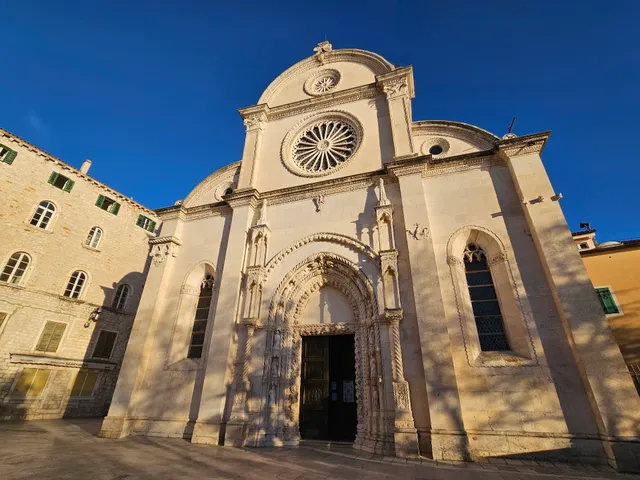
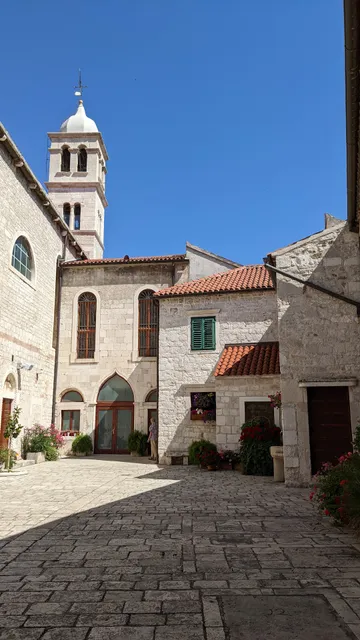
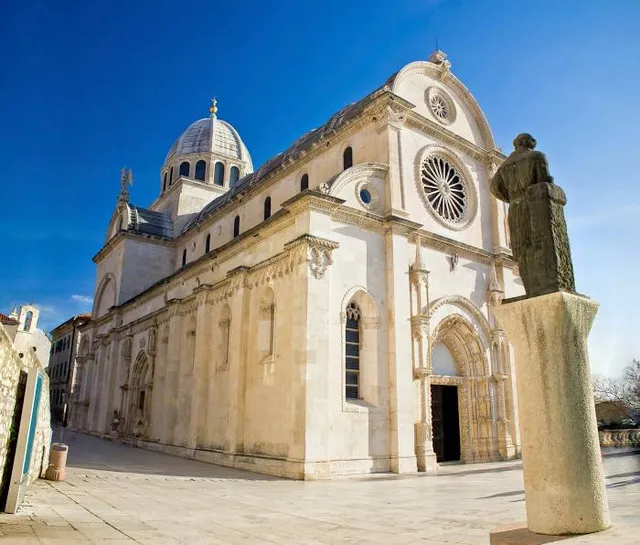
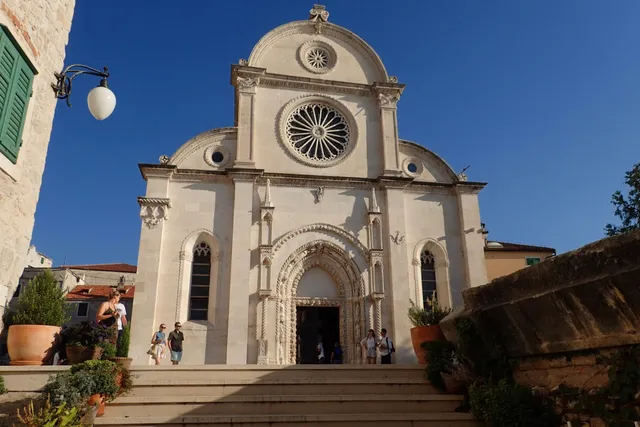
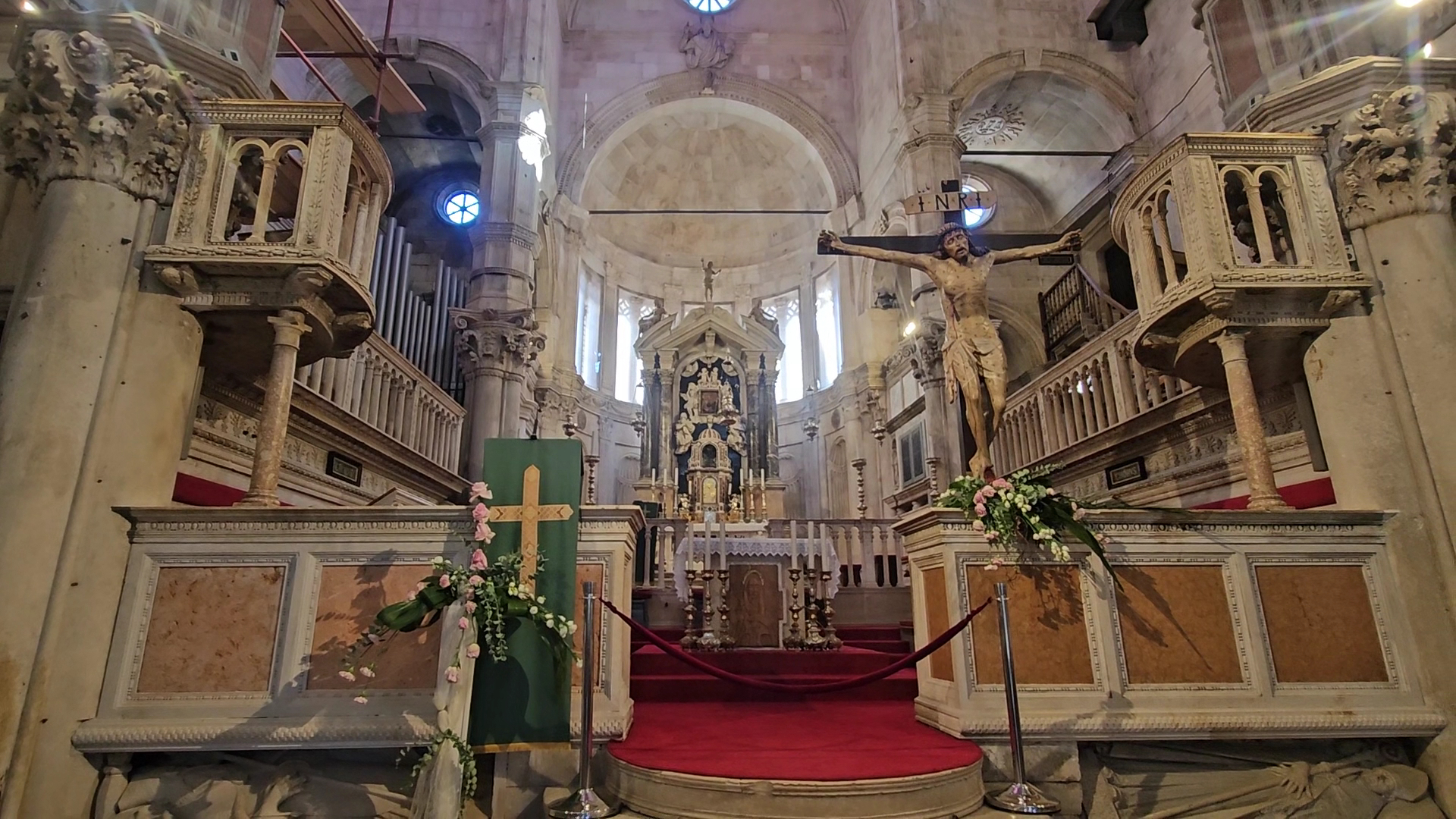
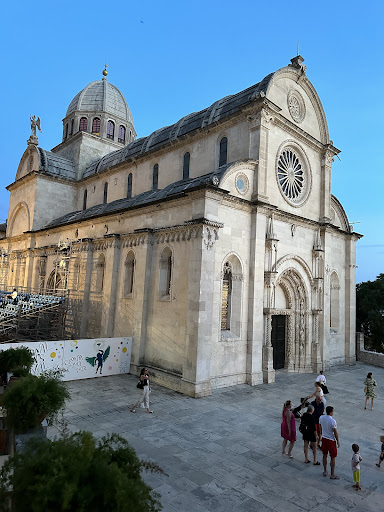
Read moreRising from the historic heart of Šibenik, the Cathedral of St. James is more than just a magnificent structure; it is a living testament to human faith, ingenuity, and spirit. This UNESCO World Heritage site is a sublime fusion of Gothic and Renaissance styles, a unique architectural masterpiece that tells a story not just of stone and mortar, but of the souls who shaped it. Crafted entirely from local limestone and marble, the cathedral stands as a tribute to the master builders who, across more than a century, meticulously brought their vision to life. Its most celebrated feature, the frieze of 71 sculpted human faces, each one unique, looks down upon the city with a quiet dignity. These are not merely decorative elements; they are the faces of the people—the merchants, the sailors, the artisans—who lived and breathed in this city, forever immortalized in stone. Each face seems to hold a secret, a memory, a silent prayer echoing through the ages. Inside, the light filters through the magnificent rose window, illuminating the intricate carvings and the hushed sanctity of the space. The absence of traditional building materials like wood or brick gives the interior a pure, almost ethereal quality. It is a space where the past feels palpable, where every arch and every column seems to whisper the names of those who stood there before, seeking solace, celebrating joy, and finding strength. The Cathedral of St. James is not just an architectural marvel; it is the spiritual and cultural anchor of Šibenik. To stand before it is to feel a connection to generations past, to appreciate the profound power of art, and to be reminded that the most enduring legacies are those built not just with hands, but with heart. It is a monument that speaks a universal language of beauty and devotion, a timeless beacon for all who seek...
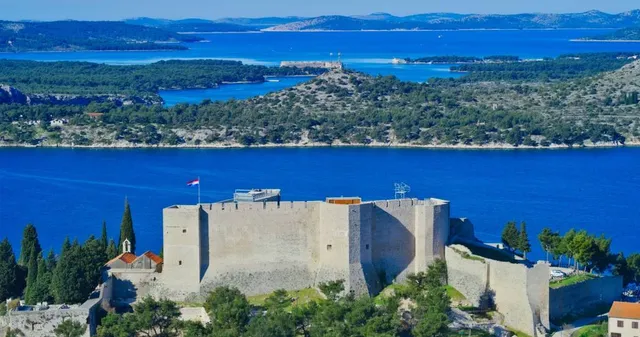
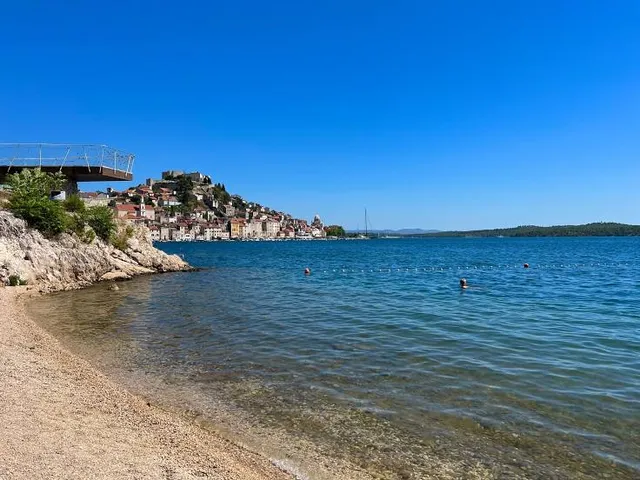
Read moreThe city of Šibenik or as pop culture calls it Braavos. Šibenik, a neighbour city right beside Split, is also a city of music and is well known for its long tradition of Klapa (like acapella) choir which UNESCO has placed on the list of cultural heritage. The city houses 3 fortress and is where the town of Šibenik came into existence. The city was also used by the TV series, Game of Thrones, to depict the city Braavos. To recap, Braavos is the wealthiest and most powerful of the Free Cities in GoT, and is located on the northwestern end of Essos where the Faceless Men (whom Arya Stark understudied), Iron Bank (yes if you need money to build an army you come here, although Iron Bank depicted in the show is really just St. James Cathedral) and Moonsingers (priestess) are found. The wealthy city streets are also depicted in the TV series so its quite a fan moment for me to...
Read more