Solar Boats of Pharaoh Khufu (Khufu’s Sun Boats)
Historical Context
Pharaoh Khufu (Greek Cheops) was the second ruler of Egypt’s Fourth Dynasty (c. 2589–2566 BC) during the Old Kingdom. He is best known as the builder of the Great Pyramid at Giza. Egyptian religion of Khufu’s time centered on the sun god Ra, who was thought to cross the sky daily in a sacred solar barque. The pharaoh was considered Ra’s earthly embodiment, so a solar boat was created as a ritual vessel for the king’s own celestial journey. In other words, solar boats symbolized Khufu’s rebirth and voyage through the heavens alongside Ra after death.
Discovery
In 1954 Egyptian archaeologist Kamal el-Mallakh uncovered Khufu’s barque in a sealed pit at the south base of the Great Pyramid. He found a row of 40 limestone slabs covering a deep rock-cut chamber beneath the pyramid’s foundation. Peering into a carved hole in one slab, Mallakh saw cedar planks and oars packed in perfect order (still smelling of cedar). Over 20 months he removed all 1,224 wooden pieces from the pit. That phased excavation, along with the painstaking 10-year reconstruction by conservator Ahmed Youssef Moustafa, restored the ship to its original shape. Notably, a second dismantled solar boat was found in a nearby pit at the same time, but it remains unexcavated.
Construction
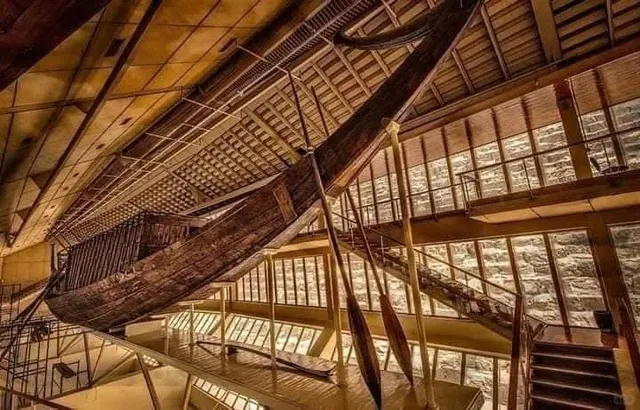
Size and Materials: The Khufu boat measures about 43.4 meters (142 ft) long and 5.9 m (19 ft) wide. It weighs on the order of 20 tons. It was built almost entirely of cedar planks (likely Lebanon cedar), a prized imported wood.
Building Technique: Construction was “shell-first,” meaning the outer hull planks were fitted before any internal frames. Craftsmen shaped each of 30 hull planks (some cut from logs up to 23 m long) so that edges interlocked like puzzle pieces. No metal nails were used; instead, adjacent planks were joined by mortise-and-tenon joints and lashed together with ropes of halfa grass.
Features: The boat has a flat bottom (no true keel) and a large roofed deckhouse roughly 9 m long (30 ft) atop its center. Inside this deckhouse was a 2–3 m chamber – perhaps intended as Khufu’s shelter or coffin compartment, though its exact purpose is unknown. The vessel also carried twelve huge oars carved from single timbers. Ten of these oars are shown amidships (for rowing) and two at the stern (for steering). In short, the Khufu barque is a masterpiece of ancient shipbuilding, with “exceptional” workmanship and ingenious joinery techniques.
Religious and Symbolic Significance
In ancient Egyptian belief, Ra traveled across the sky in solar boats – the Mandjet by day and the Mesektet by night. Pharaohs were seen as sons of Ra, so Khufu’s solar barque was intended as a symbolic vehicle for his soul. It was meant to carry the deceased king with the sun god through the underworld and ensure his rebirth at dawn. Inscriptions and later texts emphasize that boats played a central role in funerary rituals. The Khufu boat’s careful burial beside the pyramid (rather than actual sea travel) suggests it was primarily a ritual “solar barge.” (Some Egyptologists have proposed alternative uses – for example, carrying Khufu’s body from Memphis to Giza or making ritual Nile pilgrimages – but the consensus is that its role was mainly symbolic.)
Museum Exhibition
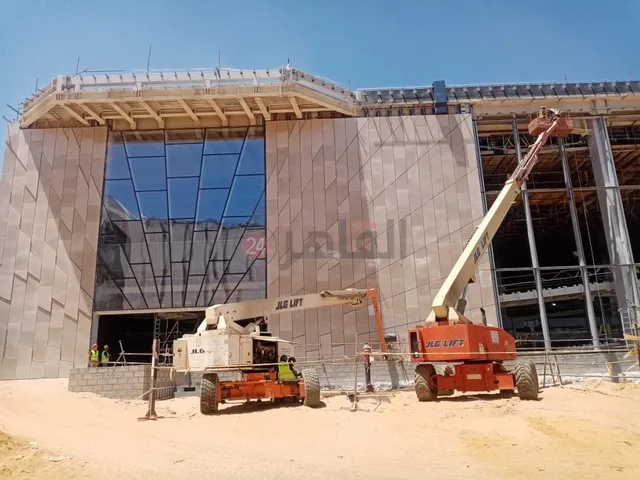
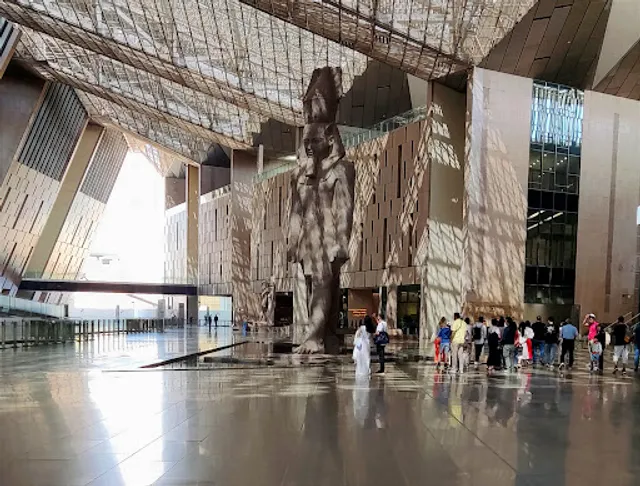
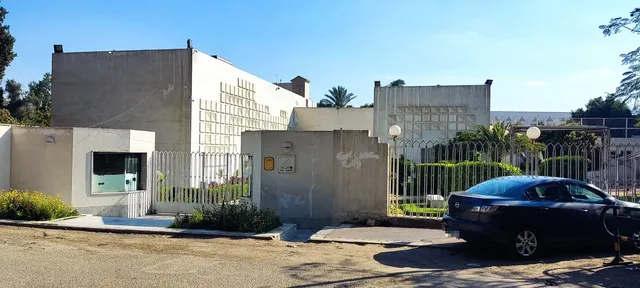
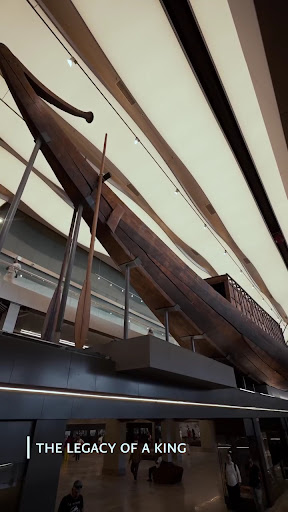
Figure: Scale model of Khufu’s solar boat on display in the museum. Exhibits related to the barque include detailed models and informational panels, helping visitors visualize this ancient ship. From 1982 until 2021 the reconstructed boat was housed in its own air-conditioned “Khufu Boat Museum” at Giza, located beside the Great Pyramid. The solar boat museum was designed specifically for this artifact and welcomes thousands of tourists each year: it has been described as “one of the distinctive museums and archaeological landmarks that receive many visitors” because it contains “the oldest and largest wooden ships...
Read moreProbably my favourite part of the museum. Firstly you're overwhelmed by the sheer scale of the boat; it's enormous (check the size of the people for comparison) and the fact that it's built entirely of wood with no nails or glue! Beautiful architectural design features; look at the detailing of the benches, ceiling...
Read moreAlthough the GEM is already open to visitors (March 2025), the Solar boat and the Tutankhamon treasures are NOT!! The final and full opening is delayed...
Read more