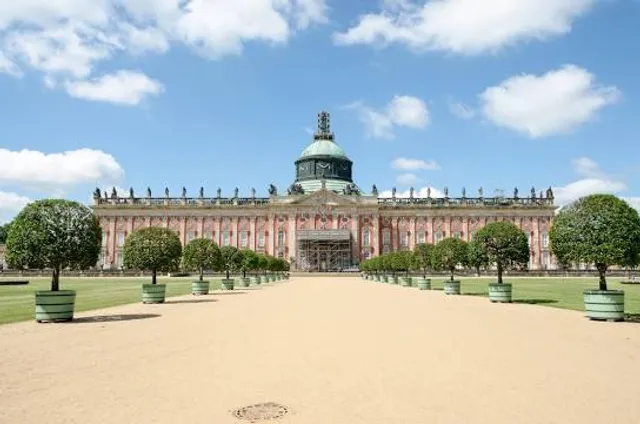
The New Palace (Neues Palais) in Potsdam, Germany, is a magnificent and grand royal palace built during the 18th century. It is located in the western part of the Sanssouci Park complex and is another significant architectural gem in the city.
Historical Significance: The New Palace was commissioned by Frederick the Great, King of Prussia, and designed by the renowned architect Johann Gottfried Büring. Construction of the palace began in 1763, shortly after the end of the Seven Years' War, and it was completed in 1769. The palace was intended to commemorate the victory of Prussia in the war.
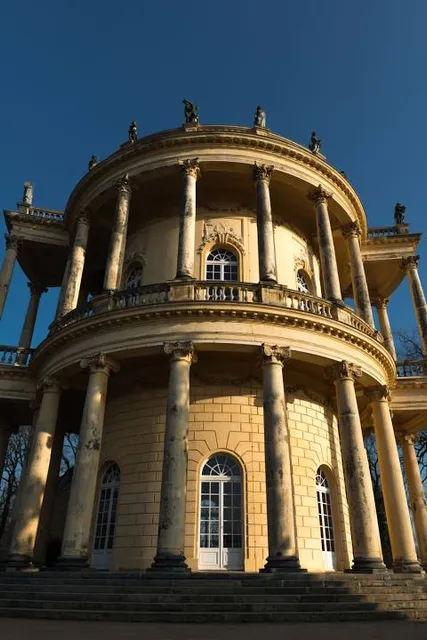
Architectural Style: The New Palace is a prime example of the Baroque and Rococo architectural styles. It features an imposing facade with a central dome and multiple wings. The exterior is adorned with sculptures, decorative elements, and intricate stucco work.
Interior Splendor: Inside the New Palace, visitors can explore lavishly decorated rooms that showcase the opulence of the 18th-century Prussian court. The grand hall, marble hall, and various chambers are adorned with sumptuous furnishings, gilded decorations, and impressive frescoes.
The Marble Hall: One of the most remarkable rooms in the New Palace is the Marble Hall, known for its stunning marble columns, ornate ceiling decorations, and a magnificent chandelier. It served as the main banquet hall for royal receptions and celebrations.
The Grotto Hall: Another noteworthy room is the Grotto Hall, designed to resemble an underwater cave. It is adorned with shells, minerals, and crystals, creating a unique and whimsical atmosphere.
The Picture Gallery: The palace also houses a significant collection of paintings, including works by renowned artists of the time.
UNESCO World Heritage Site: Like other structures in the Sanssouci Park complex, the New Palace is a UNESCO World Heritage Site, recognized for its historical and architectural importance.
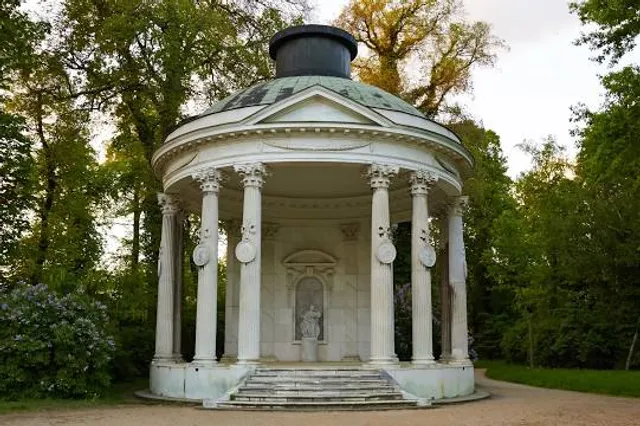
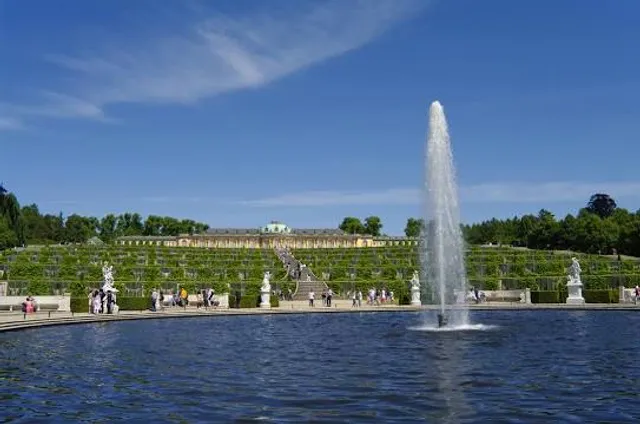
Gardens and Grounds: The palace is surrounded by beautifully landscaped gardens and parkland. Visitors can explore the park, which includes fountains, statues, and walking paths.
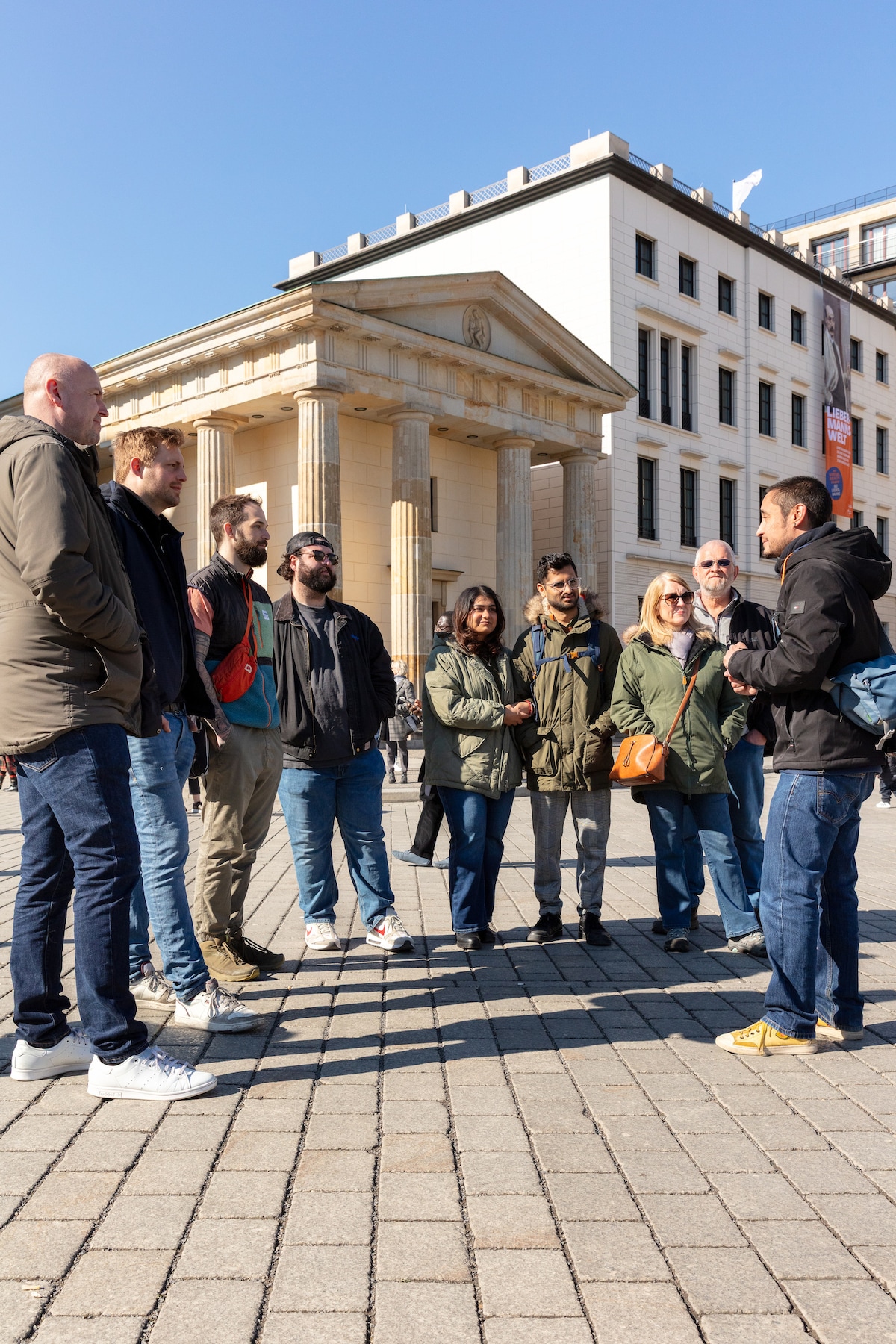
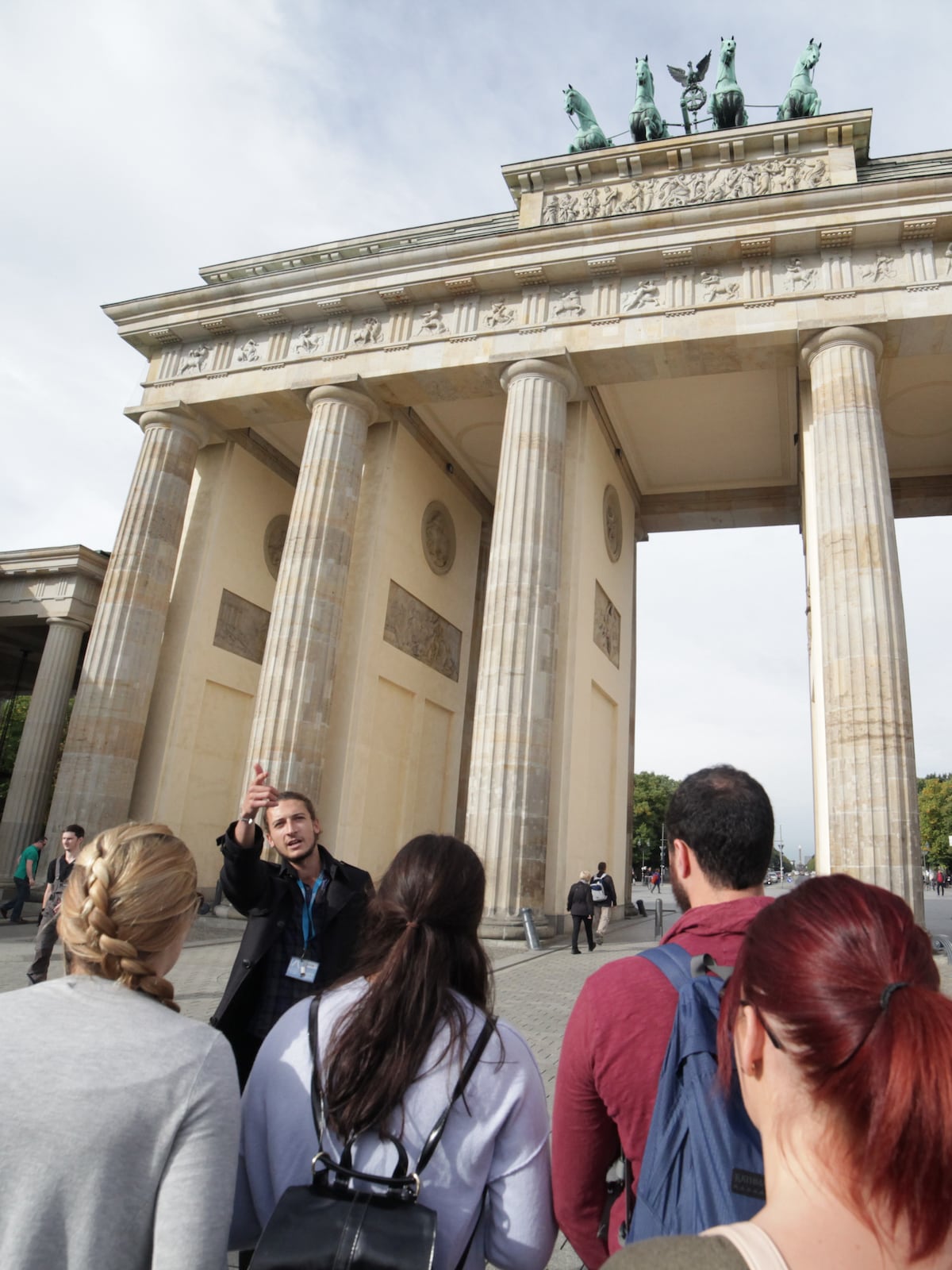
Visitor Experience: The New Palace is open to the public, offering guided tours that provide insight into the history of the palace and the era in which it was built. Visitors can marvel at the grandeur of the architecture and the wealth of decorative details.
Cultural Events: The New Palace and its gardens are occasionally used for cultural events, including concerts and exhibitions.
The New Palace in Potsdam is a testament to the wealth and splendor of the Prussian monarchy during the 18th century. It stands as a symbol of the artistic and architectural achievements of the era and is a must-visit destination for those interested in history, culture, and the grandeur of...
Read moreThe New Palace was built by King Frederick the Great to celebrate Prussia’s triumphant victory in the Seven Years’ War. Frederick wanted to show off Prussia's power in the aftermath of the war and built this primarily to receive dignitaries and guests. Opposite the main palace building was built a secondary set of buildings called the Commun that are meant to house the servants of the dignitaries.
The New Palace was the last big piece of residence built by King Frederick the Great and considered the last of the towns great baroque architecture. In later years as Prussia transition into an empire in its own right, the emperors choose this as their preferred place of residence.
Today there is some renovation going on so you may not be able to visit everything. But if you have time it worthwhile to pop in for a quick look. It's not as pack as Versailles so I find it far more pleasant.
Opposite the New Palace is another magnificent building called the Communs. In fact, I was actually more impressed initially by this building with its curved archway that overlooks vast expanse towards the west.
This annex to the palace is actually the working section of the New Palace. Visiting dignitaries don't stay here when visiting Prussia but this is where the servants stay, housing the quarters, horse stable, the kitchen etc. Wow, in my mind these servants live in nicer places than me.
The Communs is actually 2 buildings on each side, with a colonnade connecting the two buildings together. It's now the University of Potsdam most recognized campus because of the @UNESCO listed building its housed in. Really can't tell at first it's a university. Perhaps they were on summer break on my visit as the place was really quiet to the point I thought these were...
Read moreThe neues Schloss is for sure a really nice castle. But it could be even nicer if the staff for the visit was trained. I went there with my girlfriend on the 28th of january 2022, it was winter, a friday, the postdam castles area was empty of visitors. We go at the entrance of the castle at 11:30 as planed, we were the only ones for this time slot, we had to show our vaccination papers, it took 2 mins. After the check we are brought to our "guide" tell8ng us we are late ... because paper stuff lasted 2 mins. If you don't speak german do not bother, you will have to understand only one word "SCHNELL" !!! It means quick (for info i speak fluent german). Really during the visit i had the impression the russians were back and we will have to leave with the next refugee column to west germany. Schnell schnell schnell. The visit lasted 20 minutes chrono. What a pity, when they could use the winter season low on tourist to make their experience more enriching than in the summer where the number of visitors do not allow to take time and explain. This visit was a big deception, i do not recommand. Look at a documentary you will learn more and see more this kind of visit...
Read more