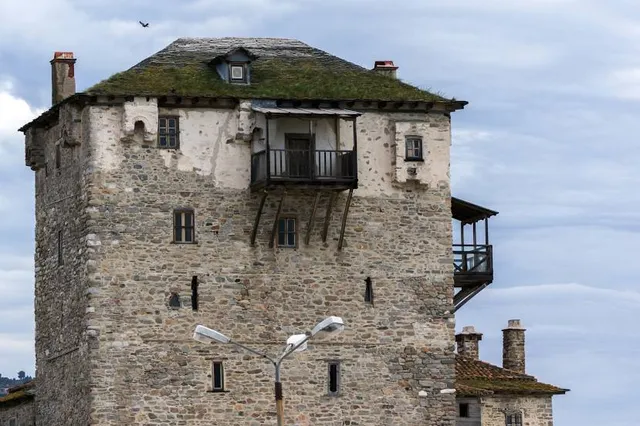
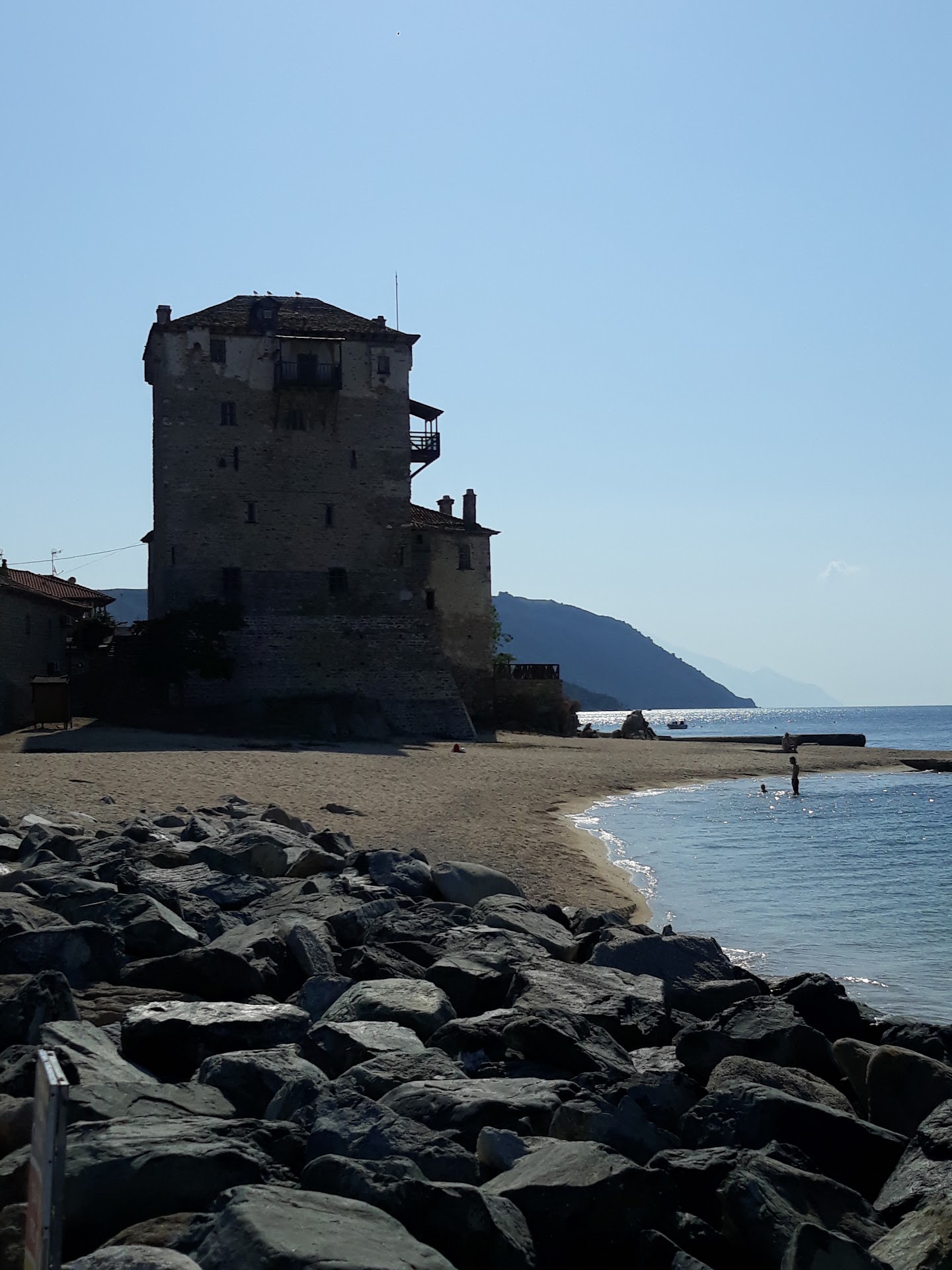
The tower is known to have existed already in 1344, but appears to have been older than this.
In May 1379, the “despot” (King) of Thessaloniki, loannis Palaeologos, was hosted at the tower and during his stay there granted it exemption from taxes. It must have suffered considerable damage from the earthquake of 1585 and, probably, received extensive repairs. In August 1858 the tower is reported “empty and uninhabited inside” (presumably after being burned down during the devastation of Halkidiki in the revolution of 1821), but this same year saw the beginning of extensive repair and reconstruction works that gave it its present form.
Recently, the tower was consolidated and restored by the 10th Ephorate of Byzantine Antiquities. During the course of this project, the main historical phases of the building were identified as follows:
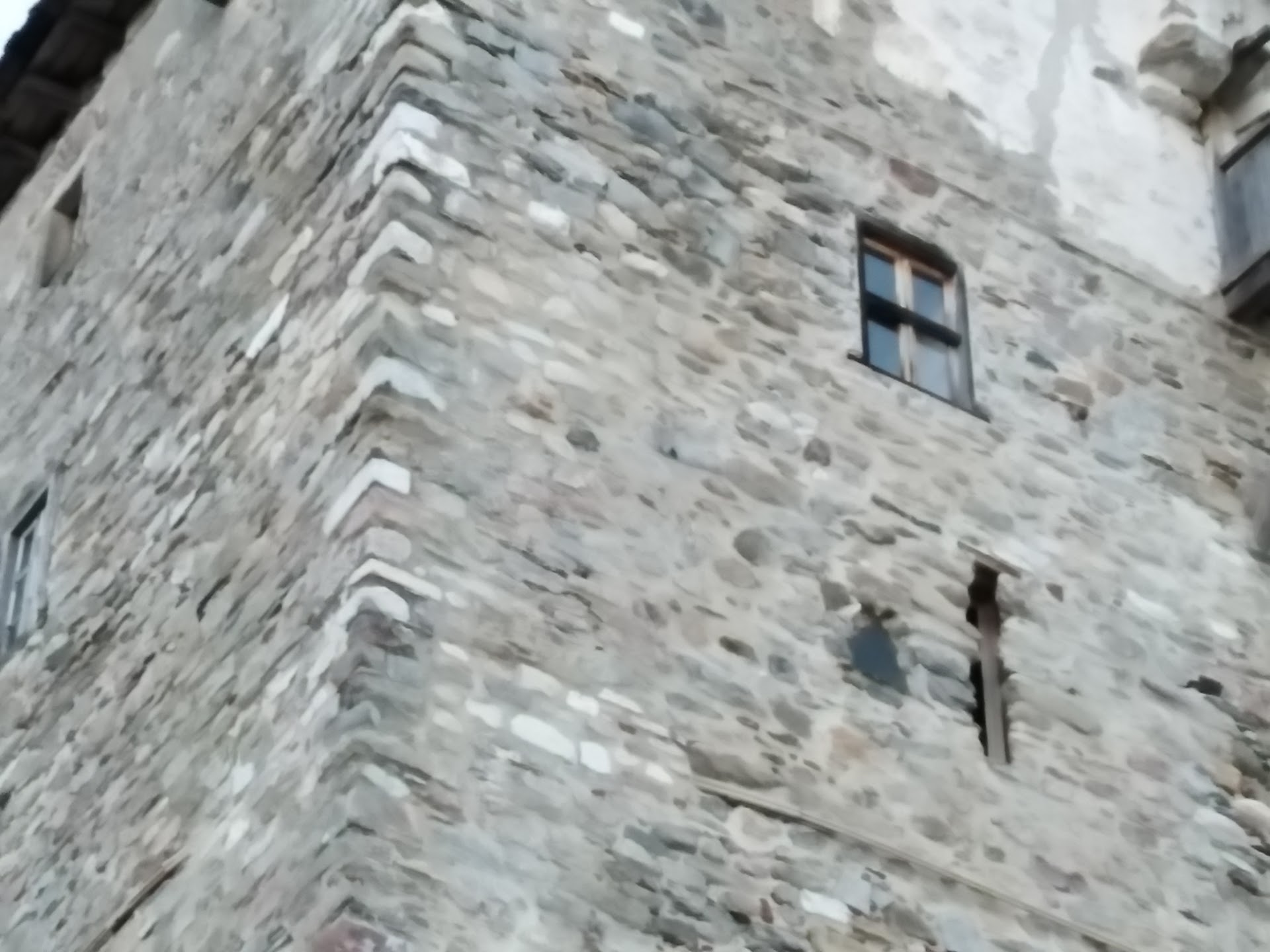
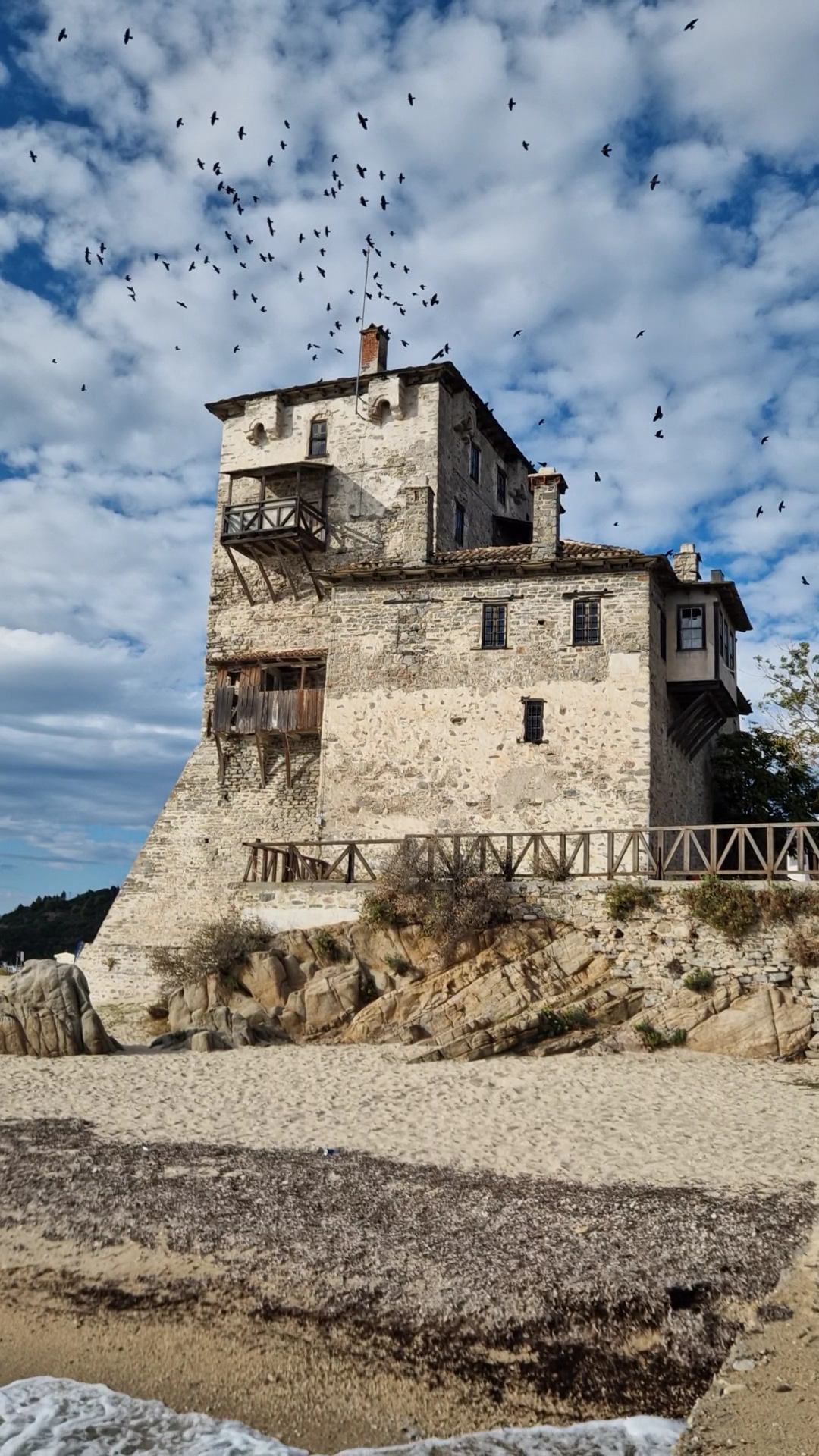
The entire lower part of the stone structure, apart from the two upper storeys, belongs to the Byzantine tower. It may be assigned on the basis of its typology and construction to the few known examples of the 11th-12th century. The two upper storeys and another one (or at least a battlement level) now lost, date from the Ottoman Domination era, probably after the earthquake of 1585. The entire wooden interior of the tower, together with its present roof, belong to the 19th century repair mentioned above, which seems to have been completed in 1862. Later, the external sloping buttress wall was added, probably after the earthquake of 1905. Nowdays, after the recent restoration works, the interior of the tower is preserved with the original constructions of the 19th century.
Against the eastern side of the tower rests the annex building of barbakas (barbican), the fortified enclosure, which seems to have been a side building of the early Ottoman domination era, with later repairs. Today’s residence and the storerooms inside barbakas were built in the middle of the 19th century.
To the north-west of the tower stands the building of arsanas (boat-house), built in 1865, along with the now lost jetty. It consists of a half-underground space for the keeping of the boat, the storage mezzanine and the residence of the upper level with its loggia.
The metochion estate owned many other buildings (storehouses, barns, an oil press, tenant lodgings (“kolligospita”), wells, etc), only two of which are preserved, about fifty meters to the south-west of the tower. The installations of the metochion were used for many years as lodgings for the new inhabitants, who built Ouranoupolis in 1923.
Nowdays, the tower estate belongs to the Greek...
Read moreThe imposing landmark of Ouranoupoli is the fortified Byzantine tower which nests on the rocks on the sea-front by the jetty. The tower was built during the 14th century A.D., certainly before 1344. It was the principal building of the metohi (farm) of Prosforion which belonged to the important monastery of Vatopedi. In May 1379 the ruler of Thessaloniki, Ioannis Palaeologos stayed in the tower and issued various concessions in favor of Mount Athos. He removed the obligation for the metohi (farm) around the tower to pay any tax and the original document is still kept at the monastery of Vatopedi. The farm prospered and expanded, taking over all the land in the area, including that of the monastery of Zygou which had declined by then. The tower was used as the living quarters of the monk managers of the metohi (farm) until 1922. It was set on fire in 1821 but was repaired some time after 1865 when a few other buildings around it were added. Those were an olive press with a water well, an oven, stables, an iron monger's workshop and two large houses where the civilian workers lived. Today only the tower, the iron monger's workshop and the worker's houses survive. You can see archaeological pieces from Toroni, Nikiti and Ierissos. For example Corintian helmes from the 6th Century have recovered from a ship wreck in 110 m depth the Skite Agia Anna. Sightseeing can be ceramics, jewelry, Coins, bronze rings from 10th - 12th centuries. To the upper floors of the tower there is a small chapel with icons and...
Read moreThis tower, among the very few to remain in use from the middle ages to this day, has been in service for about 8 centuries. Its characteristics suggest that it was built by the Byzantine empire sometime in the late 13th or (most likely) in the early 14th century, perhaps to serve as a buffer to invaders seeking to plunder the flourishing monastic communities to its south. Fortunately, it has been kept in use ever since and has thus survived to this day with adjustments and modifications that have not altered its fundamental frame. One can walk or drive right to its door. Entrance is possible, as it serves as a...
Read more