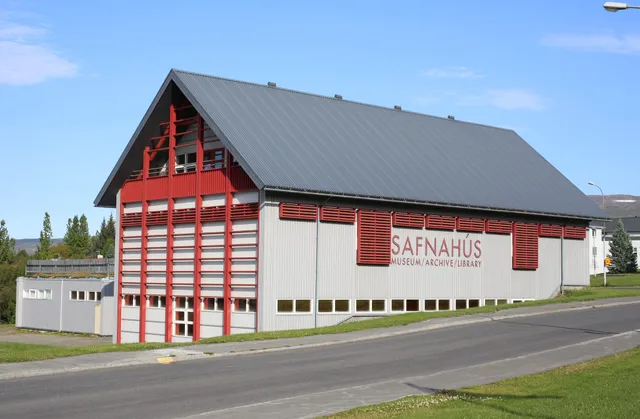
Within the building, there are three institutions that contribute to the cultural life of Egilsstaðir and the Austurland generally: in the basement, there is the Austurland Archives, with specialist curators of the documentary history of this region of Iceland; on the ground floor, there is the East Iceland Heritage Museum; upstairs, there is a small public library, with librarians, which has a varied collection of literature and a reading room, including a good selection for children. I also note that there was a shelf of used books for sale, at a substantial discount.
Since this review pertains chiefly to the East Iceland Heritage Museum, I pass over the others, but I invite visitors to explore the building. When I visited the museum (by the way, please ask for discounts: they offer children's, senior, and student discounts), there were two exhibition: the permanent heritage collection and the special exhibit, dedicated to the reindeer in East Iceland.
The permanent heritage collection is varied and includes objects and photographs of agrarian and home life in East Iceland before the 1950s. There are labels in both Icelandic and English and the arrangement of the objects is sensible, divided into specific sections, by craft and domain of life: woodworking, toolmaking, and the crafting of objects and tools; farm tools and farm equipment; domestic life, cooking, baking, and dairy processing; horse dressage, saddles, and leathercrafts; wool processing, wool crafting, and traditional clothing; furniture and decorative arts (including a vast collection of wooden chairs and carved side boards).
Aditional cabinets dedicated to shoes (including fish leather shoes), old objects discovered in various places, ceramics and glassware, and there are reconstructed interior spaces with furniture.
There is also an intact, old-style house from the 19th century assembled within the museum. It is furnished with period pieces and can be entered to get a sense of what it was like to live in the houses of the past, with some imagination: they used to cook and heat the houses using the dried dung of sheep.
I enjoyed the reindeer exhibition, too, which describes the natural history of reindeer, their introduction to East Iceland, and the role they play today in the life and sport in Austurland. The collection of carved antler objects was a...
Read moreIf you are in Eastern Region, this museum is a must. We had the fortune of visiting it on a very special day with traditional music and singing, which helped us for an even better immersion.
East Iceland Heritage Museum offers something for any museum lover: its main focus is, as its name reads, Icelandic cultural heritage, with a rich collection of artifacts and documents gathered around a traditional Icelandic home and the office of an important forest engineer. They have managed to find a perfect balance of lighting, information and objects that create a vivid experience.
There are two other main sections in the museum: one dedicated to archeological sites of the region, with a special focus on the fascinating history of the remains of a mysterious foreign noble woman. The other part shares the history and evolution of the reindeer population since its introduction from Norway back in XVIII century. Scientific data by late reindeer population expert Skarphéðinn G. Þórisson and further information about hunting and species characteristics are in display for those interested in...
Read moreThis is a relatively small museum with displays on Icelandic culture and a separate section on reindeer. Great for children as it is not so large as to loose their attention. Being in a small town they do not get a lot of visitors, so the staff are very happy and accommodating when tourists stop in. Local schools take trips there which would be the one time it gets busy. Egilsstaðir is on highway 1, so if you are driving by it is worth the short detour. As a woodworker I loved the old...
Read more