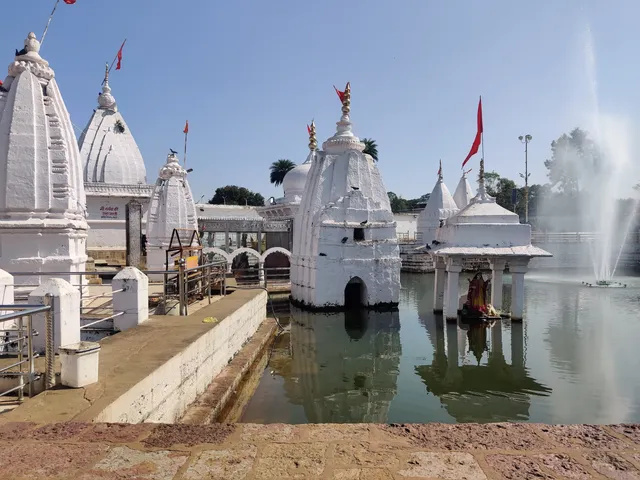
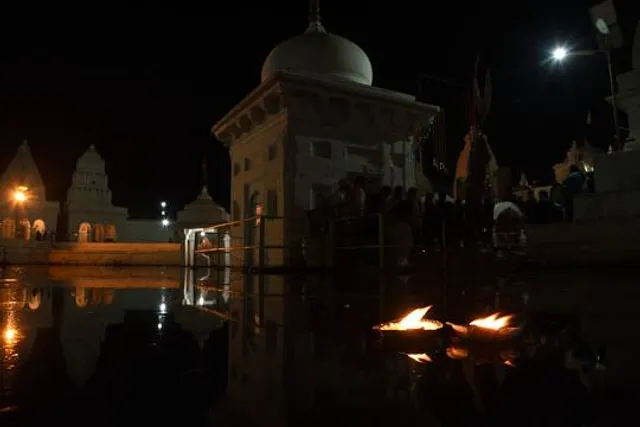
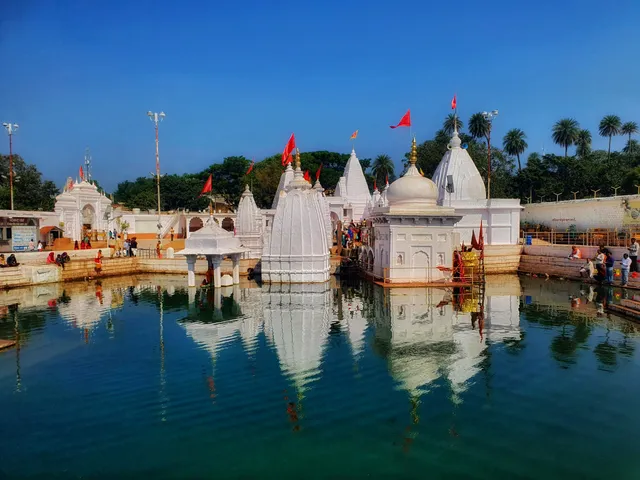
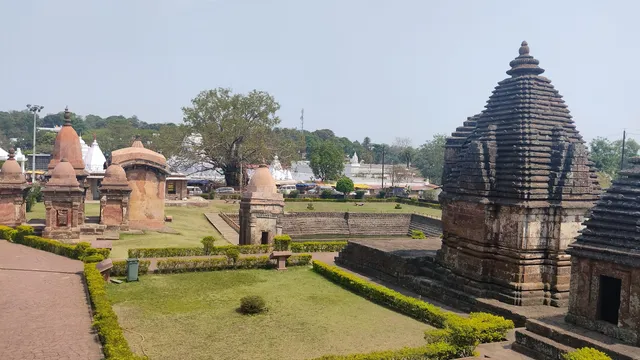
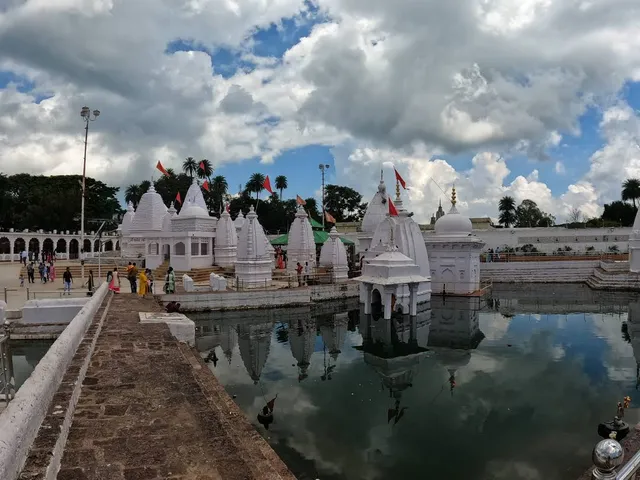
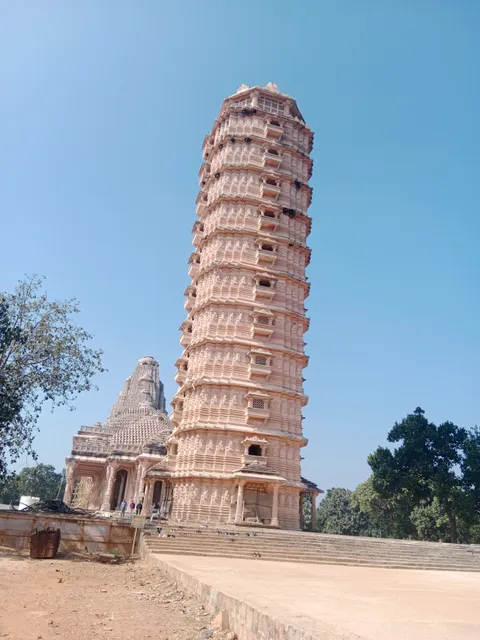
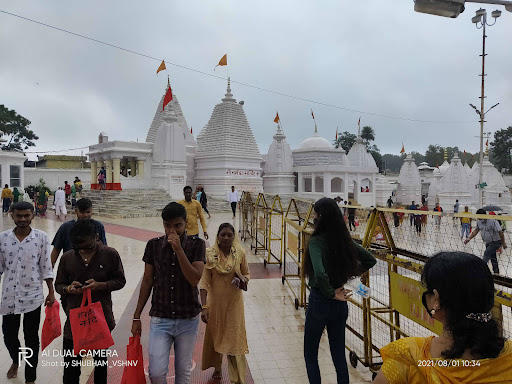
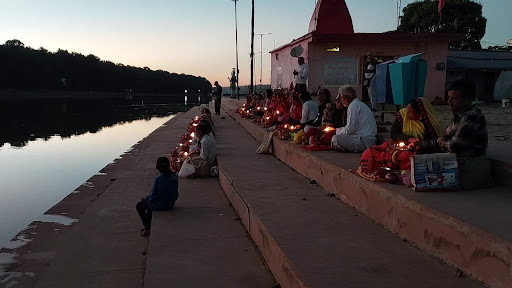
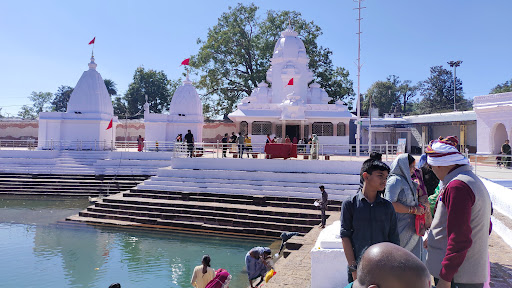
Peaceful place. The Narmada Mandir in Amarkantak, Madhya Pradesh, is a highly revered Hindu pilgrimage site, marking the sacred origin of the River Narmada. This ancient temple complex is often referred to as Narmada Udgam Temple or Narmada Kund, signifying the divine source of the river. Built primarily with white marble, the temple showcases marvelous architecture, with historical evidence suggesting its initial construction by the Kalachuri dynasty around the 12th century. The Narmada Udgam Kund, the very birthplace of the river, was originally established by Rewa Nayak. Later, in the 18th century, Bhonsle, the king of Nagpur, expanded and shaped the temple, with significant renovations undertaken by Maharani Devi Ahilya Holkar. Within the complex, a central black stone image of Goddess Narmada with large silver eyes is housed. The Narmada Kund is the exact spot from which the river flows, eventually becoming the mighty Narmada. Opposite the Narmada Temple stands the Amarkantheshwar Shiva Linga, believed to be where Lord Shiva and his daughter Narmada resided. It is said that Narmada originated from Shiva's matted hair, earning him the name Jatashankar here. The Narmada Mandir complex comprises about sixteen other pristine stone temples dedicated to various deities, including Lord Shiva, Karthikeya, Sriram Janaki, Annapurna, Guru Gorakhnath, and Sri Suryanarayana. Its profound mythological significance attracts devotees from across the globe, who perform rituals and take holy dips in the kund, believing it cleanses sins and fulfills wishes. The evening aarti ceremony is a particularly cherished and spiritually uplifting experience. The temple's serene location amidst lush greenery, where the Vindhya and Satpura ranges meet the Maikal Hills, adds to its spiritual ambiance and natural beauty. Narmada Jayanti, celebrating the river's birth, is a major festival observed with...
Read moreThe Narmada Udgam Temple is the sacred heart of Amarkantak, marking the legendary birthplace of the holy Narmada River. It's a complex of temples with a central Narmada Kund from which the river is said to emerge. This site is not just a place of worship but a confluence of ancient myths and devotion, attracting pilgrims who believe that merely looking at the Narmada is enough to cleanse one's sins, unlike other rivers where a dip is required. The temple's deepest mythological connection lies in its status as a Shakti Peetha. It's believed that a part of Goddess Sati's body (specifically, her right buttock) fell here when Lord Shiva, heartbroken, carried her lifeless body across the universe. This makes the land profoundly sanctified and links it directly to the divine union of Shiva and Shakti. Another popular myth suggests that the Narmada River herself is Lord Shiva's daughter, originating from his hair, which is why he is also known as Jatashankar in this region. The river is believed to have been granted a boon by Shiva to flow eternally, blessing the land with fertility and prosperity. While the main temple is dedicated to Goddess Narmada, the presence of Lord Shiva is deeply ingrained in the entire area. Just opposite the Narmada Temple stands the Amareshwar Mahadev Temple with a prominent Shivlingam. This temple is a testament to the region's connection to Shiva worship. Furthermore, the Jwaleshwar Mahadev Temple, located about 8 kilometers from the main complex, is another significant site for Shiva devotees. Legend says that this is the spot where Lord Shiva's third eye's fiery flame, or a part of a demon he vanquished, fell to Earth. This temple is also the origin of the Johila River, making it a sacred site for both nature and spirituality. These temples, along with others in the complex, highlight Amarkantak's importance as a center for both Narmada and...
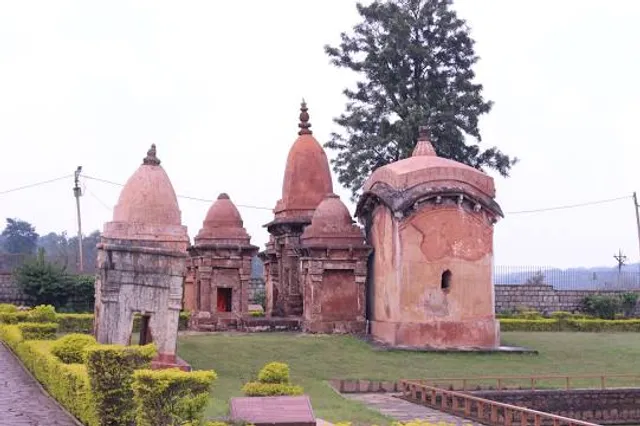
Read moreThe Amarkantak Narmada Udgam Mandir is a temple complex in Madhya Pradesh that marks the origin of the sacred Narmada River. The site is a major pilgrimage destination and holds immense spiritual significance for Hindus. Narmada Udgam Temple, Amarkantak - Timings, Festivals ... Narmada Devi Temple, Narmada Udgam Mandir, located in ... Amarkantak: where Kabir and Kapila meditated and the Narmada ... Key features and facts Location: The temple complex is located in the pilgrimage town of Amarkantak on the Amarkantak Plateau in the Anuppur district of Madhya Pradesh. The Narmada Kund: At the center of the complex is the Narmada Kund, a sacred reservoir believed to be the exact point where the Narmada river emerges. Bathing in the kund is prohibited, but devotees can bathe in an adjacent kund. River's origin: According to mythology, the river is said to have sprung from the matted locks of Lord Shiva, and is considered his daughter. The Narmada is one of India's seven most sacred rivers. Temple complex: The Narmada Udgam Mandir is not a single temple but a cluster of around twenty small temples. The complex features: Narmada Temple: The most important temple, dedicated to the river goddess Narmada. Lord Shiva Temple: A temple dedicated to Lord Shiva, honoring his connection to the river's origin. Other shrines: The site also contains shrines and statues dedicated to various other deities. Spiritual significance: The site is a place of profound spiritual solace, where pilgrims perform rituals and offer prayers. The atmosphere is serene, surrounded by lush green forests. Annual festival: The Narmada Jayanti festival, which celebrates the birth of the river, is held here with great devotion and zeal. Nearby attractions: In addition to the Narmada Udgam Mandir, visitors can explore the nearby ancient Kalchuri Temple, located just behind...
Read more