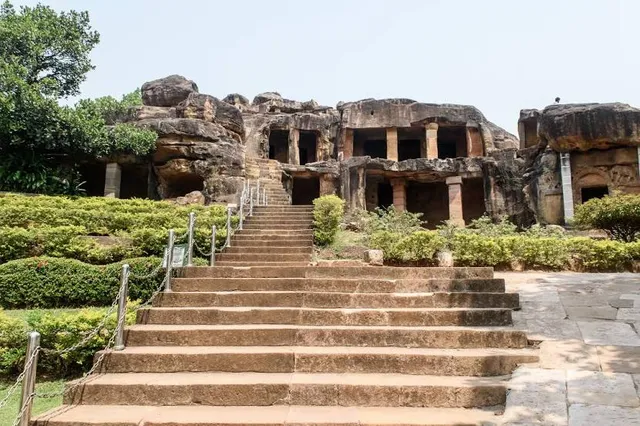
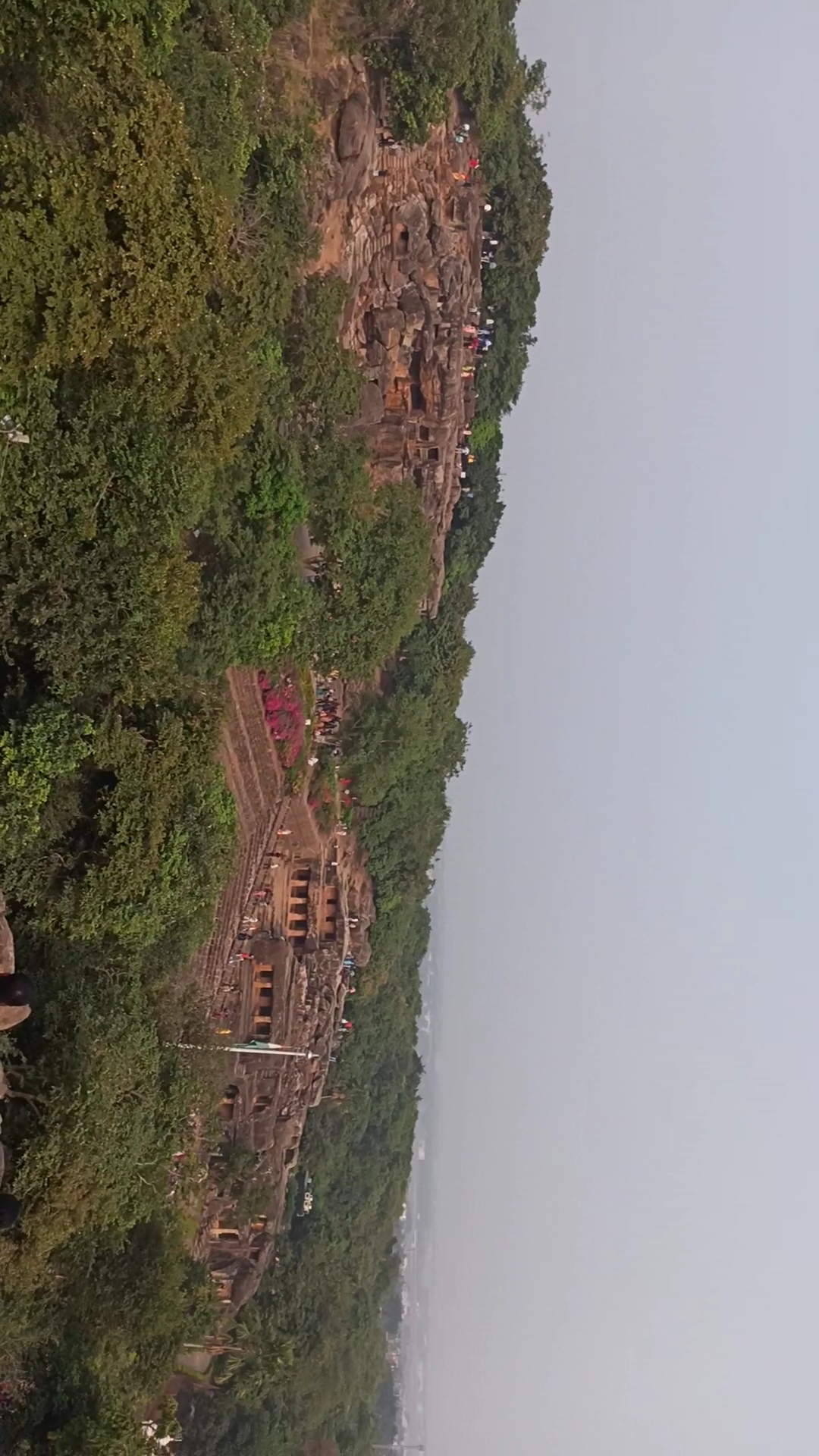
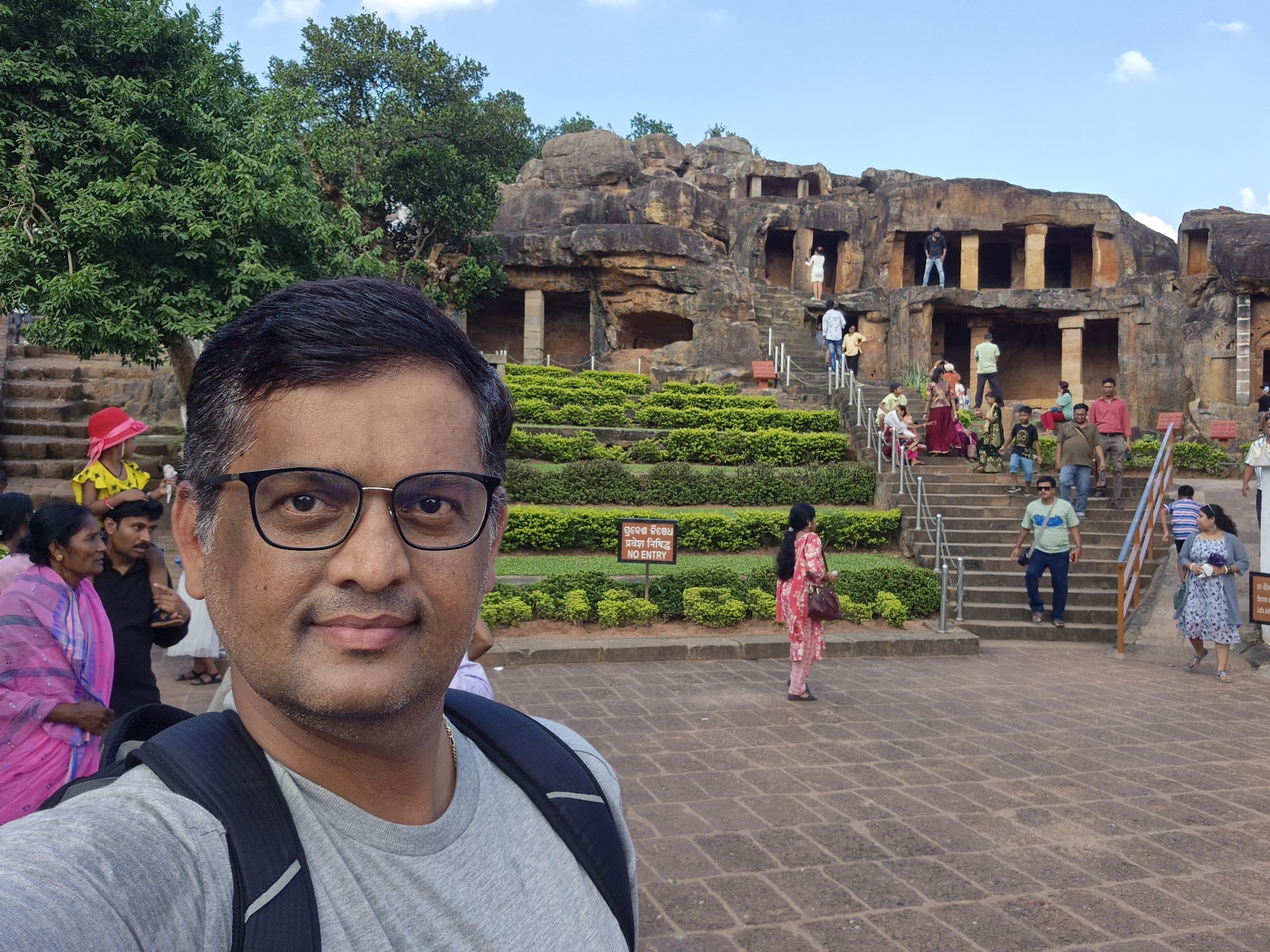
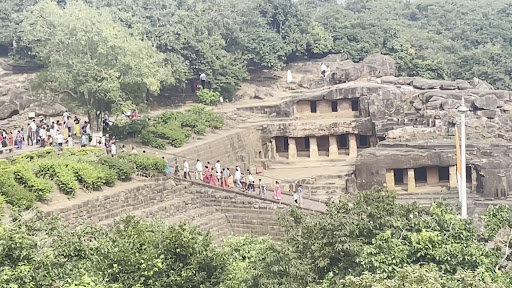
Udayagiri and Khandagiri caves, formerly called kattaka caves or cuttack caves, are partly natural & partly artificial caves of archaeological, historical and religious importance near the city of Bhubaneswar in Odisha, India. The caves are situated on two adjacent hills, Udayagiri and Khandagiri mentioned as kumari parvata in the Hatigumpha inscription. They have a number of finely and ornately carved caves built during the 1st century BCE. It is believed that most of these caves were carved out as residential blocks for Jain monks during the reign of King Kharavela. Udayagiri means "Sunrise Hill" and has 18 caves while Khandagiri has 15 caves. The caves of Udayagiri and Khandagiri, called lena or lena in the inscriptions, these were taken out mostly during the reign of Kharavela for the abode of Jain ascetics. The most importance of this group was Ranigumpha in Udayagiri which is a double storeyed monastery. Other important caves include Hathi Gumpha, Ananta Gumpha, Ganesha Gumpha, Jaya Vijaya Gumpha, Mancapuri Gumpha, Bagha/Byaghra/Vyaghra Gumpha and Sarpa Gumpha. The Archaeological survey of India (ASI) has listed that Udayagiri and Khandagiri Caves in the list of "Must See" Indian Heritage. The Udayagiri and Khandagiri Caves are listed as one of the Adarsh Smarak Monuments by ASI. B. M. Barua, based on a reading of line 14 of the Hathi Gumpha Inscription, declared that a total of 117 caves were excavated by Kharavela and others on the Kumari hill (Udayagiri). Marshall has counted more than 35 caves in both the hills, while M.M. Ganguli has enumerated only 27 caves. The number of existing caves at Jdayagiri is 18, while Khandagiri has 15.The local name he existing caves are listed below, numbered according to the enumeration of the Archaeological Survey of India. In Udayagiri, Hathi Gumpha (cave 14) and Ganesha Gumpha (cave 10) are especially well known for their historically important sculptures and reliefs. Raninka Na'ara (Queen's Palace Cave, Cave 1) is also an extensively carved cave and elaborately embellished with sculptural friezes. Khandagiri offers a fine view back over Bhubaneswar from its summit. The Ananta Cave (Cave 3) depicts carved figures of women, elephants, athletes, and geese carrying flowers. The Udayagiri hills are on the right-hand side as the visitor approaches from Bhubaneswar. Compared to Khandagiri, Udayagiri offers more beautiful and better maintained cave shrines. There are 18 caves in Udayagiri: 1. Rani Gumpha "Cave of the Queen" 2. Bajaghara Gumpha, 3. Chota Hathi Gumpha, 4. Alakapuri Gumpha, 5. Jaya Vijaya Gumpha, 6. Panasa Gumpha, 7. Thakurani Gumpha, 8. Patalapuri Gumpha, 9. Mancapuri and Swargapuri Gumpha, 10. Ganesha Gumpha, 11. Jambesvara Gumpha, 12. Vyaghra Gumpha, 13. Sarpa Gumpha, 14. Hati Gumpha, 15. Dhanaghara Gumpha, 16. Haridasa Gumpha, 17. Jagannatha Gumpha, 18. Rasui Gumpha. There are 15 caves in Khandagiri. 1. Tatowa Gumpha, 2. Tatowa Gumpha, 3. Ananta Gumpha, 4. Tentuli Gumpha, 5. Khandagiri Gumpha, 6. Dhyana Gumpha, 7. Navamuni Gumpha, 8. Barabhuji Gumpha, 9. Trusula Gumpha, 10. Ambika Gumpha, 11. Lalatendu Keshari Gumpha, Caves 12, 13 and 15 are unnamed. Cave 14 is very simple and called Ekadasi Gumpha. Entry fee for Citizens of India and visitors of SAARC (Bangladesh, Nepal, Bhutan, Sri Lanka, Pakistan, Maldives and Afghanistan) and BIMSTEC Countries (Bangladesh, Nepal, Bhutan, Sri Lanka, Thailand and Myanmar) – Rs. 25 per head and for each foreigner is Rs. 300 and free entry for children below 15 years. The monument remains open from...
Read moreUdaygiri " Hathigumpha rock edicts of kharavela " are worth a visit only and only if you are really interested in the ancient history of Odisha, magadha. 🛑 Hathigumpha rock edicts : untold story of Jain Bhikshukraja Kharavela India is a great country with historical evidence of tolerance, inclusiveness, and mutual respect for cultures and religions. India has time and again proven to the world that different religions and cultures can peacefully coexist and even flourish. The " Hathigumpha inscription " is rock solid proof of peaceful coexistence of jainism amidst contemporary Hinduism and Buddhism. Location : Udaygiri near Bhubaneshwar in odisha. Time line : 150 - 200 BCE. Script. : Brahmi. Architect : Emperor Kharavela aka Jain Bhikshukraja Dynasty. : Chedi Contemporary: King SKANDASTAMBHI of Satavahana, yavanaraja. Brihaspatimitra of magadha. Contents : The udaygiri rock cut caves have the famous Hathigumpha rock edicts of Jain Bhikshuraja kharavela 1st century BCE. [ 180-130 BCE ].The 17 lines Brahmi inscriptions mention about the wars won by Kharavela. 🛑Kharavela defeated Bhojakas of vidharbha , Rathikas of Berar, along with Lambodara, the son of SKANDASTAMBHI of Satavahanas 🛑 The Jain "Kalinga Jina," which was taken away by Mahapadma Nanda in 4th century BCE, was also brought back to kalinga by the Brave King after defeating Pataliputra 3.🛑 First mention of BHARATVARSHA Inscription in Brahmi. 🛑 Contains names of the 24 Jain Tirthankaras.
History of Kharavela : The ferocious kshtriya slayer sudra raja mahapadma nanda ruled kalinga from Magadha 4th century BCE , 300 years before kharavela. The premauryan Nandas completed irrigation works in kalinga which was a Vassal Kingdom of nandas of magadha.Nandas also constructed highway from magadha to kalinga and kosala.The last Nanda Dhananda was defeated by Duo of Chandragupt Maurya( 322- 298 BCE) and Chanakya in 322 BCE. The mauryan rule ended with the death of Ashoka ( 268 - 232 BCE). Kalinga became independent again during the reign of CGM and BINDUSARA ( 298 - 268 BCE) . Ashoka brought it under mauryan rule after the battle of kalinga in 261 BCE.
🏵🏵 Kharavela belonged to chedi- mahameghavahana dynasty [ Mahameghavahanenaraja, mahamegha is cloud like state elephant in brahmi] of kalinga with capital at kalinganagari, modern shishupalgarh. kharavela was brown and beautiful, proficient in dance, and music .
"Lekha-- rupa-- ganana--vavahara-- vidhi"
Meaning trained in writing, music, rituals, maths. Good looking and well behaved.
🏵🏵 18 years old king kharavela waged war from his 2nd reginal year against SATAVAHANAS, Bhojakas, Rastrikas, magadha. 🏵🏵 war against magadha in 8 th year 🏵🏵 saved mathura from the YAVANAS or indo greeks in the 9th year. 🏵🏵 10 th year -- war against Ceres, cholas, pandyas, satyaputra. 🏵🏵 12th year - great war against Magadha raja Brihaspatimitra [ ? pushyamitra sunga] and brought back KALINGAJINA taken by Nandaraja in 4 th century BCE. 🛑Kharavela's wife -- queen called VIJIRAGHARAVATI or AGRAMAHISI in hathigumpha inscriptions of kharavela mentioning about donations by AGRAMAHISI to Jain temple and institution. Although there is no presence of Buddhism in Udaygiri, the coexistence of Jain, Hindu and Buddhism in contemporary history is unique feature of india that has and will continue to be a role model of the world. ' vasudhaivah Kutumbakam'.
Dr amol...
Read moreUdayagiri and Khandagiri are two famous hills located near Bhubaneswar, the capital city of Odisha, India. They are known for their ancient Jain rock-cut caves, which are significant both archaeologically and historically. These caves date back to the 2nd century BCE and were carved during the reign of King Kharavela of the Mahameghavahana dynasty.
Key Features of Udayagiri and Khandagiri:
Historical Significance: The caves were created primarily for Jain monks and are among the earliest groups of Jain rock-cut shelters. King Kharavela, a prominent ruler of ancient Odisha, is associated with these caves, and his Hathigumpha inscription on Udayagiri provides valuable historical information about his reign and achievements.
Udayagiri Caves: Udayagiri, meaning "Sunrise Hill," contains 18 caves. Some of the notable caves include: Rani Gumpha (Queen's Cave): The largest and most elaborate cave, known for its intricate carvings and spacious courtyards. It has two levels with beautiful relief sculptures depicting various scenes, including royal processions and religious activities. Hathigumpha (Elephant Cave): Famous for the Hathigumpha inscription, which is a lengthy Prakrit inscription in Brahmi script, detailing King Kharavela's reign. Ganesh Gumpha: Named after the carvings of Lord Ganesha found inside. It also has beautifully carved figures and inscriptions.
Khandagiri Caves: Khandagiri, meaning "Broken Hill," has 15 caves. Some notable ones include: Ananta Gumpha: Known for its sculptures of women, elephants, and other figures. Tatowa Gumpha (Parrot Cave): Notable for its carvings of parrots on the entrance arches. Navamuni Gumpha: Contains figures of nine Jain Tirthankaras. These caves are relatively simpler compared to those in Udayagiri but still hold significant historical and religious importance.
Architectural and Artistic Value: The caves exhibit a blend of natural and man-made architectural features, with many being multi-storeyed and containing intricately carved pillars, doorways, and sculptures. The carvings include depictions of religious symbols, deities, and scenes from everyday life, reflecting the rich cultural and religious heritage of the period.
Religious Importance: Udayagiri and Khandagiri hold great significance for Jainism. They were used as residences and meditation chambers by Jain monks. The caves continue to attract Jain pilgrims and tourists interested in ancient history and architecture.
Tourism and Accessibility: Located about 6 kilometers from Bhubaneswar, these sites are easily accessible by road. They are popular tourist destinations and are often included in the itinerary of visitors to Odisha, offering a glimpse into the region's ancient history and Jain heritage.
Visiting Tips: It's advisable to hire a guide to understand the historical context and significance of the carvings and inscriptions. Wear comfortable walking shoes as exploring the caves involves some climbing. Visiting early in the morning or late afternoon can provide a more comfortable experience, avoiding the midday heat.
Udayagiri and Khandagiri caves are an important part of Odisha's cultural and historical landscape, offering insights into the region's ancient past and its...
Read more