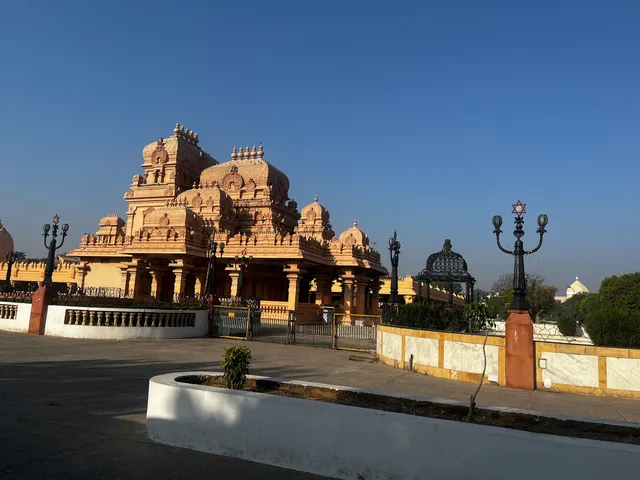
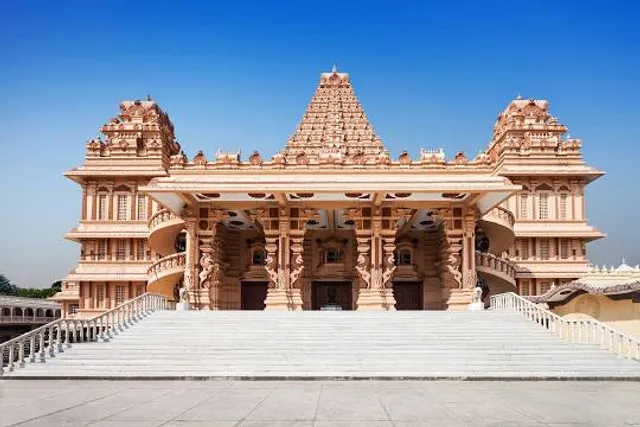
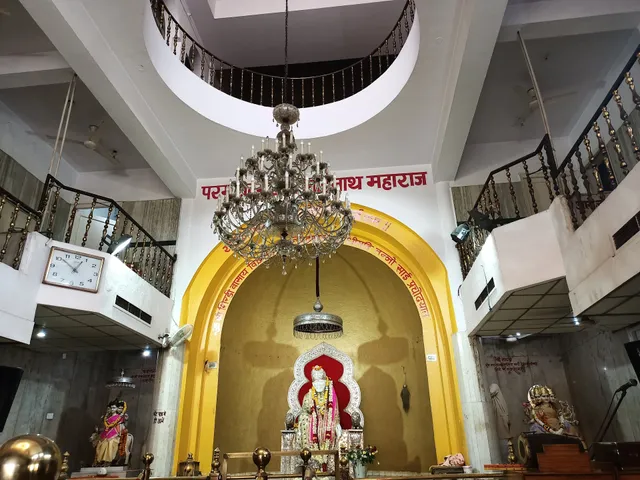
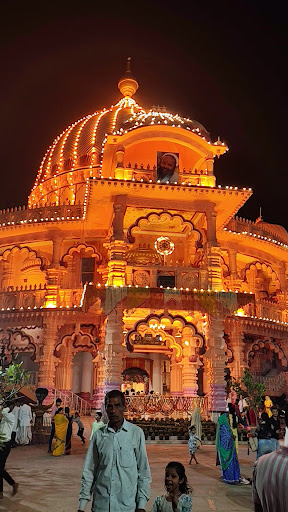
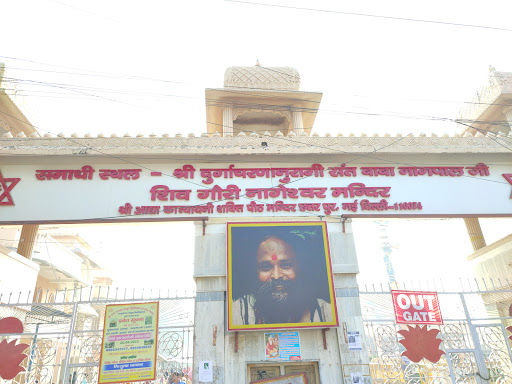
labour South of Delhi on a full-moon night, a white marble palace comes alive. Soaring archways glow in the light and there is magic in the air as the chants rise above the wild clanging of bells. It's another festive occasion at the Sri Adya Katyayni Shaktipeeth temple, better known as Chhatarpur Mandir to the capital's nirvana seekers. There, alighting from Fords and Mercedeses, Sierras and trucks, tractors and bicycles are the believers - over one lakh of them - who make the pilgrimage every fortnight, come thunder, lightning or rain. Dressed in shades of red, saffron and white, singing bhajans, they wait patiently for a glimpse of the deity. Though it's the deity that moves them, the force behind the temple is Sant Nagpal. To the faithful, he's Babaji. The man who apparently acquired sainthood at the improbable age of four following the death of his mother. Someone, a kindly neighbour perhaps, felt sorry for the little boy crying by her funeral pyre and took him to a temple dedicated to Durga: she's your new mother, he was told. She is eternal. The child obviously took the lesson to heart. Years later, he is still making magnificent edifices for his "mother" in Delhi, Tripura and Arunachal Pradesh. But each time a temple is built, he hands it over to a management trust and moves on. In 1974 he began building the Chhatarpur temple. The village panchayat donated a 1,000 sq yard plot and Babaji began collecting donations. But in the early '80s on a trek to Kedarnath in the Himalayas, he fell down a hill, hitting a boulder. He survived, but one of his lungs was irreparably damaged. Today, he's on artificial respiration: two tubes tucked into his nose connect him through plastic pipes to oxygen cylinders. He moves about on a wheelchair. Meeting the Baba isn't easy. His list of visitors include Congress President Sitaram Kesri (who apparently visits him every Saturday), former prime minister H.D. Deve Gowda and A.L. Batra, chairman of the Batra Hospital who is also vice-president of the temple trust. It is said that Indira Gandhi too was under his spell, despite her son Sanjay's scepticism and disdain for this maker of temples. But undaunted by the galaxy of devotees, we put in a request for an interview - my photographer and I. Three weeks later, we're heading to the temple. I've been warned: the Baba can read minds. Folklore has it that his miraculous powers are extensive and he brought back to life a devotee who died while on a pilgrimage with him to Vaishno Devi. Says S.P. Gupta, temple trustee and former joint secretary in the Lok Sabha Secretariat: "I have yet to meet anyone who has attained his level of spiritual elevation." But on my mind, there's one question: is this man for real? Dusk is descending when we get our darshan. I'm trying hard to push away the cynicism, hoping I can get him to talk and hoping too that he can't really read minds. And then, going beyond the towering archways and the lotus blooms in the public domain, we are escorted to a lacklustre structure: no fancy lights, no classy decor, only a narrow corridor leading to a badly lit,...
Read morePrepare to be captivated as you step foot into the mystical realm of Baba Naagapala Temple in Delhi. Nestled amidst the bustling city, this sacred haven unveils a unique spiritual experience like no other. Embark on a spiritual sojourn as I recount my enchanting visit to this serpent sanctuary.
Atmosphere: Upon entering the temple premises, a sense of tranquility washes over you like a gentle breeze. The ambiance is suffused with an ethereal energy, creating an oasis of peace amidst the urban chaos. The melodious chants and fragrance of incense permeate the air, further enhancing the spiritual aura of the place.
Architectural Marvel: The architectural brilliance of Baba Naagapala Temple is a sight to behold. Intricately carved sculptures of serpents adorn the walls, symbolizing the divine connection between nature and spirituality. The serpentine motifs, meticulously crafted in stone, exhibit the remarkable skill of the artisans who brought this masterpiece to life.
Spiritual Significance: Baba Naagapala Temple holds immense significance for devotees seeking solace and blessings. Dedicated to Lord Shiva and revered as the abode of the snake deity, Nag Devta, this temple is believed to possess healing powers and the ability to ward off evil spirits. Visitors flock here to offer their prayers, seeking divine intervention and spiritual upliftment.
Snake Worship: The temple's unique focus on snake worship is a distinctive aspect that sets it apart from other religious sanctuaries. Devotees observe ancient rituals, making offerings of milk, flowers, and incense to the serpent idols. The belief in the power and protection of snakes is deeply rooted in Indian mythology, and Baba Naagapala Temple provides a space for devotees to express their reverence.
Devotional Vibes: The collective devotion and reverence exhibited by the temple's visitors create an atmosphere charged with spiritual energy. The echoes of heartfelt prayers and the sight of devotees immersed in their spiritual practices evoke a sense of deep connection with the divine. The temple offers a space for introspection, reflection, and surrender to the higher forces at play.
Community Engagement: Beyond its religious significance, Baba Naagapala Temple actively engages with the community, organizing cultural and religious events that foster a sense of togetherness. Festivals such as Nag Panchami and Shivratri witness vibrant celebrations, bringing people from all walks of life together in devotion and celebration.
Conclusion: Baba Naagapala Temple stands as a testament to the rich spiritual heritage of India. It invites visitors to embark on a transformative journey, connecting with the divine and exploring the profound significance of snake worship. Whether you seek solace, spiritual growth, or simply wish to witness a unique facet of Indian culture, this sanctuary is an enchanting destination that will leave an indelible mark...
Read moreOmg, really ohh my god. What a mandir, massive, huge, enormous, that too in Delhi, can anyone imagine, so just imagine, no without visiting there, this place it's almost impossible to imagine. Ok i will give you an idea, it's almost in one square km area, that too on one side of road. Ok so why this Mandir is so huge ,the real reason is that once almost fifty years ago this area chattarpur was just a village, the land was almost free, at that time it was not part of expensive Delhi. Today chattarpur being part of main stream Delhi has it's value. The land looks impressive, it's construction more impressive due most part has geometry in it. Still they have left most land unconstructed, only plane land. That gives a great feeling to walk or roam around. With too many 🌲 tree's all along the road and in between the flowing air feels great to be there. The best time to visit will be either after raining season , from November to March. In warm weather evening's are good. Yes do spare at least few hours to enjoy the time and get a great or detailed view of the environment. I must tell you the vibrations were excellent, too pleasant to relax. Yes it was crowded though that crowd gave positive vibes as without that crowd one will definitely feel scary or lonely due that enormous land. The whole mandir area was very neat and clean, yes i was stopped to take pictures and videos on certain parts of mandir area, most of times i was able to click some. Ok so the idols of this mandir are different and very beautiful. I mean it very beautiful. So do visit this place and enjoy your time. Some pictures and videos for your instant view. Also note the famous Huge Hanuman mandir is also on same land and interconnected , though it also has another gate from main road too. So do visit you will never...
Read more