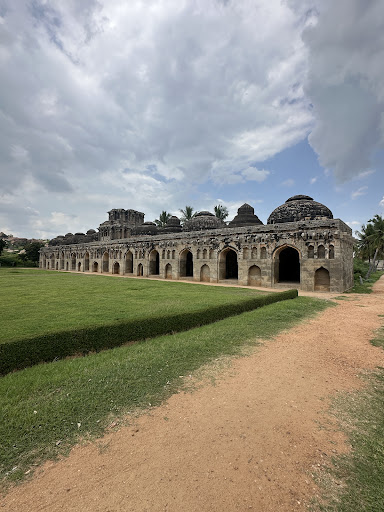
The Elephant Stable in Hampi is an impressive structure that was used to provide shelter for the royal elephants of the Vijayanagara Empire. The elephant stable is located in the area that lies just outside the Zenana Enclosure.
It is one of the very few structures that have not suffered extensive damage during the Mughal attack on Hampi that led to the downfall of the Vijayanagara Empire in 1565 A.D. The ancient stable is a major attraction among the tourists even today. Quick Facts Timing: 8:30 AM to 5:30 PM on all days of the week Entry Fee for Indians: INR 10.00 Entry Fee for Foreigners: INR 250.00 Entry Fee for Children: Free for Children under 15 years of age Photography: Allowed (no extra charges levied) Visit Duration: Around 1 hour Best time to visit: From November to February History of Elephant Stable, Hampi The elephant stable was constructed in the 15th century, during the reign of the Vijayanagara Empire. As the name indicates, the stable was constructed to house the royal elephants of the Vijayanagara Empire.
The elaborate structure indicates the importance attached to the royal elephants during those days. It also suggests towards the amazing craftsmanship of the artisans of that era.
Impressive Architecture of Elephant Stable, Hampi The elephant stable in Hampi is one of the finest examples of Indo-Islamic style of architecture. Though most of the structures and monuments in Hampi were built using the Vijayanagara style of architecture, a few structures display the Indo-Islamic style as well.
The elephant stable is a prominent building in Hampi that displays this beautiful architectural style.
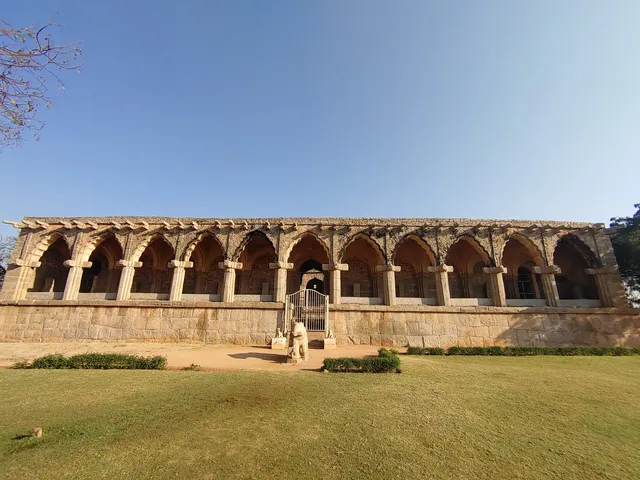
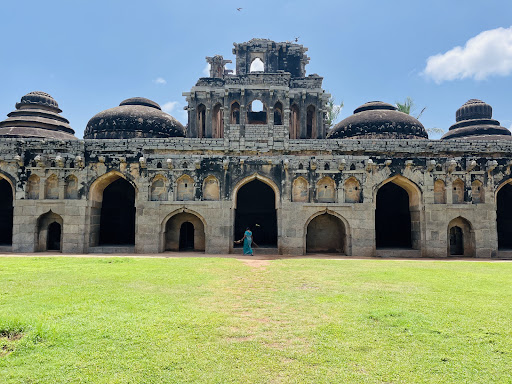
The elephant stable is a long building with a rectangular shape. The building has a row of eleven huge domed chambers. Each chamber is large enough to accommodate two elephants at a time. The domed chambers are interconnected with large arched openings.
The walls between the arches have small doorways. There is no sign to indicate that the chambers ever had any doors in the doorways.
Every chamber contains a small opening at the rear side. It is believed that this opening was used by the mahouts to enter and exit the chambers.
The building also contains a concealed staircase that leads one to the roof of the building. The chambers of the building have high ceilings.
The central chamber contains a metal hook embedded in the ceiling. This hook was most probably used to tie the elephants during the days of the Vijayanagara Empire. The hook could also have been used as a pulley by the mahout to set the howdah on the back of the elephants.
Uniqueness of domes in Elephant Stable, Hampi The uniqueness about the elephant stable is that it has a distinct central dome. The central dome is the largest and most decorated among the 11 domes of the building. The design of the central dome represents the architectural style found in the temples of Hampi.
The other 10 domes represent the Islamic style of architecture. The domes of the building were designed in a variety of shapes, such as, octagonal, circular, ribbed, drum-shaped and fluted. All the domes possess a symmetric layout. Each of the domes was decorated with ornate plaster on the interior as well as the exterior.
Present Condition of the Elephant Stable, Hampi The elephant stable is among one of the few least destroyed buildings in Hampi. The wear and tear of time and weather has faded and weakened the building to an extent. However, it is still in a firm condition, more than 600 years after it was constructed.
The plaster of the building has fallen off at some places. The central dome is not as well preserved as the other domes. Yet, the stable stands as one of the most remarkable structures in Hampi and attracts scores of visitors on a daily basis. It is one of the monuments that are preserved by the Archaeological...
Read moreThe Elephant Stable in Hampi is an impressive structure that was used to provide shelter for the royal elephants of the Vijayanagara Empire. The elephant stable is located in the area that lies just outside the Zenana Enclosure. It is one of the very few structures that have not suffered extensive damage during the Mughal attack on Hampi that led to the downfall of the Vijayanagara Empire in 1565 A.D. The ancient stable is a major attraction among the tourists even today. Quick Facts Timing: 8:30 AM to 5:30 PM on all days of the week Entry Fee for Indians: INR 10.00 Entry Fee for Foreigners: INR 250.00 Entry Fee for Children: Free for Children under 15 years of age Photography: Allowed (no extra charges levied) Visit Duration: Around 1 hour Best time to visit: From November to February History of Elephant Stable, Hampi The elephant stable was constructed in the 15th century, during the reign of the Vijayanagara Empire. As the name indicates, the stable was constructed to house the royal elephants of the Vijayanagara Empire.
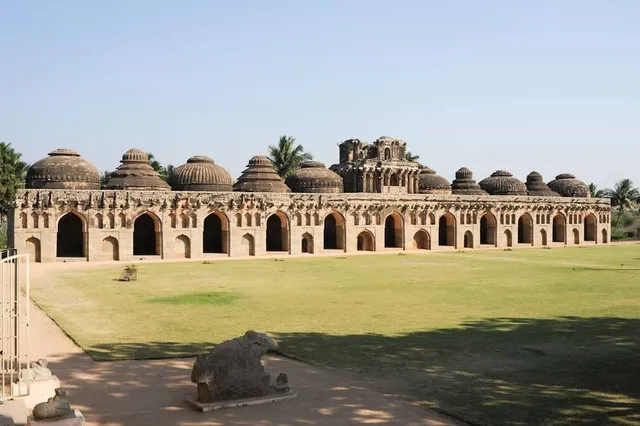
The elaborate structure indicates the importance attached to the royal elephants during those days. It also suggests towards the amazing craftsmanship of the artisans of that era. Impressive Architecture of Elephant Stable, Hampi The elephant stable in Hampi is one of the finest examples of Indo-Islamic style of architecture. Though most of the structures and monuments in Hampi were built using the Vijayanagara style of architecture, a few structures display the Indo-Islamic style as well.
The elephant stable is a prominent building in Hampi that displays this beautiful architectural style.
The elephant stable is a long building with a rectangular shape. The building has a row of eleven huge domed chambers. Each chamber is large enough to accommodate two elephants at a time. The domed chambers are interconnected with large arched openings.
The walls between the arches have small doorways. There is no sign to indicate that the chambers ever had any doors in the doorways. Every chamber contains a small opening at the rear side. It is believed that this opening was used by the mahouts to enter and exit the chambers.
The building also contains a concealed staircase that leads one to the roof of the building. The chambers of the building have high ceilings.
The central chamber contains a metal hook embedded in the ceiling. This hook was most probably used to tie the elephants during the days of the Vijayanagara Empire. The hook could also have been used as a pulley by the mahout to set the howdah on the back of the elephants.
Uniqueness of domes in Elephant Stable, Hampi The uniqueness about the elephant stable is that it has a distinct central dome. The central dome is the largest and most decorated among the 11 domes of the building. The design of the central dome represents the architectural style found in the temples of Hampi.
The other 10 domes represent the Islamic style of architecture. The domes of the building were designed in a variety of shapes, such as, octagonal, circular, ribbed, drum-shaped and fluted. All the domes possess a symmetric layout. Each of the domes was decorated with ornate plaster on the interior as well as the exterior.
Present Condition of the Elephant Stable, Hampi The elephant stable is among one of the few least destroyed buildings in Hampi. The wear and tear of time and weather has faded and weakened the building to an extent. However, it is still in a firm condition, more than 600 years after it was constructed.
The plaster of the building has fallen off at some places. The central dome is not as well preserved as the other domes. Yet, the stable stands as one of the most remarkable structures in Hampi and attracts scores of visitors on a daily basis. It is one of the monuments that are preserved by the Archaeological...
Read moreElephant Stables - Hampi
The Elephant Stables in Hampi, Karnataka, is a significant architectural structure that reflects the grandeur of the Vijayanagara Empire. This historical monument was used to house the royal elephants and is a key attraction within the Hampi complex.
Key Points:
Location: Situated in the Royal Enclosure area of Hampi, Karnataka, India.
Historical Context: Built during the 15th century, under the reign of the Vijayanagara Empire, specifically during the time of King Krishnadevaraya. The structure demonstrates the importance of elephants in the royal household, both for ceremonial purposes and as a symbol of power.
Architectural Design: The Elephant Stables is an elongated building, approximately 87 meters long, featuring a series of interconnected chambers. It comprises 11 domed chambers, each designed to accommodate an elephant. The central chamber is larger and more ornate, indicating its special significance, possibly used for the royal elephant or ceremonial purposes.
Architectural Style: The design is an excellent blend of Indo-Islamic architecture, reflecting the syncretic culture of the Vijayanagara Empire. The domes exhibit various shapes, including circular, ribbed, and octagonal, adding to the aesthetic diversity of the structure. Arched entrances to each chamber are a distinctive feature, adorned with intricate carvings and decorative elements.
Materials Used: The stables are constructed primarily from stone and mortar, with the exterior decorated with intricate carvings and patterns.
Purpose and Function: The primary function was to house and shelter the royal elephants of the Vijayanagara Empire. It also served as a symbol of the empire's wealth and power, as elephants were considered royal animals and were integral to the military and ceremonial activities.
Preservation and Maintenance: The Elephant Stables are well-preserved and maintained by the Archaeological Survey of India (ASI), ensuring that the structure remains intact for future generations. Conservation efforts focus on maintaining the stability of the structure and preserving the intricate carvings and architectural details.
Tourist Attraction: The Elephant Stables is a significant tourist attraction in Hampi, drawing visitors fascinated by its architectural beauty and historical significance. It provides insight into the daily life and grandeur of the Vijayanagara Empire, contributing to Hampi's status as a UNESCO World Heritage Site.
Summary
The Elephant Stables in Hampi, Karnataka, is a notable historical structure built in the 15th century during the Vijayanagara Empire. Located in the Royal Enclosure, it comprises 11 domed chambers designed to house royal elephants. The architecture blends Indo-Islamic styles, reflecting the empire's syncretic culture. Constructed from stone and mortar with intricate carvings, the stables symbolise the wealth and power of the Vijayanagara rulers. Preserved by the Archaeological Survey of India, the Elephant Stables are a significant tourist attraction, showcasing the grandeur and architectural brilliance of the...
Read more