The Hazaara Ramachandra Temple and Pasupari Bazaar are among the most notable landmarks of Hampi, reflecting both the architectural grandeur and cultural vibrancy of the Vijayanagara Empire. These structures are integral to understanding the historical, religious, and cultural heritage of this iconic site.
The Hazaara Ramachandra Temple, located adjacent to the royal palace of Harihara, stands as a testament to the artistry and devotion of the Vijayanagara period. The name "Hazaara," meaning "thousand," is derived from the temple's location within a courtyard that was part of the palace complex. This courtyard is adorned with numerous relief sculptures depicting scenes from the Ramayana, thus earning the temple its name. These detailed depictions narrate episodes from the great Hindu epic, emphasizing the centrality of the Ramayana in the cultural fabric of the Vijayanagara Empire.
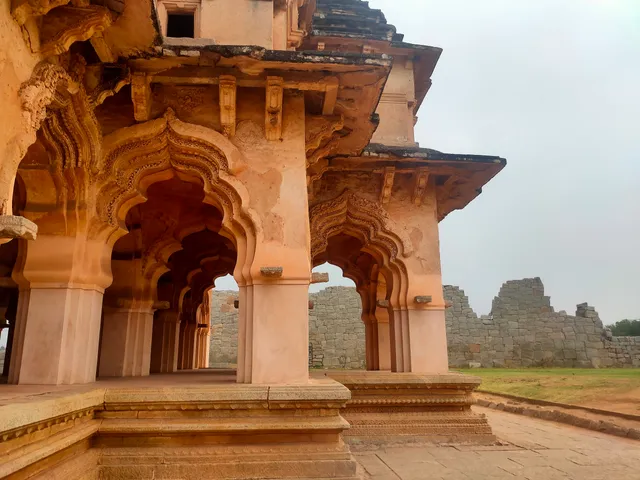
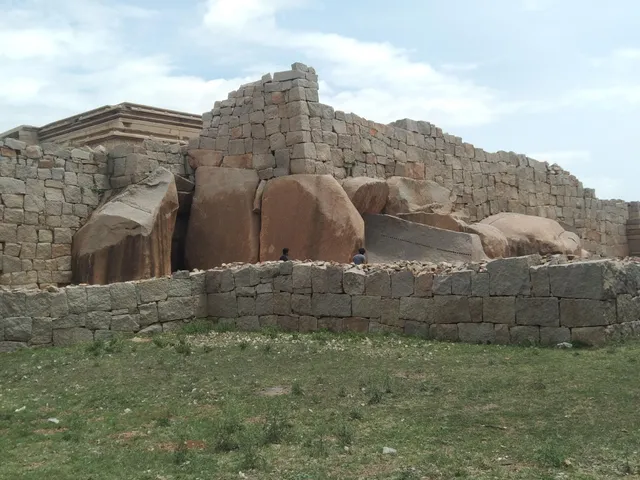
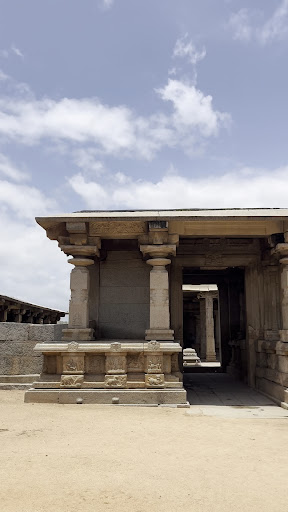
Architecturally, the temple is an exemplary representation of the Vijayanagara style. The east-facing temple has a classic layout consisting of a garbhagriha (sanctum sanctorum), antarala (vestibule), and a navaranga (hall) with three entrances, providing a sense of openness and accessibility. A spacious pillared porch, known as the gudha mandapa, leads into the temple, inviting devotees and visitors alike to experience its spiritual significance. The temple is encased within an enclosure wall, with gateways to the east and north, and an additional passageway at the south, ensuring the sanctity and security of the sacred space.
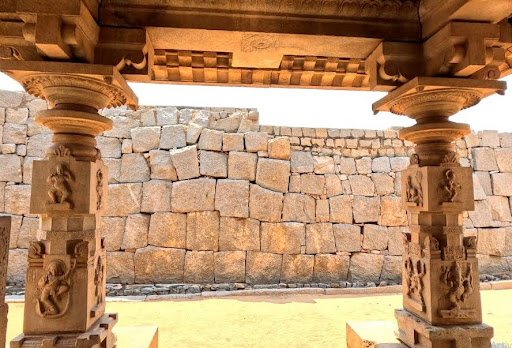
Dating back to the 14th and 15th centuries, the Hazaara Ramachandra Temple is renowned for its exquisite wall friezes, which not only depict the Ramayana but also include scenes from the Bhagavata, another important Hindu text. The intricate craftsmanship on the temple walls provides valuable insights into the art and cultural expressions of the period. The four chitrakhanda pillars in the hall are particularly noteworthy for their polished black stone, meticulously sculpted with detailed imagery. These pillars stand as symbols of the masterful stonework that was characteristic of Vijayanagara architecture. Additionally, the temple complex houses a separate shrine for Devi and several pillared mandapas located at the north-east, south, and west corners, further enhancing the temple's architectural significance.
One of the unique features of the Hazaara Ramachandra Temple is its royal connection. The temple had a separate exit pathway specifically designed for the royal family, which is indicative of the importance of the temple within the palace complex. This feature highlights the intersection of religion and royalty in Vijayanagara society, where temples played a central role in statecraft and governance.
Just outside the temple, to the eastern side, lies the Hazaara Ramachandra Bazaar, a bustling market area that measures nearly 930 meters in length. The market is an essential element of the Vijayanagara heritage, known for its significance as both a commercial hub and a cultural space. The street, known in inscriptions as Kramuka-pamapana vidhi or Pedda Angadi vidhi, was the primary marketplace of Vijayanagara. It was not only the site of daily commerce but also hosted the weekly Friday market, where traders and artisans would gather to sell their goods.
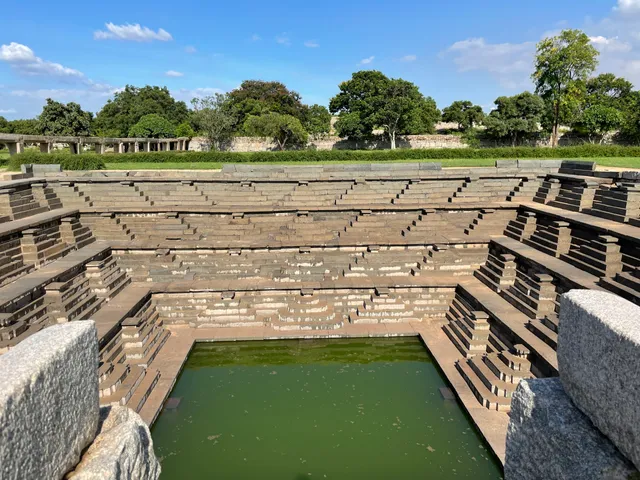
The market is lined with smaller shrines, tanks, and mandapas, which reflect the multifaceted nature of Vijayanagara urban planning. These structures were designed to accommodate both religious and commercial activities, underscoring the city’s holistic approach to urban life. The integration of religious and economic spaces within the same locale highlights the cultural ethos of the Vijayanagara Empire, where spirituality and commerce were deeply intertwined.
One of the important landmarks on the left side of the street is the temple dedicated to Goddess Durga, locally known as Pattanad Vellamma. This temple was especially significant during the Mahanavami festivals, when the Vijayanagara rulers would engage in elaborate worship of the...
Read moreThe Hazara Rama Temple in Hampi, Karnataka, is a remarkable and historically significant temple that showcases the artistic excellence of the Vijayanagara Empire.
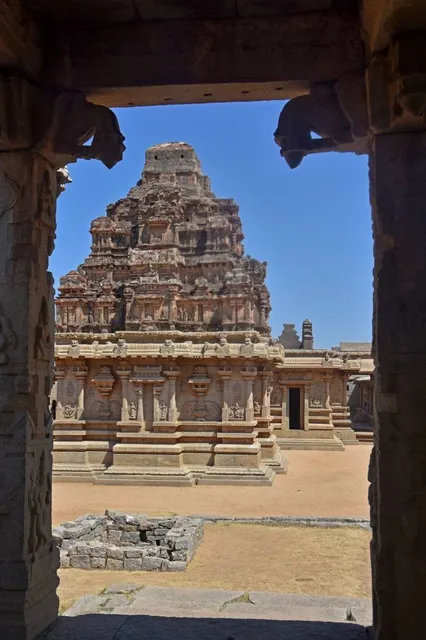
The Hazara Rama Temple, meaning "Temple of a Thousand Ramas," is dedicated to Lord Rama, an incarnation of Lord Vishnu. It was built in the 15th century under the patronage of the Vijayanagara rulers and served as a private temple for the royal family.
One of the unique aspects of the Hazara Rama Temple is its stunning exterior walls adorned with intricately carved bas-reliefs. These carvings depict scenes from the Ramayana, showcasing the epic story of Lord Rama. Visitors can witness various episodes, including Rama's birth, his journey, and the epic battle with the demon king Ravana.
The temple's name, Hazara Rama, is derived from the multitude of Rama sculptures that embellish the walls, providing a visual narrative of the Ramayana. The exquisite carvings, attention to detail, and the narrative quality of the artwork make it a remarkable sight for art and history enthusiasts.
Upon entering the temple complex, visitors are greeted by a pillared hall known as the Mahamandapa. The pillars are intricately carved, featuring various gods, goddesses, and mythological creatures. The craftsmanship and artistry of these pillars are truly impressive.
As visitors explore the inner sanctum of the Hazara Rama Temple, they will discover beautifully carved sculptures of deities, including Lord Rama, Sita, Lakshmana, and Hanuman. The main shrine, housing the idol of Lord Rama, exudes a spiritual ambiance, inviting devotees to offer their prayers and seek blessings.
The Hazara Rama Temple is not only a place of worship but also a treasure trove of historical and cultural significance. The temple provides valuable insights into the religious practices and the patronage of the Vijayanagara Empire. It offers a glimpse into the royal life and the reverence for Lord Rama that prevailed during that era.
The temple complex is surrounded by well-maintained gardens, enhancing the overall ambiance and providing a peaceful retreat for visitors. The tranquility of the surroundings, combined with the architectural splendor, creates a serene atmosphere that invites contemplation and reflection.
It's worth noting that the Hazara Rama Temple is a protected monument, and certain areas may have restricted access or require permission for photography. As with any historical site, it's important to respect the rules and regulations set by the authorities to ensure the preservation of this cultural heritage.
the Hazara Rama Temple in Hampi is a magnificent testament to the artistic and architectural brilliance of the Vijayanagara Empire. Its intricately carved bas-reliefs, captivating sculptures, and serene surroundings make it a must-visit destination for history lovers, art enthusiasts, and...
Read moreThe Hazara Rama temple, Hampi
The Hazara Rama temple, also known as Ramachandra temple, is located at the center of Royal Enclosure in Hampi - the glorious capital of the Vijaynagar Empire, in the state of Karnataka. This temple was dedicated to Lord Rama an avatar of Vishnu. It was the ceremonial temple for the royal family. The temple was built in 15th Century by the emperor Devaraya I. The term Hazara Rama literally means a thousand Rama and refers to the large number of Ramayana panels depicted on the walls of the temple. This ruined temple complex is well known for its thousands of carvings and inscriptions, its elaborate frescoes depicting Hindu theosophy and its sprawling courtyard laid with gardens
The temple was originally built as a simple structure within a rectangular complex. It consisted of only a sanctum, a pillared hall and an ardha-mandapa. Later the temple structure was renovated to add an open porch and beautiful pillars. The pillared hall has unique black stone pillars which are raised on a stone platform at the center of the hall. The interior of the temple has richly ornately columns. An empty pedestal with three holes signifies that the temple once had idols of Rama, Lakshmana and Sita.
Hazara Rama Temple is the only temple in Hampi which has a well carved compound wall. High compound walls enclose the entire complex of the temple with the main entrance located at the east. To the south of the temple there are small doorways which lead to the durbar area. The exterior walls have been decorated with bas-relief which narrate the entire story of Ramayana. This depicts the episodes of birth of Rama, marriage, his exile into the forest, the abduction of Sita and the ultimate fight between Rama and Ravana. The temple's outer walls portray the Hindu Mahanavami (Dasara) and the spring Holi festival procession and celebrations in parallel bands of artwork. The lowest band shows marching elephants, above it are horses led by horsemen, then soldiers celebrated by the public, then dancers and musicians, with a top layer depicting a boisterous procession of the general public. The depiction mirrors the description of festivals and processions in surviving memoirs of Persians and Portuguese who visited the...
Read more