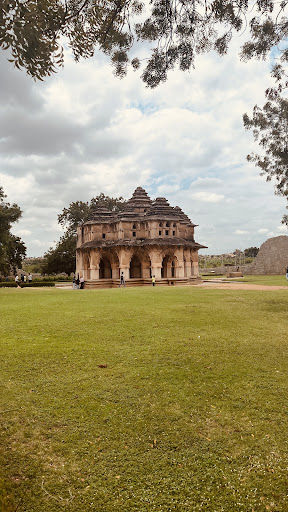
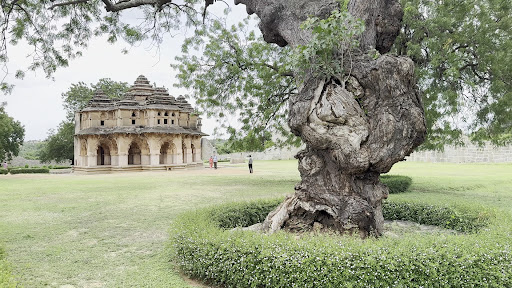
Lotus Mahal, Hampi – Visit on 28 May 2025
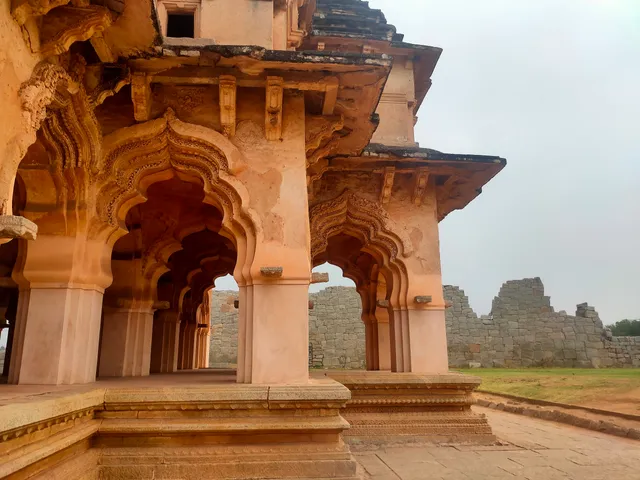
The Lotus Mahal in Hampi is undeniably one of the most beautiful and iconic monuments in the region. Architecturally stunning, it showcases an exquisite blend of Indo-Islamic style with its arched windows, domed structures, and intricate carvings that resemble a blooming lotus. Surrounded by the lush remains of the Zenana Enclosure, it sits gracefully amid well-maintained gardens and evokes a deep sense of history and wonder.
From a visual standpoint, this site is a photographer’s paradise. Every corner of the Lotus Mahal is photogenic — whether it's the symmetrical facade, the detailed carvings, or the soft light that hits the monument at different times of the day, offering breathtaking compositions for both amateur and professional photographers. The serenity of the surroundings adds to the appeal, making it an ideal spot for those who enjoy architecture, history, or simply a quiet moment amidst ancient grandeur.
Unfortunately, while the site itself left a positive impression, the behavior of the security staff seriously affected the overall experience of the visit. As a tourist, one does not only visit a monument to admire its beauty but also expects to be treated with basic respect and courtesy. Regrettably, the security guards stationed at the Lotus Mahal did not meet even the minimum standards of professional conduct.
The security personnel were extremely arrogant and displayed a manner of speaking that was rude, condescending, and completely uncalled for. They spoke to visitors, including myself, as if we were unwelcome intruders rather than guests coming to appreciate and support our shared heritage. Their tone and attitude suggested a sense of authority that bordered on hostility, creating an uncomfortable and disappointing atmosphere.
What was most disturbing was the way they seemed to forget that their salaries are, in part, supported by the taxes and fees paid by tourists. Their job is to protect the monument, of course, but equally important is how they interact with the public. As representatives of the site and the state, they should uphold standards of hospitality and professionalism — especially at a site that attracts both domestic and international tourists. Sadly, the current staff seemed completely unaware of this responsibility.
I strongly urge the authorities and management of the Hampi heritage sites to invest in proper training for their staff, especially security personnel. It is important that they are educated not only about the site’s history and rules but also about basic communication skills and etiquette. A little courtesy goes a long way in ensuring that visitors leave with fond memories rather than frustration and regret.
In conclusion, while the Lotus Mahal is a visual and cultural treasure that deserves to be visited and appreciated, the behavior of the security staff on duty during my visit on 28 May 2025 left a lasting negative impression. I hope the concerned authorities will take note of such feedback and take steps to improve the experience for future visitors. It would be unfortunate if such a majestic and historically important location were to be overshadowed by the misconduct of those tasked with...
Read moreLotus Mahal
The Lotus Mahal, also known as Kamal Mahal or Chitrangi Mahal, is an architectural marvel located within the Royal Enclosure of Hampi, a UNESCO World Heritage Site in Karnataka, India. It stands out for its distinctive Indo-Islamic architectural style and historical significance.
Key Points:
Location: Situated in Hampi, Karnataka, India, within the Zenana Enclosure of the Vijayanagara Empire's royal complex.
Historical Context: Built during the Vijayanagara Empire (14th to 17th centuries), one of the most prosperous and powerful kingdoms in South India. Hampi was the capital of the Vijayanagara Empire, and the Lotus Mahal was an integral part of the royal complex.
Architectural Style: The Lotus Mahal uniquely blends Hindu and Islamic architectural elements. The structure is noted for its lotus-like appearance, with arched windows and elaborate multi-layered roofs that resemble the petals of a lotus flower. Features symmetrical, geometrical proportions and intricate carvings.
Design and Structure: Built using a combination of stone and plaster, the Lotus Mahal has a two-story structure. The ground floor features arched openings supported by slender, ornate pillars, while the upper floor has windows with delicate latticework. The central dome is supported by four smaller domes, each intricately carved, enhancing the overall aesthetic appeal.
Function and Use: The exact purpose of the Lotus Mahal is not definitively known, but it is believed to have served as a social and recreational pavilion for the royal women. It might have been used for meetings, leisure activities, and as a place of relaxation for the queen and her attendants.
Cooling System: The Lotus Mahal is known for its ingenious cooling system, which includes water channels running through the structure to keep it cool in the hot climate of Hampi.
Preservation and Significance: The Lotus Mahal, along with the rest of Hampi, has been recognised as a UNESCO World Heritage Site, highlighting its cultural and historical importance. Efforts by the Archaeological Survey of India (ASI) ensure the ongoing preservation and maintenance of this historic monument.
Tourist Attraction: The Lotus Mahal is one of the key attractions in Hampi, drawing tourists worldwide to admire its architectural beauty and historical significance. It stands as a testament to the advanced engineering and artistic capabilities of the Vijayanagara period.
Summary
The Lotus Mahal in Hampi, Karnataka, is a striking example of Indo-Islamic architecture from the Vijayanagara Empire. Known for its lotus-like design and intricate carvings, the two-story structure was a social and recreational pavilion within the royal complex. Recognised as a UNESCO World Heritage Site, the Lotus Mahal's historical significance, architectural beauty, and innovative features make it a key attraction in Hampi, reflecting the grandeur of the...
Read moreThe Lotus Mahal, also known as the Kamal Mahal or Chitrangi Mahal, is a distinctive and beautifully designed architectural marvel located in the historic ruins of Hampi, Karnataka, India. Here's a description of the Lotus Mahal:
Architecture: The Lotus Mahal is a two-story ornate structure that stands out due to its unique and elegant architecture. It's a perfect blend of Hindu and Islamic architectural styles, showcasing the architectural diversity of the Vijayanagara Empire.
Shape: The most striking feature of the Lotus Mahal is its lotus-shaped structure. The domes of the building resemble the petals of a lotus flower, giving it its name.
Archways and Windows: The building is adorned with numerous archways and windows, which are characterized by their Islamic-style arches and jali (intricately carved stone lattice) work. These features allow for natural ventilation and provide a pleasant cooling effect inside the building.
Use: The exact purpose of the Lotus Mahal remains a subject of debate among historians. Some believe it served as a pleasure palace for the royal women of the Vijayanagara court, while others suggest it may have been a pavilion for cultural and recreational activities.
Material: The construction of the Lotus Mahal primarily involves finely cut and polished stone blocks, reflecting the skilled craftsmanship of the Vijayanagara period.
Color: The building's stone is pale in color, adding to its aesthetic appeal and creating a pleasing contrast with the lush greenery of the surrounding gardens.
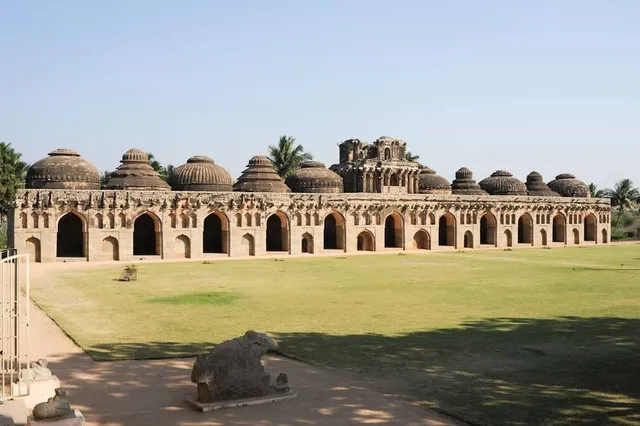
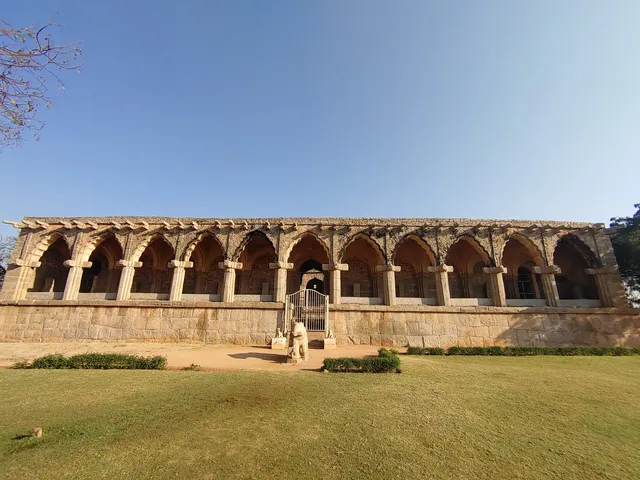
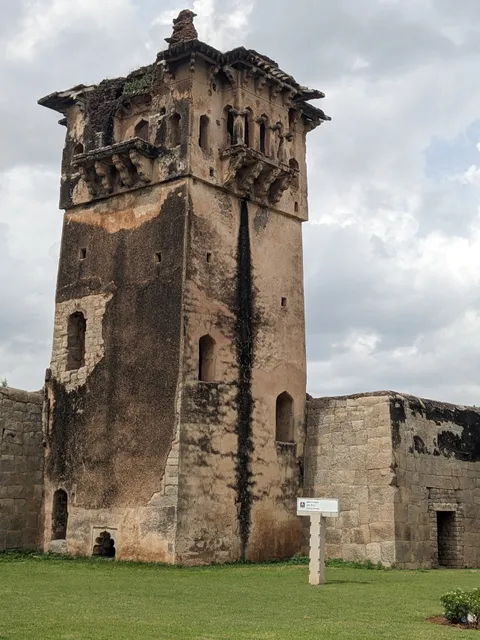
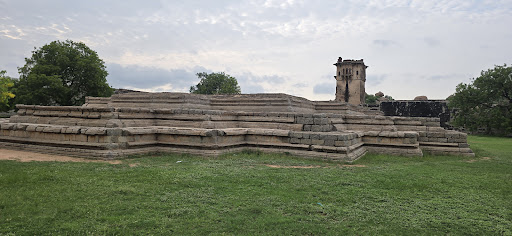
Location: The Lotus Mahal is situated within the Zenana Enclosure, a walled area believed to have been reserved for royal women and their attendants. It is in close proximity to other historic structures in Hampi, making it a significant part of the UNESCO World Heritage Site.
Preservation: Efforts have been made to preserve the Lotus Mahal and other monuments in the Hampi complex to ensure that future generations can appreciate the architectural and historical heritage of the site.
Overall, the Lotus Mahal in Hampi is a testament to the architectural brilliance and artistic aesthetics of the Vijayanagara Empire. Its unique design and intricate details continue to fascinate tourists and historians alike, offering a glimpse into the opulence and culture of...
Read more