HTML SitemapExplore

Jain temple complex — Attraction in Karnataka

Name
Jain temple complex
Description
Nearby attractions
Hoysaleshwara Temple
Halebeedu, Karnataka 573121, India
Dwarasamudra
Karnataka 573121
Nearby restaurants
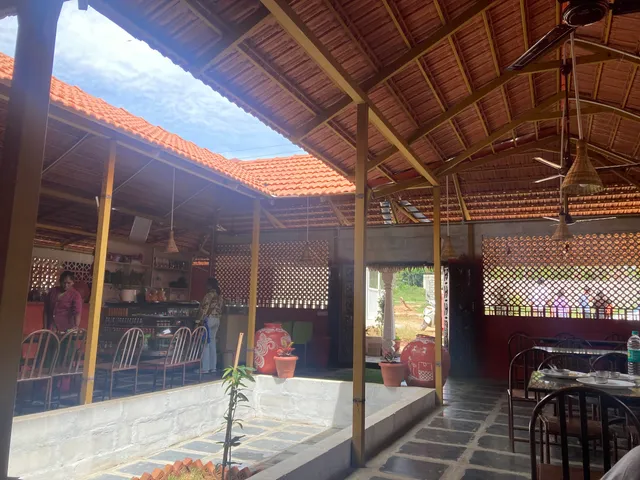
MANGO TREE VEG RESTAURANT &HOTEL
No 01, Hoysla Temple Yard, Main Road, Nera, Halebeedu, Karnataka 573121, India
ITIHAKALA RESTAURANT (Pure Veg) HALEBIDU / BELUR
Itihakala, 1 km from Hoysaleshwara Temple Hagare, Road, Halebeedu, Karnataka 573121, India
Sri Hoysala Deluxe Hotel Veg
SH-21, Halebeedu Main Road, Belur Belur, Karnataka 573121, India
Hotel Nag (Pure Veg)
6X7V+JMF, Halebeedu, Karnataka 573121, India
Nearby hotels
Related posts
Keywords
Jain temple complex tourism.Jain temple complex hotels.Jain temple complex bed and breakfast. flights to Jain temple complex.Jain temple complex attractions.Jain temple complex restaurants.Jain temple complex travel.Jain temple complex travel guide.Jain temple complex travel blog.Jain temple complex pictures.Jain temple complex photos.Jain temple complex travel tips.Jain temple complex maps.Jain temple complex things to do.
Jain temple complex things to do, attractions, restaurants, events info and trip planning
Jain temple complex
IndiaKarnatakaJain temple complex

Basic Info

Jain temple complex

6X5W+F2Q, Kedareshwara Temple Rd, Halebeedu, Karnataka 573121, India
4.7(60)
Open 24 hours
Save
spot

Ratings & Description

Info

Cultural
Scenic
"family friendly"
"accessibility"
attractions: Hoysaleshwara Temple, Dwarasamudra, restaurants: MANGO TREE VEG RESTAURANT &HOTEL, ITIHAKALA RESTAURANT (Pure Veg) HALEBIDU / BELUR, Sri Hoysala Deluxe Hotel Veg, Hotel Nag (Pure Veg)
logoLearn more insights from Wanderboat AI.

Plan your stay

hotel
Pet-friendly Hotels in Karnataka
Find a cozy hotel nearby and make it a full experience.
hotel
Affordable Hotels in Karnataka
Find a cozy hotel nearby and make it a full experience.
hotel
The Coolest Hotels You Haven't Heard Of (Yet)
Find a cozy hotel nearby and make it a full experience.
hotel
Trending Stays Worth the Hype in Karnataka
Find a cozy hotel nearby and make it a full experience.

Reviews

Nearby attractions of Jain temple complex

Hoysaleshwara Temple

Dwarasamudra

Hoysaleshwara Temple

Hoysaleshwara Temple

4.8

(5.8K)

Open 24 hours
Click for details
Dwarasamudra

Dwarasamudra

4.7

(95)

Open 24 hours
Click for details

Nearby restaurants of Jain temple complex

MANGO TREE VEG RESTAURANT &HOTEL

ITIHAKALA RESTAURANT (Pure Veg) HALEBIDU / BELUR

Sri Hoysala Deluxe Hotel Veg

Hotel Nag (Pure Veg)

MANGO TREE VEG RESTAURANT &HOTEL

MANGO TREE VEG RESTAURANT &HOTEL

4.5

(62)

Click for details
ITIHAKALA RESTAURANT (Pure Veg) HALEBIDU / BELUR

ITIHAKALA RESTAURANT (Pure Veg) HALEBIDU / BELUR

4.5

(1.0K)

Click for details
Sri Hoysala Deluxe Hotel Veg

Sri Hoysala Deluxe Hotel Veg

3.7

(12)

Click for details
Hotel Nag (Pure Veg)

Hotel Nag (Pure Veg)

5.0

(4)

Click for details
Get the Appoverlay
Get the AppOne tap to find yournext favorite spots!
Wanderboat LogoWanderboat

Your everyday Al companion for getaway ideas

CompanyAbout Us
InformationAI Trip PlannerSitemap
SocialXInstagramTiktokLinkedin
LegalTerms of ServicePrivacy Policy

Get the app

© 2025 Wanderboat. All rights reserved.

Reviews of Jain temple complex

4.7
(60)
avatar
5.0
4y

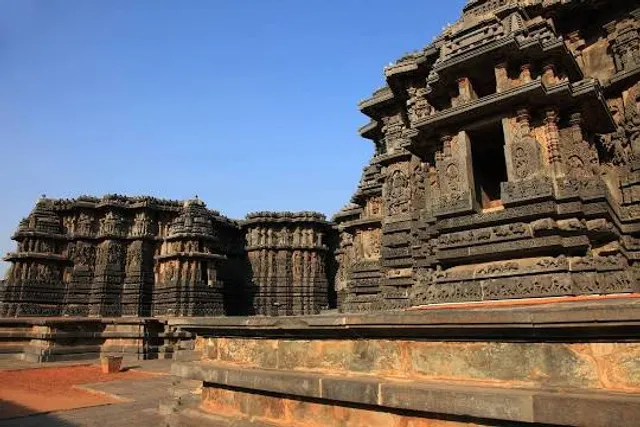
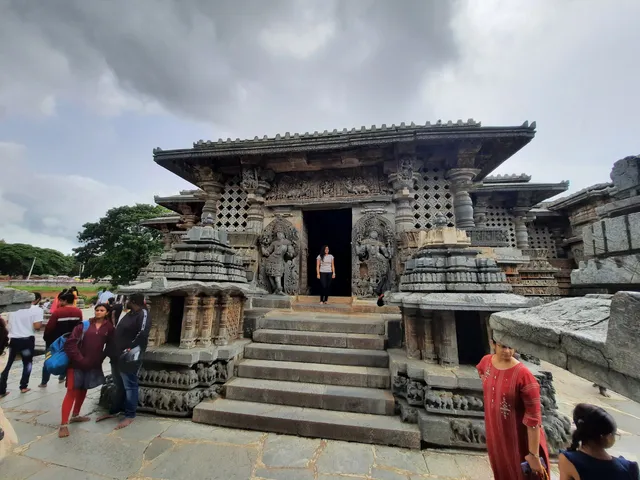
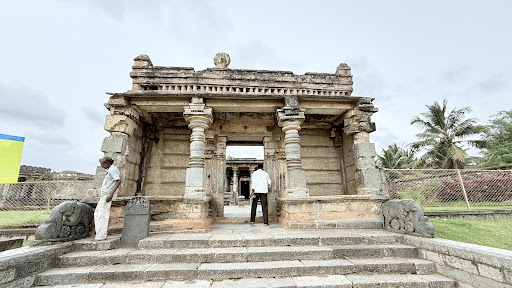
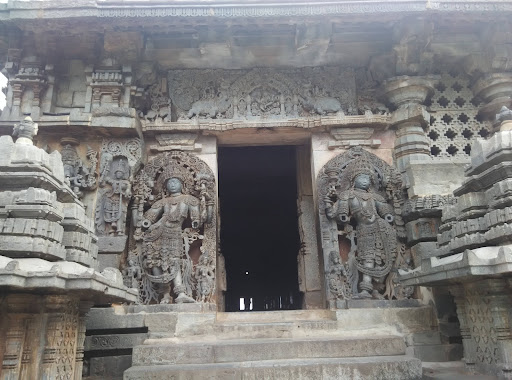
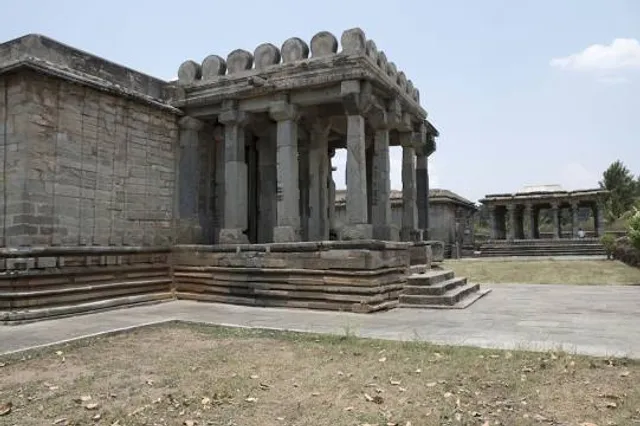
Jain Basadi complex in Halebidu, Hassan district, Karnataka consists of three Jain Basadis (Basti or temples) dedicated to the Jain Tirthankars Parshvanath, Shantinath and Adinath. The complex is situated near Kedareshwara temple and Dwarasamudra lake. These temples were constructed in the 12th century during the reign of Hoysala Empire along with Kedareshwara temple and Hoysaleswara Temple, and have been proposed to be listed under UNESCO World Heritage Site.

Halebidu was the capital of the Hoysala Empire between the 11th to 14th century CE when Jainism maintained a strong presence in the region. The region was called Dorasamudra or Dwarasamundra during the rule of Hoysala. Bittiga (later became Vishnuvardhana), is considered the greatest ruler of Hoysala kingdom and was a Jain till around 1115 AD, after which he converted to Vaishnavism under the influence of the Hindu saint Ramanujacharya. King Vishnuvardhana's wife Shantala Devi, remained a devout follower of Jainism. These temple were later maintained by Maharaja of Mysore. There are three basadis in this complex.

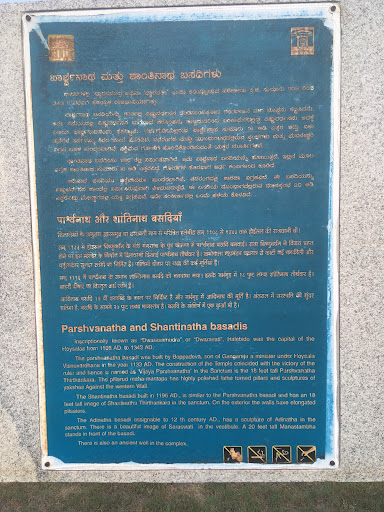
The Parshvanatha Basadi was built by Boppadeva in 1133 A.D. during the reign of King Vishnuvardhana. Boppadeva was the son of the notable Gangaraja, a minister under Hoysala King Vishnuvardhana. The construction of the temple coincided with the victory of Narasimha I as the royal heir to the throne. The deity therefore is called Vijaya Parsvanatha (victorious Parsvanatha). Parshvanatha Basadi is notable for its architecture. This temple is famous for the beautiful navaranga halls and exquisite carvings on the lathe-turned pillars. Along with being rich in sculptures, the temple also features carvings of the life-scenes of Tirthankaras on the ceiling panel of mukhamandapa. There is a famous image of Padmavati with three hooded cobra over her head and with fruits in three hands and a weapon in fourth. The temple also features niches for idols of the 24 tirthankaras

The Shantinatha Basadi was built around 1192 A.D., during the reign of Veera Ballala II.

The Adinatha Basadi is the smallest of the Jain basadis also built in c. 12th century. A monolith of Bahubali which was present inside this temple but is now displayed outside Halebidu museum.

In 1930, the temples along with the town were plundered by Malik Kafur, general of Alauddin Khilji and were destroyed in a period of 16 years during the Siege of Dwarasamudra, and the invasion by Muhammad bin Tughluq was followed shortly after the during the Siege of Dwarasamudra.

🎗️EXCAVATIONS: In 2019, the remains of Jain temple were found near Parshvanatha Basadi. In the excavated structure around ten sculptures were found, these sculptures have been moved to Halebid museum. ASI started constructing a compound wall around the Jain complex but during construction few Jain sculptures were found along with the basement structure of another Jain temple, which too have been moved to the museum. However, the temple structure was damaged due to the use of heavy earthmoving machinery. The remains of a 98 ft × 66 ft Jain temple built in the time of Hoysala dynasty has just been discovered near the Shantinatha Basadi during an excavation in February 2021. Many artefacts and sculptures were discovered in the temple site. A 2 feet Jain Upasaka sculpture was also discovered along with the temple remains.

According to A.Aravazhi, assistant archeologist in Archaeological Survey of India, Halebidu has many Jain temples built during the reign of Hoysala...

   Read more

avatar
5.0
25w

Ancient Sri 1008 Bhagawan Shantinatha Digambara Jaina Basadi, Jinanathapura

This Jain Basadi, located in the quiet village of Jinanathapura near Halebidu, is a stunning and lesser-visited monument of Hoysala-era Jain architecture, believed to have been built in the 12th–13th century by Jain merchants and officials under Hoysala patronage.

🛕 Historical Significance:

Dedicated to Bhagawan Shantinatha, the 16th Tirthankara in Jainism, this temple is built in the Hoysala style with intricate carvings and a detailed, symmetrical layout. It reflects the religious tolerance and cultural inclusiveness of the Hoysalas, who supported not only Shaivism and Vaishnavism but also Jainism.

The temple houses a beautiful black stone idol of Lord Shantinatha, seated in kayotsarga (meditative posture), radiating calm and spiritual strength. The pillars, ceilings, and outer walls are finely sculpted with floral motifs, Jain symbols, and guardian deities.

📌 What to Expect: • A peaceful atmosphere with very few visitors—ideal for quiet meditation or photography. • The temple is usually closed, but locals nearby can help you find the caretaker/key holder who will kindly open the shrine. • Surrounded by nature and a feeling of timeless spirituality.

⏰ Timings: No fixed hours; visit in the morning or before sunset 🎟️ Entry: Free 📍 Location: Jinanathapura, just a few minutes from Halebidu

🙏 Final Thoughts:

This temple is a hidden jewel of Jain heritage. If you’re visiting the Hoysala temples of Halebidu, don’t miss this spiritual and artistic masterpiece. A true reminder of India’s rich...

   Read more
avatar
5.0
2y

Jain Basadi complex in Halebidu, Hassan district consists of three Jain Basadis (Basti or temples) dedicated to the Jain Tirthankars Parshvanatha, Shantinatha and Adinatha. The complex is situated near Kedareshwara temple and Dwarasamudra lake. The temple complex also includes a step well called Hulikere Kalyani.[1]

Jain Basadis of Halebidu

Parshvanatha Basadi Religion Affiliation Jainism Deity Parshvanatha, Shantinatha and Adinatha Festivals Mahavir Jayanti Location Location Hassan, Karnataka, India Geographic coordinates 13°12′31.2″N 75°59′42.4″E Architecture Style Hoysala architecture Creator Vishnuvardhana, Veera Ballala II Date established 12th century Temple(s) 3 UNESCO World Heritage Site Official name: Sacred Ensembles of the Hoysalas Criteria Cultural: (i)(ii)(iv) Designated 2023 (45th session) Reference no. 1670 These temples were constructed in the 12th century during the reign of Hoysala Empire along with Kedareshwara temple and Hoysaleswara Temple have been declared as UNESCO World Heritage Site.[2] Archaeological Survey of India has listed all three basadi in the complex in the list of "Must See" Indian Heritage and are also inscribed as one of the "Adarsh...

   Read more
Page 1 of 7
Previous
Next

Posts

sreekanthnaidu galisreekanthnaidu gali
Ancient Sri 1008 Bhagawan Shantinatha Digambara Jaina Basadi, Jinanathapura This Jain Basadi, located in the quiet village of Jinanathapura near Halebidu, is a stunning and lesser-visited monument of Hoysala-era Jain architecture, believed to have been built in the 12th–13th century by Jain merchants and officials under Hoysala patronage. 🛕 Historical Significance: Dedicated to Bhagawan Shantinatha, the 16th Tirthankara in Jainism, this temple is built in the Hoysala style with intricate carvings and a detailed, symmetrical layout. It reflects the religious tolerance and cultural inclusiveness of the Hoysalas, who supported not only Shaivism and Vaishnavism but also Jainism. The temple houses a beautiful black stone idol of Lord Shantinatha, seated in kayotsarga (meditative posture), radiating calm and spiritual strength. The pillars, ceilings, and outer walls are finely sculpted with floral motifs, Jain symbols, and guardian deities. 📌 What to Expect: • A peaceful atmosphere with very few visitors—ideal for quiet meditation or photography. • The temple is usually closed, but locals nearby can help you find the caretaker/key holder who will kindly open the shrine. • Surrounded by nature and a feeling of timeless spirituality. ⏰ Timings: No fixed hours; visit in the morning or before sunset 🎟️ Entry: Free 📍 Location: Jinanathapura, just a few minutes from Halebidu 🙏 Final Thoughts: This temple is a hidden jewel of Jain heritage. If you’re visiting the Hoysala temples of Halebidu, don’t miss this spiritual and artistic masterpiece. A true reminder of India’s rich multi-faith history.
Vijay ShivdasaniVijay Shivdasani
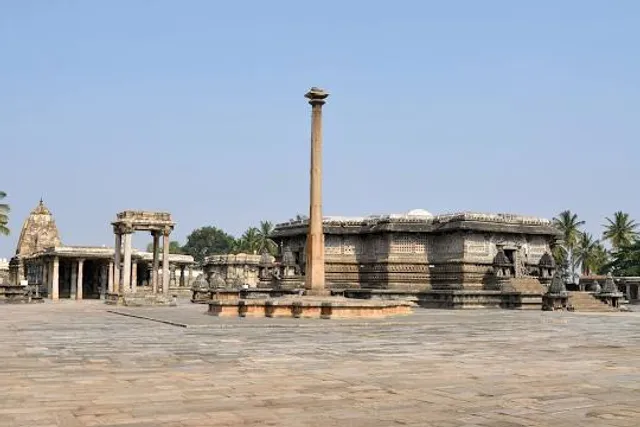
We visited this Jain temple complex in December 2018. There are three Jain Temples (basadis), very near the Kedareswara Temple in Halebeedu, less than half a kilometre away from the Hoysaleshwara Temple. We walked from the Hoysaleshwara temple to the lane where both these temple complexes are located. They are the lesser known temples hence very few tourists come here, and we got a very quiet and peaceful darshan of both. Hoysala King Vishnuvardhana followed the Jain faith before he converted to Vaishnavism, a sect of Hinduism. However his queen, Shantala Devi continued to be a follower of Jainism. These temples were built in the 12th century, during and immediately after their reign. There are three Jain basadis in this temple complex. The largest one is the Parshvanatha Basadi, with an 18 foot monolithic statue of the deity. The Shanthinatha Basadi has an inner sanctum with the 18 foot monolith of the Shanthinatha deity. The Adinatha Basadi is the smallest one with the image of the deity Adinatha and the Hindu goddess Saraswati. The monolith of Bahubali, which was earlier present in this temple, in now displayed outside the Halebeedu museum.
Tapan BhargavaTapan Bhargava
This twelfth century Jain temple built during the Hoysala dynasty’s rule has marvelous carvings along the top of the main building. A number of uncarved blocks of stone also adorn the perimeter of the structure. A unique feature of Thai temple complex is the 20 foot (or so) “Manastambha” located at the north east part of the complex. It is rare to see such a structure, especially one that has been well-preserved. Unfortunately, as with other temples in the area, some of the structure has been defaced with graffiti; one would hope that the Archeological Society of India would erase this and restore the temple at some point. As with other temples around, it would be immensely beneficial to read up on the history and details of the monuments or engage the services of a knowledgeable guide in order to better appreciate it. They close at 6 pm. A word of caution if you are entering the main building: it is dark inside and people often miss a step or two while approaching the statue located at the far end.
See more posts
See more posts
hotel
Find your stay

Pet-friendly Hotels in Karnataka

Find a cozy hotel nearby and make it a full experience.

Ancient Sri 1008 Bhagawan Shantinatha Digambara Jaina Basadi, Jinanathapura This Jain Basadi, located in the quiet village of Jinanathapura near Halebidu, is a stunning and lesser-visited monument of Hoysala-era Jain architecture, believed to have been built in the 12th–13th century by Jain merchants and officials under Hoysala patronage. 🛕 Historical Significance: Dedicated to Bhagawan Shantinatha, the 16th Tirthankara in Jainism, this temple is built in the Hoysala style with intricate carvings and a detailed, symmetrical layout. It reflects the religious tolerance and cultural inclusiveness of the Hoysalas, who supported not only Shaivism and Vaishnavism but also Jainism. The temple houses a beautiful black stone idol of Lord Shantinatha, seated in kayotsarga (meditative posture), radiating calm and spiritual strength. The pillars, ceilings, and outer walls are finely sculpted with floral motifs, Jain symbols, and guardian deities. 📌 What to Expect: • A peaceful atmosphere with very few visitors—ideal for quiet meditation or photography. • The temple is usually closed, but locals nearby can help you find the caretaker/key holder who will kindly open the shrine. • Surrounded by nature and a feeling of timeless spirituality. ⏰ Timings: No fixed hours; visit in the morning or before sunset 🎟️ Entry: Free 📍 Location: Jinanathapura, just a few minutes from Halebidu 🙏 Final Thoughts: This temple is a hidden jewel of Jain heritage. If you’re visiting the Hoysala temples of Halebidu, don’t miss this spiritual and artistic masterpiece. A true reminder of India’s rich multi-faith history.
sreekanthnaidu gali

sreekanthnaidu gali

hotel
Find your stay

Affordable Hotels in Karnataka

Find a cozy hotel nearby and make it a full experience.

Get the Appoverlay
Get the AppOne tap to find yournext favorite spots!
We visited this Jain temple complex in December 2018. There are three Jain Temples (basadis), very near the Kedareswara Temple in Halebeedu, less than half a kilometre away from the Hoysaleshwara Temple. We walked from the Hoysaleshwara temple to the lane where both these temple complexes are located. They are the lesser known temples hence very few tourists come here, and we got a very quiet and peaceful darshan of both. Hoysala King Vishnuvardhana followed the Jain faith before he converted to Vaishnavism, a sect of Hinduism. However his queen, Shantala Devi continued to be a follower of Jainism. These temples were built in the 12th century, during and immediately after their reign. There are three Jain basadis in this temple complex. The largest one is the Parshvanatha Basadi, with an 18 foot monolithic statue of the deity. The Shanthinatha Basadi has an inner sanctum with the 18 foot monolith of the Shanthinatha deity. The Adinatha Basadi is the smallest one with the image of the deity Adinatha and the Hindu goddess Saraswati. The monolith of Bahubali, which was earlier present in this temple, in now displayed outside the Halebeedu museum.
Vijay Shivdasani

Vijay Shivdasani

hotel
Find your stay

The Coolest Hotels You Haven't Heard Of (Yet)

Find a cozy hotel nearby and make it a full experience.

hotel
Find your stay

Trending Stays Worth the Hype in Karnataka

Find a cozy hotel nearby and make it a full experience.

This twelfth century Jain temple built during the Hoysala dynasty’s rule has marvelous carvings along the top of the main building. A number of uncarved blocks of stone also adorn the perimeter of the structure. A unique feature of Thai temple complex is the 20 foot (or so) “Manastambha” located at the north east part of the complex. It is rare to see such a structure, especially one that has been well-preserved. Unfortunately, as with other temples in the area, some of the structure has been defaced with graffiti; one would hope that the Archeological Society of India would erase this and restore the temple at some point. As with other temples around, it would be immensely beneficial to read up on the history and details of the monuments or engage the services of a knowledgeable guide in order to better appreciate it. They close at 6 pm. A word of caution if you are entering the main building: it is dark inside and people often miss a step or two while approaching the statue located at the far end.
Tapan Bhargava

Tapan Bhargava

See more posts
See more posts