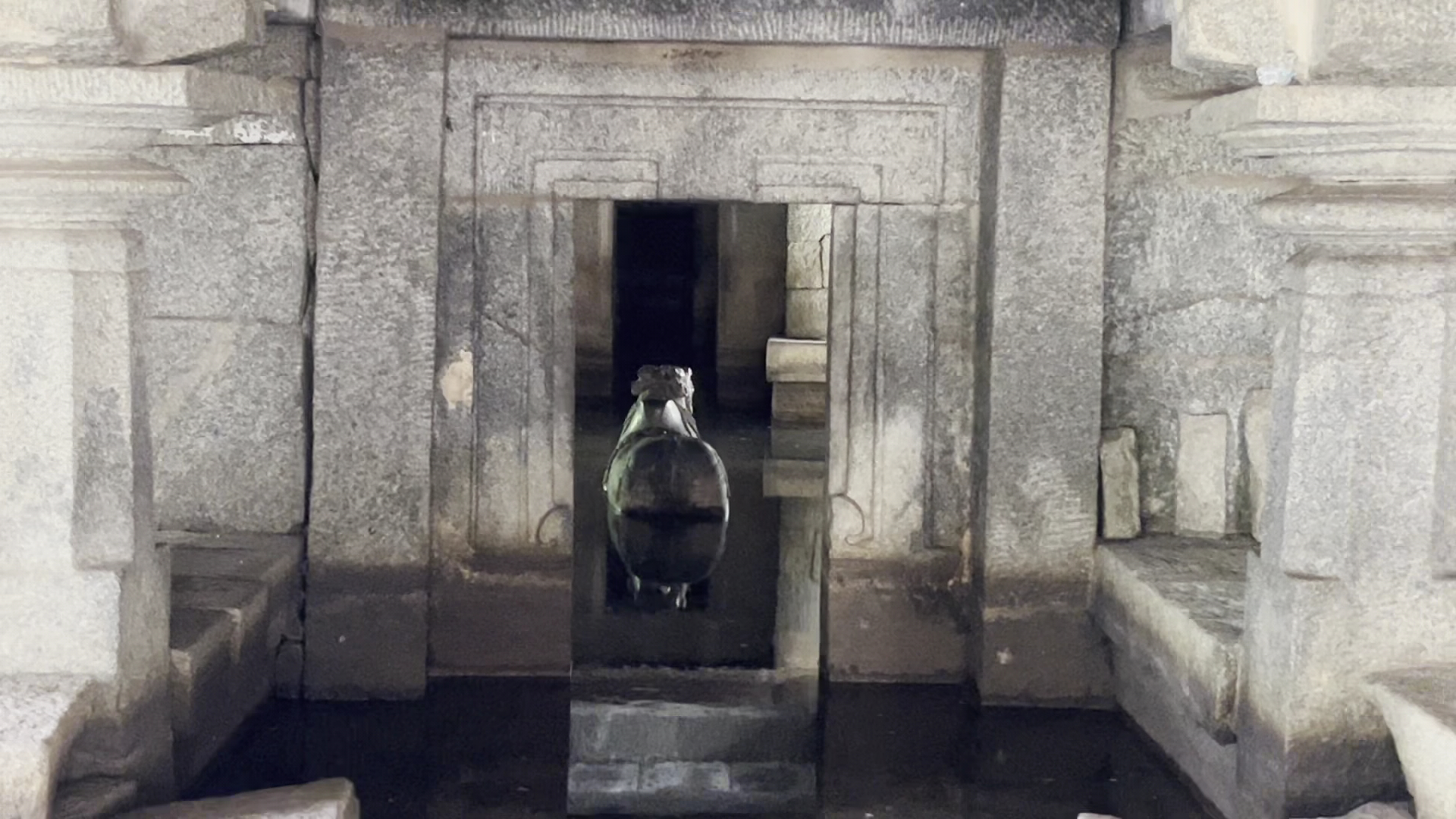
Prasanna Virupaksha temple is one of oldest temples in Hampi. Built during the reign of the Vijayanagara Empire, the temple is located near the main road to Hampi bus stand and close to the Noblemen’s quarters after Chandikesvara temple.
It is one of the popular temples that are visited by tourists on the Hampi trail
The Prasanna Virupaksha temple dates back to the 14th century AD. The temple is dedicated to Prasanna Virupaksha, an avatar of Lord Shiva. The temple stands amidst a beautiful lawn covered in green.
The temple has remained buried for over four hundred years before it was discovered in the 1980’s decade. It is believed that Vijayanagara ruler Krishnadevraya had donated extensively to this temple.
The location of the temple and its proximity to the Noblemen’s quarters indicates that the temple might have been used by the members of the Royal family of Vijayanagara for their private ceremonies.
Why is Prasanna Virupaksha Temple known as the Underground Shiva Temple?
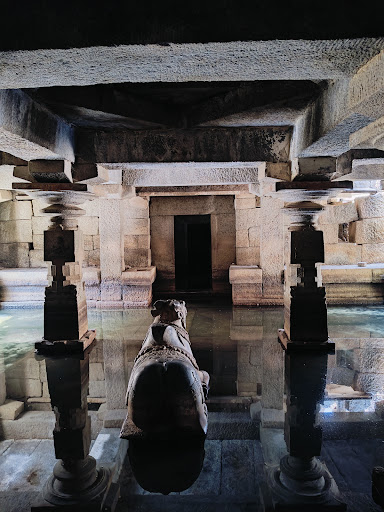
An interesting fact about the Prasanna Virupaksha temple is that it is located a few metres below the ground level. The roof of the temple is at par with the present ground level while the main structure of the temple stands on a low lying area. The reason behind such a unique location for the construction of the temple is not known.
Another thing to note is that the sanctum of the temple remains submerged under stagnant water throughout the year. During the monsoon season, extending from June to August, the water level rises inside the temple and submerges the floor of the maha mantapa and other mantapas.
This restricts the entry of visitors to most parts of the temple during the rainy season. The water inside the temple is considered to be sacred by the people of Hampi and the devotees of Lord Shiva.
Reason behind the water inside the Prasanna Virupaksha Temple, Hampi
While it is a known fact that most portions of the Prasanna Virupaksha temple remains submerged under water for most part of the year, the accurate reason behind it fact is not known.
There are different stories floating in the local circles regarding this uniqueness of the temple. One of the popular stories is that the temple has an inlet and outlet for the water. The water that flows inside the temple comes from the Tungabhadra River.
When the dam water of the river is released during the monsoons, the water level rises inside the temple and floods it.
Architecture of the Prasanna Virupaksha Temple, Hampi
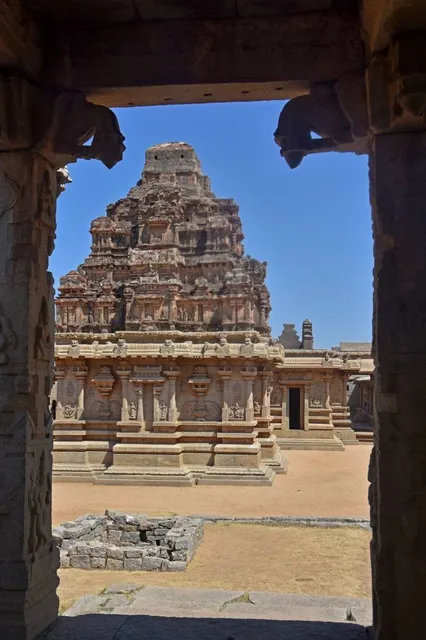
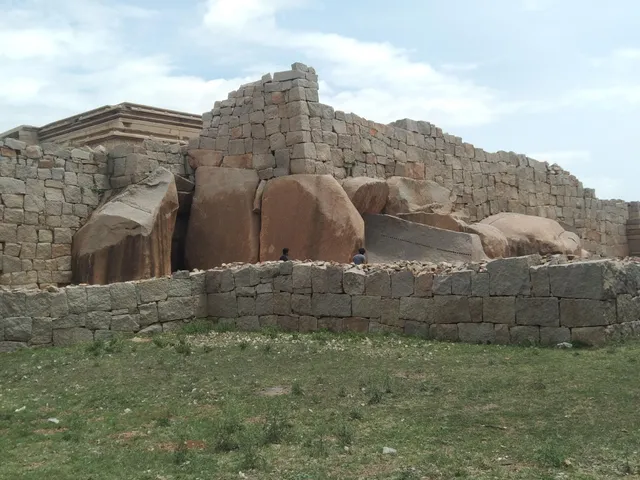
The Prasanna Virupaksha temple has been constructed following the Vijayanagara style of architecture. The temple is a simple and beautiful structure that is located inside a large courtyard surrounded by an enclosure wall. There is a water canal in the courtyard of the temple.
This Underground Shiva temple has a flat roofed main tower. There are steps leading from the main tower to the main pillared hall of the temple.
The temple has a garbhagriha along with an antarala. The temple also has an aradha mantapa and a maha mantapa.
The maha mantapa has pillared corridors that combine with the pillared mukha mantapa. This makes for a huge pillared frontal mantapa. The frontal mantapa also has a dhwaja stambha that protrudes through the rooftop.
The pillars of the temple are simple and austere in appearance, unlike the carved and engraved pillars found in most temples of Hampi.
Present Condition of the Prasanna Virupaksha Temple, Hampi
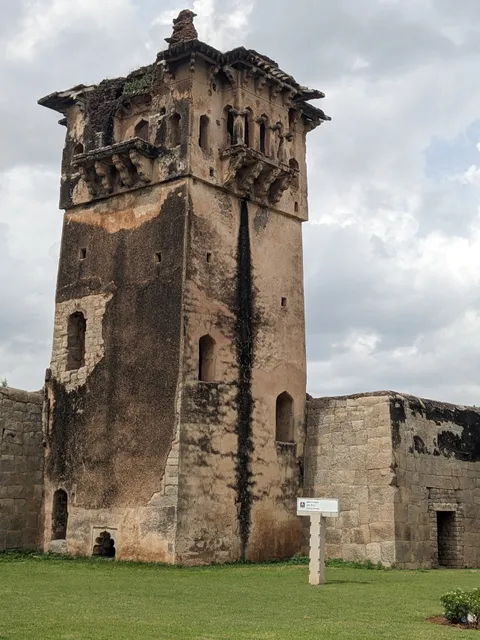
The Prasanna Virupaksha temple is in a dilapidated condition and is no better than most other temples in Hampi. It can be easily seen that the temple lacks maintenance. The inner sanctum of the temple once had an idol of Lord Shiva, but today there remains just an empty pedestal.
Some parts of the temple are accessible during the summer season. But the inner sanctum remains flooded throughout the year. During monsoon most parts of the temple become inaccessible due to the rise in the water level.
The stone pillars are plain and devoid of any ornamental carvings. But it is a thrill to wade through knee deep water and...
Read morePrasanna Virupaksha Temple (Underground Shiva Temple), Hampi
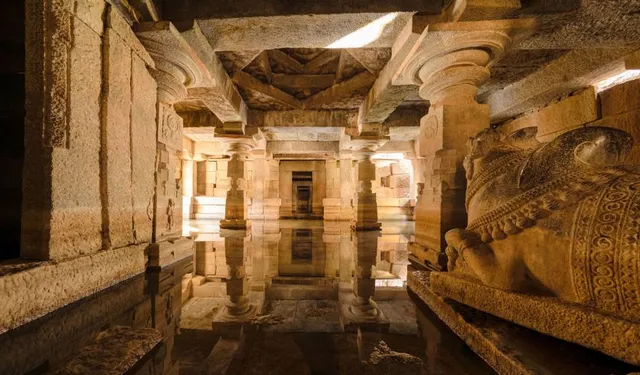
Popularly known as Prasanna Virupaksha Temple, this Shiva temple is popularly called the “Underground Shiva Temple” as the temple is built much below the current ground level and many parts of the temple are underwater. Located amidst a beautiful green lawn, the temple stands like a tranquil oasis. Its unique feature lies in its construction, as it was built several meters below the ground level, earning it the name of Underground Shiva Temple. This temple is considered to be one of the oldest temples in Hampi.
It is located at a distance of about 2.2 km from Hampi Bus Stand, near the Hampi to Kamalapura main road.
The water in the temple remains stable throughout the year, except during the summer season
Timings: 06:00 AM to 06:00 PM
The Underground Shiva Temple is a remarkable testimony to the architectural and cultural prowess of the Vijayanagara Empire. Believed to have been constructed during the reign of the empire, this temple, stylistically dating back to the 14th century CE, stands as a masterpiece of ancient craftsmanship. Built in various phases, it reflects the grandeur and legacy of the empire.
On the southwest, outside the enclosure wall, is an ornate mandapam in typical Vijayanagara style. Here, visitors can find a slab bearing an inscription dated 1513 CE, mentioning the donation of a few villages for the service of Lord Prasanna Virupaksha during the reign of Krishnadevaraya. This inscription adds to the historical richness of the site, providing information about the patronage and importance of the temple during the Vijayanagara period.
Small mandapam on the south side of the temple. Inside this shrine, there is a large stone inscription
The entrance to the subterranean Shiva temple is on the ground floor. Entering through the gate, visitors descend a flight of stairs, which takes them to the heart of the temple complex. As they step inside, they are enveloped in a cool atmosphere, offering respite from the scorching heat of Hampi.
Visitors to the underground Shiva temple have to pass through these stairs.
Built in the 14th century AD, this temple complex displays a fascinating blend of architectural styles and features built in various phases. The east-facing main temple comprises various elements such as the Garbhagriha (sanctum sanctorum), Antaral (entrance hall), Pradakshinapatha (circumambulation path), Sabha Mandapa or Ranga Mandapa (pillared hall), Maha Mandapa (large pillared hall) and pillared veranda.
The underground Shiva temple offers a unique underground experience. Go down a flight of stairs and reach a cool, tranquil world.
The innermost chamber – the Garbhagriha – houses the Shivalinga which remains submerged in water for most of the year, rarely visible during the dry season.
The temple has an ancient water canal system around the main shrine, which is believed to have played a vital role in water management and possibly held ritual significance.
Inscriptions and artifacts found in the temple complex provide valuable information about the history, culture and religious practices of the Vijayanagara Empire.
The underground Shiva temple has a strong odor due to its location below ground, limited ventilation and the presence of stagnant water in the temple complex.
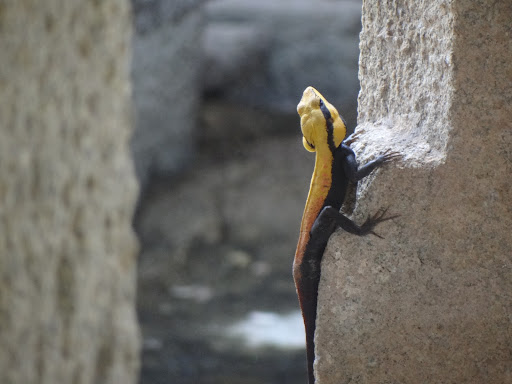
Due to the darkness and dampness, the temple is prone to various kinds of creatures...
Read morePrasanna Virupaksha (Underground Shiva) Temple
The Prasanna Virupaksha Temple, also known as the Underground Shiva Temple, holds profound historical, cultural, and mystical significance. Situated near Akka-Tangiyara Gundu in the ancient city of Hampi, this temple is a remarkable example of Vijayanagara architecture and devotion, dating back to the 14th century CE.
The temple, referred to as Prasanna Virupaksha in inscriptions, was a site of royal patronage. It is believed that King Krishnadevaraya made generous donations to this temple during his coronation ceremony in 1513 CE, as recorded in an inscription on a slab within the temple complex. This highlights the temple's importance in the socio-religious life of the Vijayanagara Empire.
Constructed in phases, the temple is dated stylistically to the 14th century CE, with later enhancements. The unique feature of this temple is its subterranean structure, built below the ground level. This design has led to many parts of the temple being submerged in water, adding to its mystical allure.
The Underground Shiva Temple symbolizes the cosmic connection between earthly existence and divine energy. Lord Shiva, revered as the destroyer and transformer in Hindu tradition, is enshrined in the garbhagriha (sanctum), which lies at the heart of this temple.
The presence of pradakshina patha (circumambulatory passages) around the sanctum reflects the spiritual practice of circumambulation, symbolizing devotion and the cycle of life. The submerged nature of the temple is often associated with the purifying and sustaining qualities of water, an essential element in Hindu philosophy.
Temple Layout: The temple has a garbhagriha, antarala (vestibule), sabhamandapa (pillared hall), and a mahamandapa (large hall). It is sandhara in nature, meaning it has a pradakshina patha around the garbhagriha and antarala.
The Devi shrine is located to the northwest of the principal shrine, and the kalyana mandapa in the southwest corner is adorned with intricate carvings.
Gopura and Pillared Halls:
The temple has a dvitala gopura (two-tiered gateway) at its eastern entrance, though the superstructure above the garbhagriha and gopura is now lost. The seven-aisled mahamandapa is supported by pillars and features a tall dipa sthambha (lamp pillar), adding grandeur to the eastern entrance.
The inscriptions within the temple record significant donations, including villages dedicated to the service of Lord Prasanna Virupaksha during Krishnadevaraya's reign. These records underscore the temple's role not only as a spiritual center but also as an administrative and economic hub.
The temple's partial submersion in water has led to legends and mystical interpretations. For devotees, the water symbolizes the sanctity and vitality of the divine presence. The temple's underground construction is also seen as a metaphor for humility and surrender before the supreme power of Lord Shiva.
The Prasanna Virupaksha Temple is not just a relic of the past but a living symbol of the artistic, spiritual, and cultural heights achieved by the Vijayanagara Empire. Its unique subterranean design, intricate carvings, and historical significance continue to draw historians, pilgrims, and seekers of mysticism, making it a timeless monument of...
Read more