Tucked away in the verdant precincts of Byculla’s Rani Baug, the Dr. Bhau Daji Lad Museum stands as a monument to Mumbai’s layered colonial and cultural past. It is the city’s oldest museum, first conceived in 1855 and officially opened in 1872 under the name Victoria and Albert Museum, Bombay. In 1975, it was renamed in honor of Dr. Bhau Daji Lad—a physician, Sanskrit scholar, and the first Indian Sheriff of Mumbai—who played a key role in its establishment.
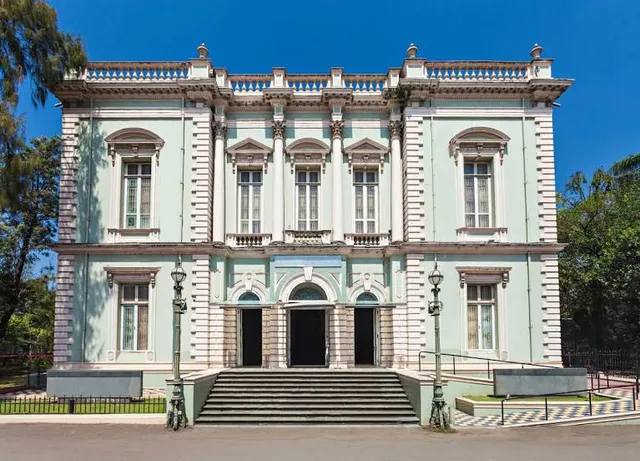
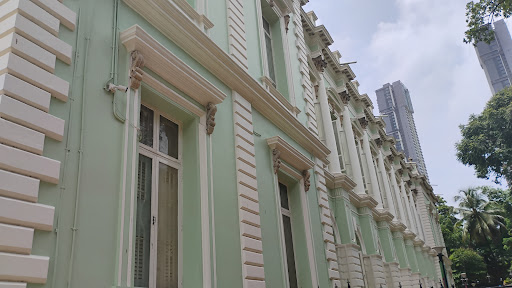
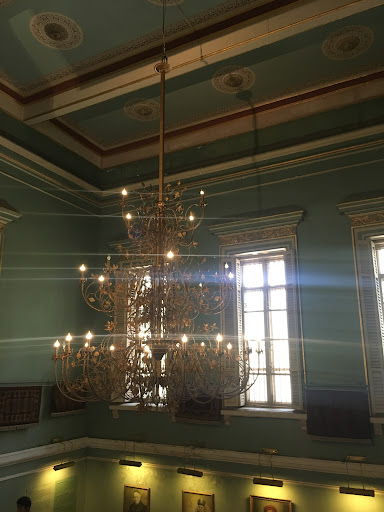
The museum’s architecture is an exemplar of High Victorian design. The two-storied structure features Doric columns, intricate cast-iron railings, Minton tile flooring, chandeliers imported from England, and richly gilded moldings. Every inch of the interior is carefully ornamented in a harmonious palette of celadon green, ivory, and gold. The building was designed by George Birdwood, built by engineers Scott, McClelland & Co., and completed in 1871 after a nearly decade-long construction process.
A major restoration project from 2003 to 2008, spearheaded by the Mumbai Municipal Corporation, INTACH, and the Jamnalal Bajaj Foundation, restored the building to its 19th-century brilliance. The project won the UNESCO Asia-Pacific Award of Excellence for Cultural Heritage Conservation in 2005. Another round of restoration concluded in 2025, focusing on structural stability, ceiling frescoes, and lighting enhancements, with a budget of approximately ₹3 crore.
The museum's collection is a meticulous archive of Mumbai’s transformation from a cluster of fishing islands to a cosmopolitan metropolis. Its six main galleries house over 700 artifacts, ranging from 18th-century dioramas and clay models representing indigenous communities, to industrial arts such as silverware, Bidriware, lacquer work, and early ceramic styles produced in Bombay’s colonial-era factories.
A key attraction is the Origins of Mumbai Gallery, which features rare lithographs, maps from the 16th to 19th centuries, and photographs documenting the city's reclamation projects, dock expansion, and suburban rail networks. Another remarkable display is the massive basalt elephant sculpture from Elephanta Island, which stood at the museum’s entrance for over a century before being relocated to the interior.
The museum also holds significant archival material on the founders of Bombay’s civic identity, including Sir Jamsetjee Jeejeebhoy, Jaganath Shankarseth, Dr. George Buist, and of course, Dr. Bhau Daji Lad himself. Portraits, correspondence, medals, and minutes from civic meetings offer a glimpse into the city’s philanthropic and intellectual roots.
In recent years, the museum has become a cultural hub. It organizes contemporary art exhibitions, heritage walks, documentary screenings, children's workshops, and public lectures. Collaborative projects with international museums have brought rare traveling exhibitions, including displays on Art Deco furniture, Indo-Saracenic design, and the architecture of modern Indian cities.
Operational hours are from 10:00 a.m. to 5:30 p.m., Tuesday to Sunday, with a nominal entry fee ranging between ₹20 and ₹100. Audio guides in English, Hindi, and Marathi are available. The museum is easily accessible via Byculla Station, and its location within the historic Jijamata Udyan makes it a compelling day trip for families and researchers alike.
The museum’s grandeur lies not just in its aesthetic majesty but in its careful accumulation of civic memory. Unlike larger national museums that often present sweeping narratives, the Bhau Daji Lad Museum excels in precise storytelling—through documents, materials, and crafts that trace the evolution of Bombay as a global port city.
In sum, this museum is both an architectural gem and an intellectual reservoir. It offers a uniquely Mumbai-centric lens into India’s urban, artistic, and social history. It is not simply a museum to be visited, but a heritage space to be absorbed—quietly, slowly, and with respect for the...
Read moreMuseum Review: Exploring History at Bhau Ji Lad Museum, Mumbai
During my visit to Mumbai, I had the pleasure of exploring the Bhau Ji Lad Museum, a hidden gem dedicated to preserving and showcasing the rich cultural heritage of Maharashtra. Located in the heart of the city, this museum offers a fascinating journey through history and provides visitors with a glimpse into the life and achievements of Bhau Ji Lad, a prominent figure in Maharashtra's cultural landscape.
The Bhau Ji Lad Museum is a modest yet captivating space that houses a diverse collection of artifacts, photographs, and memorabilia. The museum pays homage to Bhau Ji Lad, a renowned musician and composer who made significant contributions to Marathi music and theater. It is a tribute to his legacy and offers visitors a unique opportunity to delve into the artistic traditions of Maharashtra.
One of the highlights of the museum is the extensive display of musical instruments, including traditional Maharashtrian instruments like the harmonium, tabla, and sitar. These instruments are beautifully preserved and provide insight into the unique melodies and rhythms that define the region's music. As I explored the exhibits, I couldn't help but appreciate the craftsmanship and the significant role these instruments have played in the cultural fabric of Maharashtra.
The museum also houses a remarkable collection of vintage photographs that offer a visual narrative of Maharashtra's artistic heritage. These photographs depict Bhau Ji Lad in his various musical performances, alongside notable artists of his time. The images capture the essence of a bygone era and provide a glimpse into the vibrant cultural scene of Maharashtra.
One aspect that stood out to me was the interactive elements incorporated into the museum. Visitors can listen to recordings of Bhau Ji Lad's iconic compositions and gain a deeper appreciation for his musical prowess. These audio installations enhance the overall experience, allowing visitors to immerse themselves in the melodic world of Maharashtra's traditional music.
The museum is thoughtfully curated, with informative captions and displays that provide historical context and significance to the artifacts. The layout of the exhibits is well-organized, allowing for a seamless exploration of Bhau Ji Lad's life and contributions. The museum staff is knowledgeable and eager to share insights, further enriching the visit.
However, it's worth noting that the museum is relatively small in size, which might disappoint those expecting a vast collection. Additionally, the signage and descriptions could benefit from further translations or explanations in English for non-Marathi speakers.
In conclusion, the Bhau Ji Lad Museum in Mumbai offers an enriching experience for those interested in Maharashtra's cultural heritage. The museum beautifully captures the essence of Bhau Ji Lad's musical legacy and provides a valuable glimpse into the artistic traditions of the region. Although it may be compact in size, the museum succeeds in preserving the cultural heritage and ensuring that the contributions of Bhau Ji Lad are celebrated. If you have an appreciation for music and history, a visit to this museum is...
Read moreThis indeed a distinct and equally fascinating historical institution esp for a new resident like me with a passion for history, it offers a truly unique and intimate perspective on Mumbai.
Located in the historic Byculla area, the Dr. Bhau Daji Lad Mumbai City Museum stands as Mumbai's oldest museum, a testament to the city's rich past. Unlike the broader national and international scope of the Chhatrapati Shivaji Maharaj Vastu Sangrahalaya, the Dr. Bhau Daji Lad Museum is singularly dedicated to telling the story of Mumbai itself – its origins, its people, its industries, and its evolution into the vibrant metropolis we know today. For a history enthusiast eager to truly discover their new home, this museum is an unparalleled resource.
As a new resident, i found this museum incredibly valuable for understanding the very fabric of Mumbai. It's not just about grand empires; it's about the everyday lives, the crafts, the social changes, and the industrial growth that shaped this city. The museum's focus on decorative arts and the industrial history of Mumbai provides a crucial lens through which to view the city's unique identity. You'll gain insights into the communities that built Mumbai, the trades that flourished, and the cultural tapestry that makes it so diverse.
Highlights for the History Buff and New Mumbaikar
The Building Itself: The museum is housed in a stunning Palladian-style building, meticulously restored to its former Victorian glory. The architecture is a piece of history in itself, reflecting the grandeur of 19th-century Bombay. Just walking through its halls is an experience.
Early Mumbai Photographs and Maps: This section is a true gem for understanding the city's physical transformation. You'll see rare photographs and maps depicting Bombay's transition from a collection of islands to a bustling port city, offering a visual journey through its urban development.
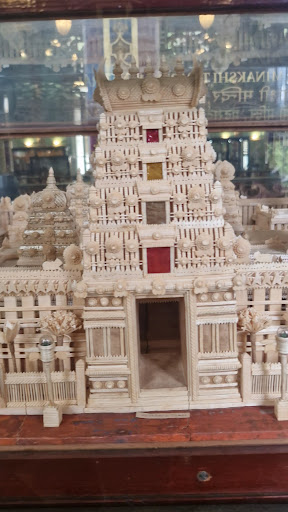
Industrial Arts and Crafts: Discover the exquisite craftsmanship that thrived in Bombay. The museum showcases a remarkable collection of decorative arts, including pottery, metalwork, textiles, and models that illustrate the city's industrial heritage and the skills of its artisans. . itithi Bhau Daji Lad Museum is a more intimate experience compared to larger museums. The carefully curated exhibits are presented with clear narratives, allowing for a deeper engagement with each artifact. The quiet, elegant ambiance of the restored building provides a perfect setting for reflection and learning. It feels like uncovering a well-kept secret about...
Read more