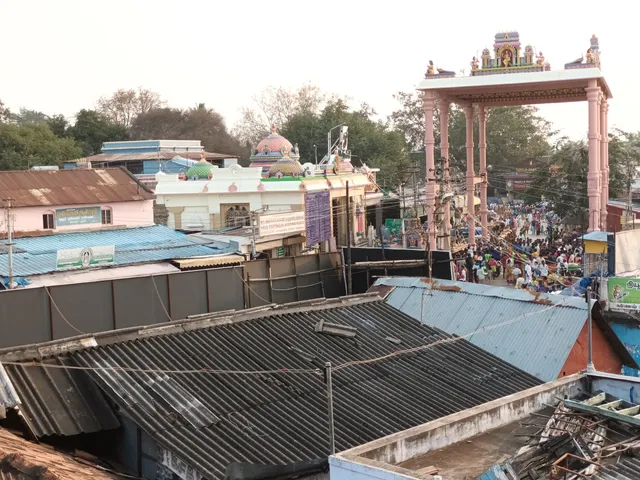
The Arulmigu Dhandayuthapani Swamy Temple at Palani is one of the most famous and widely worshipped temples dedicated to Lord Murugan (Kartikeya).
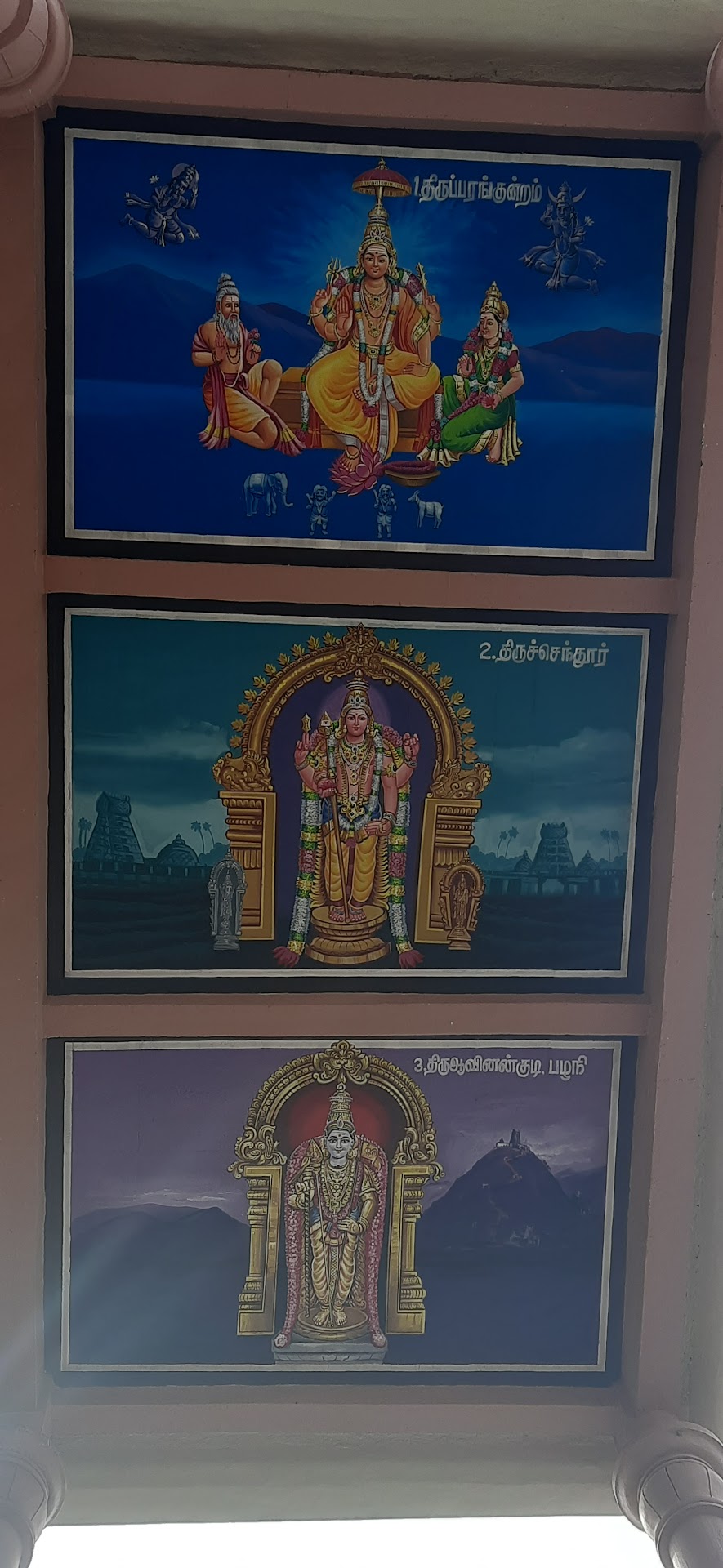
It is particularly significant as the six of the six holy abodes (Arupadaiveedu) of Lord Murugan.
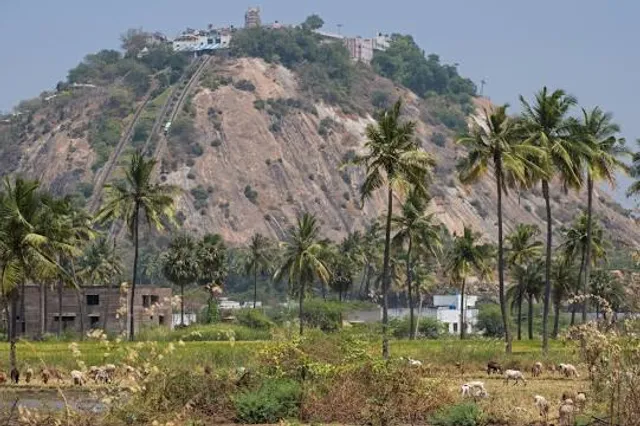
It is situated atop the Sivagiri Hill in the town of Palani, Tamil Nadu.
Significance and The Legend of Renunciation The temple is famous for the profound legend of the Gnana Pazham (Fruit of Wisdom), which explains why Lord Murugan is worshipped here as a renunciate.
The Wisdom Contest: The sage Narada presented a divine fruit, the Gnana Pazham (Fruit of Knowledge), to Lord Shiva. Shiva announced a contest between his two sons, Ganesha and Murugan, stating that the first one to circle the world thrice would win the fruit.
Ganesha's Wisdom: Lord Murugan swiftly left on his mount, the peacock, to circumnavigate the globe. Lord Ganesha, however, circled his parents (Shiva and Parvati) three times, stating that his parents were his world. Impressed by Ganesha's wisdom, Lord Shiva awarded him the fruit.
Murugan's Renunciation: When Murugan returned and learned he had been outwitted, he felt disappointed and left his home in Mount Kailash. He travelled south and settled atop the Palani Hill, discarding all his ornaments and robes, choosing the simple life of a hermit.
The Name Palani: When Shiva and Parvati came to pacify him, Shiva affectionately told his son, "Pazham Nee" (meaning "You are the Fruit" – the fruit of wisdom itself). The name Palani is a shortened, colloquial form of these two Tamil words.
Presiding Deity (Moolavar): Lord Murugan is thus worshipped here as Dhandayuthapani Swamy (the Lord with a Staff in Hand), in the form of a young, ascetic renunciate, wearing only a loincloth and holding his staff (dhandam).
The Sacred Idol (Navapashanam) The idol of the presiding deity is renowned for its unique composition and healing properties.
Creator: The idol is believed to have been consecrated by the great Siddhar (Alchemist-Sage) Bhogar.
Material: The idol is made from Navapashanam—a unique and rare amalgam of nine poisonous herbs/minerals mixed in a specific, secret ratio to create a compound that is believed to emit powerful healing energy.
Abhishekam: The holy mixtures (like milk, honey, sandalwood paste, and the famous Panchamirtham—a blend of five ingredients) poured over the idol during the Abhishekam (ablution) are considered to have medicinal properties due to their contact with the Navapashanam.
Connection to the Kavadi Tradition Palani is the central hub for the practice of carrying the Kavadi.
The Legend of Idumban: The hill's presence is also linked to the legend of the Asura Idumban. Sage Agastya commanded Idumban to carry two hills, Sivagiri and Shaktigiri, to the South. Idumban slung them across his shoulders using a pole and ropes, a model that became the first Kavadi. When he rested at Palani, he found he could not lift the hills again, as Lord Murugan had claimed them. After an ensuing fight, Idumban was vanquished and later resurrected by Murugan. Idumban was then granted the boon that anyone who carried a Kavadi to the hill would receive the Lord's blessings.
The Custom: Since then, devotees undertake the arduous climb to the temple, carrying the Kavadi as a form of penance and offering.
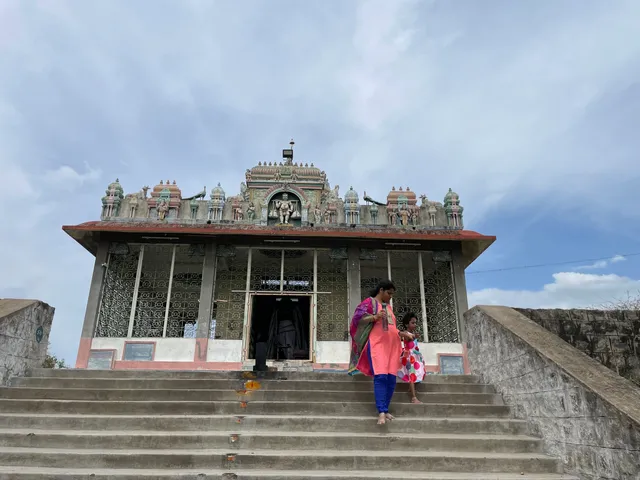
Temple Architecture and Access Location: The temple is situated on the summit of the Sivagiri Hill, accessible by several means:
Climbing the 693 stone steps.
The Elephant Path (a gentle incline).
A Winch Train.
A Rope Car (Aerial Tramway).
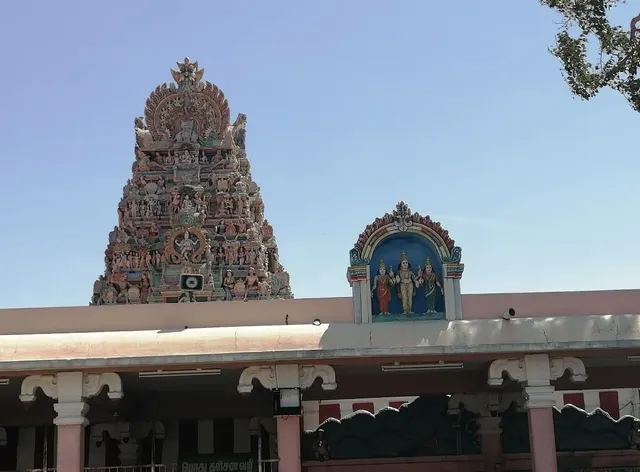
Vimanam: The tower above the main sanctum (Vimanam) is covered in gold plate, making it one of the most glittering features of the temple, visible from the plains below.
The temple is a major center for festivals like Thai Poosam and Panguni Uthiram, attracting millions of...
Read moreI don't have the rights to rate the god or the devotion or the devotees.But i do sure have all the rights to share my frustrating experiences so that people would choose the right time to visit the temple.
Don't choose weekends, any time later than opening time. The more later it gets,the more crowded it becomes!
Pls carry a water bottle and milk bottle for kids especially.
We took an auto from our room and went for tonsuring shed. Tonsuring shed: This is at the entrance of the temple hill, down the way..so it's easily accessible when you take an auto or walk to the entrance of the hill. The ticket/token is free. You shall get your token and then get your head shaved. You shall be asked to pay 100 for the person who shaved your head(fair enough)..then the sweeper person would ask you money for tea..then the person who's there at the bath place shall again ask you money for tea.. better carry 10s or 20s as per your wish. Take a set of dress with you.After you get tonsured,you have places to take bath. Ladies and gents have seperate sides. Don't expect it to be that neat.. because people don't maintain it...and when i say people,i mean people who use it.. they remove their flowers/garlands and shampoo sachets and put it all on the bathroom floor. So you shall take maximum few mins to take a quick shower and comeback. You cannot keep your belongings outside (though we hav open racks) ..it's better and advisable to take turns and take bath while the other person is holding the bags and belongings.
After shower, they'll take a snap of you with your shaved head for their count for the day .
After this, we shall get sandalwood paste in opposite shops..some ppl apply it on our heads for free... while some charge..
Then we took an auto to walk Around the hill to the place where people board the rope car...but that day rope car had a big queue. So we moved to the winch section..(big walk around the hill on a hot sunny day).. you can opt a battery car(they're free to travel around the temple).
Winch section: we had two different queues and no one standing there had any clue what the difference was..
One was 50 rupees and one was 60.. so everyone naturally thought 60 would move faster and so did we . Then later we realised 50 is non ac winch and 60 is ac..(no difference honestly)..
Both took turns and moved. We have to stand in queue first,then later we'll be directed to ticket counter. Then we wil be directed to waiting stalls and then we'll get into the winch.
We had a good dharshan there as we went through 100 rupees queue.
Funniest part is, shopkeepers ask us to remove slippers in shops and ask us to give 100 rupees for kaanikai (there are free slipper stalls)..and they give us vibhoothi, kumkum and say give it to the gurukal , he'll pour it on god..
But when we do dharshan, they ask for money and not this packs...it was a shocker when people who stood there near God idol,kept asking money for kaanikai... And they kept returning this pack we bought Back to us asking us to give it here and there..we gave it to lord Ganesh outside the premises.
So returning back would be the same.. you should take everyone with you for getting tickets for winch.. you cannot ask your family to sit and one can go buy..no... everyone should be there when getting tickets.( This rule was pathetic when a 65+ old malayali aunty,who was physically challenged was asked to climb up and down the 20 steep steps to counter)..
We'll again' be directed to waiting rooms and then we'll be directed to winch place...
I understand that managing a crowd is a Big deal and it's not easy thing to do.. but steps can be taken to further organise things and also multiple boards for instructions should be kept to...
Read moreArulmigu Dhandayuthapani Swamy Temple, Palani
Direction
Palani Arulmigu Shri Dhandayuthapani temple is one of the Six Abodes of Murugan. It is located in the town of Palani in Dindigul district, 100 kilometres (62 mi) southeast of Coimbatore and northwest of Madurai in the foot-hills of the Palani hills, Tamil Nadu, India
The idol of the Muruga in Palani, was created and consecrated by sage Bogar, one of aaseevaham’s (Ancient Tamil Culture) eighteen great siddhas out of an amalgam of nine poisons or navapashanam. The legend also holds that, the sculptor had to work very rapidly to complete its features, but that he spent so much time in creating the face, he did not have time to bestow but a rough grace upon the rest of the body, thus explaining the contrast between the artistic perfection of the face and the slightly less accomplished work upon the body. A shrine to Bhogar exists in the southwestern corridor of the temple, which, by legend, is said to be connected by a subterranean tunnel to a cave in the heart of the hill, where Bhogar continues to meditate and maintain his vigil, with eight idols of Muruga.
The deity, after centuries of worship, fell into neglect and was suffered to be engulfed by the forest. One night, Perumal a king of the Chera Dynastys, who controlled the area between the second and fifth centuries A.D., wandered from his hunting party and was forced to take refuge at the foot of the hill. It so befell, that the Subrahmanyan, appeared to him in a dream, and ordered him to restore the idol to its former state. The king commenced a search for the idol, and finding it, constructed the temple that now houses it, and re-instituted its worship. This is commemorated by a small stela at the foot of the staircase that winds up the hill.
The temple is situated upon the higher of the two hills of Palani, known as the Sivagiri. Traditionally, access to it was by the main staircase cut into the hill-side or by the yanai-padhai or elephant’s path, used by the ceremonial elephants. Pilgrims bearing water for the ritual bathing of the idol, and the priests, would use another way also carved into the hill-side but on the opposite side. Over the past half-century, three funicular railway tracks have been laid up the hill for the convenience of the pilgrims, and supplemented by a rope-way within the past decade. Devotees carry kavadi, an ornamental mount decked with flowers, glazed paper and tinsel work and wearing ochre clothes themselves on foot from long distances is a commonly followed worship practice.
Panchamirdam (mixture of five) is believed to be a divine mix prepared by Vinayagar at the end of the divine encounter. He mixed honey, dates, banana, raisins and jiggery and distributed it to Shiva Karthikeya. The practice is followed in modern times where the devotees are provided Panchamirdam as a Prasad.
The temple is open from 6.00 a.m. to 8.00 p.m. On festival days the temple opens at 4.30 a.m. There are six poojas performed in the temple, namely, the Vilaa pooja at 6.30 a.m., Siru Kall pooja at 8.00 a.m., Kaala Santhi at 9.00 a.m., Utchikkala Pooja at 12.00 noon, Raja Alankaram at 5.30 p.m., Iraakkaala pooja at 8.00 p.m. The Golden Car can be viewed at 6.30 p.m
There are two modes of transport from the foothills to uphill. There is a winch, which operate from 6 a.m. on ordinary days and 4 a.m. during festive occasions. There is another rope car which operates from 7 a.m. to 12:30 p.m. and 1:30 p.m. to 5 p.m. Both winch and the rope car are closed after the Irakkala...
Read more