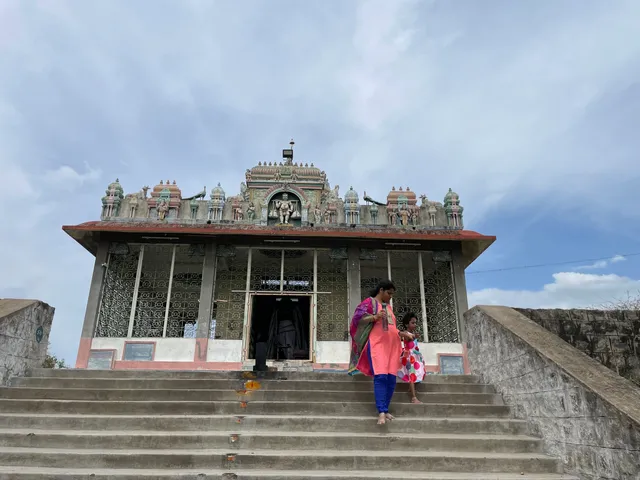
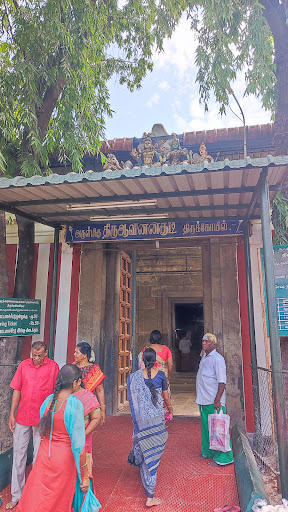
This ancient and large temple at the foot of the hill is the third Padai-Vîdu celebrated in song, classics, legend and tradition since antiquity. The official name of the shrine is Kulandai Vēlālyudhaswāmi Temple; Tiru Avinankudi is the name of the place. A sacred tank is attached to the temple.
Tiru Avinankudi is among the earliest abodes of Muruga and perhaps it had humble beginnings under the shade of the nelli tree (amla). Poet Nakkirar says that God Muruga holds at Tiru Avinankudi a Royal Court of all gods with saints emancipated and clad in saffron-dyed clothes and deer skin.
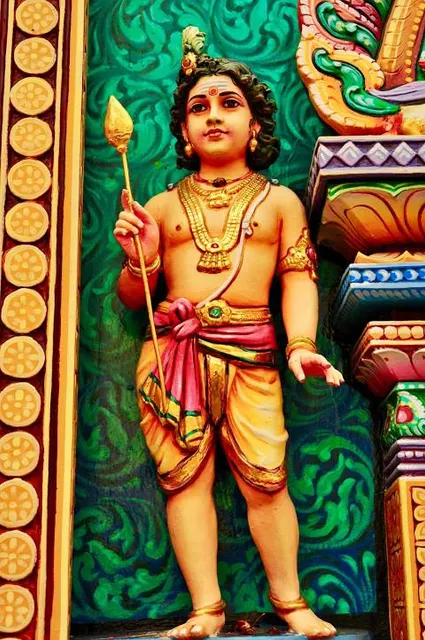
The presiding deity is Muruga as a child sitting on a peacock. A convenient and full view can be taken by the worshippers since the sanctum is on an elevation. He is like a kindly monarch on His throne who receives the humble tributes and petitions of His loyal subjects. The festival deity and the nelli and nagalinga flora and the shrine of Arunagirināthar are worth your notice.
The temple was renovated lavishly between 1898 and 1910 by N. M. Subramanian Chettiar of Karaikudi and K.P.S. Palaniappa Chettiar of Kandanur. S.P. Ramanathan Chettiar and other members of the first donor's family have added in 1968 a majestic rāja gopuram—one of Palani's landmarks visible from the hill-temple. Since the late 1970's, a few small shrines and an artistic mandapam have been constructed, adding to the beauty of an already beautiful temple.
Usually before going to the main hill temple, devotees visit Tiru Avinankudi. It is located near 'Saravana Poigai' sacred temple tank. This is an ancient temple, more ancient than the hill temple and among the earliest abodes of Lord Muruga. It is revered as the third Padai-Veedu. The official name of the shrine is Kulandai Velayudhaswami Temple and Tiru Avinankudi is the name of the place. A sacred tank is attached to the temple.
The presiding deity is Muruga as a child sitting on a peacock. A convenient and full view can be taken by the worshippers since the sanctum is on an elevation. He is like a kindly monarch on His throne who receives the humble tributes and petitions of His loyal subjects. The festival deity and the nelli and nagalinga flora and the shrine of Arunagirinathar are...
Read moreThis ancient and large temple at the foot of the hill is the third Padai-Vîdu celebrated in song, classics, legend and tradition since antiquity. The official name of the shrine is Kulandai Vēlālyudhaswāmi Temple; Tiru Avinankudi is the name of the place. A sacred tank is attached to the temple.
Tiru Avinankudi is among the earliest abodes of Muruga and perhaps it had humble beginnings under the shade of the nelli tree (amla). Poet Nakkirar says that God Muruga holds at Tiru Avinankudi a Royal Court of all gods with saints emancipated and clad in saffron-dyed clothes and deer skin.
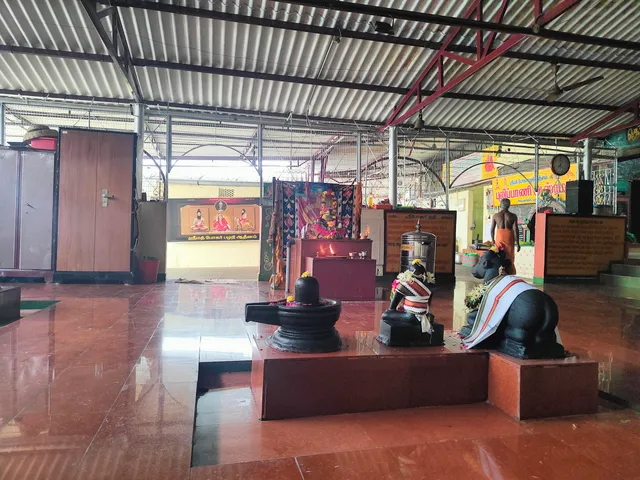
The presiding deity is Muruga as a child sitting on a peacock. A convenient and full view can be taken by the worshippers since the sanctum is on an elevation. He is like a kindly monarch on His throne who receives the humble tributes and petitions of His loyal subjects. The festival deity and the nelli and nagalinga flora and the shrine of Arunagirināthar are worth your notice.
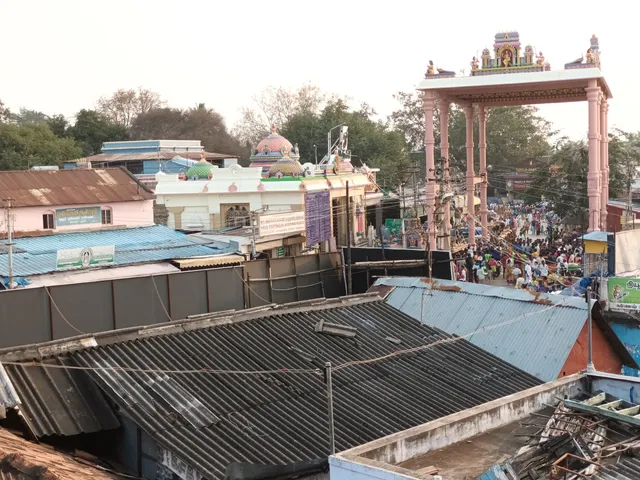
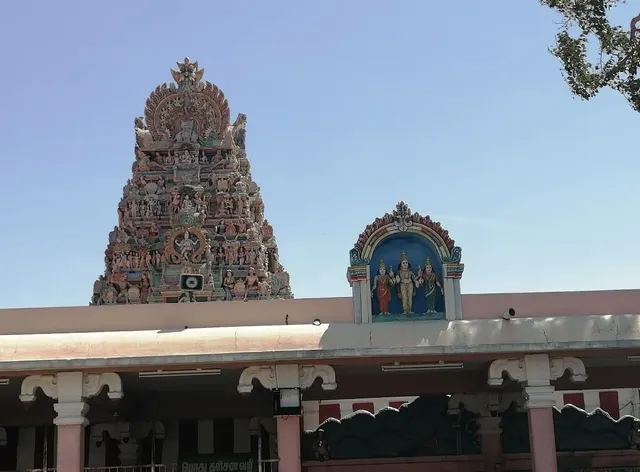
The temple was renovated lavishly between 1898 and 1910 by N. M. Subramanian Chettiar of Karaikudi and K.P.S. Palaniappa Chettiar of Kandanur. S.P. Ramanathan Chettiar and other members of the first donor's family have added in 1968 a majestic rāja gopuram—one of Palani's landmarks visible from the hill-temple. Since the late 1970's, a few small shrines and an artistic mandapam have been constructed, adding to the beauty of an already beautiful temple.
Usually before going to the main hill temple, devotees visit Tiru Avinankudi. It is located near 'Saravana Poigai' sacred temple tank. This is an ancient temple, more ancient than the hill temple and among the earliest abodes of Lord Muruga. It is revered as the third Padai-Veedu. The official name of the shrine is Kulandai Velayudhaswami Temple and Tiru Avinankudi is the name of the place. A sacred tank is attached to the temple.
The presiding deity is Muruga as a child sitting on a peacock. A convenient and full view can be taken by the worshippers since the sanctum is on an elevation. He is like a kindly monarch on His throne who receives the humble tributes and petitions of His loyal subjects. The festival deity and the nelli and nagalinga flora and the shrine of Arunagirinathar are...
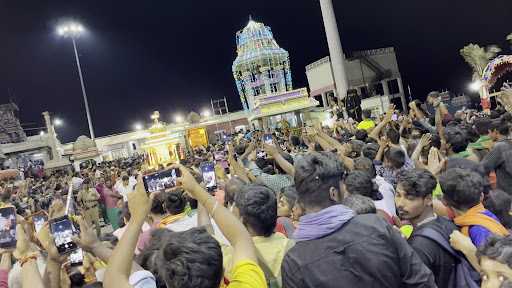
Read moreWe went palani by walk on jan month it’s very memorable diaries of Palani God. Very clean and good 😊 During Pongal festival it’s very crowd even through full of positivity 🤩 Palani is a small town located in the Dindigul district of Tamil Nadu, India. It is famous for its Hindu temple dedicated to Lord Murugan, also known as Dhandayuthapani. This temple is one of the most important pilgrimage sites for Tamil Hindus and attracts thousands of devotees from all over the world every year.
The history of the Palani temple can be traced back to the 9th century when the temple was built by the Pandian king, Kulasekara Pandian. The temple was later expanded by various dynasties and rulers, and today it stands as a grand architectural marvel with intricate carvings, sculptures and paintings adorning its walls and pillars.
The temple is also known for its famous shrine of Lord Murugan, who is considered the patron deity of the Tamil land. Lord Murugan is depicted with six faces and twelve arms, symbolizing his power and strength. The temple also houses shrines dedicated to his consorts Valli and Deivayanai.
The temple is located on a hill, and devotees are required to climb a series of steps to reach the main shrine. This climb is considered a sacred rite of passage, and many devotees perform it as a symbol of their devotion to Lord Murugan. Along the way, there are several small shrines and rest areas where devotees can stop and offer their prayers.
In addition to its religious significance, Palani is also known for its unique and ancient form of medicine known as Siddha medicine. This form of medicine is based on a holistic approach to health and wellness, and incorporates elements of yoga, meditation, and herbal remedies to treat a wide range of illnesses and conditions.
In conclusion, Palani is a town steeped in history and culture, with a rich religious tradition and a strong connection to the land and its people. Its temple is a symbol of devotion and spiritual devotion, and its unique form of medicine is a testament to the wisdom and knowledge of the ancient sages and healers who lived there. Palani is truly a place of pilgrimage, where one can seek solace and peace, and connect...
Read more