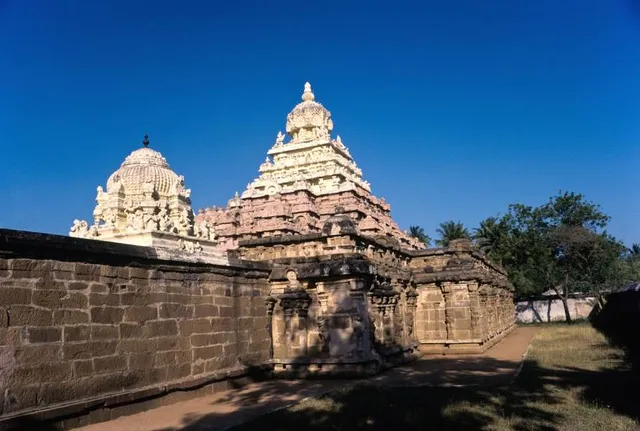
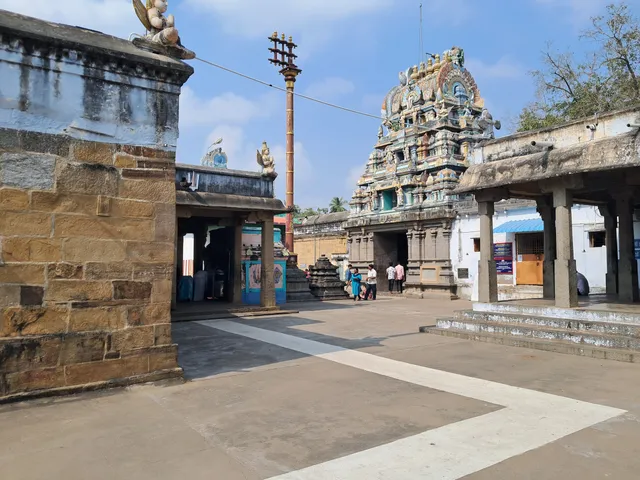
Vaikunta Perumal koil or Tiru Parameshwara Vinnagaram is situated near East Raja Street and is close to the Kanchipuram Bus Terminus. Since it is not on the main road one should ask for the location from locals. If one is travelling from Varadaraja Perumal koil one can take a share auto to the bus stand. Normal auto fare will be about Rs.80. It is declared a heritage temple and is under the ASI (Archaeological Survey of India).
We had planned a visit on an ekadasi day inorder to access the first floor housing Ranganathaswami which is open only on ekadasis. This temple has three tiers and has Perumal in three kolams: irundha, sayana and ninra that is seated, lying and standing positions.This temple does not have a rajagopuram at the entrance and one can view the top of the dwajha sthambam from the outside and the Garudas stand guard on either side.
After entering we offered dandavath pranams at the dwajha sthambam and then had ‘Garuda darsanam’ at the entrance. As we moved inside to our left was Thayar Sannidhi. Vaikuntavalli Thayar draped in light green silk was as usual beautiful and invited a second look.
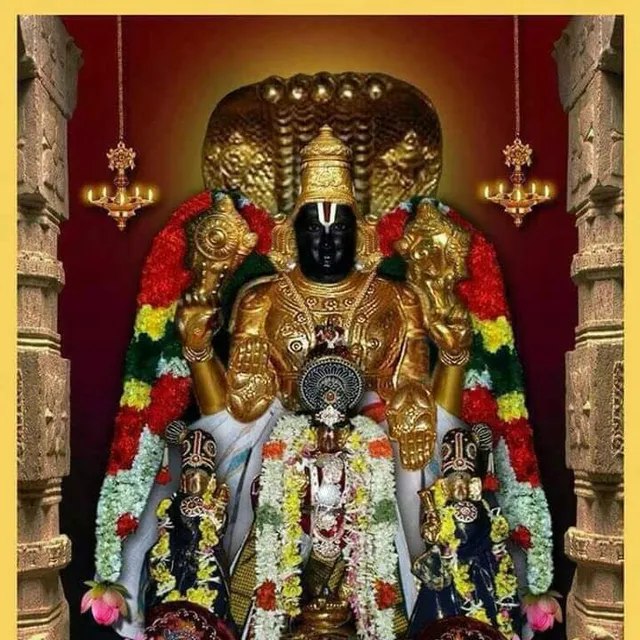
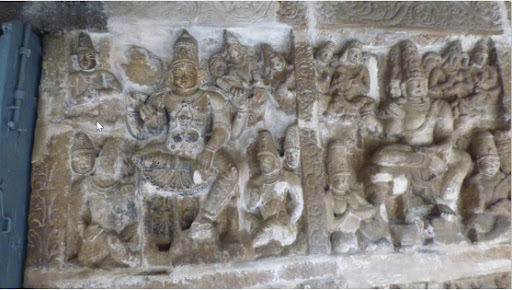
The line we were waiting in was for the darsan of Paramapadanatha. When our turn came we had darsan of Vaikunta Perumal in seated posture with one Leg folded and the other dangling. He faces west. He was decked with jasmines and Tulasi and other flowers and seemed to convey the message that those who reach Him in Srivaikuntam could be relaxed.We came out and turned left along a colonnade of impressive lion pillars to join the queue for Ranganatha darsan on the second level. As we waited we saw the disfigured statues outside and were pained to think how anyone would have had the heart to destroy these beautiful creations. We see the destruction done by muslim invaders in many temples .
The temple construction is attributed to Parameshvara varman in the seventh century. The temple goes by the name Paramesvara Vinnagaram. Parameshvara Pallava built this temple in three levels in three postures.
We reached the entrance of Ranganatha temple and stood rooted by a sandstone sculpture depicting Chathurbhuja (Four armed) Naryana in seated posture with flying celestials offering chamarams on either side and the four faced Brahma at His right.
The flight of stairs are to our left and as we ascended them we waited for the aradhakar to finish with the group infront of us. When it was our turn we were struck by the divyamangalamurthi of Ranganatha swami reclining inside a golden mandapa with Sridevi and Bhudevi at His Feet. Our usual complaint about sayana tirukolam perumal is that we are not able to enjoy the Beauty of His Tirumeni in entirity but here the Perumal’s size afforded a complete view and was very satisfying. This sannidhi is open only on ekadashis and Vaikunta ekadasi attracts almost 3 lakhs of pilgrims. We then descended down the stairs as the third level wherein Perumal is in standing posture is not accessible. The interesting feature of the steps is that there is one flight of steps for ascending and another for descending and the steps are not visible from outside.
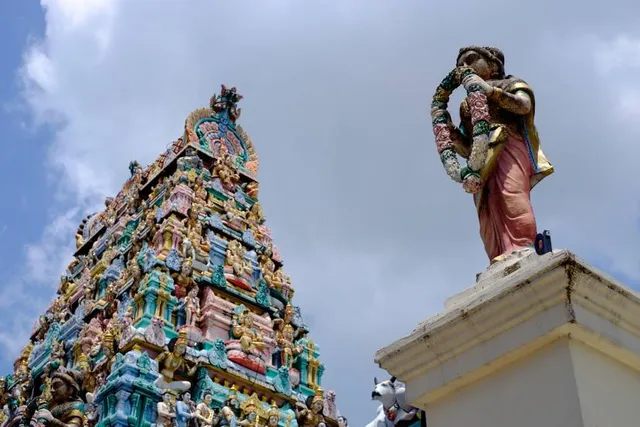
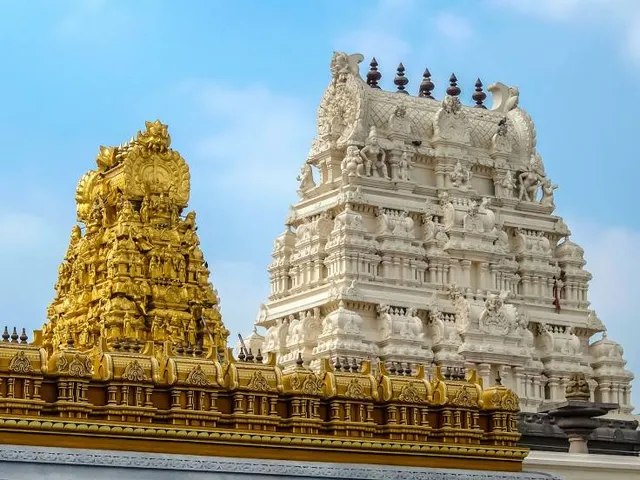
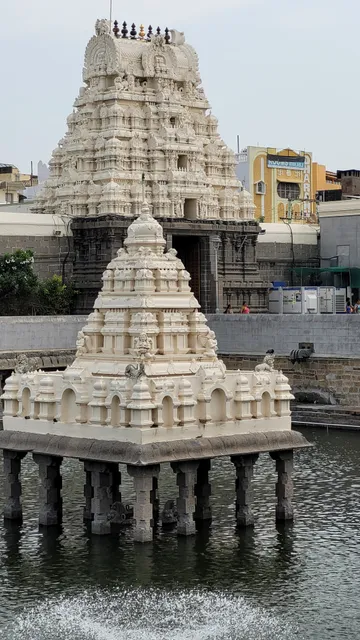
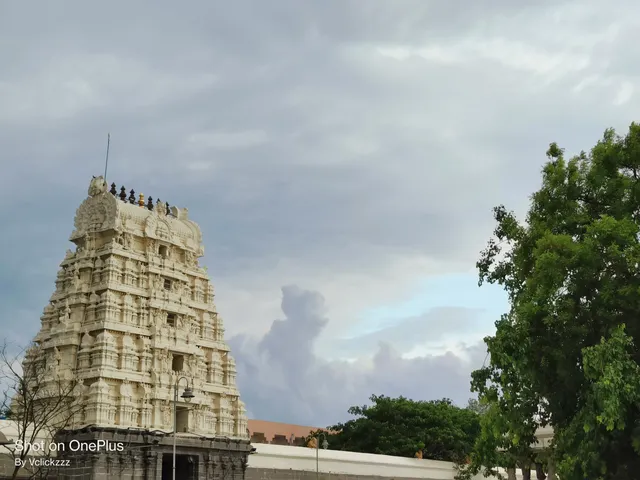
After coming out we did pradakshinam (went clockwise) of the temple. The pradakshinam path is paved with small bushes planted by the side lawns. As one moves along Perumal’s vimanam can be sighted. It is called ‘Astanga mukunda vimanam’ and the temple is called ‘mumada koil’. As we circumbulated watching the lion figurines on the outer wall we spotted the vimanam of Thayar.
As we went out we saw the large temple tank which was totally dry.This temple tank goes by the name ‘Irramatha Theertham or Viraja Theertham’.
As we made our way home with our head full of the magnificent sculptures and architectural skills of our Hindu kingdoms we bowed our heads to these men who have preserved history in stone and who understood clearly that there was a Lord above them “The King of The Universe” who always...
Read moreThe Vaikunta Perumal Temple in Kanchipuram is a revered temple dedicated to Lord Vishnu, built by the Pallava king Nandivarman II in the 7th century AD. This ancient temple showcases a unique blend of Pallava and Dravidian architectural styles, making it a standout among other temples in the region. One of its most distinctive features is the three-tiered sanctum sanctorum, which represents the three worlds: heaven, earth, and hell. The temple's walls are adorned with intricate carvings and sculptures that depict scenes from the Ramayana and Mahabharata, showcasing the exceptional craftsmanship of the Pallava era. The main deity, Vaikunta Perumal, is a form of Lord Vishnu, and the temple is considered one of the 108 Divya Desams, sacred sites revered by Vaishnavites. As a result, the Vaikunta Perumal Temple is not only an architectural marvel but also a significant spiritual destination, attracting devotees and history enthusiasts alike.
Yes, the Vaikunta Perumal Temple in Kanchipuram is considered one of the 108 Divya Desams, which are sacred temples dedicated to Lord Vishnu revered by the Sri Vaishnavite sect. Specifically, it is considered the 55th Divya Desam.
The Divya Desams are a collection of temples that are mentioned in the works of the Alvars, a group of Tamil poet-saints who lived between the 6th and 9th centuries AD. These temples are considered sacred because they are believed to be the places where the Alvars experienced the divine presence of Lord Vishnu.
As a Divya Desam, the Vaikunta Perumal Temple is considered a significant pilgrimage site for Sri Vaishnavites, who believe that visiting these temples can help them attain spiritual liberation.
The Vaikunta Perumal Temple in Kanchipuram celebrates various festivals throughout the year, including Vaikunta Ekadasi, a 21-day festival in December-January. The temple also observes Brahmotsavam, a 10-day festival in May-June, where the deity is taken out in a procession. Pavitrotsavam, a 5-day festival in September-October, is another significant event where special pujas are performed. During Navaratri, a 9-day festival in September-October, the goddess is worshiped in different forms. Vijayadashami, celebrated in September-October, marks the triumph of good over evil. Thiruvonam, a festival in August-September, is celebrated with flower decorations, and Masi Magam, in February-March, features a procession of the deity. These festivals are times of great fervor and devotion, attracting devotees from...
Read moreVeerochana King, who ruled Vaitherpa desam doesn't have any children. So he prayed to God Kailasanathar in Kanchipuram. After that, two boy children named Pallavan and Vallavan born. These two children are said to be the "Dwara Balagars" (A kind of devoted Gate Keepers, of Sriman Narayanan and can be on either side in the entrance of Moolavar Sannadhi).
When these two where doing Ashwametha Yagnam for Punniyakoti vimanamat Vaayu end, Perumal Sri Emperumaan gave his seva in Irundha thirukkolam. He gave his seva as "Paramapadha - Sri Vaikundanathan". Because of this, the sthalam is said as "Vaikunda Perumal Koil".
This sthalam also tells us how the vaishnavam and Saivam relationship should be treated. Veerochana king worshipped Lord shiva for the child, but it was the Vishnu Bhaktha who were born. So, it clearly tells that there should be no any fights (or) misunderstanding between the caste and all the Gods are said to be treated as a single one.
The Vimanam of the temple is Ashtanga Vimanam. In the ground level (Nilai), Sriman Narayanan gives seva in Irundha Kolam, in the middle Nila, he gives seva in Kidantha kolam and in the top Nilai, he gives seva in Nindra Kolam and there is no poojas done for him.
Moolavar and Thaayar:
The Moolavar of this sthalam is Sri Paramapatha Nathan. Also called as "Vaikunthanathan".
Moolavar in sitting position facing west direction. Prathyaksham for Pallava King.
Thaayar : Vaikuntha valli. Seperate sannathi for Thaayar.
Mangalasasanam:
Thirumangai Alwar - 10 Pasurams. Total - 1
Pushkarani:
Irammatha Theertham.
Virajaa Theertham.
Vimanam: Mukuntha Vimaanam (Ashtaanga Vimana style) This temple was constructed by Parameshwara Varman (Vaiyiramegan), son of Raja Simha Pallavan.
There are 3 partitions in this temple in Astaanga Vimaana style. Bottom Floor - Emperumaan in standing thirukkolam. Middle Floor - Periya Pirattiyar and Bhoomi Piratiyar in Kidantha Thirukolam. Top Floor - Nindra Thirukkolam no...
Read more