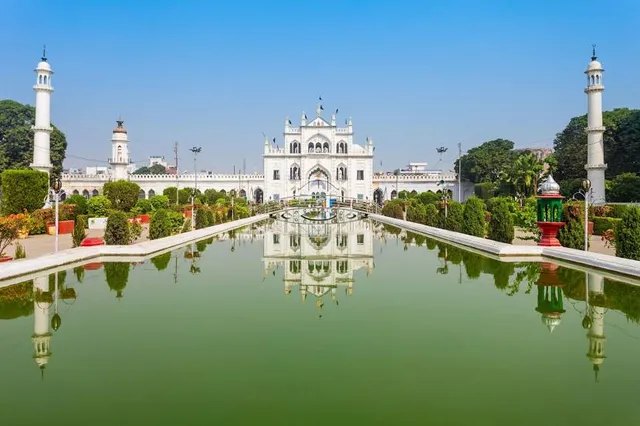
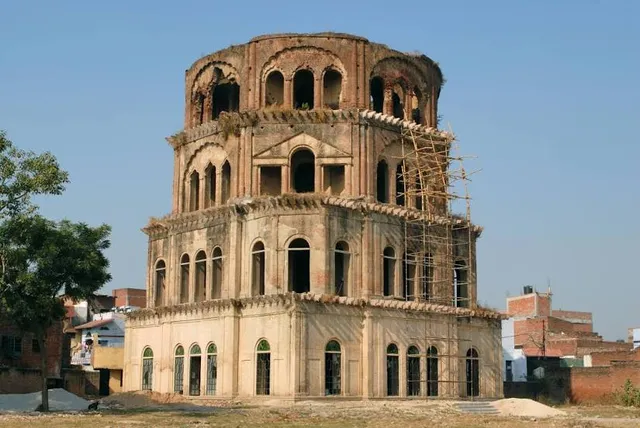
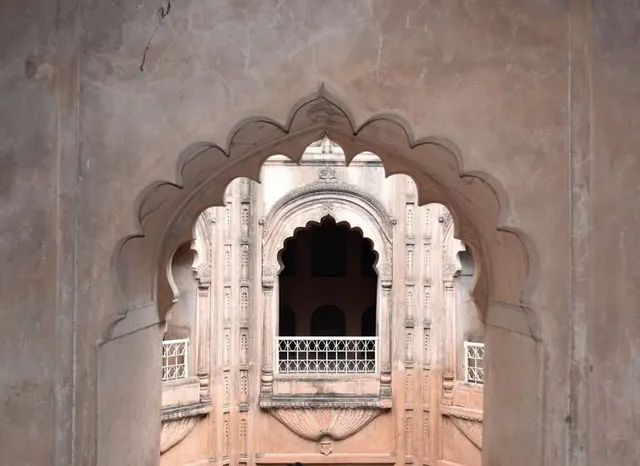
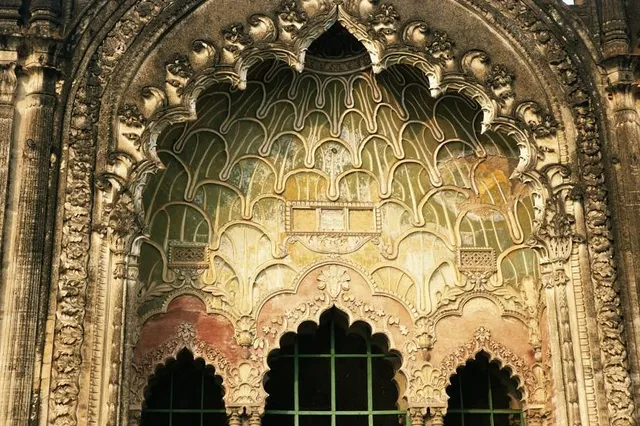
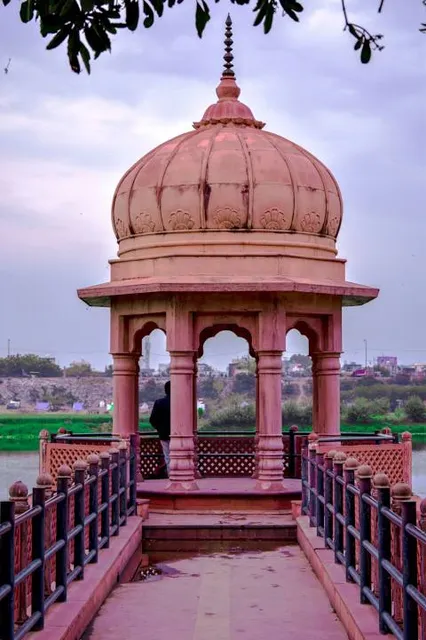
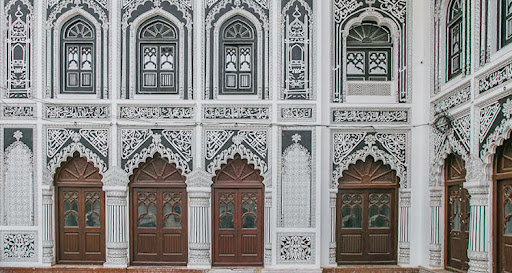
Chhota Imambara is built in the Mughal architectural style on an elevated platform. The complex is adorned with two imposing minarets erected on the edge of the platform. Along with that, the exterior of the mosque is exquisitely decorated with Quranic calligraphy and floral motifs. The structure of this famous tourist site in Lucknow also includes several turrets and a gilded dome on the top. Coming to the interior of the mosque, it includes stunning stuccos and gilt-edged mirrors. There is also a Tomb of Princess Zinat Algiya, Satkhanda, Satkhanda (watch tower), Hussainabad Mosque, and Naubat Khana (ceremonial gateway). Shehnasheen is one of two halls in Chhota Imambara which serves as the resting place of Zarih of Imam Hussain.
The other hall is Azakhana which is ornamented with stunning glass lamps and chandeliers. It is believed that these chandeliers were brought from Belgium. The Tomb of Princess Zinat Algiya is another highlight of this historical tourist place in Lucknow. There are also graves of Muhammad Shah Aliās son, his two sons-in-law, and his wife. The tomb is said to be the replica of Taj Mahal. Satkhanda is another major structure of the imposing Imambara. It is a watchtower which was supposed to be of seven stories but during the 4th storey construction of this tower, Muhammad Shah Ali died.
With a stunning white Mughal architecture adorned with a golden dome on the top and exquisite calligraphy on its exterior, Chhota Imambara is one of the top tourist attractions in Lucknow. Also known as Hussainabad Imambara, this marvelous structure is basically a congregation hall which was erected in the year 1838 for Shia Muslims by the Nawab of Awadh - Muhammad Ali Shah. Located in the west (some 2 km) of Asafi Imambara, this popular historical landmark in Lucknow also serves as the resting place of Muhammad Ali Shah and his mother. The Imamabara boasts an exquisite construction which is beautifully adorned with several turrets, gilded dome, and chandeliers. At present, Chhota Imambara is reckoned to be one of the must-visit places in Lucknow, mainly because of its grandeur and interesting historical significance. On the special occasions and festivals, the building is festooned with beautiful decoration and is often touted as Palace of Lights. Inside the Imamabar, there is located the crown of...
Ā Ā Ā Read moreChhota Imambara is one of Lucknowās most celebrated monuments, also known as the Imambara of Hussainabad. Built in 1838 by Muhammad Ali Shah, the third Nawab of Awadh, it is an iconic example of Mughal architecture infused with Persian and Indo-Islamic influences.
Architectural Significance: Chhota Imambara is often praised for its elegance and detailed ornamentation. The structure serves as a mausoleum for Muhammad Ali Shah and his family. The interiors are adorned with chandeliers, mirrors, and calligraphy, lending a regal and spiritual aura. The chandelier collection, imported from Belgium, is one of its defining features, earning it the nickname "Palace of Lights".
The complex also houses a large reflecting pool, which adds to the grandeur of the surroundings, as well as smaller structures like the Zinat Al-Masjid mosque. The tombs of the Nawab and his family rest in the central hall. The walls and ceilings inside are intricately decorated with Arabic inscriptions and beautifully crafted geometric designs.
Historical & Cultural Importance: The Imambara was initially constructed as a place of congregation for Shia Muslims during Muharram, commemorating the martyrdom of Imam Hussain. Over time, it became a significant site for religious and cultural gatherings in Lucknow. The blend of religion, art, and architecture reflects the sophisticated cultural milieu of the Nawabs of Awadh.
Surroundings: Located in the Hussainabad area, Chhota Imambara is part of a larger architectural ensemble that includes the Hussainabad Clock Tower, Satkhanda, and the Bara Imambara. These structures collectively showcase Lucknowās historical splendor and Mughal-era urban planning.
Visiting Experience: The Imambara is a popular tourist attraction, with visitors drawn by its peaceful ambiance, stunning architecture, and historical value. The best time to visit is during Muharram, when the structure is illuminated and beautifully decorated for the annual mourning procession.
Summary: Chhota Imambara is a must-visit for those interested in heritage, architecture, and religious history. Its intricate design and serene atmosphere provide a window into the cultural grandeur of...
Ā Ā Ā Read moreChota Imambara, also known as the Imambara Hussainabad Mubarak, is a historical monument located in Lucknow, Uttar Pradesh, India. It was built by Nawab Muhammad Shah Ali in 1838 as a tribute to his father, Nawab Muhammad Ali Shah. Here are some details about this magnificent structure:
Architectural Style: Chota Imambara is an excellent example of Mughal and Awadhi architecture. The monument reflects a blend of Persian and Indo-Islamic styles, featuring intricate designs, arches, and domes.
Main Structures: Imambara: The central building is the main prayer hall or Imambara. It houses the tombs of Muhammad Ali Shah and his mother. The interiors are adorned with chandeliers, gilded mirrors, and calligraphy. Bhulbhulaiya (Labyrinth): One of the unique features of Chota Imambara is the Bhulbhulaiya, an intricate maze of narrow passages inside the monument. It is said to have been designed to confuse intruders and visitors.
Chandeliers: Chota Imambara is renowned for its impressive collection of chandeliers, including one of the largest in the world. The grand chandelier in the main prayer hall is adorned with Belgian crystals and is a spectacular sight when illuminated.
Gardens and Courtyards: Surrounding the Imambara are well-maintained gardens and courtyards, adding to the overall charm of the monument. These areas provide a serene ambiance and are popular among visitors for relaxation and picnics.
Tazia: The complex also includes replicas of the tombs of various Shiite imams, especially those of Imam Hasan and Imam Husain. These replicas, known as "tazias," are paraded during the annual Muharram procession.
Festivals: Chota Imambara becomes a focal point of religious and cultural celebrations during Muharram. The annual observances attract large crowds, including processions and rituals that commemorate the martyrdom of Imam Husain.
Restoration: Over the years, efforts have been made to restore and maintain Chota Imambara. The monument stands as a testament to the rich cultural and architectural heritage of Lucknow.
Chota Imambara stands as a symbol of Nawabi grandeur and architectural excellence, drawing history enthusiasts, tourists, and devotees alike to witness its beauty and cultural...
Ā Ā Ā Read more