Pant was born in Kausani village, Bageshwar District in what is now the state of Uttarakhand, into an educated middle-class Brahmin family. His mother died a few hours after childbirth, and it appears he did not seek affection from his grandmother, father, or older brother, which later influenced his writing. His father served as the manager of a local tea garden, and was also a landholder, so Pant was never in want financially growing up. He grew up in the same village and always cherished a love for the beauty and flavor of rural India, which is evident in all his major works.
Pant enrolled in Queens College in Banaras in 1918. There he began reading the works of Sarojini Naidu and Rabindranath Tagore, as well as English Romantic poets. These figures would all have a powerful influence on his writing. In 1919 he moved to Allahabad to study at Muir College. As an anti-British gesture he only attended for two years. He then focused more on poetry, publishing Pallav in 1926. This collection established him as a literary giant of the Hindi renaissance that had begun with Jaishankar Prasad. In the introduction to the book, Pant expressed dissatisfaction that Hindi speakers "think in one language and express themselves in another. He felt that Braj was out of date and sought to help usher in a new national language.
Pant moved to Kalakankar in 1931. For nine years he lived an secluded life close to nature. Simultaneously he grew enamored with the works and thinking of Karl Marx and Mahatma Gandhi, dedicating several verses to them in the poetry he produced during this time. Pant went to Russia after being invited by Russian government under the impression that his poetic and intellectual prowess was being recognized while he became a tool for Russian propaganda. He was particularly chosen for his creation "Rhapsody to Lenin" in Hindi. The bureaucrats would get them drunk and after about fifteen days the alcohol would be withdrawn as the withdrawal would leave the subjects in a shaky position and the government would then pressure them in giving favorable statements to USSR or recruit them as informants. No guests were ever allowed in USSR without being specially selected for similar purposes. Pant returned to Almora in 1941 where he attended drama classes at the Uday Shankar Cultural Centre. He also read Aurobindo's The Life Divine, which heavily influenced him. Three years later he moved to Madras and then to Pondicherry, attending Aurobindo's ashram. In 1946 he returned to Allahabad to resume his role among the country's other leading writers.
He is considered one of the major poets of the Chhayavaadi school of Hindi literature. Pant mostly wrote in Sanskritized Hindi. Pant authored twenty-eight published works including poetry, verse plays and essays.
Apart from Chhayavaadi poems, Pant also wrote progressive, socialist and humanist poems. philosophical (influenced by Sri Aurobindo). Pant eventually moved beyond this style. As the late scholar and translator of Pant, David Rubin, writes, "In the early forties the new psychological and experimental "schools" were emerging. It was typical of both Nirala and Pant that they themselves anticipated these trends and, by the time the new approaches were in vogue, they had already moved on to newer areas of experimentation." Awards
In 1968, Pant became the first Hindi poet to receive the Jnanpith Award, considered to be India's highest accolade for literature. This was awarded to him for a collection of his most famous poems titled Chidambara. Pant received the "Sahitya Academy" award, given by India's Academy of Letters, for "Kala Aur Budhdha Chand".
The Indian Government honored him with Padma Bhushan in 1961.
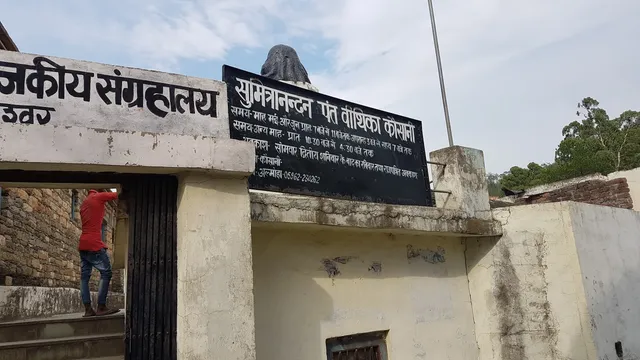
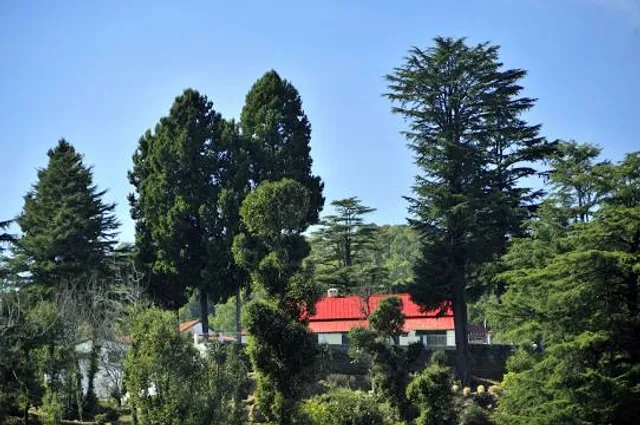
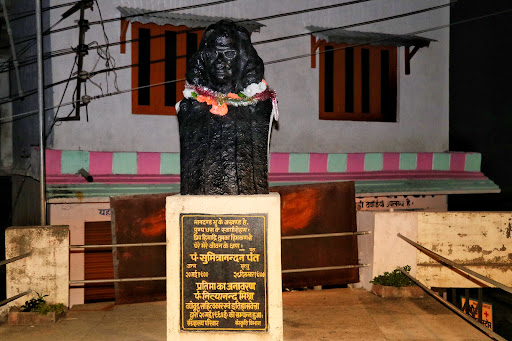
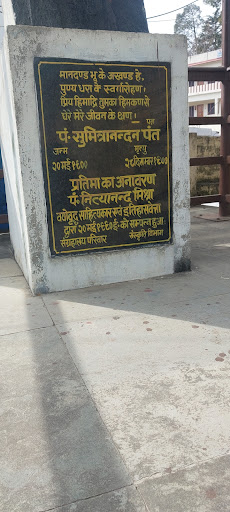
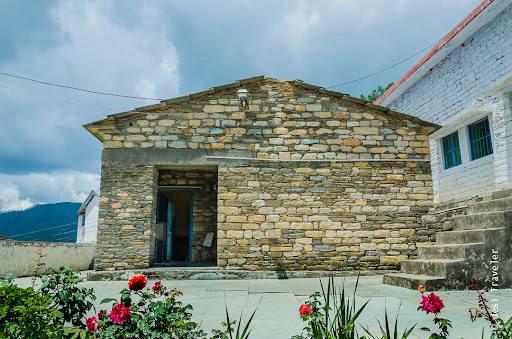
Sumitra Nandan Pant composed the Kulgeet of the Indian Institute of Technology Roorkee "Jayati Jayati Vidya Sansthan". Death Pant died on 28 December 1977, at Allahabad, Uttar Pradesh, India. His childhood house in Kausani has been converted into a museum. This museum displays his daily use articles, drafts of his poems, letters, his...
Read moreA must-visit place in Kausani! The Sumitranandan Pant Government Museum beautifully preserves the life and legacy of the great Hindi poet Sumitranandan Pant. The museum is clean, peaceful, and full of literary charm. You can explore his personal belongings, letters, manuscripts, and rare photographs — a true treat for poetry and literature lovers.
The staff is courteous and knowledgeable, and the serene surroundings make the experience even more special. It’s a small but very meaningful place that connects you to India’s rich literary heritage.
Highly recommended for anyone visiting Kausani — a perfect spot for culture, art, and...
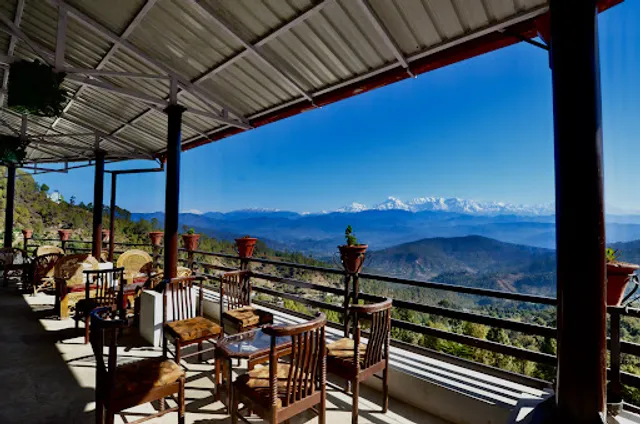
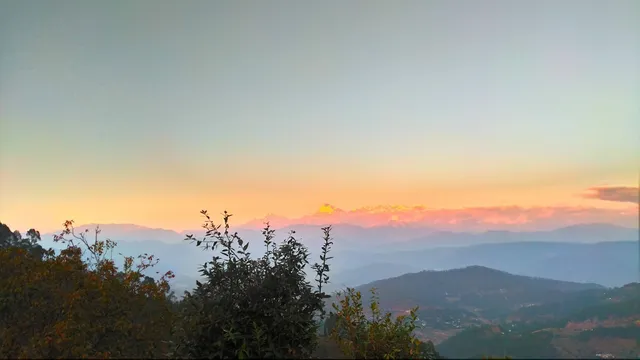
Read moreWhen we reached there on one summer evening, it was about to close we requested caretaker to open it for some extended time. He accepted our request but unluckily there was no power at that hour of the day. But still I managed to take some pictures. This place is ancient home of Sumitranandan Pant, which is situated in centre of the town. One can witness full beauty of Himalayas from the Veranda of his home. There are many memories of him and other poets of that time who visited this place. Not so popular place but still well maintained by the authorities. Must visit if you are in or around Kausani to witness his glorious life....
Read more