An exciting trip to Chennai without any learning of its legacies is useless. After some years you are sure to forget it. While a trip full of scholarly learning and enlightenment is too boring. Plan your trip in such a way so that you will get a clear picture of its ancient history and the rich cultural heritage of India as a whole. That is why, here, we are giving you information about a church, which is situated in the fort St. George. A Trip to the fort St. George place is itself interesting as it has a vast history behind it. Trip to the St. Mary's Church in Chennai is very easy as it is situated in the city itself. You can hire deluxe coaches, call taxis, which though rate higher, compared to the cheap auto rickshaws, are quite comfortable and prompt in service. If you are hiring the auto rickshaws, be careful about the fares even if they are metered.
Now to the church, but first, a little piece of history. The British East India Company entered India around 1600 AD for trading and Chennai was one of the earliest places of British occupancy in India. Fort St. George was constructed by the British in the year 1644. The fort also houses the secretariat of the Tamil Nadu state government. Besides the secretariat building there are various other offices, and the holy church revered by millions, St. Mary's Church. The St. Mary's Church, also called as the 'Westminster Abbey of the East', has its own importance. It is one of the ancient buildings of Chennai and also it is the first Anglican Church in Asia. It is also considered as the oldest Anglican Church east of Suez and has been named as St. Mary because its origin was laid down on the Annunciation day of the Virgin Mary. It is believed that on this divine day, the heavenly declaration of Jesus' birth had been announced to Mother Mary.
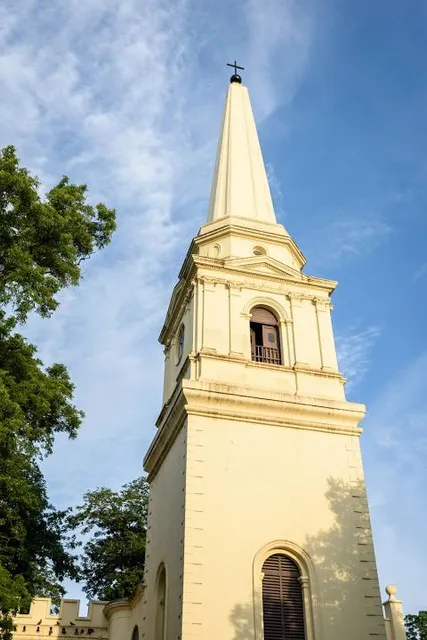
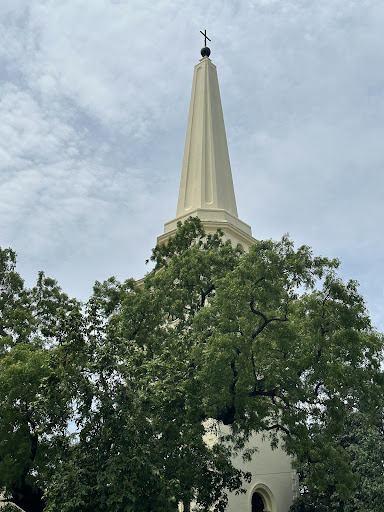
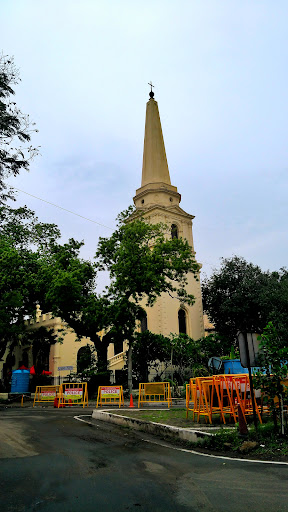
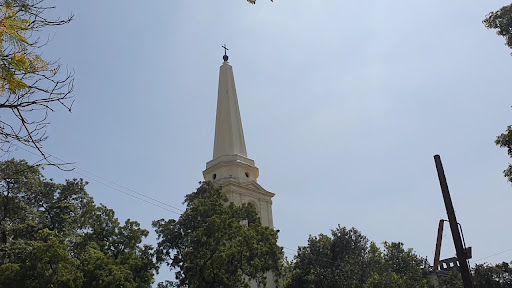
St. Mary's Church was constructed in 1678-1680 AD by the British East India Company. This historically very significant church has an old prayer house inside it that solemnized the marriages of important figures of East India Company like Robert Clive and Elihu Yale (Co-founder of Yale University in USA). The old church is full of commemorative inscriptions and memorials that date back to early 17th century. Baptism started to take place since 1680 and beautiful statuette adorned the fine walls of this church. The most special feature of the church is the high tower that is visible from a long distance. This tower was not part of the original structure and was rather added at the end of the seventeenth century on the orders of Sir John Goldsborough.
The church was originally built by William Dixon and designed by Edward Fowle. It is a bomb-proofed carved structure, which has the finishing touch of polished lime. The building of St. Mary's church had some later additions like the Sanctuary, Steeple, Tower and the Vestry. Colonel Gent added the church top in 1795. The interior of the church is embellished with the wooden and glass furnishings. You are bound to be overwhelmed by the intricate painting of the Last Supper, which is drawn by an unknown artist. Also, under the church's possession, are a 1660 Bible and also silver plates...
Read moreCSI St. Mary’s Church in Fort St. George is a beautiful sanctuary of faith and history, standing as a testament to the enduring spirit of Chennai's colonial past. Nestled within the historic walls of Fort St. George, this church is not just a place of worship but also a living museum of architectural and cultural heritage.
As you approach CSI St. Mary’s Church, its serene and dignified presence immediately commands attention. Built in 1680, it is the oldest Anglican church in India and has gracefully withstood the test of time. The church's exterior, with its classic colonial design, exudes a sense of timeless elegance. The whitewashed walls, tall spire, and arched windows create a picturesque silhouette against the backdrop of the fort.
Stepping inside the church, you are enveloped in an atmosphere of reverence and tranquility. The interior is a harmonious blend of simplicity and grandeur. The high vaulted ceilings, supported by elegant wooden beams, draw the eye upwards, creating a sense of spaciousness and light. The polished wooden pews, intricate pulpit, and beautifully carved altar reflect the meticulous craftsmanship of the era.
One of the most captivating features of CSI St. Mary’s Church is its stunning stained glass windows. These windows, with their vibrant colors and intricate designs, depict various biblical scenes and saints, casting a kaleidoscope of light onto the church’s interior. The interplay of light and shadow creates an ethereal ambiance, perfect for quiet reflection and prayer.
The church's historical significance is further underscored by its many memorials and plaques. These commemorative markers honor the lives of notable figures from the colonial period, including soldiers, officials, and community members. Each plaque tells a story, offering a poignant glimpse into the lives and legacies of those who have worshipped here over the centuries.
CSI St. Mary’s Church is also home to a magnificent pipe organ, one of the oldest in the country. The rich, melodious tones of the organ, when played during services, add to the church’s spiritual atmosphere, enveloping the congregation in a beautiful symphony of sound.
Beyond its architectural and historical treasures, CSI St. Mary’s Church is a vibrant and active place of worship. The church continues to serve the spiritual needs of its congregation, hosting regular services, weddings, and community events. This enduring legacy of faith and community engagement adds a living, dynamic dimension to the church’s historical significance.
Visiting CSI St. Mary’s Church is a deeply moving experience. Whether you come for a moment of quiet contemplation, to admire the architectural beauty, or to connect with the rich history of Fort St. George, the church offers a sanctuary of peace and a window into the past. It stands as a testament to the enduring power of faith, history, and community, inviting all who enter to pause, reflect, and...
Read moreThis quaint little church tucked away within the nerve centre of the erstwhile Madras Presidency and the present state of Tamil Nadu is more than 300 years old and is considered to be the oldest Anglican Church East of the Suez. Making it as old as the city itself. It has witnessed innumerable worship services, weddings and funerals.
The Church building comprises of a nave and two aisles with a wooden gallery made of Burma Teak which housed the seat of the Governor. The altarpiece includes a painting of 'The Last supper' rumoured to be painted by the famous Italian renaissance painter Raphael. The Church building had the distinction of being the only bomb proof structure within the 17th century Fort St George. The rounded roof almost 4 feet thick so as to cause the cannon balls to ricochet and the minimal usage of wood contributed to this effect. The tower and the spire was added later.
Today the Church continues to fulfil its role as a place of worship drawing in both worshipers and history buffs alike. A small museum inside the church comprising of old photographs, letters and documents piques the interest of the visitors who can take a walk through the city's history or choose to just sit in the old pews admiring the beauty of the old church or offer a silent prayer...
Read more