HTML SitemapExplore
logo
Find Things to DoFind The Best Restaurants

Madras High Court — Attraction in Zone 9 Teynampet

Name
Madras High Court
Description
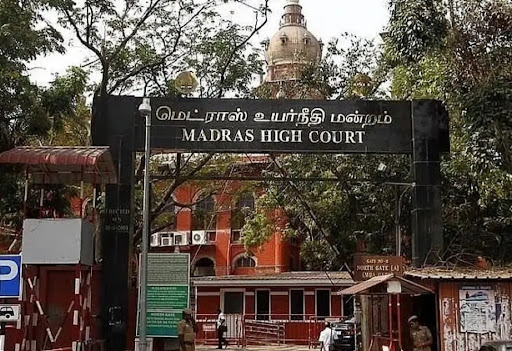
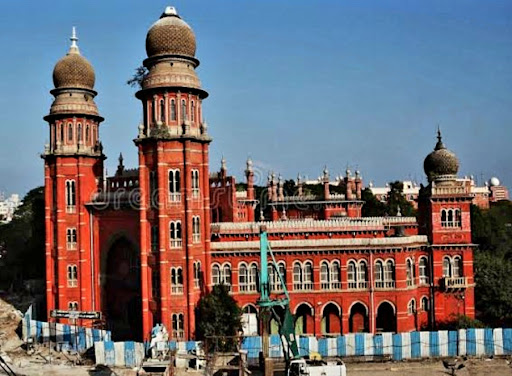
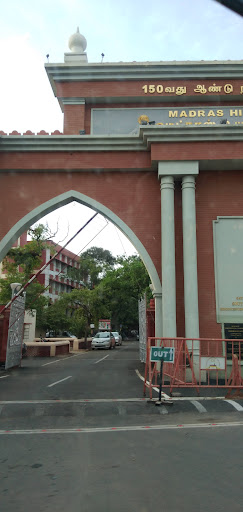
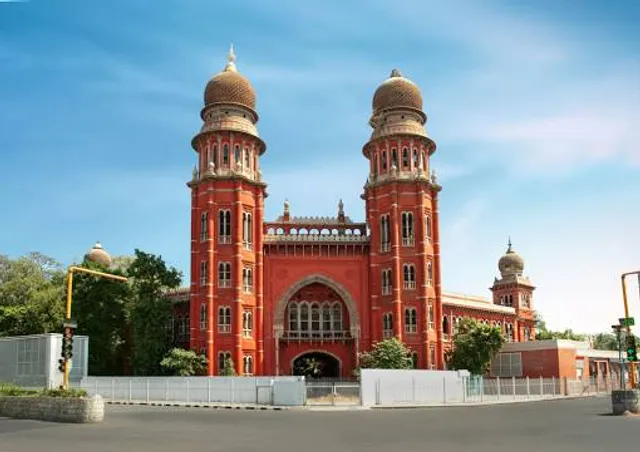
The Madras High Court is a High Court in India. It has appellate jurisdiction over the state of Tamil Nadu and the union territory of Puducherry. It is located in Chennai, and is the third oldest high court of India after the Calcutta High Court in Kolkata and Bombay High Court in Mumbai.
Nearby attractions
Fort St.George Museum
Rajaji Rd, near Legislature and Secretariat, Fort St George, Chennai, Tamil Nadu 600009, India
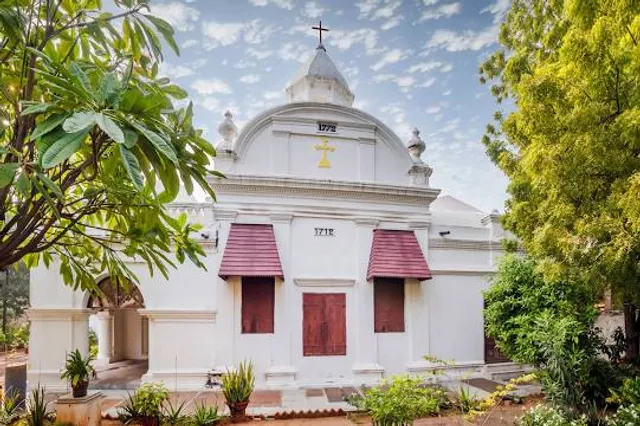
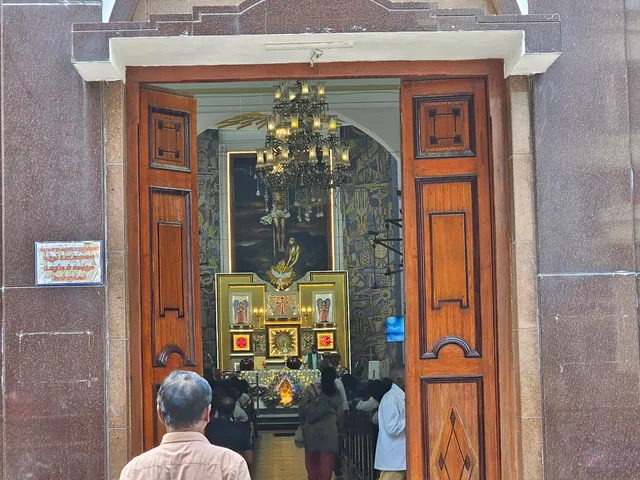
The Armenian Church
37VQ+H5M, 60/116, Armenian Street, near High Court, Parry's Corner, George Town, Chennai, Tamil Nadu 600001, India
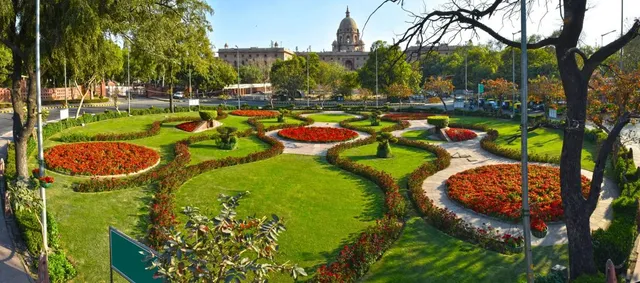
Secretariat Park, Chennai
19, Rajaji Salai, Fort St George, Chennai, Tamil Nadu 600009, India
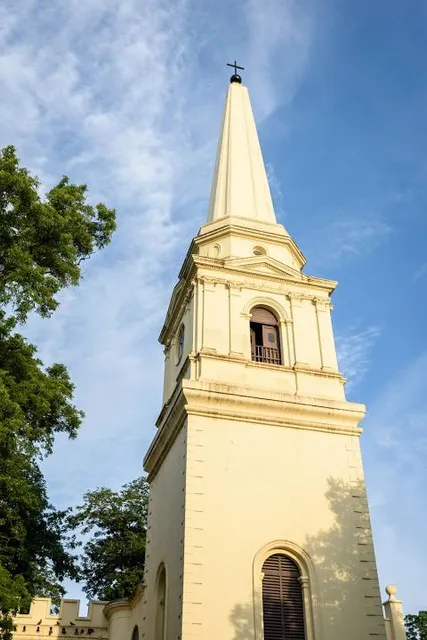
CSI St. Mary's Church
37HP+FJW, Shankar Rd, Rajaji Rd, Fort St George, Chennai, Tamil Nadu 600009, India
Kachaleeswarar Temple, Armenian Street
77, Armenian St, Mannadi, George Town, Chennai, Tamil Nadu 600001, India
Nearby restaurants
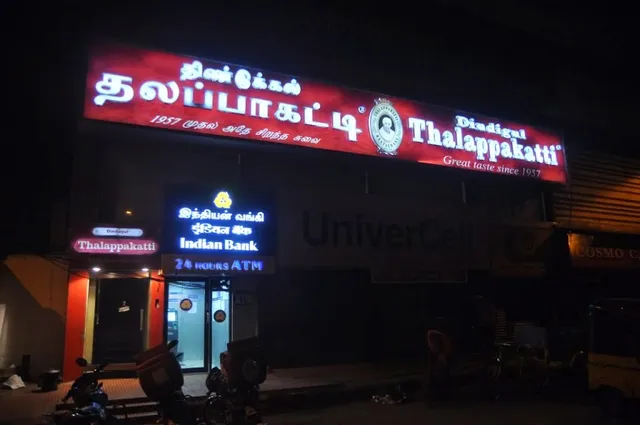
Dindigul Thalappakatti
New No.229, Old No.372, 375, NSC Bose Rd, George Town, Chennai, Tamil Nadu 600001, India
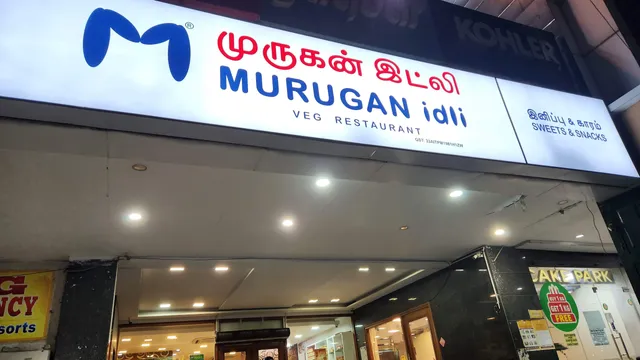
murugan idli shop
Armenian St, Parry's Corner, George Town, Chennai, Tamil Nadu 600001, India
Sangeetha Vegetarian Restaurant
111/54, Armenian St, Parry's Corner, George Town, Chennai, Tamil Nadu 600001, India
Anjappar Chettinad Restaurant
No. 122/123, Old, New No. 58, Armenian St, Parrys, George Town, Chennai, Tamil Nadu 600001, India
Hot Chips Veg Restaurant
225, NSC Bose Rd, Parry's Corner, George Town, Chennai, Tamil Nadu 600001, India
Suprapadham Sweets And Veg Restaurant
22/224, Sunkurama Chetty Street, Parry's Corner, George Town, Chennai, Tamil Nadu 600001, India
New Ramakrishna lunch home, Ramkrishna Bhavan
222, NSC Bose Rd, Elephant Gate, George Town, Chennai, Tamil Nadu 600001, India
Madurai Sri Thevar Hotel, Parrys
14, Sunkurama Chetty Street, Parrys, George Town, Chennai, Tamil Nadu 600001, India
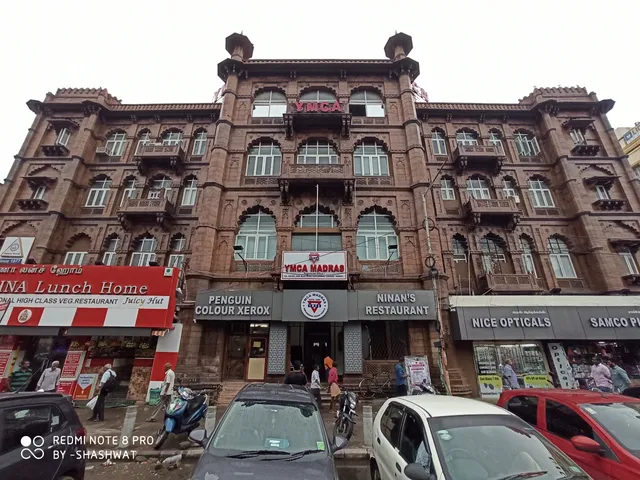
Ninan's Restaurant
223, NSC Bose Rd, Esplanade, George Town, Chennai, Tamil Nadu 600001, India
HOTEL SARAVANA BHAVAN
209, NSC Bose Rd, Parrys, George Town, Chennai, Tamil Nadu 600001, India
Related posts
Keywords
Madras High Court tourism.Madras High Court hotels.Madras High Court bed and breakfast. flights to Madras High Court.Madras High Court attractions.Madras High Court restaurants.Madras High Court travel.Madras High Court travel guide.Madras High Court travel blog.Madras High Court pictures.Madras High Court photos.Madras High Court travel tips.Madras High Court maps.Madras High Court things to do.
Madras High Court things to do, attractions, restaurants, events info and trip planning
Madras High Court
IndiaTamil NaduZone 9 TeynampetMadras High Court

Basic Info

Madras High Court

High Ct Rd, Parry's Corner, George Town, Chennai, Tamil Nadu 600104, India
4.3(426)
Open 24 hours
Save
spot

Ratings & Description

Info

The Madras High Court is a High Court in India. It has appellate jurisdiction over the state of Tamil Nadu and the union territory of Puducherry. It is located in Chennai, and is the third oldest high court of India after the Calcutta High Court in Kolkata and Bombay High Court in Mumbai.

Cultural
"accessibility"
attractions: Fort St.George Museum, The Armenian Church, Secretariat Park, Chennai, CSI St. Mary's Church, Kachaleeswarar Temple, Armenian Street, restaurants: Dindigul Thalappakatti, murugan idli shop, Sangeetha Vegetarian Restaurant, Anjappar Chettinad Restaurant, Hot Chips Veg Restaurant, Suprapadham Sweets And Veg Restaurant, New Ramakrishna lunch home, Ramkrishna Bhavan, Madurai Sri Thevar Hotel, Parrys, Ninan's Restaurant, HOTEL SARAVANA BHAVAN
logoLearn more insights from Wanderboat AI.
Phone
+91 44 2530 1349
Website
hcmadras.tn.gov.in

Plan your stay

hotel
Pet-friendly Hotels in Zone 9 Teynampet
Find a cozy hotel nearby and make it a full experience.
hotel
Affordable Hotels in Zone 9 Teynampet
Find a cozy hotel nearby and make it a full experience.
hotel
The Coolest Hotels You Haven't Heard Of (Yet)
Find a cozy hotel nearby and make it a full experience.
hotel
Trending Stays Worth the Hype in Zone 9 Teynampet
Find a cozy hotel nearby and make it a full experience.

Reviews

Nearby attractions of Madras High Court

Fort St.George Museum

The Armenian Church

Secretariat Park, Chennai

CSI St. Mary's Church

Kachaleeswarar Temple, Armenian Street

Fort St.George Museum

Fort St.George Museum

4.3

(2.6K)

Closed
Click for details
The Armenian Church

The Armenian Church

4.6

(209)

Open 24 hours
Click for details
Secretariat Park, Chennai

Secretariat Park, Chennai

4.4

(864)

Open 24 hours
Click for details
CSI St. Mary's Church

CSI St. Mary's Church

4.6

(210)

Open until 5:00 PM
Click for details

Things to do nearby

Candlelight: Tribute to Arijit Singh
Sun, Dec 7 • 6:00 PM
Museum Compound, Pantheon Road, Egmore, Chennai, 600008
View details
A Day with a Local - Cooking, Temple Visit and Fun
Sat, Dec 6 • 9:30 AM
Chennai, Tamil Nadu, 600033, India
View details
Musical Walk along Chennais Marina Beach
Sat, Dec 6 • 6:00 AM
Chennai, Tamil Nadu, 600009, India
View details

Nearby restaurants of Madras High Court

Dindigul Thalappakatti

murugan idli shop

Sangeetha Vegetarian Restaurant

Anjappar Chettinad Restaurant

Hot Chips Veg Restaurant

Suprapadham Sweets And Veg Restaurant

New Ramakrishna lunch home, Ramkrishna Bhavan

Madurai Sri Thevar Hotel, Parrys

Ninan's Restaurant

HOTEL SARAVANA BHAVAN

Dindigul Thalappakatti

Dindigul Thalappakatti

4.3

(3.4K)

$$$

Click for details
murugan idli shop

murugan idli shop

4.0

(1.6K)

Click for details
Sangeetha Vegetarian Restaurant

Sangeetha Vegetarian Restaurant

4.2

(1.6K)

Click for details
Anjappar Chettinad Restaurant

Anjappar Chettinad Restaurant

3.8

(1.1K)

Click for details
Get the Appoverlay
Get the AppOne tap to find yournext favorite spots!
Wanderboat LogoWanderboat

Your everyday Al companion for getaway ideas

CompanyAbout Us
InformationAI Trip PlannerSitemap
SocialXInstagramTiktokLinkedin
LegalTerms of ServicePrivacy Policy

Get the app

© 2025 Wanderboat. All rights reserved.
logo

Posts

Pankaj DubeyPankaj Dubey
The Madras High Court is the second oldest High Court of India after the Calcutta High Court in Kolkata. It is located in Chennai, Tamil Nadu. The court is one of the three High Courts in India established in the three Presidency Towns of Madras, Bombay and Calcutta by letters patent granted by Queen Victoria, bearing date 26 June 1862. It exercises original jurisdiction over the city of Chennai and appellate jurisdiction over the entire state of Tamil Nadu and Union territory of Puducherry, as well as extraordinary original jurisdiction, civil and criminal, under the letters patent and special original jurisdiction for the issue of writs under the Constitution of India. Covering 107 acres, the court complex is one of the largest in the world, next only to Supreme Court of the United Kingdom, London. It consists of 74 judges and a chief justice who are in charge of the general policy adopted in the administration of justice. In September 2016, the centre government forwarded the names of 15 new judges to the President for his signature on their warrants of appointment. Of the 15, nine are from among lawyers and six from the subordinate judiciary. Justice Sanjib Banerjee is the current Chief Justice of Madras High Court. He assumed office on 4 January 2021. From 1817 to 1862, the Supreme Court of Madras was situated in a building opposite the Chennai Beach railway station. From 1862 to 1892, the High Court was also housed in that building. The present buildings were officially inaugurated on 12 July 1892, when the then Madras Governor, Beilby, Baron Wenlock, handed over the key to the then Chief Justice Sir Arthur Collins. British India's three presidency towns of Madras (Chennai), Bombay (Mumbai), and Calcutta (Kolkata) were each granted a High Court by letters patent dated 26 June 1862. The letters patent were issued by Queen Victoria under the authority of the British parliament's Indian High Courts Act 1861. The three courts remain unique in modern India, having been established under British royal charter; this is in contrast with the country's other high courts, which have been directly established under the Indian Constitution. However, the Constitution of India recognises the status of the older courts. The Madras High Court was formed by merging the Supreme Court of Judicature at Madras, and the Sadr Diwani Adalat. The Court was required to decide cases in accordance with justice, equity and good conscience. The earliest judges of the High Court included Judges Holloway, Innes, and Morgan. The first Indian to sit as a judge of the High Court was Justice T. Muthuswamy Iyer. Other early Indian judges included Justices V. Krishnaswamy Iyer and P. R. Sundaram Iyer. The Madras High Court was a pioneer in Original Side jurisdiction reform in favor of Indian practitioners as early as the 1870s. The Madras High Court's history means that the decisions of the British Judicial Committee of the Privy Council are still binding on it, provided that the ratio of a case has not been overruled by the Supreme Court of India. Although the name of the city was changed from Madras to Chennai in 1996, the Court as an institution did not follow suit and retained the name as the Madras High Court. However, a Bill to rename the Madras High Court as the Chennai High Court was approved by the cabinet on 5 July 2016, along with the change of name of the Calcutta High Court and Bombay High Court as Kolkata High Court and Mumbai High Court, respectively. The Bill called High Courts (Alternation of Names) Bill has been introduced in the Lok Sabha on 19 July 2016. The Bill is yet to be passed by both Houses of Parliament. However, the Tamil Nadu Legislative Assembly has passed a unanimous resolution appealing to the Central Government to rename the court as High Court of Tamil Nadu since the Court serves the whole state.
A J BashhaA J Bashha
The Madras High Court, located in Chennai, Tamil Nadu, is one of the oldest and most prominent high courts in India. It was established on June 26, 1862, by Queen Victoria’s Letters Patent, making it one of the three Chartered High Courts in British India, along with the Calcutta High Court and Bombay High Court. Constructed in 1892 during the British colonial era, the court complex is a remarkable example of Indo-Gothic architecture, featuring minarets at the entrance, Indo-Saracenic style arched doorways, intricately designed windows, and distinct columns. As one of the largest judicial compounds in the country, it is a recognized heritage structure that has been carefully preserved over the years. The Madras High Court has original jurisdiction over Chennai and appellate jurisdiction over the entire state of Tamil Nadu and the Union Territory of Puducherry. Additionally, it exercises extraordinary original jurisdiction in civil and criminal matters under the Letters Patent, along with special original jurisdiction for issuing writs under the Constitution of India. The Hon’ble Chief Justice, as the head of the judiciary, is responsible for overseeing the administration of justice in the High Court and across the state. The judicial system in Tamil Nadu is composed of District Judges, Senior Civil Judges, and Civil Judges in the civil courts, while the criminal courts include Sessions Judges, Chief Judicial Magistrates, and Assistant Sessions Judges. Located in the busy Parry’s Corner area of Chennai, the court is well connected by various modes of public transport, including buses, trains, metro trains, auto-rickshaws, and cabs. Thousands of people, including lawyers, litigants, and administrative staff, rely on the High Court for judicial proceedings and legal matters. Even after more than 150 years, the Madras High Court remains a vital institution, symbolizing judicial excellence, historical legacy, and legal jurisprudence in India.
Raghunandan RamachandranRaghunandan Ramachandran
Madras High Court at Chennai: The High Court of Judicature at Madras is a High Court located in Chennai, India. It has appellate jurisdiction over the state of Tamil Nadu and the union territory of Puducherry. It is one of the oldest high courts of India along with Calcutta High Court in Kolkata and Bombay High Court in Mumbai. The Madras High Court is one of four charter high courts of colonial India established in the four Presidency Towns of Madras, Bombay, Allahabad and Calcutta by letters patent granted by Queen Victoria, dated 26 June 1862. It exercises original jurisdiction over the city of Chennai, as well as extraordinary original jurisdiction, civil and criminal, under the letters patent and special original jurisdiction for the issue of writs under the Constitution of India. Covering 107 acres, the court complex is one of the largest in the world, second only to the Supreme Court of the United Kingdom. The four-storey administrative building serves hundreds of litigants every day. History: Tree-lined squares and red-brick buildings have witnessed many important moments in Indian legal history. Yet, the 127-year-old Madras High Court complex remains a relatively unexplored part of the city. Designed by JW Brassington, then consulting architect to the Government, its grand Indo-Saracenic structure was completed by Henry Irwin in 1892. Home to two of the city’s early lighthouses, one a Doric column of Pallavaram granite, the other atop a dome on the main building fuelled by kerosene and visible 32 miles out at sea, the complex’s turreted magnificence was what many first saw of Madras when they came in by masula boats from the bay.
See more posts
See more posts
hotel
Find your stay

Pet-friendly Hotels in Zone 9 Teynampet

Find a cozy hotel nearby and make it a full experience.

The Madras High Court is the second oldest High Court of India after the Calcutta High Court in Kolkata. It is located in Chennai, Tamil Nadu. The court is one of the three High Courts in India established in the three Presidency Towns of Madras, Bombay and Calcutta by letters patent granted by Queen Victoria, bearing date 26 June 1862. It exercises original jurisdiction over the city of Chennai and appellate jurisdiction over the entire state of Tamil Nadu and Union territory of Puducherry, as well as extraordinary original jurisdiction, civil and criminal, under the letters patent and special original jurisdiction for the issue of writs under the Constitution of India. Covering 107 acres, the court complex is one of the largest in the world, next only to Supreme Court of the United Kingdom, London. It consists of 74 judges and a chief justice who are in charge of the general policy adopted in the administration of justice. In September 2016, the centre government forwarded the names of 15 new judges to the President for his signature on their warrants of appointment. Of the 15, nine are from among lawyers and six from the subordinate judiciary. Justice Sanjib Banerjee is the current Chief Justice of Madras High Court. He assumed office on 4 January 2021. From 1817 to 1862, the Supreme Court of Madras was situated in a building opposite the Chennai Beach railway station. From 1862 to 1892, the High Court was also housed in that building. The present buildings were officially inaugurated on 12 July 1892, when the then Madras Governor, Beilby, Baron Wenlock, handed over the key to the then Chief Justice Sir Arthur Collins. British India's three presidency towns of Madras (Chennai), Bombay (Mumbai), and Calcutta (Kolkata) were each granted a High Court by letters patent dated 26 June 1862. The letters patent were issued by Queen Victoria under the authority of the British parliament's Indian High Courts Act 1861. The three courts remain unique in modern India, having been established under British royal charter; this is in contrast with the country's other high courts, which have been directly established under the Indian Constitution. However, the Constitution of India recognises the status of the older courts. The Madras High Court was formed by merging the Supreme Court of Judicature at Madras, and the Sadr Diwani Adalat. The Court was required to decide cases in accordance with justice, equity and good conscience. The earliest judges of the High Court included Judges Holloway, Innes, and Morgan. The first Indian to sit as a judge of the High Court was Justice T. Muthuswamy Iyer. Other early Indian judges included Justices V. Krishnaswamy Iyer and P. R. Sundaram Iyer. The Madras High Court was a pioneer in Original Side jurisdiction reform in favor of Indian practitioners as early as the 1870s. The Madras High Court's history means that the decisions of the British Judicial Committee of the Privy Council are still binding on it, provided that the ratio of a case has not been overruled by the Supreme Court of India. Although the name of the city was changed from Madras to Chennai in 1996, the Court as an institution did not follow suit and retained the name as the Madras High Court. However, a Bill to rename the Madras High Court as the Chennai High Court was approved by the cabinet on 5 July 2016, along with the change of name of the Calcutta High Court and Bombay High Court as Kolkata High Court and Mumbai High Court, respectively. The Bill called High Courts (Alternation of Names) Bill has been introduced in the Lok Sabha on 19 July 2016. The Bill is yet to be passed by both Houses of Parliament. However, the Tamil Nadu Legislative Assembly has passed a unanimous resolution appealing to the Central Government to rename the court as High Court of Tamil Nadu since the Court serves the whole state.
Pankaj Dubey

Pankaj Dubey

hotel
Find your stay

Affordable Hotels in Zone 9 Teynampet

Find a cozy hotel nearby and make it a full experience.

Get the Appoverlay
Get the AppOne tap to find yournext favorite spots!
The Madras High Court, located in Chennai, Tamil Nadu, is one of the oldest and most prominent high courts in India. It was established on June 26, 1862, by Queen Victoria’s Letters Patent, making it one of the three Chartered High Courts in British India, along with the Calcutta High Court and Bombay High Court. Constructed in 1892 during the British colonial era, the court complex is a remarkable example of Indo-Gothic architecture, featuring minarets at the entrance, Indo-Saracenic style arched doorways, intricately designed windows, and distinct columns. As one of the largest judicial compounds in the country, it is a recognized heritage structure that has been carefully preserved over the years. The Madras High Court has original jurisdiction over Chennai and appellate jurisdiction over the entire state of Tamil Nadu and the Union Territory of Puducherry. Additionally, it exercises extraordinary original jurisdiction in civil and criminal matters under the Letters Patent, along with special original jurisdiction for issuing writs under the Constitution of India. The Hon’ble Chief Justice, as the head of the judiciary, is responsible for overseeing the administration of justice in the High Court and across the state. The judicial system in Tamil Nadu is composed of District Judges, Senior Civil Judges, and Civil Judges in the civil courts, while the criminal courts include Sessions Judges, Chief Judicial Magistrates, and Assistant Sessions Judges. Located in the busy Parry’s Corner area of Chennai, the court is well connected by various modes of public transport, including buses, trains, metro trains, auto-rickshaws, and cabs. Thousands of people, including lawyers, litigants, and administrative staff, rely on the High Court for judicial proceedings and legal matters. Even after more than 150 years, the Madras High Court remains a vital institution, symbolizing judicial excellence, historical legacy, and legal jurisprudence in India.
A J Bashha

A J Bashha

hotel
Find your stay

The Coolest Hotels You Haven't Heard Of (Yet)

Find a cozy hotel nearby and make it a full experience.

hotel
Find your stay

Trending Stays Worth the Hype in Zone 9 Teynampet

Find a cozy hotel nearby and make it a full experience.

Madras High Court at Chennai: The High Court of Judicature at Madras is a High Court located in Chennai, India. It has appellate jurisdiction over the state of Tamil Nadu and the union territory of Puducherry. It is one of the oldest high courts of India along with Calcutta High Court in Kolkata and Bombay High Court in Mumbai. The Madras High Court is one of four charter high courts of colonial India established in the four Presidency Towns of Madras, Bombay, Allahabad and Calcutta by letters patent granted by Queen Victoria, dated 26 June 1862. It exercises original jurisdiction over the city of Chennai, as well as extraordinary original jurisdiction, civil and criminal, under the letters patent and special original jurisdiction for the issue of writs under the Constitution of India. Covering 107 acres, the court complex is one of the largest in the world, second only to the Supreme Court of the United Kingdom. The four-storey administrative building serves hundreds of litigants every day. History: Tree-lined squares and red-brick buildings have witnessed many important moments in Indian legal history. Yet, the 127-year-old Madras High Court complex remains a relatively unexplored part of the city. Designed by JW Brassington, then consulting architect to the Government, its grand Indo-Saracenic structure was completed by Henry Irwin in 1892. Home to two of the city’s early lighthouses, one a Doric column of Pallavaram granite, the other atop a dome on the main building fuelled by kerosene and visible 32 miles out at sea, the complex’s turreted magnificence was what many first saw of Madras when they came in by masula boats from the bay.
Raghunandan Ramachandran

Raghunandan Ramachandran

See more posts
See more posts

Reviews of Madras High Court

4.3
(426)
avatar
5.0
4y

The Madras High Court is the second oldest High Court of India after the Calcutta High Court in Kolkata. It is located in Chennai, Tamil Nadu. The court is one of the three High Courts in India established in the three Presidency Towns of Madras, Bombay and Calcutta by letters patent granted by Queen Victoria, bearing date 26 June 1862. It exercises original jurisdiction over the city of Chennai and appellate jurisdiction over the entire state of Tamil Nadu and Union territory of Puducherry, as well as extraordinary original jurisdiction, civil and criminal, under the letters patent and special original jurisdiction for the issue of writs under the Constitution of India. Covering 107 acres, the court complex is one of the largest in the world, next only to Supreme Court of the United Kingdom, London.

It consists of 74 judges and a chief justice who are in charge of the general policy adopted in the administration of justice. In September 2016, the centre government forwarded the names of 15 new judges to the President for his signature on their warrants of appointment. Of the 15, nine are from among lawyers and six from the subordinate judiciary.

Justice Sanjib Banerjee is the current Chief Justice of Madras High Court. He assumed office on 4 January 2021.

From 1817 to 1862, the Supreme Court of Madras was situated in a building opposite the Chennai Beach railway station. From 1862 to 1892, the High Court was also housed in that building. The present buildings were officially inaugurated on 12 July 1892, when the then Madras Governor, Beilby, Baron Wenlock, handed over the key to the then Chief Justice Sir Arthur Collins.

British India's three presidency towns of Madras (Chennai), Bombay (Mumbai), and Calcutta (Kolkata) were each granted a High Court by letters patent dated 26 June 1862. The letters patent were issued by Queen Victoria under the authority of the British parliament's Indian High Courts Act 1861. The three courts remain unique in modern India, having been established under British royal charter; this is in contrast with the country's other high courts, which have been directly established under the Indian Constitution. However, the Constitution of India recognises the status of the older courts.

The Madras High Court was formed by merging the Supreme Court of Judicature at Madras, and the Sadr Diwani Adalat. The Court was required to decide cases in accordance with justice, equity and good conscience. The earliest judges of the High Court included Judges Holloway, Innes, and Morgan. The first Indian to sit as a judge of the High Court was Justice T. Muthuswamy Iyer. Other early Indian judges included Justices V. Krishnaswamy Iyer and P. R. Sundaram Iyer.

The Madras High Court was a pioneer in Original Side jurisdiction reform in favor of Indian practitioners as early as the 1870s.

The Madras High Court's history means that the decisions of the British Judicial Committee of the Privy Council are still binding on it, provided that the ratio of a case has not been overruled by the Supreme Court of India.

Although the name of the city was changed from Madras to Chennai in 1996, the Court as an institution did not follow suit and retained the name as the Madras High Court. However, a Bill to rename the Madras High Court as the Chennai High Court was approved by the cabinet on 5 July 2016, along with the change of name of the Calcutta High Court and Bombay High Court as Kolkata High Court and Mumbai High Court, respectively. The Bill called High Courts (Alternation of Names) Bill has been introduced in the Lok Sabha on 19 July 2016. The Bill is yet to be passed by both Houses of Parliament. However, the Tamil Nadu Legislative Assembly has passed a unanimous resolution appealing to the Central Government to rename the court as High Court of Tamil Nadu since the Court serves the...

   Read more
avatar
5.0
7y

Once of the oldest building in Chennai , From 1817 to 1862, the Supreme Court of Madras, the precursor to the present Madras High Court, was situated in a building opposite the Chennai Beach railway station. From 1862 to 1892, the High Court was also housed in that building. The present buildings were officially inaugurated on 12 July 1892, when the then Madras Governor, Beilby, Baron Wenlock, handed over the key to the then Chief Justice Sir Arthur Collins

The statue of Manuneethi Cholan in the Madras High Court premises British India's three presidency towns of Madras (Chennai), Bombay (Mumbai), and Calcutta (Kolkata) were each granted a High Court by letters patent dated 26 June 1862.[5] The letters patent were issued by Queen Victoria under the authority of the British parliament's Indian High Courts Act 1861. The three courts remain unique in modern India, having been established under British royal charter; this is in contrast with the country's other high courts, which have been directly established under the Indian Constitution. However, the Constitution of India recognises the status of the older courts.

The Madras High Court was formed by merging the Supreme Court of Judicature at Madras, and the Sudder Dewanny Adawlut. The Court was required to decide cases in accordance with justice, equity and good conscience. The earliest judges of the High Court included Judges Holloway, Innes and Morgan. The first Indian to sit as a judge of the High Court was Justice T. Muthuswamy Iyer. Other early Indian judges included Justices V. Krishnaswamy Iyer and P. R. Sundaram Iyer.

The Madras High Court was a pioneer in Original Side jurisdiction reform in favour of Indian practitioners as early as the 1870s.

The Madras High Court's history means that the decisions of the British Judicial Committee of the Privy Council are still binding on it, provided that the ratio of a case has not been over-ruled by the Supreme Court of India.

Although the name of the city was changed from Madras to Chennai in 1996, the Court as an institution did not follow suit, and retained the name as the Madras High Court. However, a Bill to rename the Madras High Court as the Chennai High Court was approved by the cabinet on 5 July 2016, along with the change of name of the Calcutta High Court and Bombay High Court as Kolkata High Court and Mumbai High Court respectively.[6] The Bill called High Courts (Alternation of Names) Bill has been introduced in the Lok Sabha on 19 July 2016.[7] The Bill is yet to be passed by both Houses of Parliament. However, the Tamil Nadu Legislative Assembly has passed a unanimous resolution appealing to the Central Government to rename the court as High Court of Tamil Nadu since the Court serves...

   Read more
avatar
4.0
44w

The Madras High Court, located in Chennai, Tamil Nadu, is one of the oldest and most prominent high courts in India. It was established on June 26, 1862, by Queen Victoria’s Letters Patent, making it one of the three Chartered High Courts in British India, along with the Calcutta High Court and Bombay High Court.

Constructed in 1892 during the British colonial era, the court complex is a remarkable example of Indo-Gothic architecture, featuring minarets at the entrance, Indo-Saracenic style arched doorways, intricately designed windows, and distinct columns. As one of the largest judicial compounds in the country, it is a recognized heritage structure that has been carefully preserved over the years.

The Madras High Court has original jurisdiction over Chennai and appellate jurisdiction over the entire state of Tamil Nadu and the Union Territory of Puducherry. Additionally, it exercises extraordinary original jurisdiction in civil and criminal matters under the Letters Patent, along with special original jurisdiction for issuing writs under the Constitution of India. The Hon’ble Chief Justice, as the head of the judiciary, is responsible for overseeing the administration of justice in the High Court and across the state. The judicial system in Tamil Nadu is composed of District Judges, Senior Civil Judges, and Civil Judges in the civil courts, while the criminal courts include Sessions Judges, Chief Judicial Magistrates, and Assistant Sessions Judges.

Located in the busy Parry’s Corner area of Chennai, the court is well connected by various modes of public transport, including buses, trains, metro trains, auto-rickshaws, and cabs. Thousands of people, including lawyers, litigants, and administrative staff, rely on the High Court for judicial proceedings and legal matters. Even after more than 150 years, the Madras High Court remains a vital institution, symbolizing judicial excellence, historical legacy, and legal...

   Read more
Page 1 of 7
Previous
Next