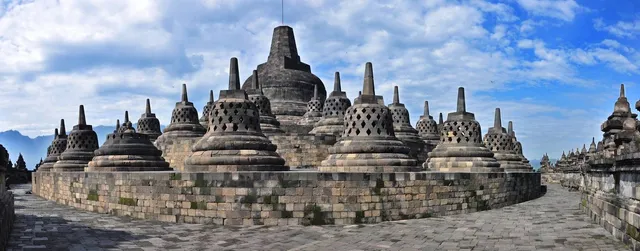
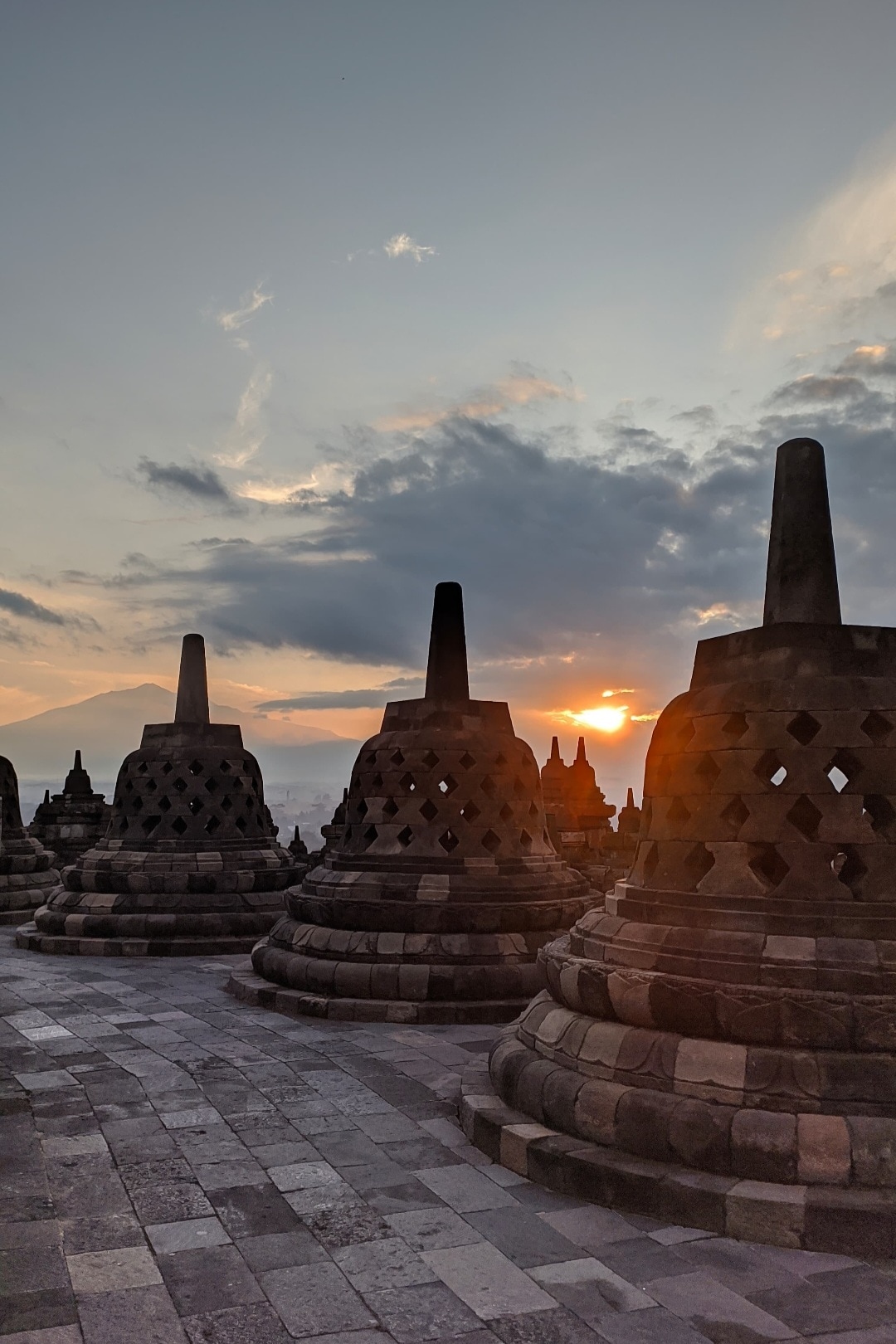
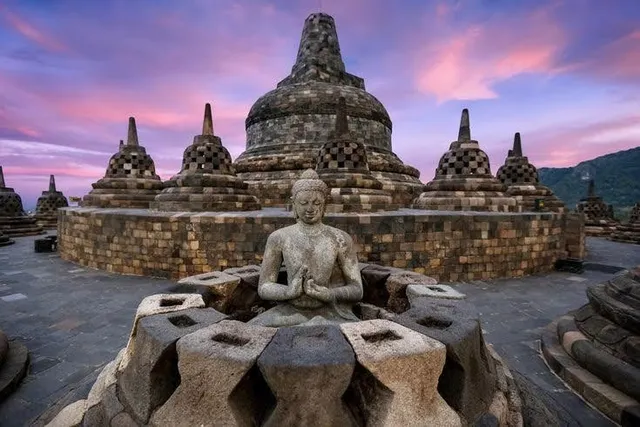
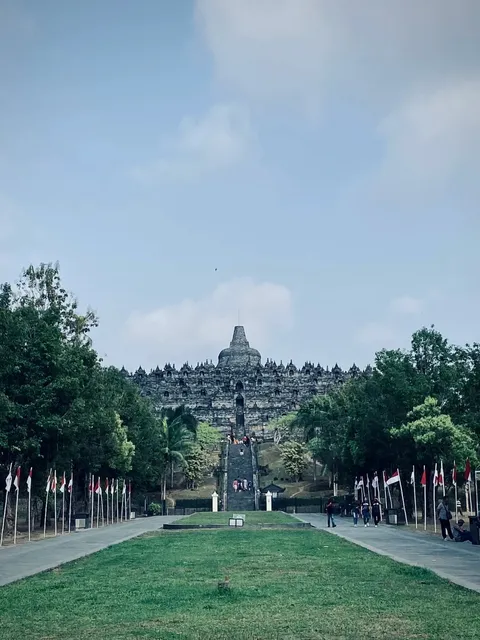
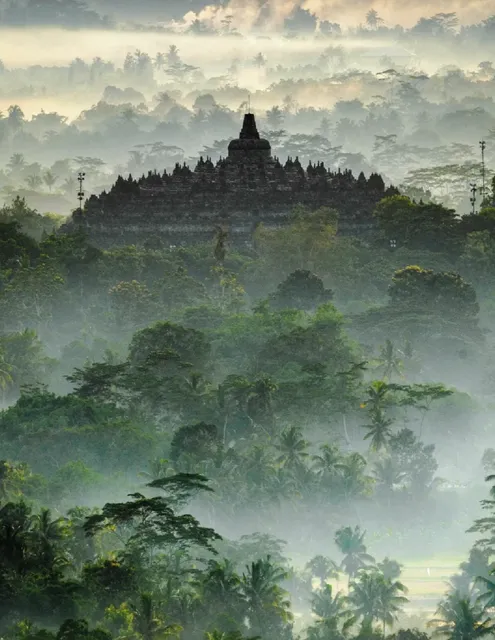
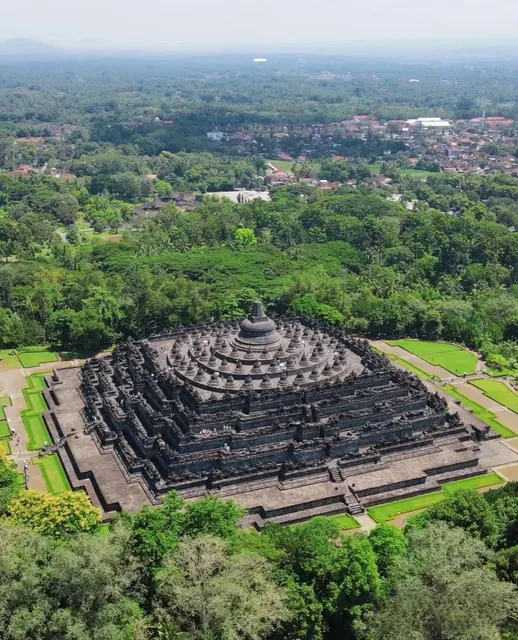
Candi Borobudur, also known as the Borobudur Temple, is one of the most significant and iconic Buddhist monuments in the world. Located in Central Java, Indonesia, Borobudur stands as a testament to the country's rich history and cultural heritage. Here are some key points about Borobudur: Historical Background Construction: Borobudur was built during the Sailendra Dynasty, around the 8th and 9th centuries. Its construction is generally attributed to the reign of King Samaratungga. Architecture: The temple is an example of Javanese Buddhist architecture, which blends Indian influences with indigenous Indonesian elements. Design and Structure Layout: The temple is designed in the form of a giant mandala, symbolizing the Buddhist cosmology. Terraces: It consists of nine stacked platforms, six square and three circular, topped by a central dome. Reliefs: The walls and balustrades are adorned with 2,672 relief panels and 504 Buddha statues. Narratives: The reliefs depict various narratives such as the life of the Buddha (Lalitavistara), the Jataka tales, and other Buddhist teachings. Stupas: The circular platforms are home to 72 openwork stupas, each containing a statue of the Buddha in a meditation pose. Cultural and Religious Significance Borobudur serves as a pilgrimage site for Buddhists. Pilgrims walk through the different levels of the monument to symbolize their path to enlightenment. The temple also holds significant annual religious ceremonies, such as Vesak Day, which commemorates the birth, enlightenment, and death of the Buddha. Rediscovery and Restoration Rediscovery: The temple was abandoned and gradually covered by volcanic ash and jungle growth. It was rediscovered in 1814 by Sir Thomas Stamford Raffles, the British ruler of Java. Restoration: A major restoration project was undertaken between 1975 and 1982, spearheaded by the Indonesian government and UNESCO. Borobudur was subsequently designated a UNESCO World Heritage Site in 1991. Tourism Borobudur is one of Indonesia's most visited tourist attractions, drawing visitors from around the world. The site offers a range of activities including guided tours, sunrise viewings, and cultural performances. Conservation Challenges The temple faces ongoing threats from natural elements such as volcanic ash from nearby Mount Merapi, weathering, and environmental degradation. Efforts continue to preserve and protect Borobudur through various conservation programs. Conclusion Candi Borobudur is not only an architectural marvel but also a profound representation of Buddhist philosophy and Indonesian cultural history. Its grandeur and intricacy continue to inspire awe and reverence, making it a vital piece of the global heritage. For those interested in history, architecture, or spirituality, Borobudur provides a deeply enriching experience, encapsulating centuries of human artistry...
Read moreVisiting the largest Buddhist temple in the world and one of the most interesting UNESCO World sites, and one of the seven Wonders of the world was one of the highlights of my trip. Navigating around when and how to go, which kind of ticket to buy, was challenging. I heard a lot of stories and with this review I am hoping to provide an accurate up to date experience
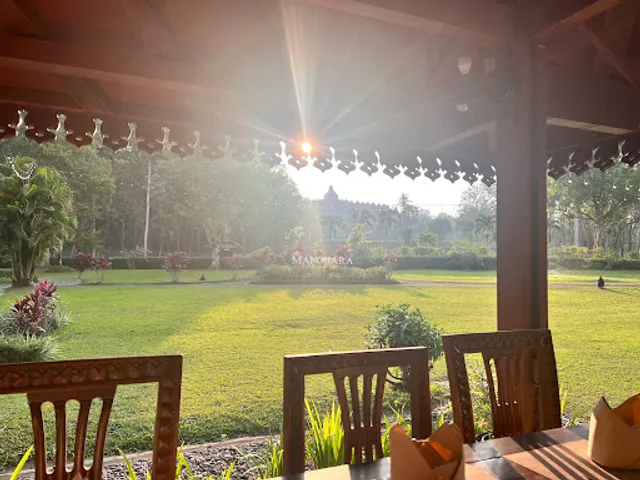
Q: Are the sunrise tours canceled? A: Yes they are, unless you are staying in the Manohara hotel, they have a special private Tour
Q: When should I go? A: The 1st tour starts at 8:30am, if you will buy tickets on site, make sure to be there at least 1 hour before, so 7 to 7:30. They only allow 1200 visitors per day on the temple itself, so don't arrive later than, noon, because not only it will be so crowded and you might miss entry, the scorching sun will burn you, especially on the temple, being it made from black volcanic stone
Q: Can I get on top of the temple? A: Providing that you buy an extension of the temple ground ticket, you can, only with a guide with a max time limit of 1 hr. The temple has 7 levels, the max reachable level is 6. The last level is off limits to public, only reserved for high religious figures
Q: Should I buy tickets on site or online? What kind of tickets is available? A: I prefer to buy tickets on site since there are so many outlets selling them, which might end up being fake tickets. There are two types of tickets, temple ground and temple structure. With the ground one you will only be allowed access around the temple but not on top of it, so you should buy the temple structure ticket, which will cost you 455,000IDR or 30 dollars, which personally I found very expensive, however since this place is one of a kind it's totally worth it
Q: Is the tour organized? Can I roam on my own? A: Yes a few tours leave every 30 mins starting 8:30am, each tour is assigned a number. You will have to follow your tour guide and group at all times, which is part of the ticket. They will give you a slipper to wear, because you are not allowed with normal shoes on the temple structure. Your guide will explain the history of the temple and everything you nerd to know. There is mineral water provided. There will be 15 mins free time to roam and take pictures in the end on the structure. On the temple ground itself you can stay as much as you want
I believe a better job can be done in organizing the tours, streamlining all the information about the visit online to make it easier for tourists to access and enjoy their experience...
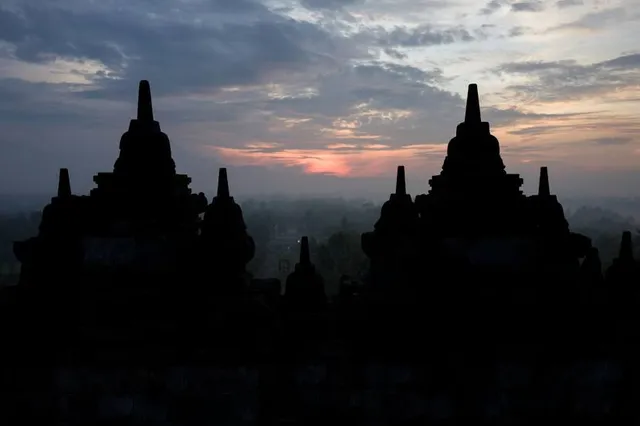
Read moreBorobudur Temple Borobudur Temple is a magnificent and iconic Buddhist temple located in Central Java, Indonesia. It is one of the most famous and important historical sites in the country and is recognized as a UNESCO World Heritage Site. Here's a review of Borobudur Temple: Historical and Cultural Significance: Borobudur Temple holds immense historical and cultural value. Built in the 9th century during the Sailendra Dynasty, the temple is a masterpiece of Indonesian architecture and art. It showcases the blending of Buddhist influences with indigenous Javanese architecture and serves as a symbol of Indonesia's ancient past. Architectural Marvel: The temple's design is awe-inspiring and unique. It is constructed as a massive stone mandala, with a pyramid-like structure consisting of nine stacked platforms. The lower levels have intricate reliefs depicting Buddhist teachings and stories, while the upper levels house stupas, each containing a statue of the Buddha. Spiritual Experience: Visitors often describe Borobudur Temple as a serene and spiritual place. The ambiance is tranquil, especially during early morning or late afternoon visits. Climbing to the top of the temple offers panoramic views of the surrounding lush landscapes and nearby volcanic mountains. Sunrise and Sunset Views: The temple is famous for its breathtaking sunrise and sunset views. Many tourists and locals flock to the site to witness the sun rising or setting behind the temple's stupas, creating a magical and unforgettable experience. Crowds and Weather: Borobudur Temple is a popular tourist destination, so it can get quite crowded, especially during peak seasons. To avoid the crowds, visiting early in the morning or later in the afternoon is recommended. Weather in the region can be hot and humid, so it's advisable to bring appropriate clothing and stay hydrated. Preservation Efforts: Over the years, the temple has undergone significant restoration and preservation efforts to protect it from natural disasters and decay. These efforts have been vital in maintaining the temple's structural integrity and ensuring it remains accessible to visitors for generations to come. Overall, Borobudur Temple is a must-visit destination for history enthusiasts, culture lovers, and anyone seeking a spiritual connection. It offers a fascinating glimpse into Indonesia's rich heritage and is a remarkable testament to the artistry and ingenuity of ancient...
Read more