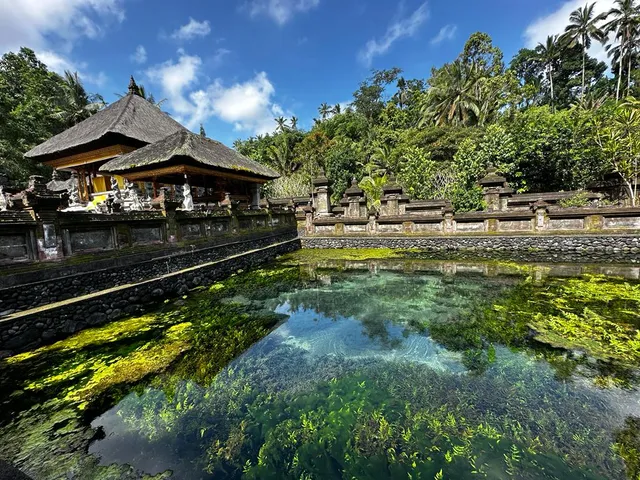
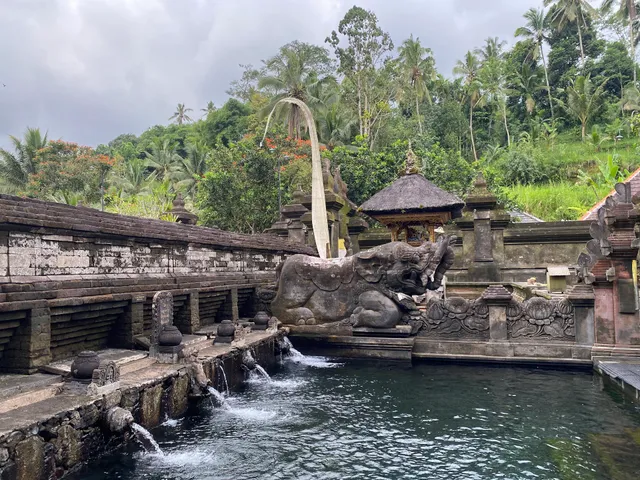
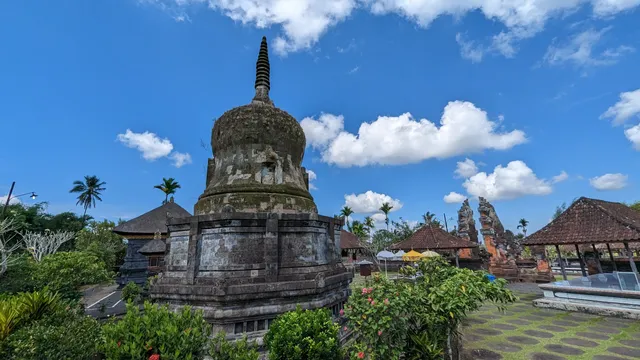
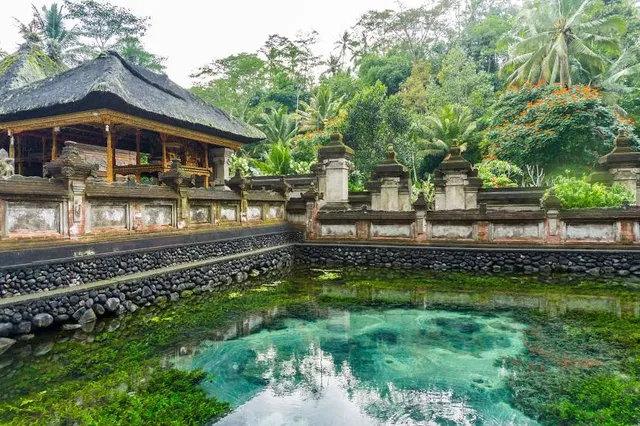
Tirta Empul Temple is nowadays become one of the most famous tourism destination in Bali. This place is actually a religious site that has very important values for the Balinese people. That values are closely related to the development of the history of civilization, cultures, and beliefs in Bali.
Tirta Empul Temple was built by the orders of Queen Sri Candra Bayasingha in the 10th century in an area which now located in Manukaya Village, Tampaksiring District, Gianyar Regency. Its name consists of the word "Tirta" means water and "Empul" means gushing, so that if combined as a whole it will have the meaning of water spring.
In terms of its cultural value, the Tirta Empul spring, together with Pakerisan River and Petanu River flows which originate from the Kintamani Mountain, are used to provide fertility for the rice fields and plantations of the local community.
In terms of its beliefs value, the Tirta Empul spring, similar with all other water springs in Bali, are used to be a key to the purification of conducting ritual worship in both the original Balinese beliefs and the Hinduism-Buddhism beliefs derived from Java, China, India.
Tirta Empul Temple has a history of establishment recorded in the Manukaya Inscription carved by the orders of King Jayasingha Warmadewa and in the Lontar Usana Bali which now is stored in the Pura Puseh Village of Manukaya. Tirta Empul Temple also has its myths and legends. It is said that this temple was founded starting from a war between good and evil. The good side with the figure of the Priest Kulputih who asked the God Indra to fight the evil side with the figure of King Mayanadewa. In short, King Mayanadewa created a poisonous spring that could kill the troops of God Indra, but finally God Indra managed to defeat King Mayanadewa and turned the spring into a holy spring. The celebration of the victory of good over evil continues to live in the collective memory of the Balinese community to this day with the commemoration of Galungan which is celebrated...
Read moreIf you’re coming here hoping for a deeply personal or spiritual experience, set your expectations low. This isn’t the serene, slow-paced temple energy you might crave. It’s more of a tightly managed, highly commercialized procession — with ancient roots and modern hustle sitting a little too close together.
Here’s the rundown: • You pay at the gate. Then again for sarong rental. Then again if you want a locker. Then again if you want a guide. It’s not the cost that stings — it’s the constant drip of transactions that chips away at the sacredness of the space. • The purification ritual is supposed to be deeply spiritual. But with tourists queuing in wet clothes for photos and GoPros bobbing beside prayerful locals, it starts to feel like a water-themed group tour, not a moment of personal reflection. • The temple grounds are still beautiful. But it’s hard to access that beauty when you’re being ushered, timed, and layered in expectation.
What works well: • The system is organized. You’re led where you need to go. No confusion. • The water is cold. Like, shock-you-into-the-moment cold. At one point I felt like I was just another fish in the tank — which, depending on your mindset, could be poetic or ridiculous. • There are locals who come here for real spiritual reasons, and I respect that deeply. But they’re navigating the same tourist waves you are.
The takeaway: If you’re curious, it’s worth trying once. Just don’t expect quiet revelation. This isn’t a temple that meets you with stillness. It meets you with a schedule.
For some, it might still land. For me, it missed the mark — not because it lacks meaning, but because the meaning feels buried under layers of commerce and crowd control.
And the sellers here has a way of ripping you off by overpriced items lol. Going here is so...
Read moreI recently visited Tirta Empul in Bali and I must say, it was an incredible experience. As soon as I entered the temple compound, I was engulfed by a serene and peaceful atmosphere.
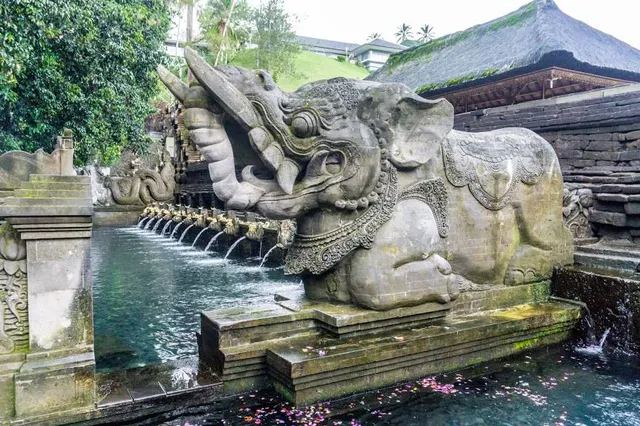
The highlight of the visit was undoubtedly the holy spring water pool. The water gushing from various spouts created a mesmerizing sight and held deep spiritual significance. Following the local tradition, I immersed myself in the purifying waters and felt a sense of calm and renewal wash over me.
The architecture and craftsmanship of the temple were awe-inspiring. Intricate stone carvings, soothing Balinese music, and the scent of incense made the visit truly immersive. The temple's grounds were well-maintained and provided a perfect setting for quiet contemplation.
Visitors can also witness traditional Balinese rituals and ceremonies taking place at Tirta Empul, which give a glimpse into the island's rich cultural heritage. The friendly and knowledgeable temple guides were happy to share insights about the rituals and explain their significance.
If you're looking to connect with your spiritual side or simply seeking a peaceful escape from the bustling tourist spots, Tirta Empul is a must-visit destination in Bali. The combination of natural beauty, cultural experience, and the chance to refresh your body and mind in the holy waters make it an unforgettable experience.
I highly recommend visiting Tirta Empul and immersing yourself in the rich tapestry of Balinese spirituality...
Read more