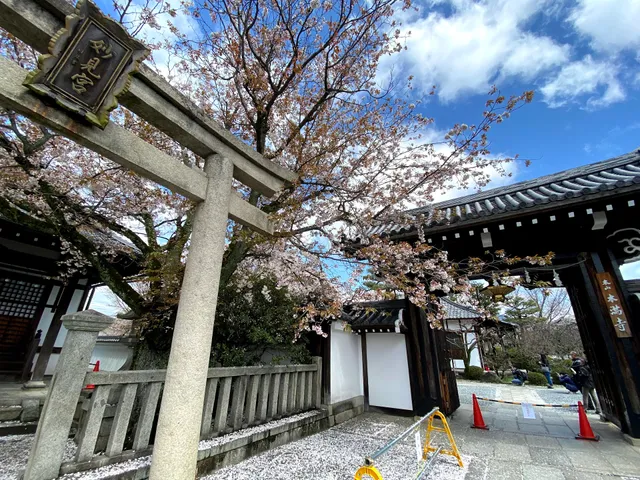
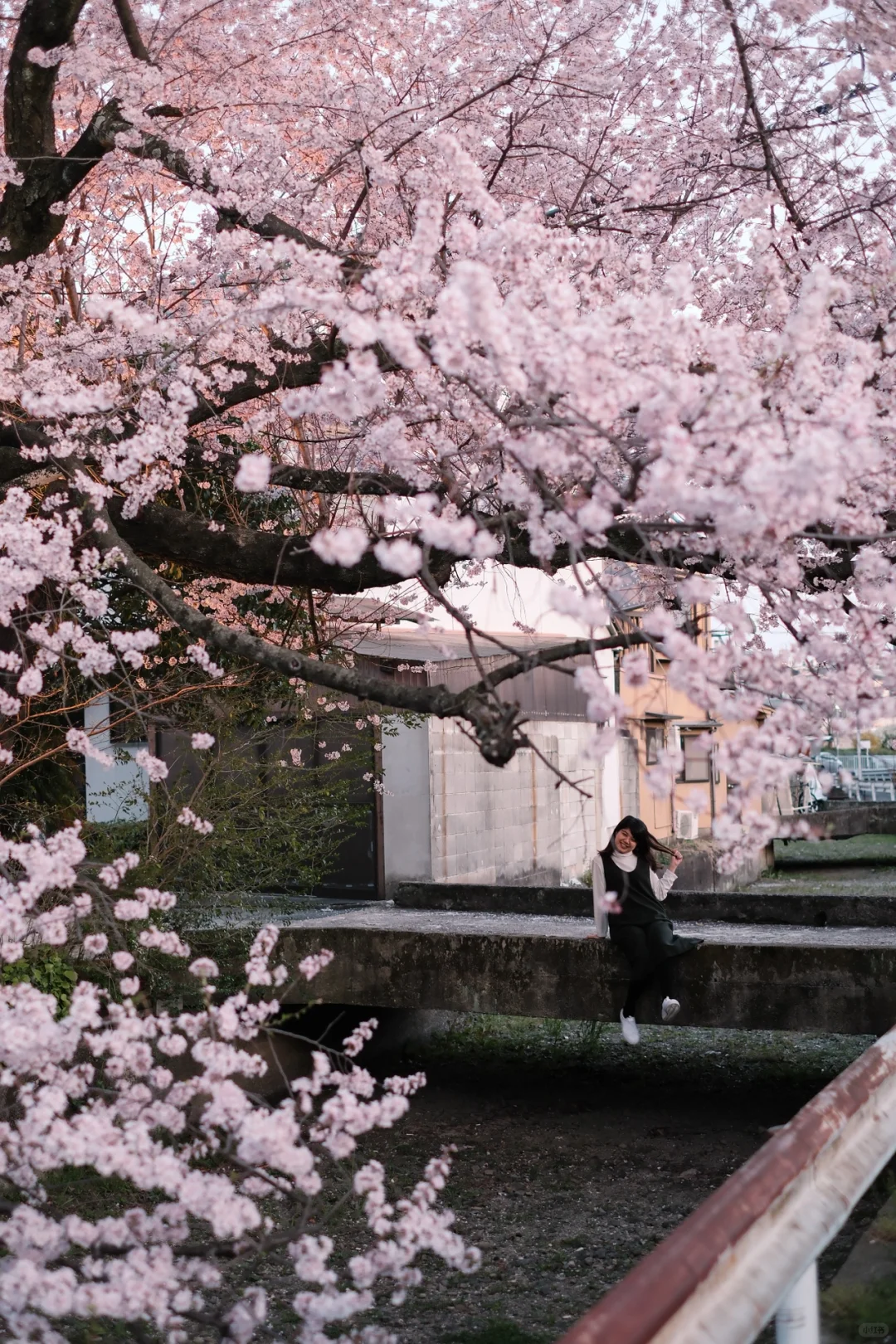
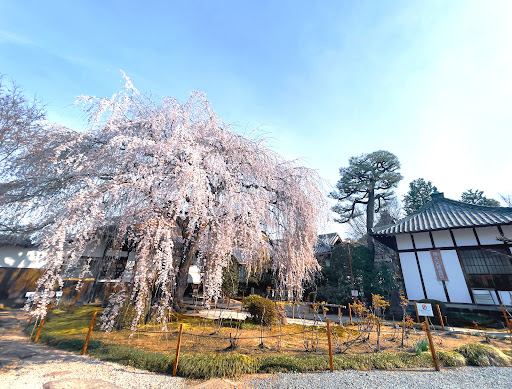
Within the tranquil precincts of Honmanji Temple, there stands a single, monumental cherry tree, its grandeur unparalleled, a solitary sentinel of beauty amidst the ancient stones. This colossal tree, with its expansive canopy of delicate pink blossoms, seems almost surreal in its beauty, a living testament to the wonders of nature and time. Its branches stretch wide, casting a gentle shade and showering the ground with a soft, petal-laden embrace, creating a haven of tranquility and awe.
The sheer scale of this cherry tree amplifies its beauty, making it not just a sight to behold but an experience to immerse oneself in. Each bloom on this giant seems to hold a universe of detail, from the subtle gradients of pink to the intricate patterns of the petals. As the breeze stirs through its branches, a cascade of blossoms flutters to the earth, painting the temple grounds in hues of fleeting beauty, a spectacle so profound it commands a reverent silence from all who witness it.
This majestic cherry tree serves as a focal point for contemplation and admiration, its overwhelming presence a reminder of the enduring cycles of life and nature. It stands as a symbol of resilience and renewal, its roots deeply intertwined with the history and spirit of Honmanji Temple. The experience of standing under its sprawling canopy, enveloped in the fragrance of thousands of blossoms, offers a profound sense of connection to the natural world, a reminder of the delicate balance between strength and fragility.
Visitors to Honmanji Temple are drawn to this singular cherry tree, not just for its breathtaking beauty but for the sense of peace and perspective it bestows. In its presence, one can't help but feel part of something greater, a momentary participant in the tree's centuries-long vigil. The spectacle of its bloom, a fleeting yet eternal symbol of renewal, inspires reflection on the ephemeral nature of existence, encouraging all who gaze upon it to cherish the transient moments of beauty in their own lives.
In essence, the giant cherry tree of Honmanji Temple is more than just a natural wonder; it is a beacon of hope, beauty, and reflection, standing proudly as a cherished jewel of Kyoto, captivating the hearts and souls of all who come...
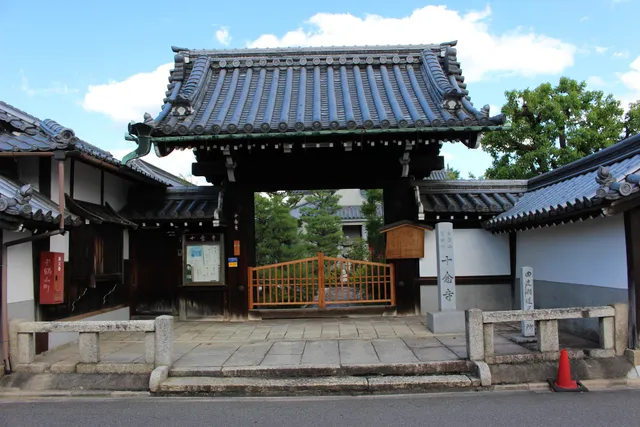
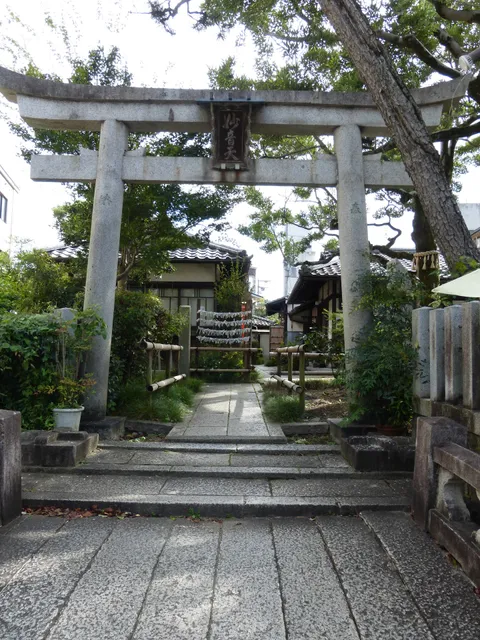
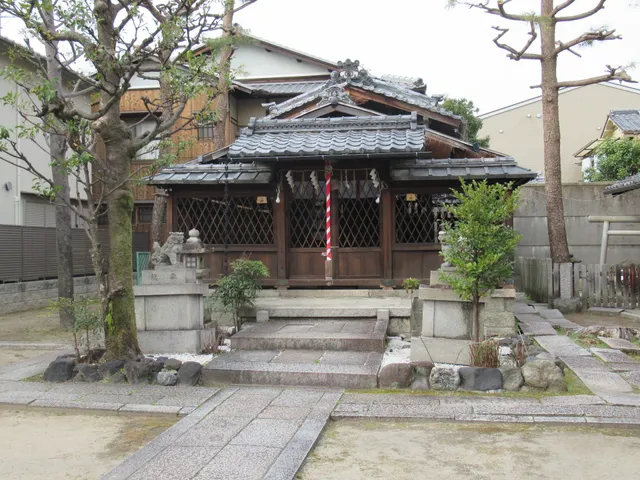
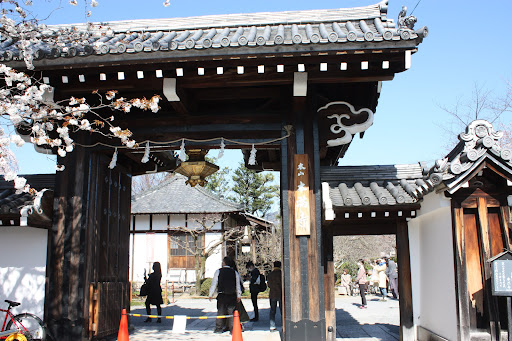
Read moreHonmanji Temple 本満寺 (ほんまんじ) 日蓮宗本山 The temple was relocated to this place in 1539 as an imperial prayer station of late Enperor Nara. The highlights of this temple is that it is combined with a small shrine annex to the temple and cherry blossoms in spring, The garden space in front of a main hall is nicely arranged all-yeear round with pots of lotus and various types of flowers. Before you enter the temple you will see " Myokengu shrine " on your left. Farther you go toward parking area you will see a grave yard of this temple on the north side. There is a large white statue in the middle of the grave yard. The exit is on the opposite side of this part of the temple. The temple has 2 gates one is the front entrance ( north / west side ) and exit ( east / south ). One which is its main gate is on Teramachi street and there is another one from the road stretching from East and West. It is recommended to take a tour from the front gate. When you come out from the exite located on the south gate of this temple, you are very close to Aoibashi Bridge of Kamo River north of Demachi Delta. Aoibashi Bridge is the one that connects Shimogamo Shrine ( south ) and Kamigamo Shrine ( north ). When you come to Kamo River just walk toward south along the river around the Delta to enjoy the view and watch the wildlife ( Bird watching ). Around Delta there a stall where you can play Goldfish scooping. ( Trans-word+ : TGM...
Read more2021年3月20日枝垂れ桜が満開ですよ。見事です。 日蓮宗本山。1410年(応永17)近衛関白道嗣の嫡子、玉洞妙院日秀が今出川新町に朝廷より敷地三万坪を与えられて創建。広宣流布山、本願満足寺と号す。1536年(天文5)の天文法華の乱後、12世日重の代、1539年(天文8)関白近衛尚道の外護により現在の地に移り、後奈良天皇の勅願所となる。1751年(宝暦1)35世日鳳が8代将軍徳川吉宗の病気平癒を祈り、以来、将軍家の祈願所ともなった。本尊は十界大曼陀羅。又、尚道奉安の祖師像は、芹生村山麓より発見されたものでその山中より法華経読誦の声が上がったという有名な説がある。境内墓地には山中鹿之介の墓、本堂脇には徳川家康二男秀康の正室、蓮乗院の石廟がある。伝太子筆紺紙 金泥一字宝塔法華経並普賢経は重要文化財。宗祖日蓮大聖人真蹟十界大曼荼羅御本尊ニ幅、狩野元信筆の祖師像はじめ寺宝多数。尚、重要文化財は京都博物館 預け。屋外は見学自由。 2021年3月20日枝垂れ桜が満開ですよ。見事です。 日蓮宗本山。1410年(応永17)近衛関白道嗣の嫡子、玉洞妙院日秀が今出川新町に朝廷より敷地三万坪を与えられて創建。広宣流布山、本願満足寺と号す。1536年(天文5)の天文法華の乱後、12世日重の代、1539年(天文8)関白近衛尚道の外護により現在の地に移り、後奈良天皇の勅願所となる。1751年(宝暦1)35世日鳳が8代将軍徳川吉宗の病気平癒を祈り、以来、将軍家の祈願所ともなった。本尊は十界大曼陀羅。又、尚道奉安の祖師像は、芹生村山麓より発見されたものでその山中より法華経読誦の声が上がったという有名な説がある。境内墓地には山中鹿之介の墓、本堂脇には徳川家康二男秀康の正室、蓮乗院の石廟がある。伝太子筆紺紙 金泥一字宝塔法華経並普賢経は重要文化財。宗祖日蓮大聖人真蹟十界大曼荼羅御本尊ニ幅、狩野元信筆の祖師像はじめ寺宝多数。尚、重要文化財は京都博物館 預け。屋外は見学自由。 March 20, 2021 The weeping cherry tree is in full bloom. It's wonderful. Nichiren sect head temple. It was built in 1410 (Oei 17) by Konoe Michitsugu's son, Tamado Myoin Hihide, who was given a site of 30,000 tsubo by the imperial court in Imadegawa Shinmachi. Kosen-rufuyama, called Manzoku-ji Temple. After the turbulence of the astronomical grammar in 1536 (Tenbun 5), he moved to the present location in 1539 (Tenbun 8) under the protection of Naomichi Sekishiro Konoe, and became the Imperial Palace of Emperor Go-Nara. In 1751 (Horeki 1), Sekai Nippo prayed for the healing of the illness of Yoshimune Tokugawa, the 8th general, and since then it has become a prayer place for the shogunate. The principal image is the Ten Realms Gohonzon. In addition, there is a famous theory that the statue of the founder of Shodo Hoan was discovered at the foot of Mt. Seryomura, and the voice of the Lotus Sutra reading was raised from the mountains. In the precincts graveyard is the tomb of Grave of Yamanaka, and on the side of the main hall is the main room of Hideyasu Tokugawa Ieyasu and the stone mausoleum of Renjoin. Dentaiko Brush Navy Blue Paper Gold Paint One Character Treasure Tower Lotus Sutra and Samantabhadra are Important Cultural Properties. Nichiren Daishonin Shinsou Tenkai Daimandala Gohonzon Nichiren, a large number of temple treasures including the statue of the ancestor of Motonobu Kano. Important cultural properties are deposited at the Kyoto Museum. Free to...
Read more