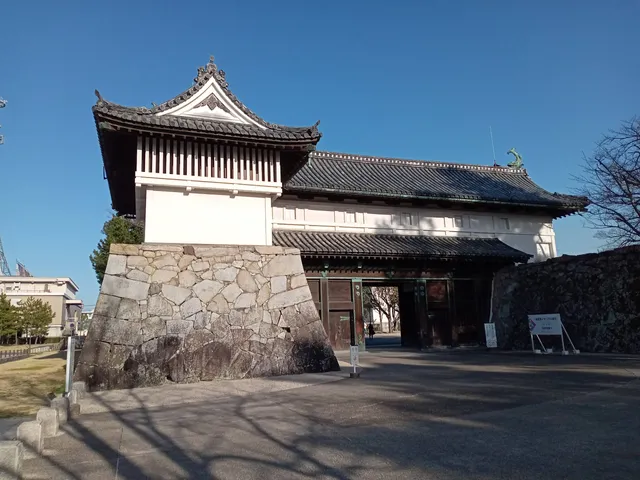
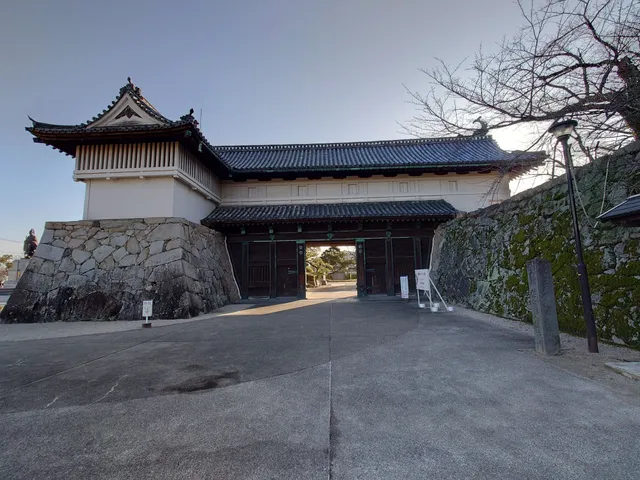
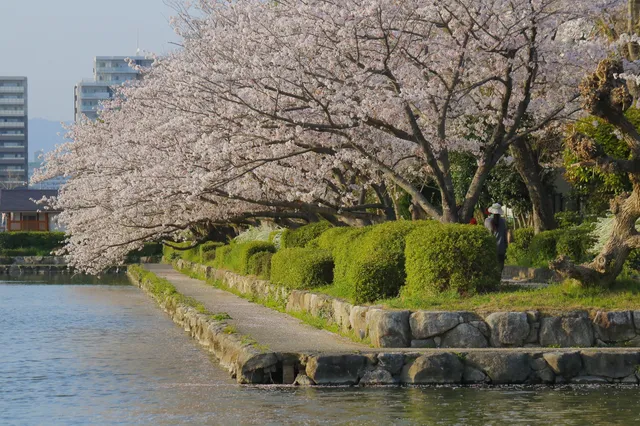
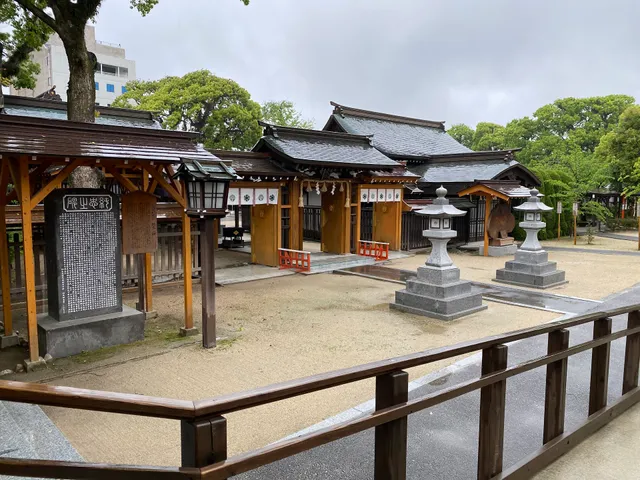
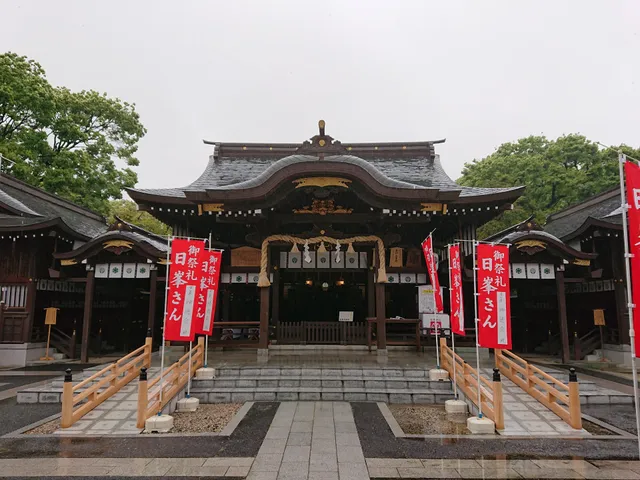
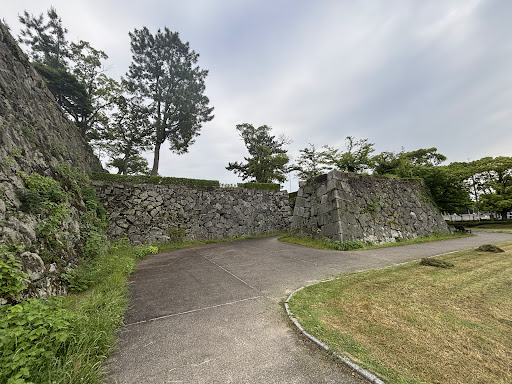
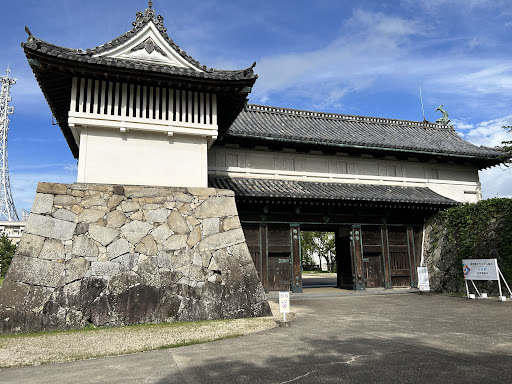
Saga Castle is a Japanese castle located in Saga City, Saga Prefecture, Japan. It is a hiraijirō, a castle built on a plains rather than a hill or mountain, and is surrounded by a wall rather than being built above a stone base. Saga castle was home to the Nabeshima clan, daimyō of Saga Domain. It was also known as "Submerged Castle".
The location of Saga Castle was originally a fortified village under the control of the Ryūzōji clan, warlords of a small area of northern Kyūshū in the Muromachi period. After Ryūzōji Takanobu was defeated by a coalition of Shimazu and Arima forces in 1584, his retainer Nabeshima Naoshige gained control of the castle. Naoshige allied the clan with Toyotomi Hideyoshi and gained personal distinction during the Japanese invasions of Korea, during which time he befriended noted castle architect Katō Kiyomasa and future Shōgun Tokugawa Ieyasu. Following the Battle of Sekigahara, the Nabeshima clan was confirmed in its holdings in Hizen province, and Naoshige’s son, Nabeshima Katsushige became 1st daimyō of Saga Domain. Naoshige began work on rebuilding the castle with the approval of the Tokugawa Shogunate beginning in 1602, with the work completed under Katsushige by 1611. The original structure included a five-storey donjon surrounded by a system of 80-metre wide moats. Unusually, the moats are not surmounted by stone walls, but by earthen ramparts tall enough to conceal the inner fortifications. These ramparts were also planted with pine and camphor trees for additional concealment, which lent the castle its nickname.
A fire in 1726 destroyed most of the castle structures, including the donjon. The palace portion was restored two years later in the outer bailey, which was the centre of the Saga domain government for most of the Edo period. Another fire occurred in 1835, after which the buildings were reconstructed by Saga domain’s final daimyō Nabeshima Naomasa.
After the Meiji Restoration, the castle remained the location for the local government offices. However, the castle was occupied in 1874 by former politician and samurai Etō Shinpei and his following of disgruntled samurai in the Saga Rebellion. The rebels were defeated by military force, during which most of the buildings in the castle were burned down.
Since 1874, the castle grounds have been used as the site for a court building and a prefectural office, and in 1883 it became a junior school. The buildings were eventually replaced by modern school buildings. In 1953, one of the surviving gates of the castle was proclaimed a Saga Prefectural Important Cultural Property (PICP). It gained national protection (ICP) in 1957.
From 2001 to 2004 the main portion of the castle was restored. It is now houses the Saga Castle History Museum and is the largest wooden castle reconstruction in Japan. In 2006, Saga Castle was listed as one of the 100 Fine Castles of Japan by the Japan Castle Foundation.
Saga Castle is also the castle where Yamamoto Tsunetomo, the orator of Hagakure,...
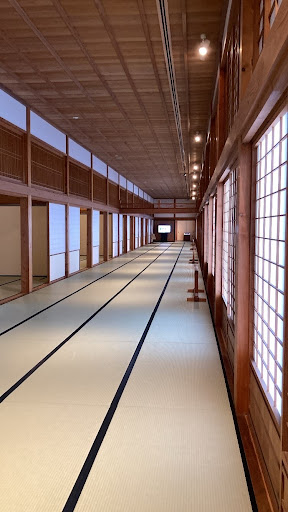
Read moreLe château de Saga est un château plat typique construit sur un terrain bas dans la plaine de Saga, entouré de douves qui mesurent environ 72 mètres à son point le plus large. Ce château était une extension du château Muranaka du clan Ryuzoji, construit pendant l'ère Tensho, et complété de 1608 à 16 par la construction générale du château de Saga par Nabeshima Naoshige et Katsushige. Le château de Saga est un château plat construit sur un terrain plat, et le donjon principal mesure environ 126 mètres d'est en ouest et environ 122 mètres du nord au sud, avec une tour de château de quatre et cinq étages au nord-ouest, et le mur de pierre est On dit qu'il mesurait environ 9 mètres de haut. Il était entouré de douves et de berges de 80 m de large, et des arbres tels que des pins et des camphres étaient plantés sur les berges pour empêcher quiconque de jeter un coup d'œil à l'intérieur du château. En entrant dans le bâtiment, vous trouverez un long couloir de 45 mètres recouvert de tatamis et un grand hall de 320 tatamis, ce qui en fait un espace attrayant où vous pourrez profiter de l'atmosphère de l'époque. Vous pouvez découvrir un espace japonais confortable. En entrant dans le bâtiment, vous trouverez un long couloir de 45 mètres recouvert de tatamis et un grand hall de 320 tatamis, ce qui en fait un espace attrayant où vous pourrez profiter de l'atmosphère de l'époque. Vous pouvez découvrir un espace japonais confortable. À l'intérieur du musée, diverses choses sur le clan Saga sont présentées de manière facile à comprendre sous trois thèmes : « Les changements du château de Saga et du Honmaru », « La saga de la fin de la période Edo et la restauration Meiji ». Période'' et ``Naomasa Nabeshima et le clan Saga à la fin de la période Edo.'' Les commentaires du guide bénévole résident sont très appréciés. Vous pouvez revenir sur les activités des personnes qui ont contribué à la modernisation du Japon, toucher à l'esprit de regarder le passé du Japon dans une perspective mondiale et ressentir le souffle de...
Read moreI came to Saga on a rainy day from Fukuoka and this castle did not disappoint. It’s a reconstruction of a lord’s wooden castle and the big hallways and tatami mats throughout really make it feel impressive. Walking on tatami in your socks feels great. The people working at the castle were very friendly and even called out a very nice Japanese man who speaks English to take me on a tour and explain the exhibits. They also have an English language audio guide they loan out since most exhibits are only in Japanese. I think Saga is a smaller city that probably doesn’t get too many foreign visitors so it really felt like they appreciated my visit. Well...
Read more