We arrived at Kansai International Airport (KIX) just before noon on 13 August 2025, the summer heat shimmering over the vast expanse of Osaka Bay. The approach to the airport is a scenic experience in itself — this is no ordinary terminal sitting on land, but a marvel of engineering built entirely on a massive man-made island about 50 Km southwest of central Osaka. Linked to the mainland only by the 3.75 Km Sky Gate Bridge, it stands isolated yet striking against the water.
Opened in 1994, KIX was designed to operate 24 hours a day, something its predecessor, Osaka’s Itami Airport, could not do due to strict noise regulations and capacity limits. Its offshore location solved that problem, allowing it to serve as the primary international hub for the Kansai region — covering not only Osaka but also Kyoto, Nara and Kobe. Over the years, it has become a symbol of connectivity for western Japan.
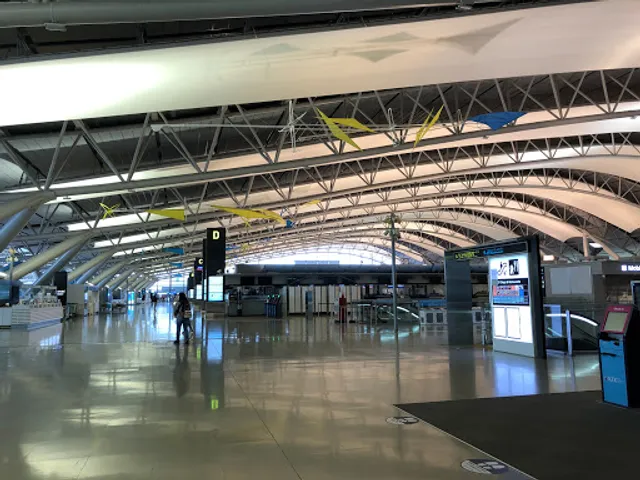
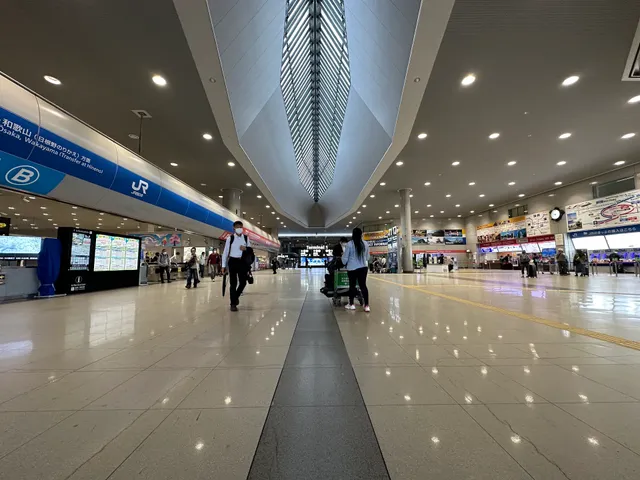
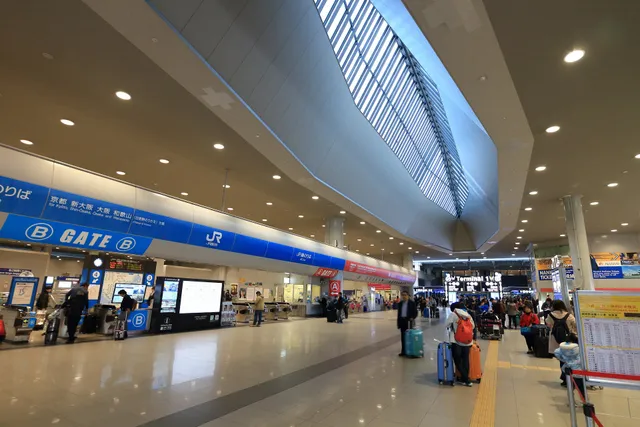
The drive in was smooth and almost cinematic, with the turquoise water of the bay on both sides as we cruised across the long Sky Gate Bridge. The sleek Terminal 1 building came into view — a long, gently curved structure designed to be both functional and easy to navigate.
Our first stop was Toyota Rent-A-Car in the Aeroplaza, the airport’s dedicated complex for rental cars, hotels and related services. It’s a short and well-signposted drive and returning the car was effortless.
With the keys handed over, we wheeled our luggage into Terminal 1, heading straight for Row H where AirAsia X operates its check-in counters. The process was refreshingly straightforward: baggage drop, a few quick security questions and we were done.
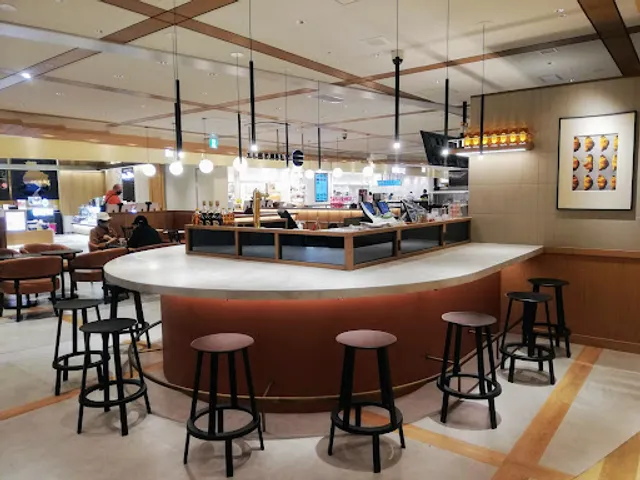
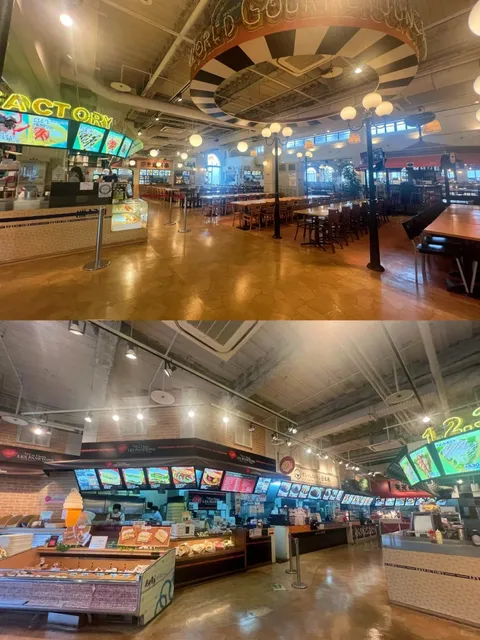
Hunger led us to Tasty Street on the 2nd Floor, a lively cluster of eateries offering a variety of Japanese comfort food, snacks and drinks. There’s something satisfying about grabbing a hot meal before clearing security, especially when you know the airside options can be pricier. The atmosphere was busy but friendly, with the chatter of travellers, the clatter of cutlery, and the smell of freshly cooked noodles in the air. We have to weave through crowds and wait for a table — a common theme throughout the airport.
Back upstairs in the departure hall, we joined the river of passengers flowing toward carry-on inspection. The security staff were efficient but thorough, and despite the length of the queue, we moved forward at a steady pace. Next was immigration clearance, which was similarly busy yet well managed, with automatic clearance using the scanning machines. Once through, the airside concourse revealed itself — a bright, spacious area lined with duty-free boutiques, luxury brand stores, souvenir shops, and a selection of cafes and restaurants. The design is practical: two long wings, North and South, branching off from the central concourse. Our gate, Gate 15, was located at the end of one of these stretches, and the walk was pleasant thanks to the clear signage and moving walkways.
On the whole, Kansai International Airport is well-managed. The flow from car rental to check-in, security, immigration, and boarding feels logical, and the facilities are modern and well maintained.
However, there’s no escaping the fact that in the peak of summer travel, crowds are everywhere It’s not chaotic in the sense of being disorganised, but the sheer number of people can make certain stages of the journey feel like a slow shuffle.
If you’re planning a trip through KIX, my advice is simple: arrive early, especially for international flights, and give yourself enough time to navigate the people traffic without stress. The airport is a fascinating blend of polished Japanese service and the bustling energy of global travel. That mix — efficiency paired with the hum of humanity — is what makes passing through Kansai International Airport not just a transit point, but a memorable part of the...
Read moreAs there is no 10 start rating I am only giving 5 star here, I recently got a chance to visit Japan for 10 days to be open I have never even dream about going to Japan and I have not even seen it in google maps.. But only I have read and heard about Japan and the cities. Here I want to share my greatest experience about Kansai International Airport (KIX) is a major airport this airport is a hub for both domestic and international flights, serving as a gateway to the Kansai region of Japan, which includes Osaka, Kyoto, and Kobe. Further I will try to give the strength and weakness about this wonderful airport Accessibility
One of the most significant benefits of KIX is its accessibility. The airport is easily accessible by train, bus, and Taxis or private cars. The airport is well-connected to various destinations in the Kansai region through train lines such as the JR, Nankai lines, and the Osaka Metro. The train stations in the airport provide a direct connection to major cities such as Osaka and Kyoto, making it convenient for travelers to explore the area.
Facilities
KIX boasts of an extensive range of facilities and amenities that cater to the needs of travelers. The airport has a wide variety of restaurants and cafes, ranging from local Japanese cuisine to international fast-food chains. The airport also has a shopping center, where travelers can purchase souvenirs, electronics, and duty-free items. Moreover, the airport has several lounges that cater to the needs of business and first-class travelers, providing a comfortable and relaxing environment for waiting passengers.
Cleanliness and Hygiene
KIX maintains high standards of cleanliness and hygiene. The airport is immaculately clean, and there are numerous cleaning staff members who are visible throughout the terminal. The restrooms are well-maintained and have high levels of cleanliness. Additionally, the airport provides numerous hand-sanitizing stations for travelers, ensuring that the airport remains a hygienic environment for everyone.
Efficiency
One of the most significant strengths of KIX is its efficiency. The airport has a well-designed layout that allows for easy navigation and a streamlined flow of travelers. The security screening process is quick and efficient, ensuring that travelers can move through the airport with ease. Moreover, the airport has numerous automated check-in kiosks that allow travelers to check-in for their flights quickly and easily.
Weaknesses
Despite its strengths, KIX has a few weaknesses that detract from the overall experience. One of the primary weaknesses is the lack of seating in the terminal building. The airport can become quite crowded, and the seating options are limited, which can make it challenging to find a comfortable place to sit and relax.
Another weakness of KIX is the limited availability of public transportation during off-peak hours. Travelers arriving or departing from the airport during off-peak hours may find it challenging to access public transportation, as the frequency of trains and buses may be reduced.
Conclusion
In conclusion, Kansai International Airport is a modern and efficient airport that provides an excellent travel experience for both domestic and international travelers. Its accessibility, facilities, customer service, cleanliness, efficiency, and design make it an excellent choice for those visiting the KIX.
IF I HAVE OUR GOD'S GRACE I WILL VISIT OSAKA FOR ONE MORE TIME...
Read moreWriting about Tiger Air here. I flew from Japan to Taiwan in September 2024, expecting a simple journey, but Tiger Airways turned it into one of the worst travel experiences I’ve ever had. The issue started with my carry-on luggage—a bag I’ve used on multiple international flights with no problem, including with airlines like EVA Air and several European carriers. However, Tiger Airways insisted my bag was too large and charged me $47.50 to check it in.
What made the situation even more infuriating was the inconsistency. While I was being forced to check my bag, I saw other passengers with larger carry-ons being allowed to board without issue. My bag had always met the standard size requirements for carry-ons, so it felt like I was being singled out unfairly. On top of that, the airline staff showed no concern for customer service—they were only focused on charging the fee.
Adding insult to injury, they didn’t even ask if I had any fragile items in my luggage when they forced me to check it in. This is basic protocol for any airline, but Tiger Airways seemed more concerned with collecting fees than performing their actual duties. As a result, everything fragile in my bag was shattered when I retrieved it at my destination. This could have easily been avoided if they had just taken the time to ask about the contents of my luggage or if they had allowed my carry-on as it was.
I was hoping to say a quick goodbye to a friend at the gate, but instead, I was stuck dealing with this unnecessary situation. The staff’s indifference to my concerns only made things worse. There was no flexibility, no consideration, and certainly no empathy. Their rigid focus on squeezing money out of passengers overshadowed any responsibility they had to provide decent service.
As someone who has flown with many airlines—both budget and premium—this was by far one of the most disappointing experiences I’ve had. Tiger Airways clearly prioritizes revenue from additional fees over their passengers' experience or safety of their belongings. They turned a routine flight into a stressful, expensive, and frustrating ordeal.
In conclusion, Tiger Airways not only shattered the items in my luggage but also shattered my trust in their service. Their poor customer service, inconsistent policies, and careless handling of my luggage make them an airline I cannot recommend. There are many other airlines that offer budget-friendly flights without sacrificing customer care and professionalism, and Tiger Airways falls well below...
Read more