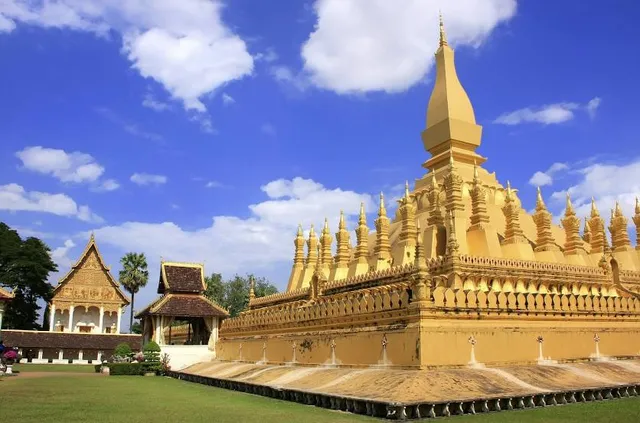
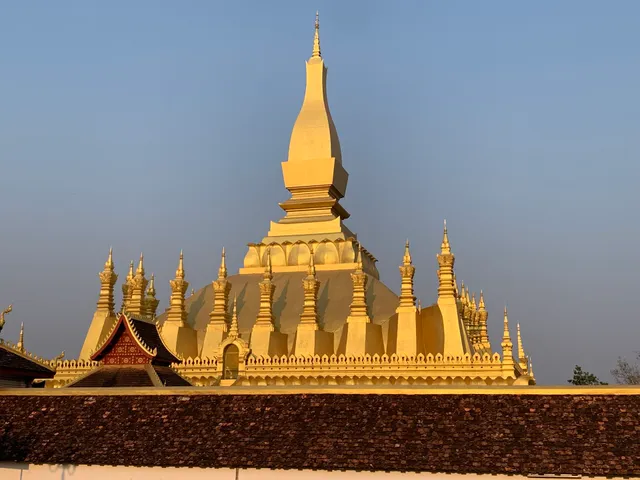
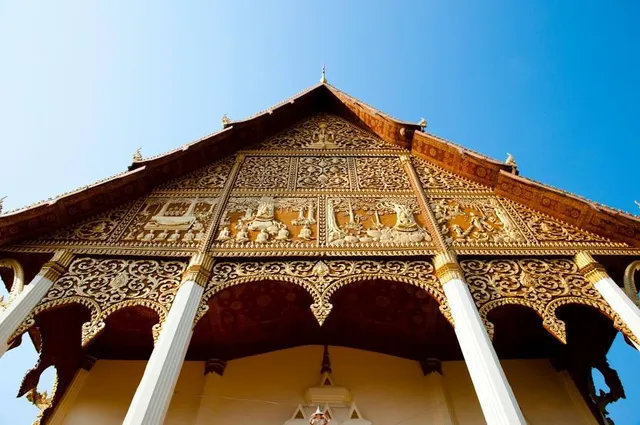
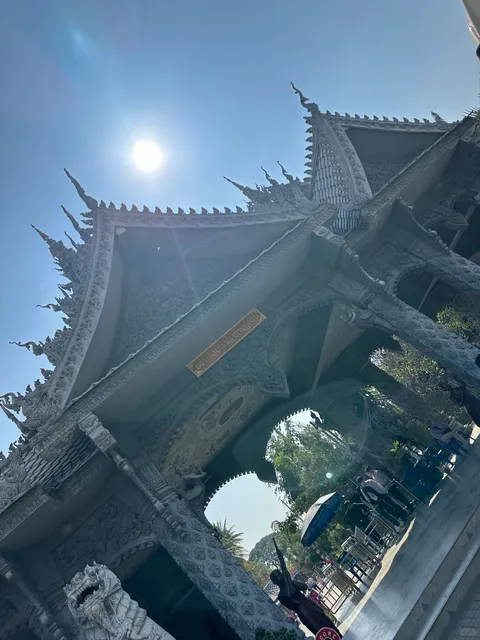
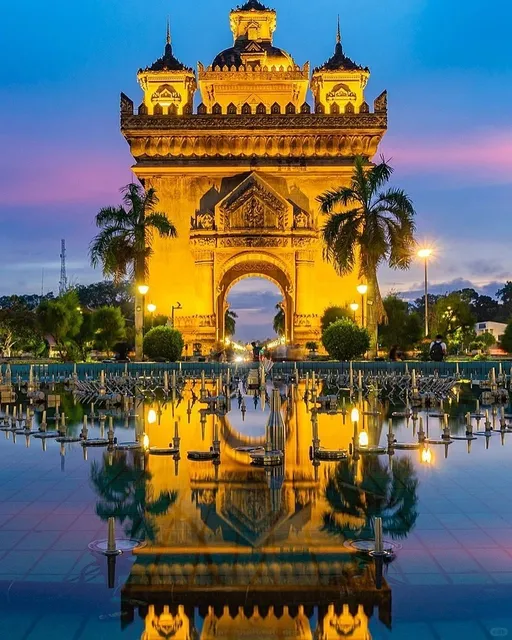
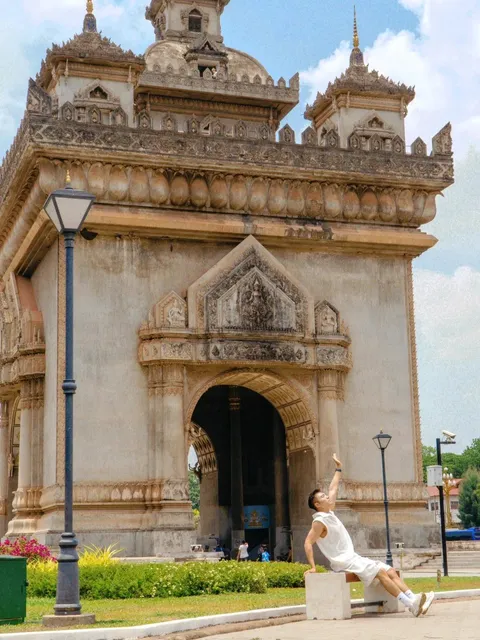
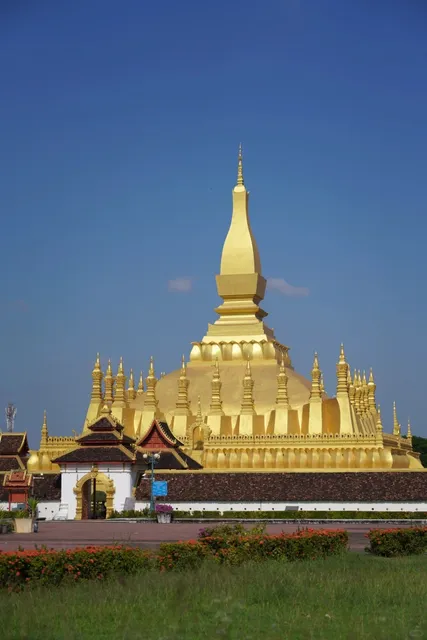
That Luang is the national symbol and most important religious monument of Laos. Vientiane's most important Theravada Buddhist festival, "Boun That Luang", is held here for three days during the full moon of the twelfth lunar month (November).
The That Luang dates from 1566. It has been destroyed and ransacked and renovated numerous times. The site is sacred as the Lao believe that the stupa enshrines a relict of Buddha.
For festival on 13th December Monks and laypeople from all over Laos congregate to celebrate the occasion with three days of religious ceremony followed by a week of festivities, day and night. The procession of laypeople begins at Wat Si Muang in the city center and proceeds to That Luang to make offerings to the monks in order to accumulate merit for rebirth into a better life. The religious part concludes as laypeople, carrying incense and candles as offerings, circulate That Luang three times in honor of Buddha. Folk and popular music troupes and drama performances provide entertainment at the festival.
History of Pha That Luang Pha That Luang is a remarkable stupa, a Buddhist monument, in Laos. So, how did Laos end up with this architectural marvel? The history of Buddhism in Laos actually dates back to at least the 3rd century CE, when the Indian emperor Ashoka sent emissaries to spread Buddhism across Asia. According to tradition, one of those emissaries ended up in Vientiane, and founded the first Buddhist temple of the city.
That temple was replaced by the Khmer Empire of Laos in the 13th century, but the new temple later fell into disrepair. Then, in 1566, the Laotian king Setthathirat decided to move his capital from the city of Luang Prabang to Vientiane. When he did, he realized he had to rebuild Vientiane into a royal capital worthy of his throne, and he started by building the stupa of Pha That Luang. As a Buddhist, the king would have hoped that building the stupa would help on his own path to enlightenment, as well.
The stupa you see today is directly modeled on King Setthathirat's, but it's not unaltered. In 1828, Pha That Luang was almost completely destroyed by the invading Kingdom of Siam. The biggest thing to save it from being burnt to the ground was likely a desire to pillage all the gold from it.
The stupa was abandoned after that, until the French decided to rebuild it once they expanded their empire into that part of Asia. The French ultimately rebuilt the stupa along Setthathirat's plans in 1930. It was again nearly destroyed in 1940 during the independence movements of Southeast Asia, but after World War II was finally reconstructed into the monument...
Read morePha That Luang is a significant Buddhist monument located in Vientiane, the capital city of Laos. Also known as the Great Stupa, it is considered one of the most important national symbols and religious sites in Laos.
Pha That Luang is a large golden stupa that stands at a height of about 44 meters (144 feet). The current structure dates back to the 16th century, although it has been reconstructed and renovated several times throughout history. The stupa is built in a traditional Lao architectural style, with influences from Hindu and Buddhist art.
The monument holds great religious and historical importance for the people of Laos. It is believed to enshrine a relic of the Buddha, making it a significant pilgrimage site for Buddhists. The annual Boun That Luang festival, held during the full moon in November, attracts thousands of devotees who come to pay their respects and participate in religious ceremonies.
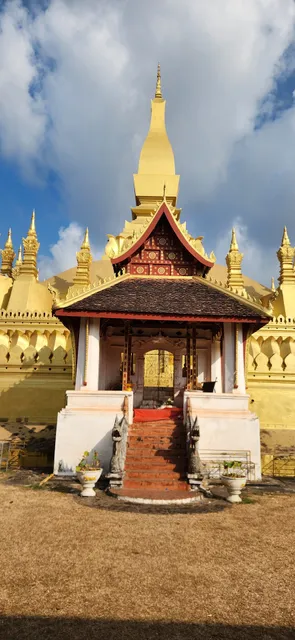
The exterior of Pha That Luang is covered in gold leaf, giving it a distinctive and awe-inspiring appearance. The stupa is surrounded by a complex of smaller temples, buildings, and gardens, which together form the That Luang complex. Visitors can explore the grounds, admire the intricate architecture and decorations, and learn about the history and significance of the site.
Pha That Luang is not only a religious site but also serves as a symbol of national identity for the people of Laos. Its image is featured on the national seal, currency, and official documents of the country, highlighting its cultural and historical significance.
Visiting Pha That Luang provides a glimpse into Laos' rich Buddhist heritage and offers a serene and peaceful atmosphere for reflection and contemplation. It is a must-visit destination for those interested in history, culture, and spirituality in...
Read moreStep into the sacred realm of That Laung, located in the heart of Vientiane. Experience the tranquility and reverence of this remarkable spiritual sanctuary, cherished by the locals for its profound significance. Join me on a journey that emphasizes respect for the spiritual importance of That Laung.
Pha That Luang is a sacred monument and one of Laos' most impressive religious structures. It was founded in the 3rd century to house the breastbone of Buddha, which was brought to Laos by an Indian missionary. The current structure was built by King Setthathirat in 1566, after Vientiane became the capital of Laos. It is also officially named Pha Chedi Lokajulamani, which translates to “World Precious Sacred Stupa”.
That Laung holds deep spiritual meaning to the local community. As visitors, it's important to approach this revered site with reverence and respect. Understand that it is a place of worship, reflection, and cultural heritage for the locals. Embrace the serenity of the space, maintain a calm demeanor, and be mindful of your actions, ensuring they do not disrupt the sanctity of the surroundings. Prepare to be captivated by the architectural splendor of That Laung. Marvel at the intricate details and craftsmanship that adorn the main stupa, a testament to the artistic excellence of the local community.
Entry to some areas is free, while the main stupa entrance requires a nominal fee of 30.
This trip was part of a tuk -tuk tour that cost 150, 000 Kip around $8 to five attractions including Haw pha keow temple, sisaket temple, Patuxay, and simeuang temple. This convenient mode of transportation presents an opportunity to view the cultural heritage of Vientiane, while enjoying the...
Read more