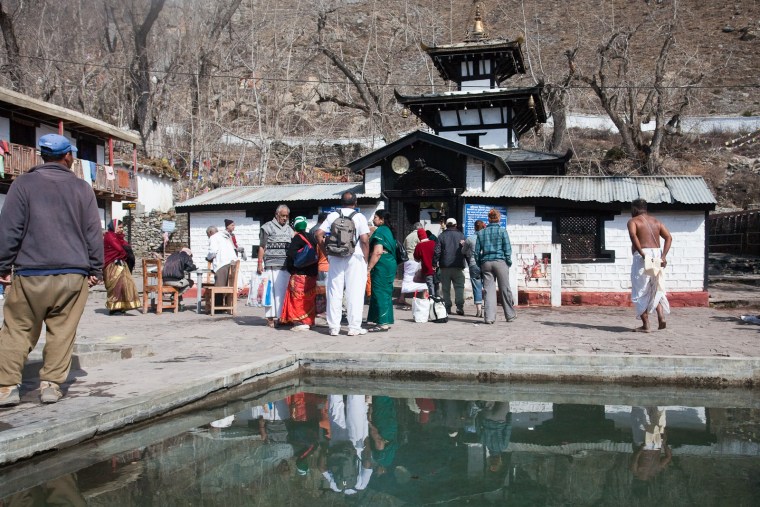
Mukthinath
As per schedule we should have taken a flight from Pokhara to Jomsom but because of technical snag no flights were in operation so we had to proceed in jeeps. On the morning of 18.09.2013 after coffee we left for Jomsom. There were six people in our vehicle. The driver was Rajkumar Sonar and next to him on the front seat was Sri Amrith Adhikar, CEO of Satyam Tours, who is our organizers Nepal counterpart. We were happy to travel with locals who knew the terrain well and would quench our curiousity. Pokhara to Jomsom is 154 kms but the path we traversed was mountainous and the roads bumpy and kutcha but the scenery was amazing.We enjoyed the sight of Macchapucchare and Annapurna peaks.
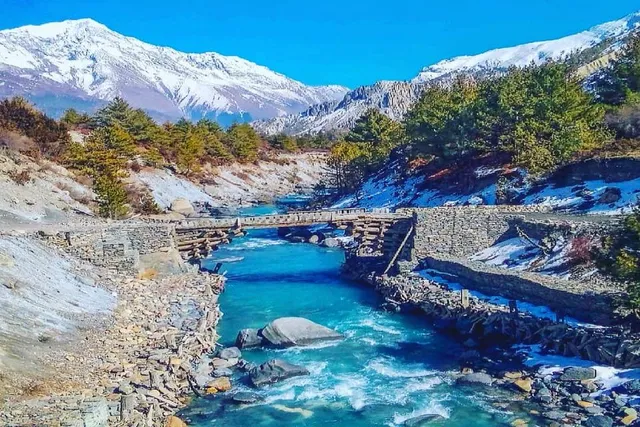
Maize and banana plants were seen at the lower level. As we ascended there were fields covered with magenta flowers. Amrith told us that it was an edible plant and its flour was used extensively in Nepal. We spotted houses where chillies which were put to dry as also other things. Vegetables like pumpkin, cabbage and cauliflower were spotted. There were plenty of apple trees some filled with apples. We were told that these apples were already bought by prospective buyers from abroad who would collect them during harvest time. Now and then we would sight children in uniform on their way to school. Gorges valleys, cliffs and the river Gandaki was spotted all through the way. Sometimes she would be a trickle, sometimes we spotted her falling from heights in steps and sometimes roaring and gushing forth like the sea. The water was whitish and sometimes brownish. Now and then we spotted a swing like bridge for pedestrians. Tuborg signs were seen everywhere and we learnt it was a beer. Another sign we saw was Takali and Amrith told us that they were a community in Nepal.We stopped once for tea and then the tossing and throwing began again. By 7.00 p.m. we reached Jomsom and checked into our rooms. The trip had taken almost 12 hours. Jomsom means New Fort and is at a height of 2800m. It is in Mustang district in the Dawalagiri zone of Nepal. The weather was cold and we got into our woolens. We got both cold and hot drinking water. After the tumultuous ride we were thankful for the comfort of the bed and the warmth of the comforter. Next morning after coffee we left.Baskets full of apples and vegetables were being sold outside the hotel but we had to leave so no purchases could be made. We took the same jeep we came from Pokhara and travelled for about 15 minutes by a narrow road to reach a jeep stand. We took one such jeep which passed through Kaghbeni. On one side we spotted Annapurna and on the other Daulagiri. Between these other mountain ranges could be seen the river The jeep took us to Mukthinath Jeep stand We then took motorbikes to reach the entrance of Mukthinath temple (Rs 300 per head). While we waited for our turn we bought salagramamurthis ranging from Rs20 to Rs 1000. Then it was time to board the motor –bikes holding the driver around his tummy. It was a roller-coaster ride which was amazing and while some enjoyed others screamed. Atlast we were there – Mukthinath located at 3710m from sea level at the Thorang La Pass in Mustang district. After climbing a fleet of steps we reached the temple premises. Many in our group had bathed and were having Mukthinath Darshan.We took bath in the 108 Gomukhas called Mukthidhara from which Gandaki water pours continuously. It was melted ice and we literally felt frozen. Then we had a dip in two ponds, dried ourselves and changed to fresh clothes in the changing room which was functional. When our turn came we went inside to find Mukthi Narayan in standing posture with Sri Devi and Bhu Devi. They were wearing many many glass bangles. Then there were Salagrams which were huge. Bhaghavadh Ramanuja and Suka Brahmam with a parrot face were seen. There were three Buddhas. The Tibetan priestess put red ribbons round our neck and placed SriSathari on our heads. It was then...
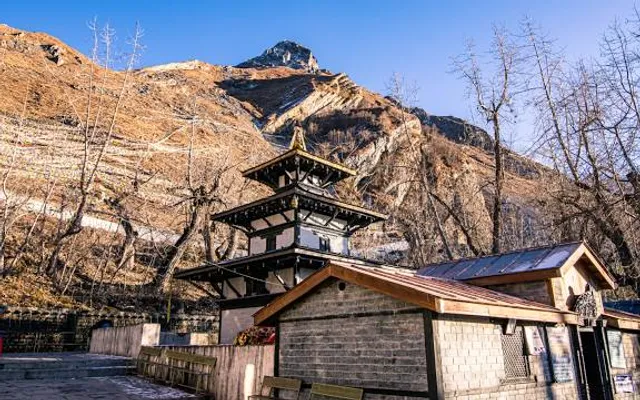
Read moreSituated at an altitude of 3,710 meters (12,172 feet) at the base of the Thorong La mountain pass in the Mustang district, Muktinath is a highly venerated sacred place for both Hindus and Buddhists.
Hindus call the site Mukti Kshetra, which literally means the "place of salvation" and it is one of the most ancient temples of the God Vishnu and the Vaishnava tradition in Nepal. The shrine is considered to be one of the eight sacred places known as Svayam Vyakta Ksetras (the other seven being Srirangam, Srimushnam, Tirupati, Naimisharanya, Totadri, Pushkar and Badrinath), as well as one of the 108 Divya Desam, or holy places of worship of Lord Vishnu. Additionally, it is also one of the 51 Shakti Pitha goddess sites.
The temple is small and contains a human-sized golden statue of Vishnu as Shri Mukti Narayana. In addition to Mukti Narayana, the temple has bronze images of Bhoodevi (the Earth-goddess form of Lakshmi), the goddesses Saraswati and Janaki (Sita), Garuda (the mount of Vishnu), Lava-Kusa (the sons of Rama and Sita) and the Sapta Rishis (Seven Sages created by Lord Brahma). There is an old Buddhist monk present in the temple and worship is conducted by Buddhist nuns.
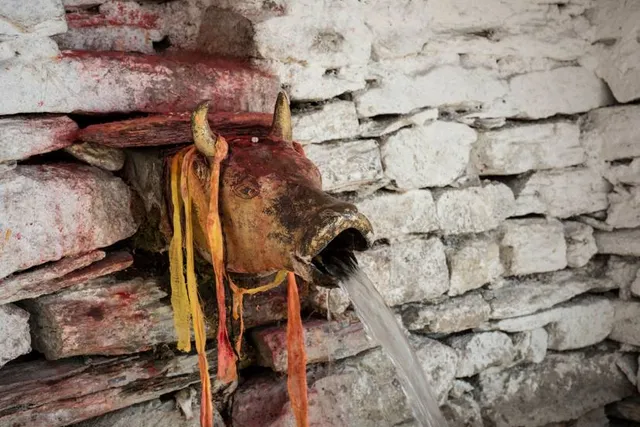
Behind the temple is a semi-circular wall with 108 stone faucets at a height of seven feet. The faucets all have the same shape of the head of a bull and are separated by approximately one foot. Water from the ice-cold Kali Gantaki River has been diverted to flow through the mouths of these bulls and hardy pilgrims who visit the temple often stand beneath each of the spouts.
The number 108 carries great significance in Eastern philosophy. In Hindu astrology, there are 12 zodiac or Rashi and 9 planets or Graha, giving a total of 108 combinations. Also there are 27 Lunar mansions or Nakshatras, which are divided in 4 quarters, or Padas each giving a combination of 108 Padas in total.
The Kali Gantaki riverbed downstream from Muktinath is the sole source of the rare Shaligram stones that are required to establish a temple of Vishnu anywhere in the world.
Buddhists call Muktinath Chumming Gyatsa, which in Tibetan means 'Hundred Waters'. According to Tibetan Buddhism Chumig Gyatsa is a sacred place of the Dakinis goddesses known as Sky Dancers, and also one of the 24 celebrated Tantric places. Additionally, the site is believed to be a manifestation of Avalokitesvara, the Bodhisattva of Compassion and Virtue. The Tibetan Buddhist tradition states that Guru Rimpoche, also known as Padmasambhava, the founder of Tibetan Buddhism, meditated here on his way to Tibet.
After completing prayers and worship at the Muktinath temple many pilgrims, both Hindu and Buddhist, visit Mebar Lha Gomba, the small monastery of `miraculous fire', which is situated near the entrance gate of the temple. This monastery, dedicated to Guru Rimpoche (Padmasambhava) and containing a statue of the Buddhist deity Chenrezig (Avalokitesvara), is famous for its continuously burning natural gas fire, which Hindus worship as Jwala Mai, the...
Read moreMuktinath Temple: A Sacred and Scenic Pilgrimage Destination
Muktinath Temple, located in Nepal’s Mustang district at an altitude of 3,710 meters, is one of the most revered pilgrimage sites for both Hindus and Buddhists. The temple, nestled in the lap of the Himalayas, offers not only spiritual significance but also breathtaking natural beauty.
Spiritual Significance
For Hindus, Muktinath is one of the 108 Divya Desams, sacred Vishnu temples mentioned in ancient texts. The name "Muktinath" translates to "the god of liberation," and it is believed that visiting the temple cleanses one’s sins and grants salvation (moksha). The main deity, Lord Vishnu, is worshipped here in the form of a golden idol. The temple is also significant for Buddhists, who consider it a place where Guru Rinpoche meditated on his way to Tibet. The presence of Tibetan-style prayer wheels and Buddhist monks reflects the temple’s cultural harmony.
Unique Features
One of the most fascinating aspects of Muktinath is the 108 water spouts surrounding the temple. Pilgrims believe that taking a holy bath under these icy-cold waters purifies the soul. Another unique attraction is the eternal flame, which burns naturally from a rock due to underground gas emissions. This rare combination of fire, water, and air symbolizes nature’s balance and adds to the temple’s mystique.
Scenic Beauty and Adventure
Beyond its religious significance, Muktinath is a paradise for nature lovers. The journey to the temple takes visitors through stunning landscapes, including rugged mountains, deep gorges, and scenic valleys. The Annapurna and Dhaulagiri mountain ranges provide a majestic backdrop, making the trip visually rewarding. The region is also home to the unique Tibetan-influenced culture of the Thakali people, adding to the richness of the experience.
Journey to Muktinath
Reaching Muktinath is an adventure in itself. Pilgrims and travelers can choose different routes:
By Road: A long but scenic drive from Pokhara or Kathmandu via Jomsom.
By Air: A flight to Jomsom followed by a short trek or jeep ride.
By Trekking: Muktinath is a popular stop along the Annapurna Circuit trek, offering an unforgettable hiking experience.
Challenges and Tips
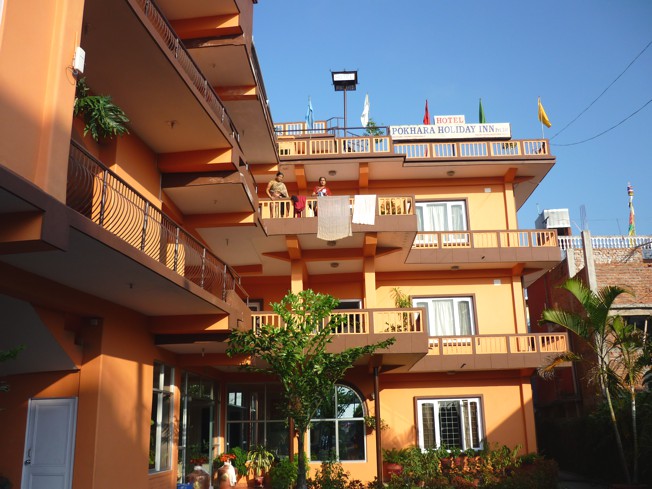
Due to its high altitude, visitors may experience altitude sickness. It’s advisable to acclimatize properly and stay hydrated. The weather can be unpredictable, so carrying warm clothing is essential. Accommodation and food facilities are available in Jomsom and nearby areas, though they can be basic.
Final Thoughts
Muktinath Temple is more than just a pilgrimage site—it’s a blend of spirituality, adventure, and natural beauty. Whether you visit for religious purposes or to enjoy the stunning Himalayan scenery, Muktinath offers an unforgettable experience. The temple’s peaceful aura, combined with the breathtaking surroundings, makes it a must-visit destination for seekers of both devotion...
Read more