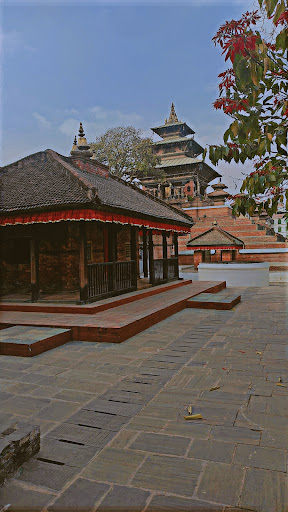
The temple, believed to have been commissioned by then King Mahendra Malla, is located adjacent to the Hanuman Dhoka Palace Museum. A lot of stories have come up about the origins of the holy temple.
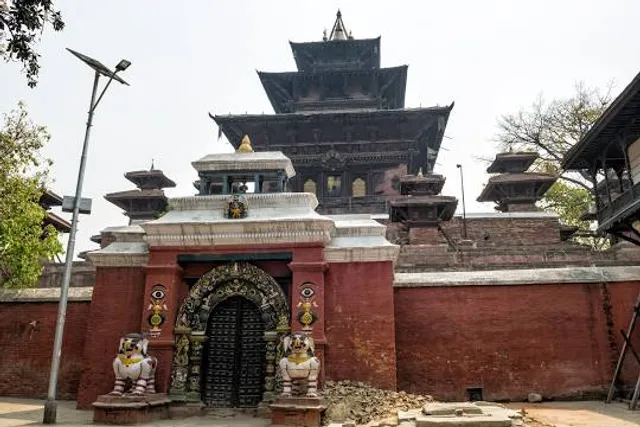
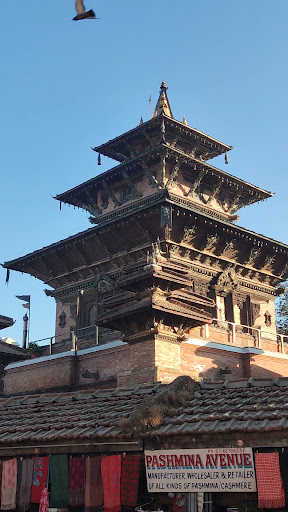
People believe that the temple was built in the shape of yantra, a mystical diagram said to have magical powers, due to a suggestion that came straight from the Goddess Taleju. According to legends, Taleju Bhawani herself made a special appearance at the temple’s dedication ceremony where she came disguised as a bee. She was originally a goddess from the south of India, but later became the kul deuta (family deity) of the Malla Kings in 14th century. Even when the Malla kingdom was conquered by the Shah rulers, the new kings adopted Taleju as their own new royal deity in order to prove and cement their legitimacy to the throne. Some people also say due to the presence of the royal goddess, the temple escaped with only minor damages in the 2015 earthquake. The temple still stands, albeit with a few cracks. Its pinnacle collapsed but has been restored and the main temple is slightly slanted from its original place, but the structure has been secured with scaffolding. Taleju temple can only be visited by Hindus once a year on the ninth day of Dashain. For everyone else, it can only be viewed from the outside. Inside, there are 12 miniature versions of the temple that surround the main building. There are four more temples higher up just below the main temple. The four main decorative gates are guarded by stone lions. Inside the main Taleju temple itself are golden statues depicting the ten-armed goddess along with shrines to both Taleju Bhawani and Kumari, Nepal’s Living Goddess.
People believe that the temple was built in the shape of yantra, a mystical diagram said to have magical powers, due to a suggestion that came straight from the mouth of Goddess Taleju herself Kumari is considered to be the human manifestation of the Goddess Taleju. There are several legends telling us why the Kumari is considered as the manifestation of Goddess Taleju. One popular legend states how the last Malla King Jayaprakash Malla played tripasa, a dice game with the goddess. She promised to come every night on the condition that the king wouldn’t tell anyone about it. But one night the king’s wife saw the goddess which angered Taleju Bhawani and she left. But before leaving she told the king that if he wanted to see her again or have her protect his country, he’d have to search for her among the high cast Newar girls as she would be incarnated as a little girl among them. Hoping to make amends with his patroness, King Jayaprakash Malla left the palace in search of the young girl who was possessed by Taleju’s spirit. The worshiping of the Goddess Taleju in the form of a young virgin girl, or kumari, became a tradition in the Newar society and has continued to this day. As per the tradition, the living goddess visits the temple on Mahanawami of Dashain every year. The temple will be open on Nawami from 5 am to 7 pm. Every year hundreds of devotees patiently stand in line to pay homage to Taleju Bhawani situated at Tulasi Chowk, Hanuman Dhoka. The lines reach up to as far as the Kumari Ghar, Basantapur from the temple’s...
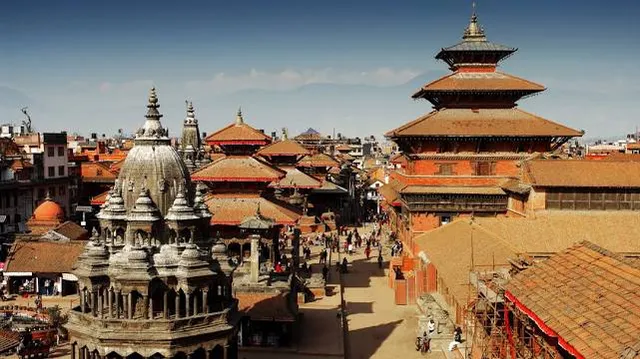
Read moreTaleju Bhawani Temple, an architectural masterpiece located within Kathmandu Durbar Square, stands as a significant symbol of religious devotion and historical grandeur in Nepal. Dedicated to the goddess Taleju Bhawani, this temple is one of the most important religious sites in the Kathmandu Valley, drawing pilgrims and visitors alike with its towering structure and intricate design.
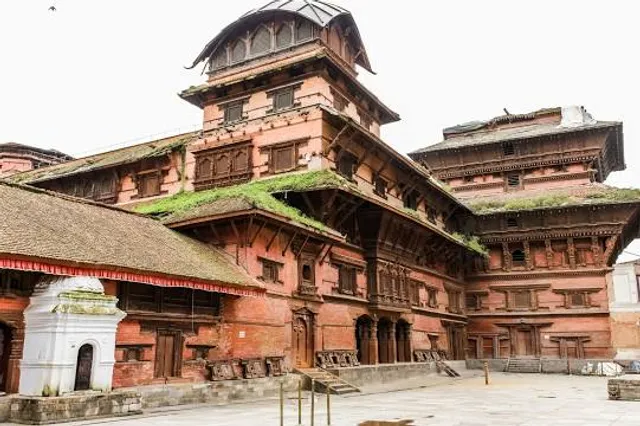
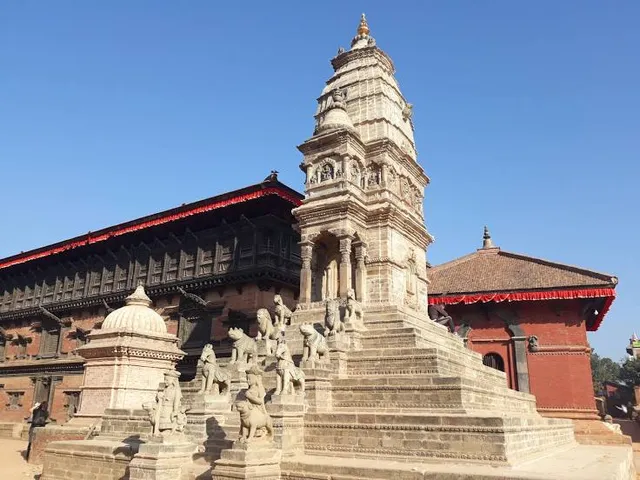
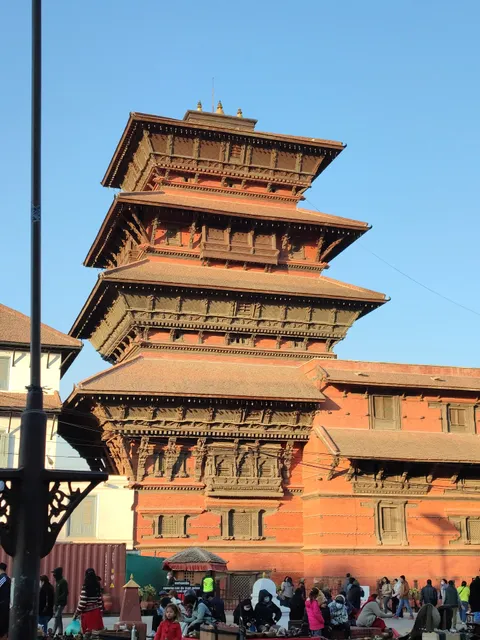
The Taleju Bhawani Temple was constructed in 1564 by King Mahendra Malla. It is a remarkable example of Newari architecture, characterized by its towering, multi-tiered pagoda style. Rising majestically from its base, the temple is built on a twelve-stage plinth, which elevates it above the surrounding buildings and provides it with a commanding presence. The height of the temple, coupled with its complex design, makes it one of the most striking landmarks in the area.
The temple’s main structure comprises three diminishing tiers, each roof adorned with ornate wooden carvings and intricate latticework. The roofs are covered with gilded copper plates, which glint in the sunlight, adding to the temple’s majestic appearance. The eaves of the roofs are supported by meticulously carved wooden struts, each depicting various deities and mythological figures, showcasing the exceptional craftsmanship of the Newari artisans.
Surrounding the main temple are several smaller shrines and temples, each contributing to the sacred ambiance of the site. These auxiliary temples are dedicated to various gods and goddesses, creating a comprehensive spiritual complex. The symmetrical arrangement of these smaller temples around the central structure adds to the architectural harmony and visual appeal of the site.
The temple complex is adorned with numerous statues, sculptures, and inscriptions, each telling a part of the rich mythological and historical narrative associated with Taleju Bhawani. The main entrance to the temple is flanked by statues of the temple guardians, which are believed to protect the sanctity of the temple. Inside, the sanctum houses the idol of Taleju Bhawani, although access is traditionally restricted to Hindus, and the deity is only visible to the public during the annual Dasain festival.
The temple’s interior is equally magnificent, with walls covered in frescoes and carvings depicting scenes from Hindu mythology. The central sanctum is dimly lit, creating a serene and contemplative atmosphere. The intricate woodwork and metalwork inside the temple further emphasize the artistic heritage of the Newar culture.
A visit to the Taleju Bhawani Temple offers a profound experience, blending spirituality with a deep appreciation for historical architecture. The temple stands as a testament to the enduring devotion and architectural brilliance of the Newar people. Whether you are drawn by its religious significance or its architectural beauty, the Taleju Bhawani Temple provides a captivating glimpse into Nepal’s rich cultural and spiritual heritage. Walking around the temple, admiring the detailed carvings, and soaking in the sacred atmosphere allows visitors to connect with the historical and cultural essence of Kathmandu...
Read moreIn the heart of Kathmandu Durbar Square resides the Guardian Deity of the Malla Kings; Taleju Bhawani. Full of mythical and mystical beliefs, the Taleju temple stands on a 12 stage pedestal captivating the Durbar square area. Kathmandu Durbar Square’s largest temple Taleju Bhawani is at its northeastern extremity and is not open to the public every day.
Taleju Bhawani is one of the most powerful goddessand her temple stands out among the many temples and monuments around Durbar Square. Legend has it that she played Tripasa (a dice game) with the last Malla king Jayaprakash Malla every night in the condition that no one would know about it. However one night the queen sees her which angers the goddess and she leaves. Before leaving she tells the king that if he ever wishes to see her or protect the nation then he must search for her amongst the high cast Newar girls among whom she will reside. Here are few facts you should know about the great Taleju Bhawani:
The temple was built in the shape of ‘yantra’, a mystical diagram said to have powers as it was a suggestion that came straight from the Goddess Taleju.
Non-Hindus are not allowed inside the temple.
Taleju Temple can only be visited once a year on Nawami (ninth day ) of Bada Dashain.
When it was built, King Mahendra Malla ordered that no other building in Kathmandu should rise higher than its gilded roofs.
It took 46 years to build Taleju Bhawani Temple and was completed in 1564.
Goddess Taleju Bhawani was also the clan Goddess (Kul Devta) of the Malla Kings who ruled Nepal from the 12th century to the 18th century
When the Malla Kingdom was conquered by Shah rulers, the new Kings adopted Taleju as their own new royal deity in order to prove their legitimacy to the throne.
As per tradition 54 male buffalos and 54 male goats along with other animals are sacrificed on Ashtami (eighth day of Bada Dashain)
There are 12 miniature temples surrounding the main temple.
Kumari is considered to be the human manifestation of the Goddess Taleju and there are several legends telling us why the Kumari is considered as the manifestation of...
Read more