I can't give this site less than 3 stars because even though it was closed, I'm fairly confident I will rate it 5 stars if/when I revisit and have the opportunity to go inside with a tour guide.
Unesco world heritage site 330. Be careful visiting as they seem to close randomly and have weird visiting hours/days. May require a reservation/appointment.
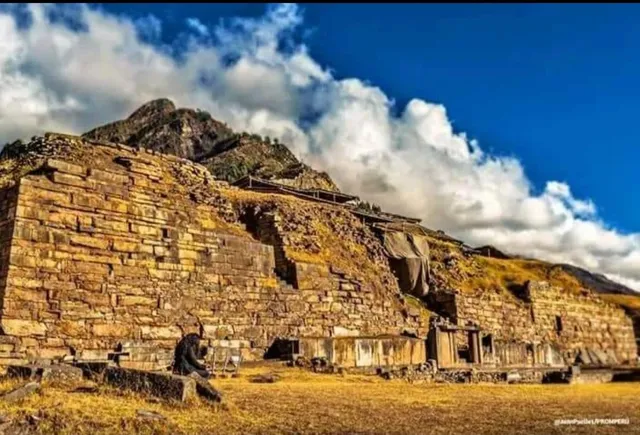
2022.08.20 0429 PET-RMN update: Interesting, I didn't read my own note as we went there on Tuesday 2022.08.16 (8 hour drive by car from Lima) and it was closed due to a recent landslide in the area (2 weeks prior). We did not call in advance or attempt to make reservations. However, we were able to see the u shaped complex, main temple (from the outside), and sunken plaza. We could also see the fanged deity from pretty close, taking pictures from over the wall. The fanged deity is much larger than I thought. I anticipated that it would be around 6-8 inches in diameter but it was more like 3-4 feet in diameter. If we have the opportunity, we should revisit to take the tour and see the museum located in the town of Chavin, as it was also closed. Tickets/tours include the ability to go inside the temple and view the several meter high stone rock pillar (obelisk) with partially transformed fanged...
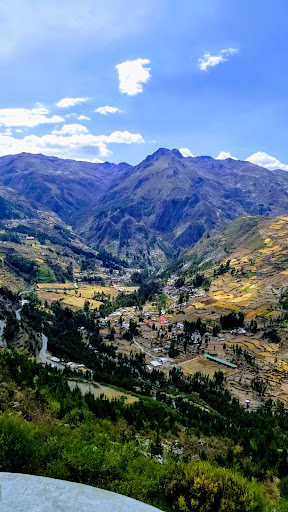
Read moreThis is a fantastic experience to see the site. 15 soles entry. A few hours from Huaraz by public transport (15 soles each way). Caution: during the long often unnerving, winding route, you reach high altitudes and must take a day or two to adjust to elevation before attempting to cross the mountain. A museum with objects taken from the site is on the other side of town. The site dates from 1500BC, and has been used since long before, though signage explains most the main structures are 800s BC. They do not allow you to climb most stairs or explore a significant portion of the site, and some paths are controlled for continued excavations. You mostly see things from the other side of a fence. But in some moments you get to interact with the site and go down passageways etcetera. The environment is gorgeous, as you're surrounded 360° by mountains. Don't miss out heading down to the creek that surrounds the site on two sides to enjoy the tranquility by the edge of the flowing stream still going 3000...
Read moreExtraordinario
Chavín de Huántar es un sitio arqueológico (o monumento arqueológico) ubicado en el distrito de Chavín de Huántar, provincia de Huari, departamento de Áncash, en el Perú. Declarado como Patrimonio de la Humanidad en 1985. Se ubica a 462 km al noroeste de Lima y a 86 km de Huaraz, a una elevación de 3177 m s. n. m., en la Sierra Oriental de Áncash al este de la Cordillera Blanca. El complejo se ubica en la confluencia de los ríos Huacheksa y Mosna, en la cuenca alta del río Marañón, que fue un punto de paso preinca desde la costa hacia la selva, lo que propició su crecimiento e importancia en la recolección de insumos y tránsito de bienes.
Fue el centro administrativo y religioso de la cultura chavín, construido y ocupado aproximadamente entre los años 1500 y 300 a. C. (Formativo Andino). Sus estructuras, de forma de pirámide trunca, están construidas a base de piedra y argamasa de barro. La estructura más imponente es la conocida como “El Castillo”, llamado también “Templo Mayor” o “Templo Nuevo”. Es una muestra sobresaliente del arte de construir de los antiguos peruanos por el alto grado de perfección alcanzado en materia de ingeniería, en el tallado y pulido de las piedras y en la litoescultura asociada a su arquitectura. A pesar de no ser el sitio arqueológico más antiguo, ni el más grande, ni el más vistoso del Perú antiguo, a Chavín de Huántar se le considera como el más importante centro de peregrinación del mundo andino y, de acuerdo a Luis Guillermo Lumbreras, una síntesis de las experiencias anteriores desarrolladas en la costa, sierra y selva, así como uno de los testimonios más tempranos de la civilización en América.
La construcción presenta una compleja red de caminos y galerías interiores de piedra únicamente iluminados por haces de luz que penetran a través de ductos estratégicamente dispuestos. En su interior aún puede apreciarse el Lanzón monolítico, piedra tallada de 4,54 m. de altura en la que se observa representada una divinidad antropomorfa, posiblemente la más importante del panteón chavín. En los muros del templo principal se podía ver una serie de cabezas clavas, bultos escultóricos que oficiaban al parecer de guardianes...
Read more