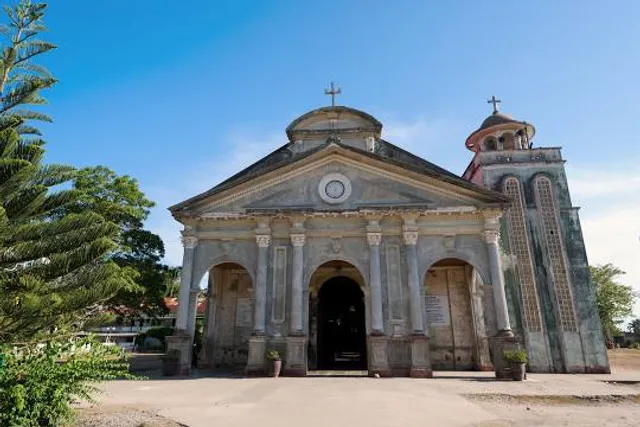
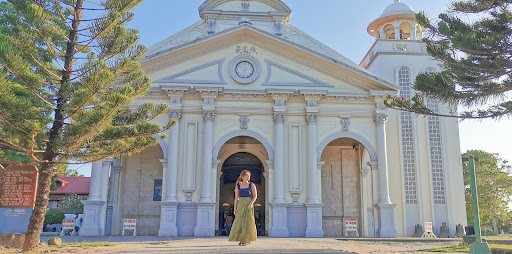
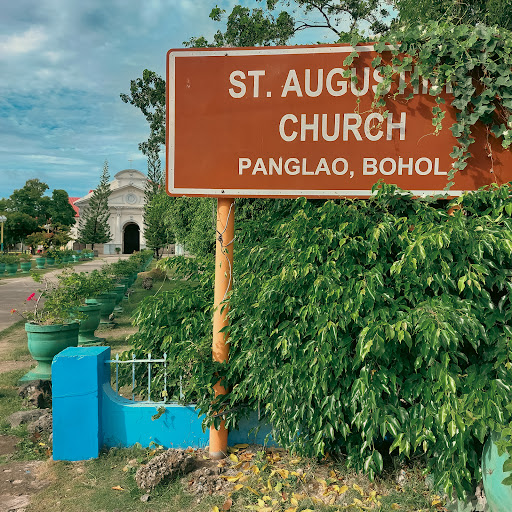
The St. Augustine Church, also known locally as Panglao Church, is a remarkable testament to artistic, historical, and cultural significance on Panglao Island in Bohol, Philippines. Let me paint you a vivid picture of this beautiful place: Architectural Beauty: The church’s façade draws inspiration from neoclassical architecture, featuring a typical portico adorned with Corinthian columns. Above the main entrance, a choir loft adds an elegant touch. But what truly captivates visitors are the twin wooden antique confessionals, intricately carved with grapevine, flower, and dove patterns. Inside, the ceiling murals depict the Seven Sacraments of the Roman Catholic Church. Historical Significance: Construction of the stone church began in 1894 under the Augustinian Recollects but was halted due to the Philippine Revolution. Work resumed in 1912, and the church was consecrated on August 31, 1924, by Most Reverend Juan Gorordo, Bishop of Cebu. The facade, completed in 1925 by Fr. Quiterio Sarigumba, stands as a testament to the dedication of its builders. Bell Tower and Watchtower: A 5-story bell tower, constructed from cut stone in 1851, stands behind the original church ruins. This centuries-old watchtower is reputed to be the tallest in the Philippines. Feast Day and Location: The church honors its patron saint, St. Augustine, whose feast day is celebrated annually on August 28. Situated at the western end of Panglao Island, near Panglao Bay, it’s approximately 22 kilometers from Tagbilaran City. Visitor Information: The St. Augustine Church remains open year-round and hosts daily masses. For those interested in the feast day festivities, mark your calendar for August 28 and witness the town-wide celebrations. Whether you’re an art enthusiast, a history buff, or simply seeking spiritual solace, St. Augustine Church invites you to step into its storied past and experience its...
Read moreIn the records of the diocese, Panglao was established as a parish by the Jesuits in 1782. The Recollects’ records show that they took charge of Panglao town in 1803.
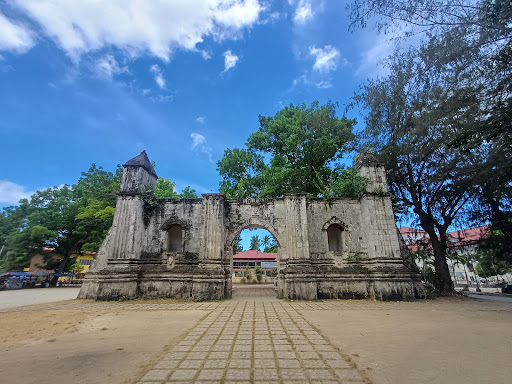
The extant church, imposing and awe-inspiring especially if viewed from its right side, stands beside the ruins of an older church, probably from Jesuit times. The ruin’s façade indicate that it may have been Baroque in design. This church was ruined before 1886. Church records show that a provisional church, made of tabigue and wood, was constructed.
To the rear of the ruins, further off to the seashore, stands a 5-storey bell tower built of cut stone in 1851. Octagon in shape and covered by a pitched roof, the tower is said to be the tallest of its kind in the Philippines. This tower as a heritage of the past needs urgent restoration.
Rev. Fr. Valentin Utande, a Recollect, started building this church in 1894 up to 1897 when he was transferred to another parish. Two other Spanish priests, Rev. Fr. Eugenio Gil and Rev. Fr. Pedro Jimenez continued the construction slowly until 1898 when the Filipino revolution against Spanish authority broke out. The construction was abandoned as there were no more Spanish priests assigned in Panglao.
In 1912, Rev. Fr. Emiliano Veloso was assigned parish priest and he continued the construction with the whole-hearted cooperation of the church leaders, town officials, and residents of Panglao. A greater part of the nave was done in 1920, and by 1924, even if still unfinished, a 4-day inauguration affair was scheduled, with Bishop Juan B. Gorordo of Cebu celebrating the Inaugural Mass and Blessing on Sunday,...
Read moreThe Church of St. Augustine in Panglao presents a curious paradox. Its facade, adorned with Corinthian columns whispers of classical European architecture, yet it lacks the patina of age one expects from a Spanish colonial relic. This modern iteration, though imposing in its own right, feels strangely disconnected from the whispers of history that permeate this tranquil island.
Just steps from the church's polished stone, the skeletal remains of an earlier structure emerges. These ruins speak of a bygone era—a tangible link to the island's Spanish colonial past. Records indicate this original church dates back to 1886, a testament to the enduring power of faith amidst a turbulent history. The juxtaposition of these ruins against the pristine facade of the new church creates a poignant dialogue between past and present, a visual echo of Panglao's evolving identity.
Further enhancing this historical tapestry is the imposing watchtower that stands sentinel over the island. Rising five stories, it is said to be the tallest of its kind in the Philippines. This silent guardian, constructed from coral stone and weathered by centuries of sun and storm, has borne witness to the ebb and flow of life on Panglao. From its vantage point, one can imagine Spanish soldiers scanning the horizon for Moro raiders, or villagers seeking refuge from the ravages...
Read more