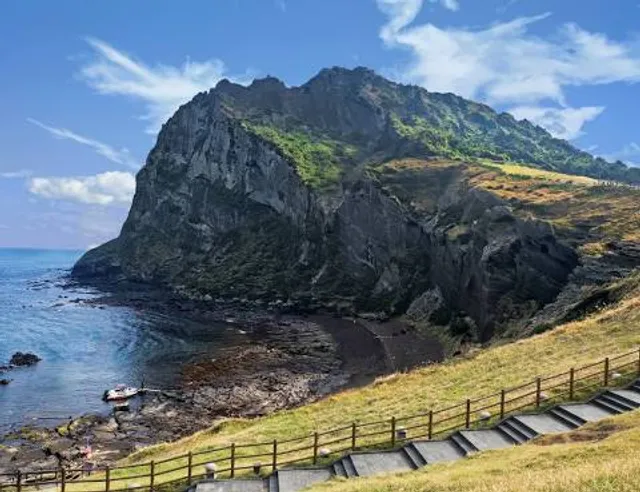
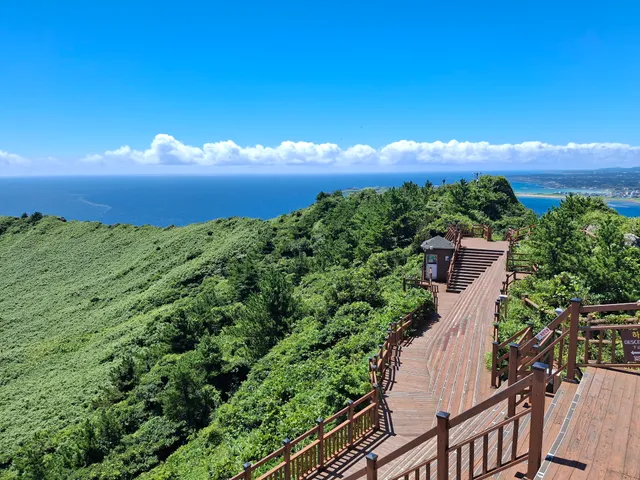
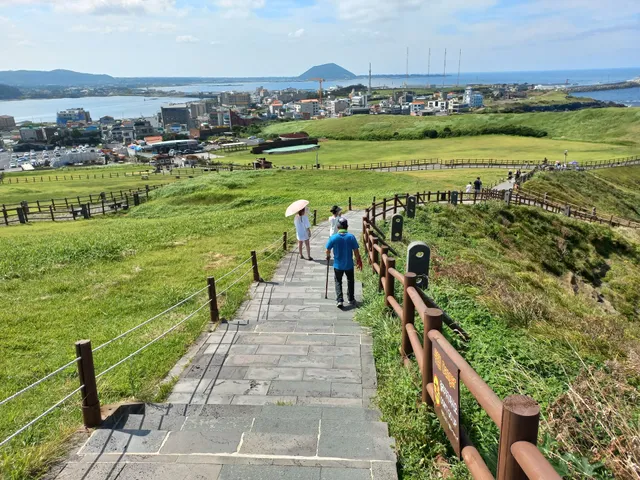
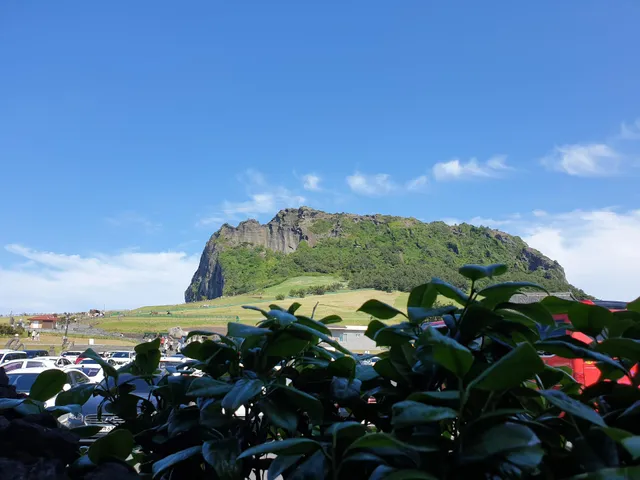
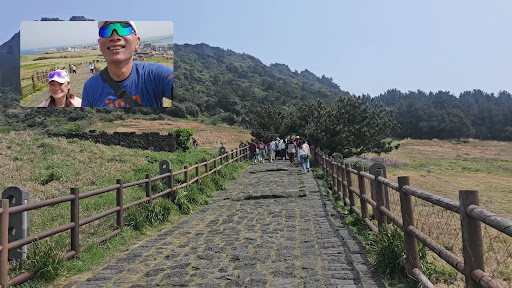
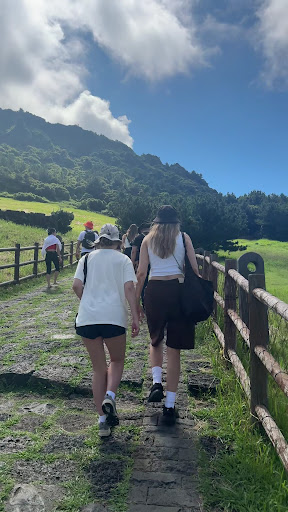
Seongsan Ilchulbong, also known as Sunrise Peak, is a stunning natural wonder. The climb isn't easy, but the breathtaking views from the crater rim are worth the effort. We went around 2:30 p.m., so we missed the sunrise, but the views were still amazing. It's not for the faint of heart. The full loop hike takes about 50 minutes. Plan for 1.5 hours if you want a relaxed climb, or 1 hour 15 minutes if you’re feeling physically fit. The entrance is 5,000 won per person.
We also visited Deungyeongdol, a sacred rock formation with a fascinating legend about the creation of Jeju Island. It’s definitely worth checking out.
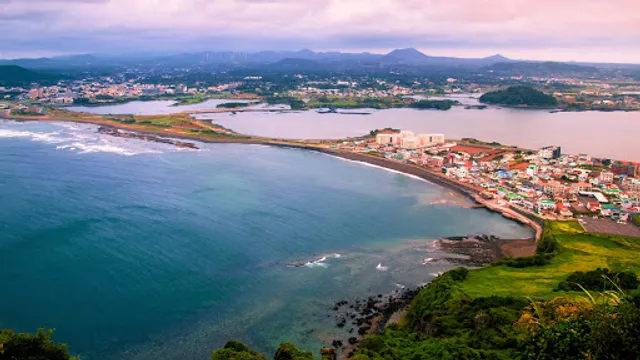
We learned about the formation of Seongsan Ilchulbong through an informative sign. It explained that a volcanic eruption created a tuff cone that was initially an island, but over thousands of years, wave erosion formed a tombolo, connecting it to the mainland.
Lastly, we learned about Udo Island, a unique island with a fascinating geological history. It was formed by a powerful interaction between magma and groundwater, creating a tuff cone. The western coast features a unique beach sediment with red algal nodules, designated as a Natural Monument.
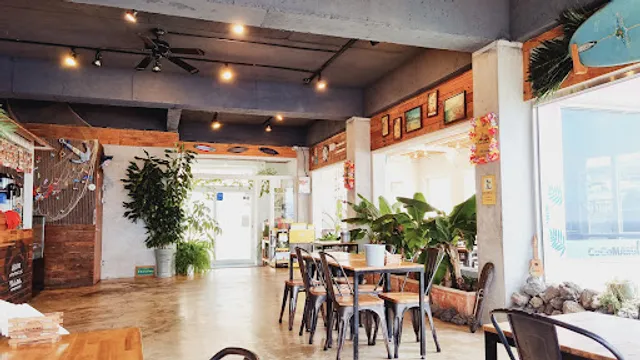
After our hike, we stopped by the seafood restaurant below the mountain, run by skilled You got it, Doraemon! Here's your review, incorporating the Haenyeo divers:
"Seongsan Ilchulbong, also known as Sunrise Peak, is a stunning natural wonder. The climb isn't easy, but the breathtaking views from the crater rim are worth the effort. We went around 2:30 p.m., so we missed the sunrise, but the views were still amazing. It's a must-do, but not for the faint of heart. The full loop hike takes about 50 minutes. Plan for 1.5 hours if you want a relaxed climb, or 1 hour 15 minutes if you’re feeling physically fit. Entrance is 5,000 won per person.
We also visited Deungyeongdol, a sacred rock formation with a fascinating legend about the creation of Jeju Island. It’s definitely worth checking out.
We learned about the formation of Seongsan Ilchulbong through an informative sign. It explained that a volcanic eruption created a tuff cone that was initially an island, but over thousands of years, wave erosion formed a tombolo, connecting it to the mainland.
Lastly, we learned about Udo Island, a unique island with a fascinating geological history. It was formed by a powerful interaction between magma and groundwater, creating a tuff cone. The western coast features a unique beach sediment with red algal nodules, designated as a Natural Monument.
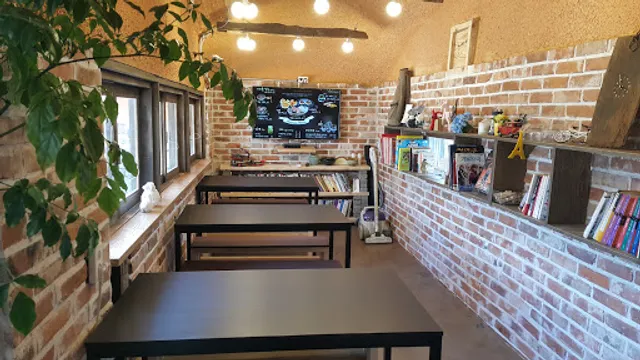
After our hike, we stopped by the seafood restaurant below the mountain, run by skilled Haenye divers. They serve amazing abalone porridge and seafood ramen. We saw a live performance where they showed off their diving skills. It's a tradition that's fading, but these women are incredibl divers. They serve amazing abalone porridge and seafood ramen. We saw a live performance where they showed off their diving skills. It's a tradition that's fading, but these women are incredible. They are a testament to the resilience and strength of the women here. It’s worth taking the time to learn about their history. We saw a sign detailing their history and traditions, which included a photo of these amazing women at work.
The Haenyeo are free divers, meaning they dive without scuba gear, collecting seafood from the ocean depths. It’s a tradition that dates back centuries and is a significant part of Jeju Island’s culture and history. The Haenyeo diving tradition was even designated as a UNESCO Intangible Cultural Heritage of Humanity in 2016, recognizing its importance.
If you’re visiting Jeju Island, make sure to learn about the Haenyeo. They’re an inspiration, and their tradition is a testament to the resilience and strength of the women of Jeju Island.
Seongsan Ilchulbong is truly special, with stunning views, fresh seafood, and captivating Haenyeo...
Read moreSeongsan Ilchulbong, also called ‘Sunrise Peak’, is an archetypal tuff cone formed by hydrovolcanic eruptions upon a shallow seabed about 5 thousand years ago. Situated on the eastern seaboard of Jeju Island and said to resemble a gigantic ancient castle, this tuff cone is 182 meters high, has a preserved bowl-like crater and also displays diverse inner structures resulting from the sea cliff. These features are considered to be of geologic worth, providing information on eruptive and depositional processes of hydromagmatic volcanoes worldwide as well as past volcanic activity of Seongsan Ilchulbong itself. It was formed by Surtseyan-type hydrovolcanic activity upon a shallow seabed about 5,000 years ago when the sea level was same as the present (Sohn & Chough, 1992; Sohn et al., 2002). Most volcanic cones or oreums (Jeju dialect for volcanic cones) were formed by piles of scoria cones which are created by Hawaiian eruptions or Strombolian eruptions. But Seongsan Ilchulbong Tuff Cone and a few other oreums on Jeju Island were hydromagmatic volcanoes which were made by piles of volcanic ash, the interaction of hot ascending magma and seawater or ground water. Seongsan Ilchulbong Tuff Cone is 180 meters high, and its crater is about 600 meters in diameter. It has a dip of strata up to 45 degrees and is 90 meters from sea level to the crater floor. Seongsan Ilchulbong Tuff Cone erupted in very moist and sticky conditions allowing a lot of water to permeate into the volcanic vent, making the diverse depositional features of a wet eruption. The wet hydrovolcanic activity continued until the end of the eruption. Consequently, the tuff has a bowl-like crater unfilled by...
Read moreWe checked in the Coop City Hotel the night before and climbed the Seongsan Ilchulbong the following morning after having a leisurely breakfast buffet. We are not early risers and did not try to catch the sunrise which was probably blocked by the October early morning clouds.
The ticket to go up was KRW5000 pp. You have the option to go down towards the beach for free.
It is a long climb with lots of stairs, but it is worth it. Every once in a while, we would take a break to admire and take photos of the view. The view only gets better as you go higher. And we had perfect late morning weather, sunny with a cool breeze.
It was very rewarding to reach the summit and admire the views of the town, ocean and crater. The summit has lots of wood steps for sitting and relaxing. October is not too crowded.
You go down using a different set of stairs. The view is as good going down as it was going up. I usually find going down tougher on my knees, but this descent was pretty easy and fast. I think the pitch of the steps matched my stride length.
Once we got to the bottom, we headed down to the beach to admire the waves and view of the Ilchulbong from sea level.
The water was too rough for divers, but there were ladies selling raw shellfish which we passed on.
I would definitely recommend Seongsan Ilchulbong if you are physically capable of handling the climb. It was one of the highlights of our 4-night Jeju trip.
Note: there is a defibrillator and a toilet partway up the climb. Also, if you are pregnant, you will have priority car parking spaces marked in pink paint, closest to the ticket...
Read more