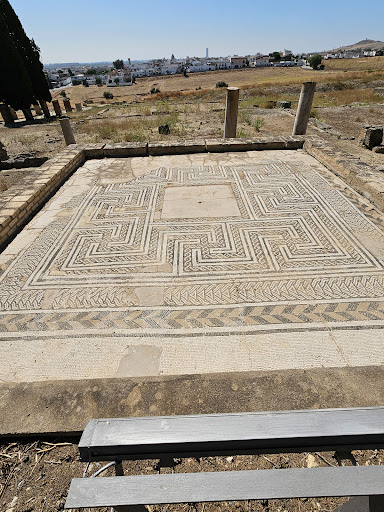
Visiting the Conjunto Arqueológico de Itálica is nothing short of stepping into the pages of a Roman epic—where history rises from the ground in sun-bleached stone and mosaic, and the spirit of an ancient empire still echoes in the wind that drifts across the Andalusian hills. Nestled just outside Seville in the quiet town of Santiponce, this extraordinary archaeological site offers a profoundly enriching experience for anyone with even a passing interest in history, architecture, or the human story itself.
Founded in 206 BCE, Itálica was the first Roman settlement established in Hispania and is notable as the birthplace of two Roman emperors—Trajan and Hadrian. These aren’t just historical footnotes; they form the essence of the site’s grandeur. The city was once a beacon of Roman civilization in the Iberian Peninsula, and what remains today provides invaluable insight into the lives of those who lived, ruled, and dreamed here.
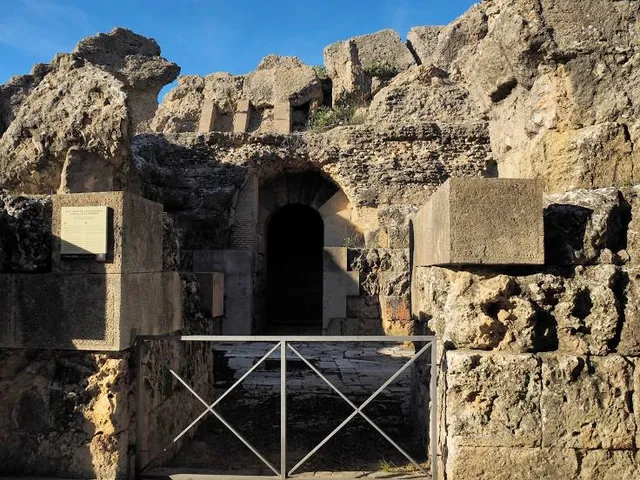
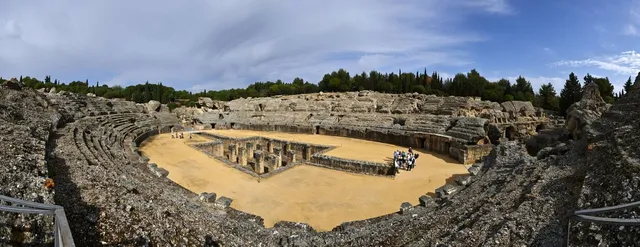
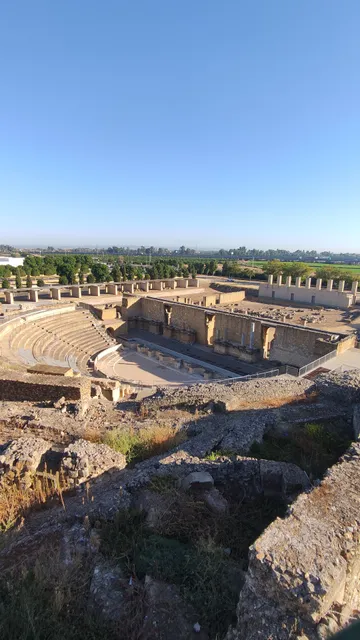
The jewel in Itálica’s crown is undoubtedly its amphitheatre, one of the largest in the Roman Empire, capable of holding around 25,000 spectators. Walking through its arched entrances and descending into the arena floor is a humbling experience. You don’t just observe history—you inhabit it. It’s easy to imagine the roar of the crowd, the clashing of gladiators, the ceremonial pageantry. The fact that this structure still stands, in such remarkably preserved condition, is a testament to Roman engineering and the careful restoration work carried out in recent decades.
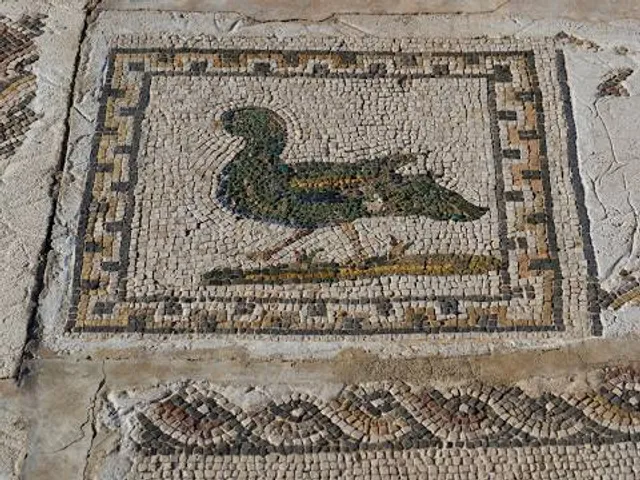
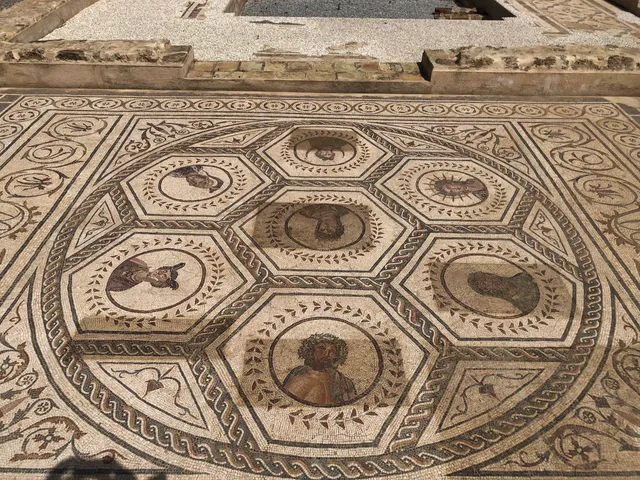
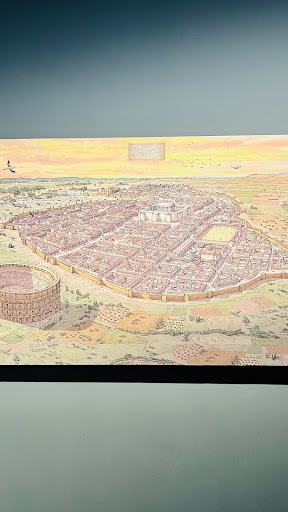
Beyond the amphitheatre lies the heart of the residential city. The urban layout is strikingly visible, with broad Roman streets paved in stone and the foundations of grand domus (villas) still marking the city blocks. Several homes feature exquisite mosaics—geometric, mythological, and floral—many of which remain in situ. The House of the Birds, House of Neptune, and the Planetarium Mosaic are highlights that hint at the sophistication and artistry of Roman domestic life. It’s rare to see this level of preservation outside of Pompeii or Herculaneum.
What sets Itálica apart from more commercialized sites is its sense of serenity. There’s space—literal and figurative—to reflect. As you wander past the remains of thermal baths, temples, and aqueducts, it’s impossible not to be awed by the scale and ambition of the Roman vision. The site isn’t overcrowded, and this allows for quiet moments to connect with the ancient world without the distraction of modern tourism hustle.
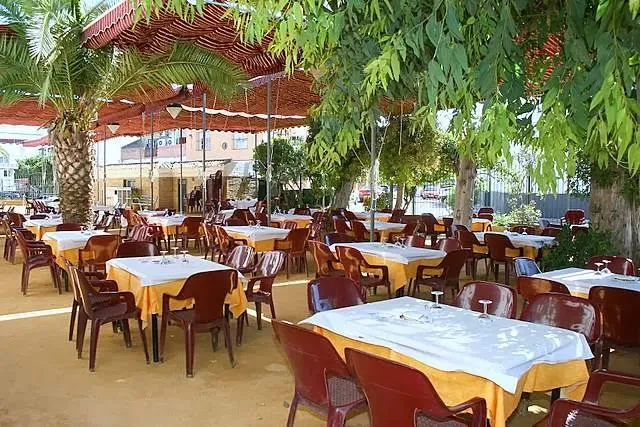
The signage around the site is clear, multilingual, and educational without being overwhelming. Visitors are encouraged to explore at their own pace, and the on-site museum (small but insightful) provides context and showcases some impressive finds. Entry is very affordable—and in some cases free for EU citizens—which speaks volumes about Spain’s commitment to preserving and sharing its heritage. There’s also a small gift shop and nearby cafés in Santiponce, where you can rest and recharge after your historical immersion.
A Hidden Gem Worth the Journey
In summary, the Conjunto Arqueológico de Itálica is a treasure. It’s one of the most significant yet underappreciated Roman sites in Europe, offering an immersive and inspiring experience that balances education with awe. It serves not only as a window into the past but as a reminder of how history lives around us—layered, complex, and profoundly human.
Whether you’re a scholar, a traveler with a curiosity for culture, a family looking for an educational adventure, or even a fan of Game of Thrones (several scenes were filmed here), Itálica will leave an impression that lingers long after you’ve walked its...
Read moreWhere Rome Meets Westeros
If you’re a history buff with a mild obsession for Game of Thrones and a deep appreciation for crumbling stones that once meant something—Italica is your Colosseum away from Colosseum.
This ancient Roman city just outside Seville is like Rome’s forgotten cousin who tried really hard in school, made a few impressive amphitheatres, then got ghosted by time. You walk in and immediately feel like you’re about to witness a gladiator match or a passive-aggressive Senate debate about aqueduct maintenance.
Highlights:
The Amphitheatre: Yes, that amphitheatre. The one where Game of Thrones filmed the Dragonpit summit. You can stand exactly where Cersei, Jon Snow, and Tyrion once stood pretending to negotiate peace while silently plotting everyone’s doom. You’ll feel like shouting “Dracarys!” even if it’s 37°C and your only dragon is the guy selling melted ice cream outside.
The mosaics: Truly stunning. These floors are better preserved than my will to live after hiking up the hill to get there. Hercules is everywhere—flexing in tile like he’s the original influencer.
The ruins: Italica’s streets still whisper stories. Mostly about plumbing. Roman engineering, baby—those bathhouses were fancier than my apartment.
Downsides: There’s not a ton of shade, so bring a hat unless you want to recreate Viserys’ slow meltdown in season 1. And don't expect a Starbucks—you’ll need to hydrate like a Roman soldier post-campaign.
Final Verdict: 5 out of 5 laurel wreaths. Italica is a glorious ruin, rich with ancient vibes and just enough Game of Thrones flair to make you feel like history and fantasy collided—and then promptly collapsed into scenic rubble.
Long...
Read moreA must-see if you love Roman archeology! Let me tell you all about the archeological park of Italica.
How to get there from Sevilla get the bus M 170A or M 170B from Plaza de la Armas, platform 20. you buy the ticket on the bus and it costs 1,70 € (have small change with you) the bus should run every 30 min.
The park itself if you are an EU citizen, you will not pay anything. It's free of charge!! non EU visitors will be charged 1,50 € Please don't fall for the scams online
I suggest you arrive at opening time (9.00 a.m.) and you go straight to the amphitheater. You'll have it all for yourself and will be able to take great pictures after you visit the park, you can have a look at the exhibition rooms.
Tips and rules
no food is allowed the park is mainly in the sun. There are trees but you'll have to stay in the sun if you want to visit the ruins. Therefore... bring a cap/hat bring sun block (SPF 50) good shoes are a must and consider taking long trousers (there are ticks) there were quite a lot of flies and insects, so consider taking an insect repellent spray. the roman theater is NOT part of the archeological park, it's 15 min away from it. We found it but it was closed and in a state of ...
Read more