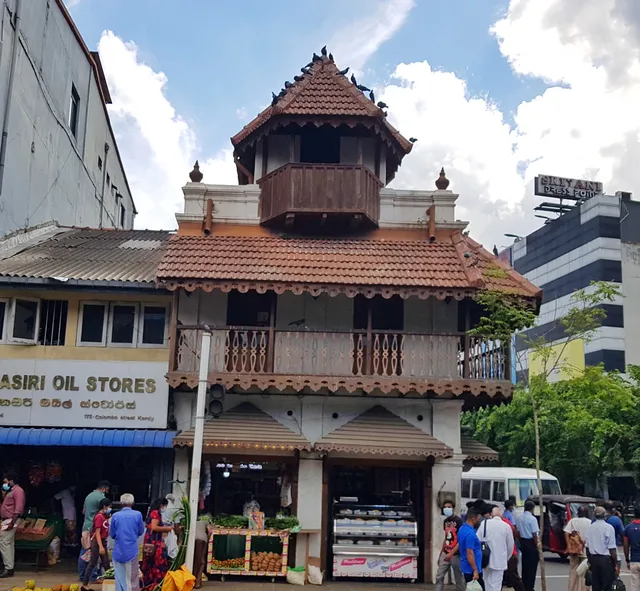
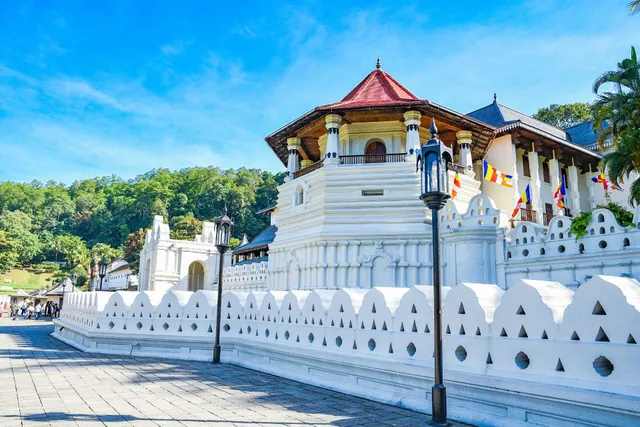
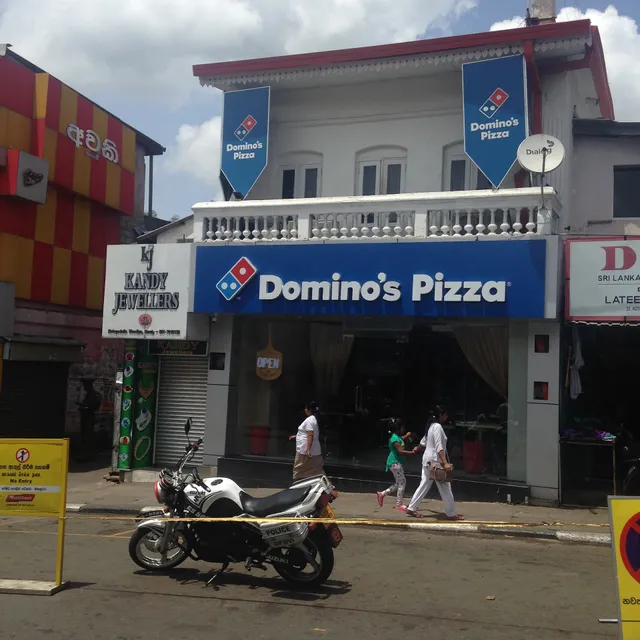
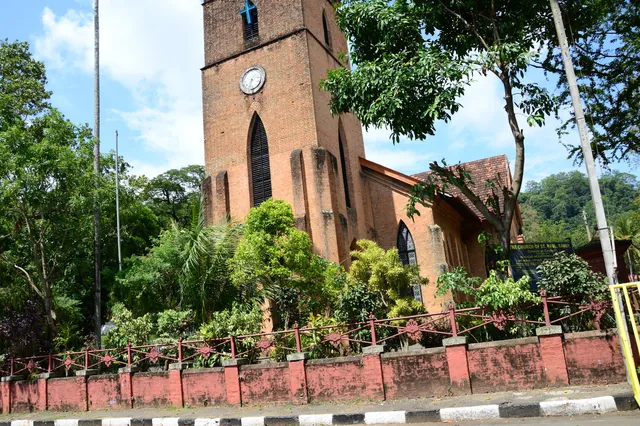
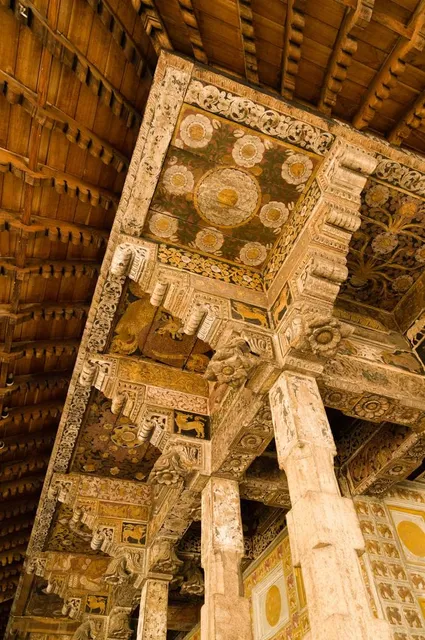
A little away from the other Devalayas (Shrines) Kataragama Devalaya (shrine) lies in the commercial area of Kandy in “Kotugodella Vidiya”. This was known as “kavikara Vidiya” in the ancient times. This is one of the Hatara Devale in the Kandy, the other three being the Natha, Vishnu and Patini. These four Devalayas have a long association with the Royal Palace ( Maha Vasala) and the Temple of Tooth Relic (Sri Dalada Maligawa) and has been venerated by Buddhists and Hindus alike from the inception.
Deity Kataragama is one of the most popular deities of Sri Lanka. His main devale (shrine) lies deep down in the Southern part of the country in the town of Kataragama and generally is called by the name of this town, Kataragama.
The origin of this deity is as a mystery as him. Some legends consider the Kataragama Deviyo (deity) as the powerful regional warrior king Mahasena who ruled the Kataragama area when the Buddha made his 3rd visit to Sri Lanka in the 8th year of his enlightenment ( 580 BC). This warrior king took to Buddhism after meeting the Buddha and was elevated to a deity by the community after his death.
Some believe he is a spy master called Kadira of Tamil invader Elara. After the defeat of Elara he became a principle benefactor in the area and earned respect from the local Singhalese community who deityfied him after his death. Kadira is said to have operated 6 spy rings again sub divided in to 12 groups and based himself in the Kataragama area. It was these groups which later was transformed in to six heads and 12 arms of the Kataragama Deviyo. Kadira was known as the “Kadira Deviyo” who later became Kataragama Deviyo. But the Tamils in Kataragama never accepted him as a deity and ignored him. Those Tamils who worshipped at the shrine introduced their own god Skanda Kumar as the reigning deity of this shrine.
According to Hindu beliefs deity Skanda is also known as Murugan, Arumugam, Kandasami (Skanda Swami), Subrahmanya, etc. According to Hindu legends deity Skanda came to Sri Lanka after a row with his wife Thevani and landed in the southern part of the island. He made “Wadihiti Kanda” near Kataragama his adobe and later married a 16 year old girl from the area called “Walli”.
The deity Kataragama seems to have come in the popularity in 14th century and increased further since 16th century.
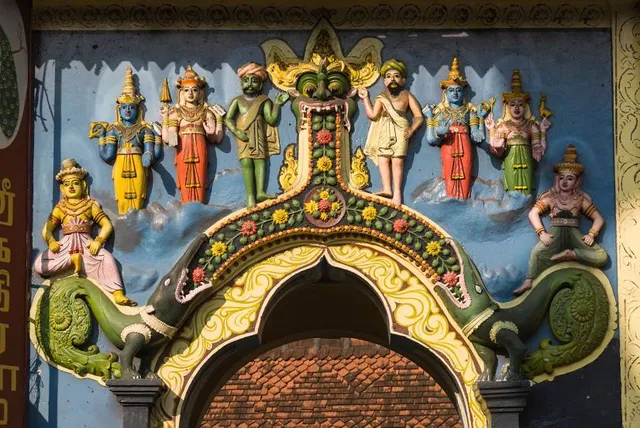
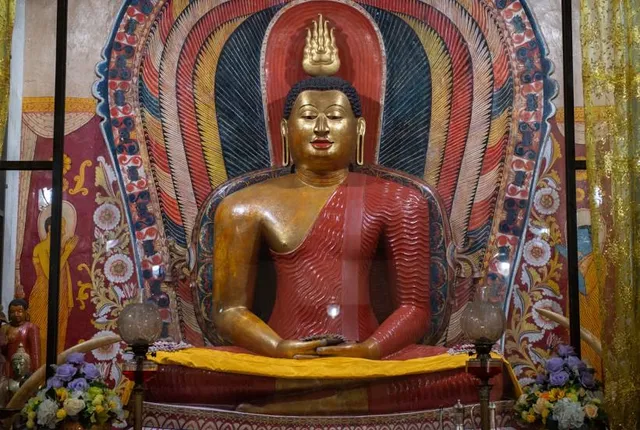
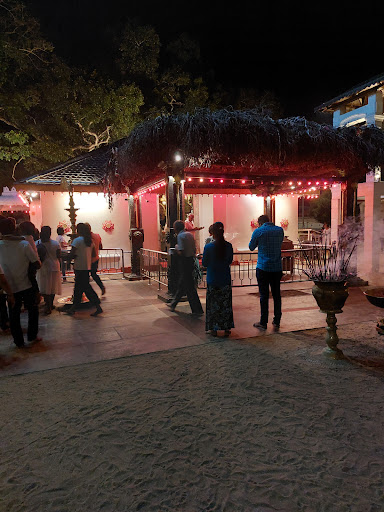
The Kataragama Devalaya at Kandy is run by Hindu priests unlike the other 3 devales in Kandy. The entrance to the main shrine faces the main street through a colorfully ornamented vahalkada. The devale building is more or less the same as the others and has the upper stories square like lantern or tower over the sanctum, with a balcony. It consists of four compartments, the innermost or western one forming the sanctum with an image. In the next compartment also is an image where the officiating priests perform their rites. The third has the palanquin used in the Perahara, and the fourth is the drummers’ quarters. To the north is an extra building attached to the main shrine and dedicated to the planetary gods.
Primary Source : “Kandy” By Central...
Read moreKatharagama is a fast developing township in the deep south of Sri Lanka. But in ancient days it was only a small village. It is situated 228km south of Colombo, the capital of Sri Lanka. It is one of the 16 principal places of Buddhist Pilgrimage to be visited. According to the great chronicle of Sri Lankan history (Mahawamsa), when the Bo-sapling (Bodhi tree under which Gotama Buddha attained enlightenment in Buddha Gaya in North India 2500 years ago ) was brought to Anuradhapura from India 2300 years ago, the warriors ( Kshatriyas ) from Katharagama were present on the occasion to pay homage and respect.
Katharagama is famous for the Hindu Shrine (Devale) and Dageba (Buddhist Pagoda - Kirivehera). Lord Buddha and his third and the last visit to Sri Lanka were believed to have met the King Mahasena who ruled over the Katharagama area in B.C.580. Thus the Sri Lankans believe that Katharagama was sanctified by Lord Buddha.
The Kirivehera Dageba which stands in close proximity to the Devale was built by the King Mahasena. According to the legend, the King met the Lord Buddha and listen to the Buddha’s discourse and as a token of gratitude, the Dageba was built on that exact spot where it now stands.
Katharagama God is indigenous and long-celebrated in Sri Lankan lore and legend, and originally resides on the top of mountain called Waedahiti Kanda just outside of the Katharagama town. Since ancient times an inseparable connection between the God and his domain has existed.
God Katharagama is popularly known among the Hindus as God Skandha, and Sivaites of South India call the God Subramanya. Following are the other names to identify the same God in the Hindu texts; Kandasamy, Kadiradeva, Kadiravel, Kartikeya, Tarakajith etc.
The God Katharagama’s image is depicted either with six heads and 12 hands, or one head and 4 hands. The God’s vehicle is the peacock, which is native to Sri Lanka and India.
In spite of the differences of caste and creed, all Sri Lankans show great reverence to God Katharagama. They honour him as a very powerful deity and beg divine help to overcome their personal problems or for success in business enterprises etc., with the fervent hope that their requests would be granted. They believe that God Katharagama actually exists and is vested with extraordinary power to assist those who ever appeal to him with faith and devotion in times of their distress or calamity.
Katharagama is a multi-religious sacred city as it contains an Islamic Mosque within its Devale complex as well. It holds its annual festival, that celebrates the God’s courtship and marriage to a Vedda princess, in...
Read moreKataragama is one of Sri Lanka’s 16 principal places of Buddhist pilgrimage, and is also an important shrine for other religions – the Kataragama God predates the Buddha of 2500 years ago, and was originally inherited (in some form) from the indigenous Vedda forest dwellers.
To complicate things further, there’s a Muslim shrine tucked amongst the foliage, and the Tamil Hindus revere the site as the home of their own warrior God, Skanda.
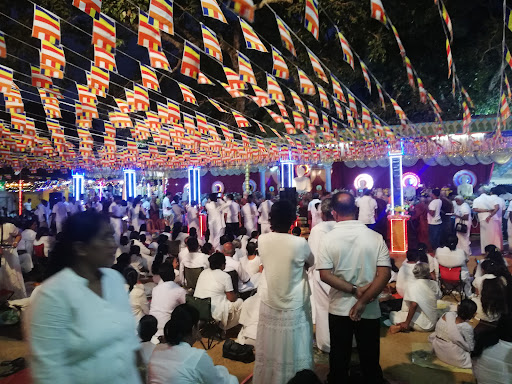
Festival time in July each year is when things really hot up, and the jungle transforms under the weight of serious religious frenzy. The festivities begin on the first night with a flag-hoisting ceremony. Each following night, after the ritual puja, white-clad kapurala shaman-priests perform a complex, carefully choreographed ritual in which the Kataragama God is depicted as emerging from his Maha Devale residence. He then rides in a grand torchlit procession upon a beautifully-decorated elephant to visit his sweetheart, the jungle princess Valli, and returns without being seen.
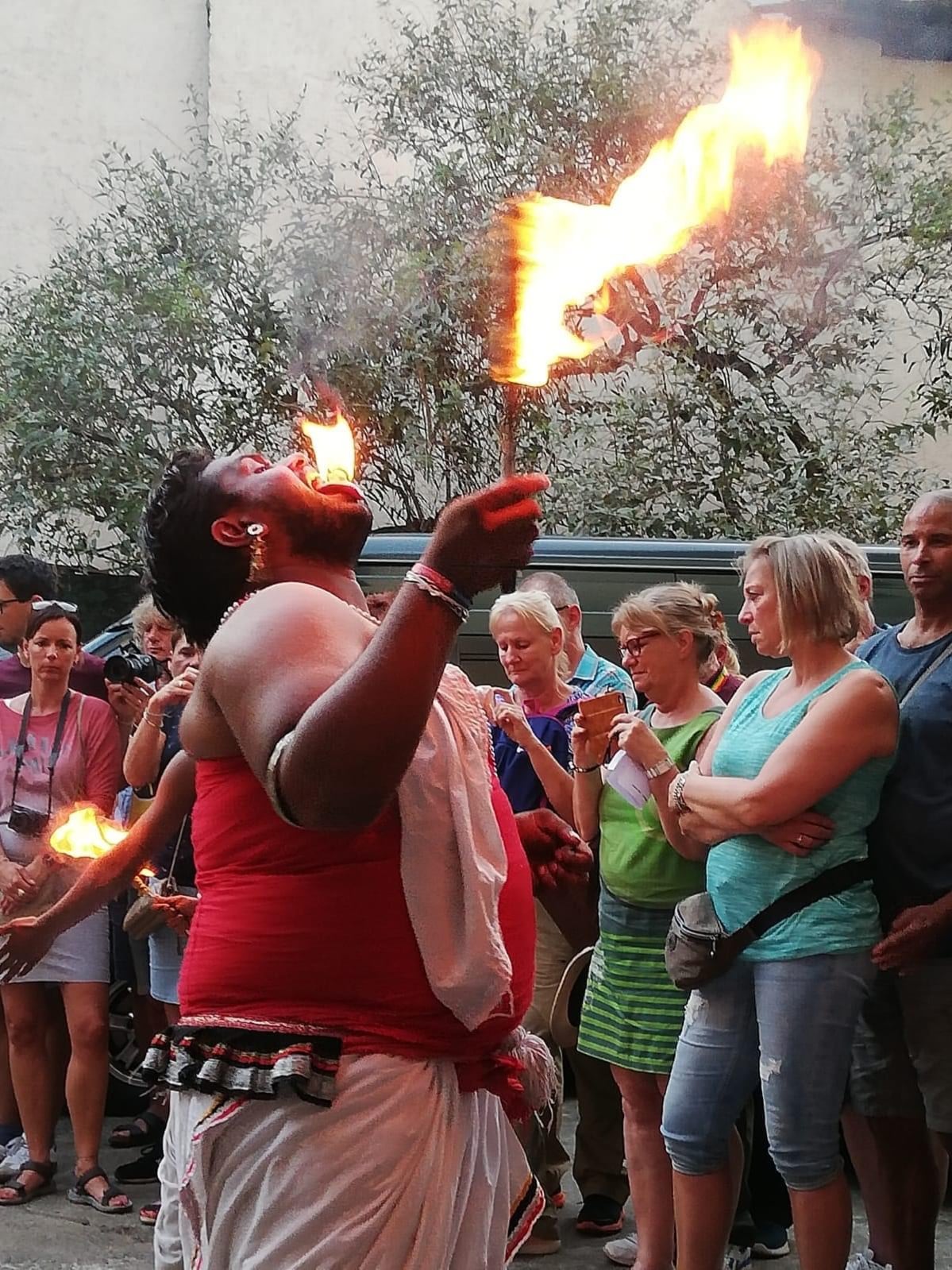
Meanwhile, during this performance, hundreds of devotees, dressed in their dhotis and ceremonial markings, turn up with huge earthenware vessels on their heads. Constant shouts of ‘Haro Hara’ remind everyone of their presence. The holy ash and camphor inside these pots is carefully emptied out onto the floor outside the temples, for them to roll across (and to be washed off later). The area in front of the main temple is cleared and laboriously covered in a layer of burning tamarind firewood (about 2O feet square). At about 4 am when the fire walkers’ river ablutions are complete, hundreds of cleansed pilgrims slowly make their way, barefoot, across the burning ash. No one is burned.
Things get even more colourful on the last night of the festival – the night of the full moon. This ends with the “water-cutting” ceremony, which is enacted the morning after the Maha Perahera. The holy casket (believed to contain the secret of the God’s birth) is dipped in the Manik Ganga sacred river, followed by thousands of pilgrims who submerge themselves with their arms raised and to the shouts of...
Read more