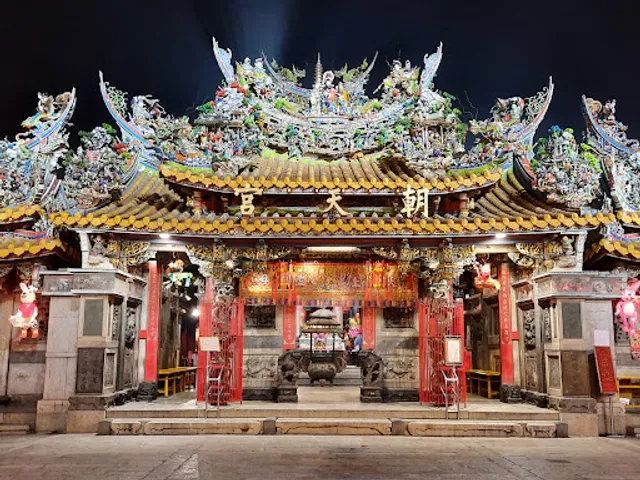
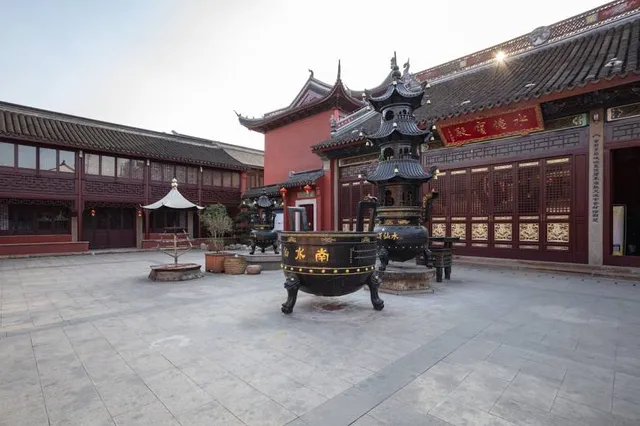
北港朝天宮, Beigang Matsu [Mazu] Temple, located in Yunling County, built in 1694, is registered as a Taoist Temple, but it worships traditional folklore Goddess Matsu as its primary deity. However, Buddhist Bodhisattva and folklore Land God or Earth God are two of four secondary deities for the Temple's worshippers and believers.
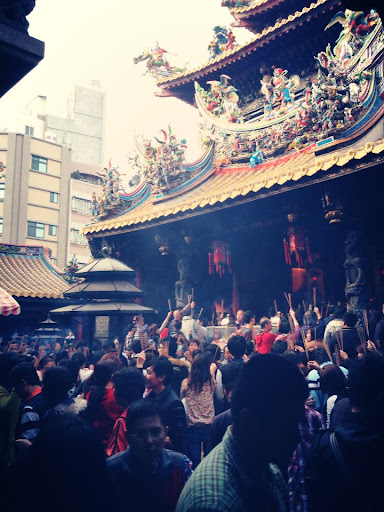
Because of expansions and earthquakes, the Temple was expanded, and rebuilt several times on the last 325 years, and the 1905-1912 rebuilt was the last one [due to earthquake]. For every expansion or rebuilding, numerous dragons were added and attached to the roof of the Temple.
The Temple is rather successful in preserving its historical architecture and building, such as arch doors, red-color brick building structures, plain white stone slate and red brick floor. Many deities preserved and displayed inside the worship halls have history of more than 100 years.
The Temple is financially sound because its receives lots of contributions from individual worshippers and corporate sponsors or donors. It is open freely to all visitors, it provides free incenses and other worship material for the worshippers, and it also has free-access bathrooms.
Because the Temple does attract large number of believers, it is NOT suitable for tour visitors to visit the Temple in weekend or religious holiday. Also because Taiwan government imposes number limitation of visitors inside the Temple at the same time, due to Covid-19 pandemics, the Temple custodians and volunteers issue visit entrance cards on site for the visit entrance. It is highly likely that visitors have longer wait outside the Temple for entering the Temple in weekend or religious holiday.
There is NO free parking offered by the Temple. Many store vendors outside the Temple which sell worship material often charge higher sales price of worship material to the visitors and then provide free parking. But, visitors may be able to find free street parking few blocks away from Temple, and walking distance to the Temple is generally 5 to 10 minutes.
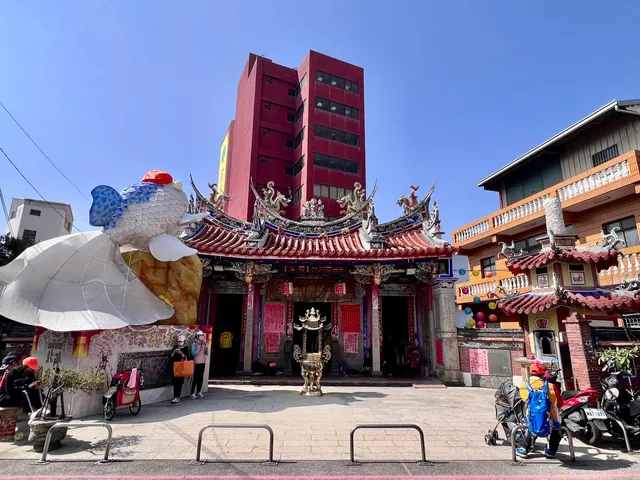
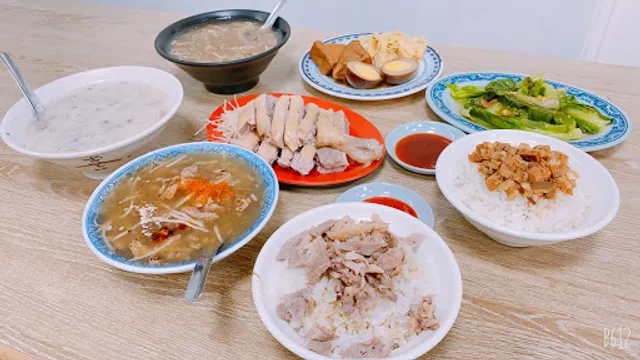
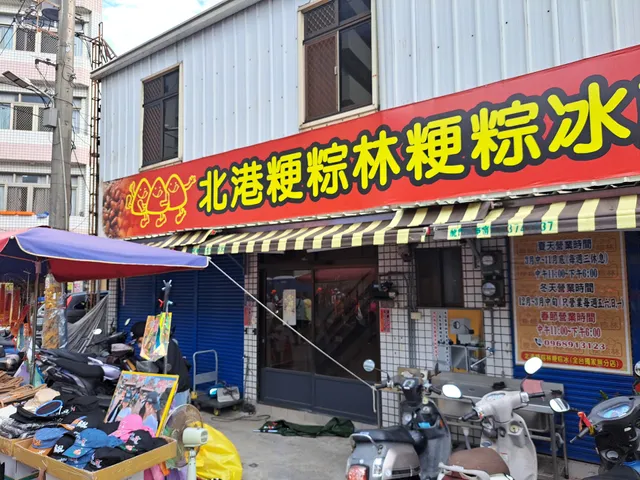
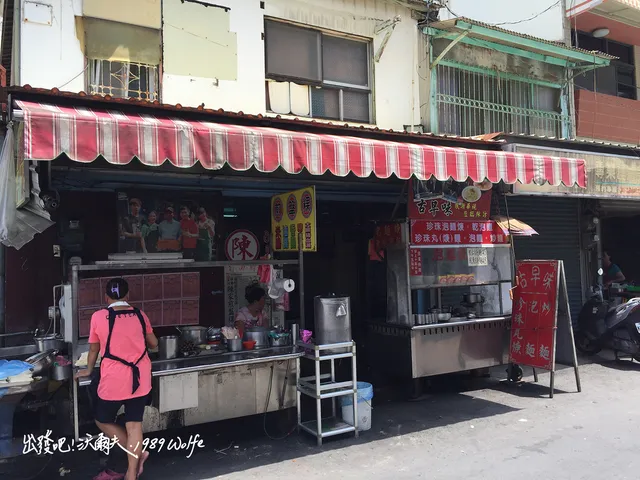
There are lots of gift shops, concession stores, diners, candy and bakeries outside the Temple. Most of these stores do offer so called local flavors or tastes, although a few of them seem to be making resales for merchandise bought from other wholesalers.
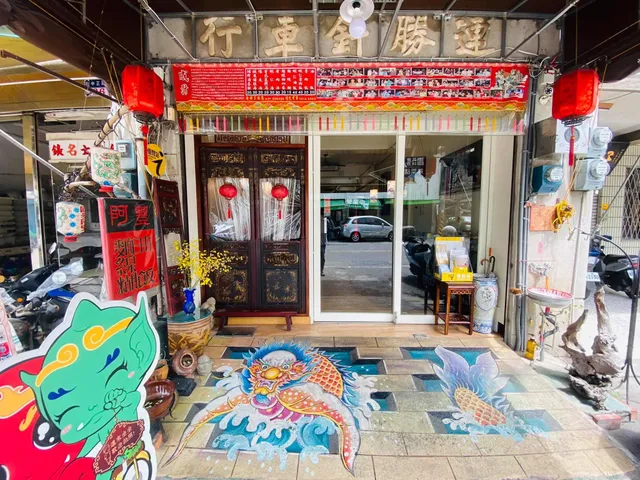
Vendor buildings outside the Temple are rather old and can be historical buildings for visitors who are interested in local architecture, although visitors should be cautious for the traffic and...
Read moreIn 1694, a monk requested that a statue of Mazu be brought to Beigang from the Chaotian Temple in her hometown of Meizhou in Fujian. In 1700, Chen Li-Shum donated a building lot and raised the funds to erect Beigang's own Chaotian Temple.
In 1730, the temple was further expanded. In 1770, Penkang Magistrate Hsueh Chao-heng considered that the temple too simple to live up to the dignity of Goddess Matsu. Three years later another reconstruction of the temple started. In 1854 a number of ranking officials initiated a third project, expanding the temple into a palace-type architectural complex.
The front wing consisted of worship courtyard and east and west chambers. The second wing was for worship of the Heavenly Mother, third wing for Goddess of mercy; east wing for San-Kuan Heavenly Emperors, west wing for Wenchang God, the 4th wing for Goddess Matsu's parents; east wing for Goddess of Childgiving and west wing, Lang God. Several renovation followed in the 20th century.
北港朝天宮,俗稱北港媽祖廟,主祀天上聖母-媽祖(另稱天后、天后聖母、天上聖母)。關於北港朝天宮之創建,口傳、志書與碑記互有出入,其中以日治1910年(明治43年)臨時臺灣舊慣調查會依訪調所得,記錄於《臺灣私法第二卷 附錄參考書》書中所載創建年代為最早,相傳1694年(康熙33年)有佛教臨濟宗禪師樹璧,奉福建湄洲朝天閣媽祖聖像從笨港登陸,被眾人留駐,立祠恭奉,為朝天宮創建之始。
1717年(康熙56年)《諸羅縣志》以笨港天后宮創建於1700年(康熙39年),此記載其後傳抄於1744年(乾隆9年)《重修臺灣府志》等文獻中。但現存於朝天宮內之1775年(乾隆40年)〈重修諸羅縣笨港北港天后宮碑記〉則以1730年(雍正8年)為朝天宮創建之年,時間比前者約晚30年。
依同碑記記載,1751年(乾隆16年)朝天宮曾經過整修。到了1775年(乾隆40年),諸羅縣笨港縣丞薛肇熿見廟貌窄小,樑桷損毀,於是捐俸倡議重修,並由陳瑞玉、王希明、蔡大成等董事集貲,鳩工改建。由1894年(光緒20年)《雲林採訪冊》及《臺灣私法第二卷 附錄參考書》文獻指出,1775年整修共完成三川殿、拜亭、聖母殿、觀音殿、東側室仔六間。今日觀音殿前的蟠龍石柱便是當時修建所完成之作品。
1775年(乾隆40年)之後,至1851年(咸豐元年)期間,北港朝天宮可能也曾經過整修。根據嘉慶年間住持浣衷和尚蓮座顯示,其曾重興朝天宮兩次,但相關興修內容缺乏具體文獻記載。1851年(咸豐元年)至1861年(咸豐11年)左右朝天宮再經歷一次盛大規模之整修,據1894年(光緒20年)《雲林採訪冊》及《臺灣私法第二卷...
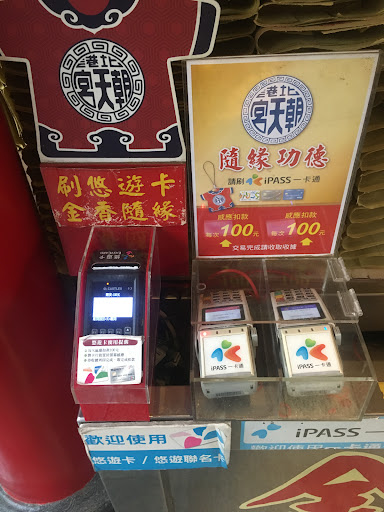
Read moreOne of the most famous temple of Mazu in Taiwan. The temple itself is an assemble of art, every beautiful pillars, roofs and statues worth appreciate. Even more, they normally contain many stories or legends of Taiwan’s couture. Can symbol specific meanings in their own way. Hire a good guide or do lots of research on internet is recommended. For international tourists, following the arrows and instructions that you can see everywhere in the temple is the most easy way to tour it. And by scanning the QR code on poster, English or Japanese descriptions can be search on internet. Beside train, bus and 7-11, this temple also provide a good way to use your easy card, to donate with it! However, it’ll cost you NTD $100/ per wave. So don’t forget to double check your pocket before wave. Coins are welcomed no matter Fontana di Trevi or any trample in Taiwan. And remember Mazu loves us all. You’ll get her blessing with or without donate, it’s not a “must option”. Outside this trample you’ll find many shop selling traditional sweet. Don’t hesitate if shop owners offer samples. Forget what people say on internet and let your nose leads is part of the fun. And you might find your new...
Read more