Free admission Opening Hours 09:00-18:00 except closed Tuesdays.
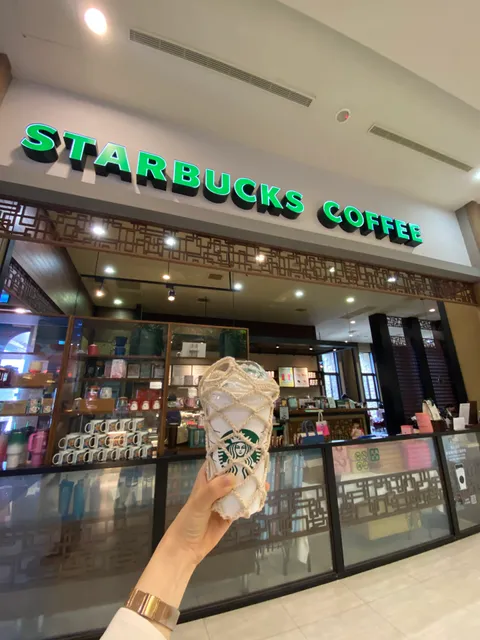
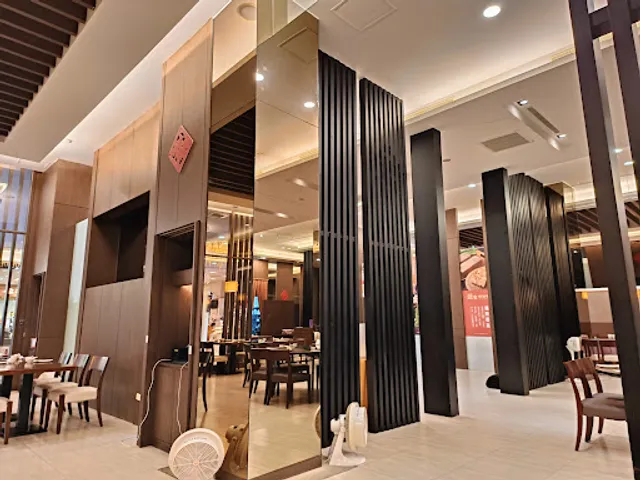
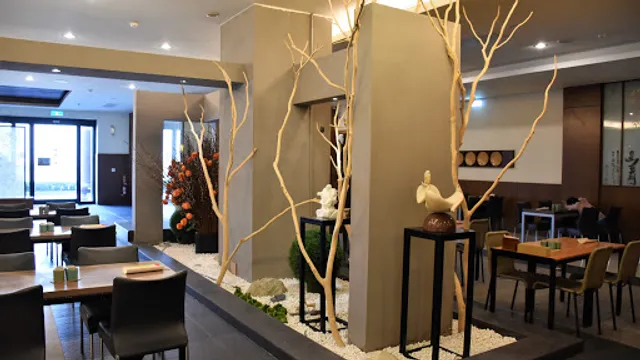
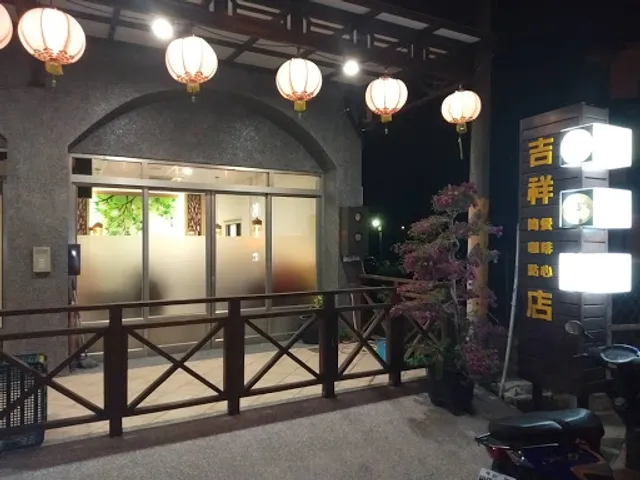
Inside the Buddha Museum, there is a buffet and a number of Waterdrop Teahouses, providing visitors with a place to satisfy their taste buds with unique menus featuring different vegetarian cuisine. There are also various spots where visitors can have a cup of coffee or a quick snack during their tours.
There are many treasures in the Fo Guang Shan Buddha Museum, including the Buddha's tooth relic, Great Compassion Mantra Caissons, and many more. Inside the shining crystal stupa holds one of three tooth relics remaining in the world, currently enshrined in Jade Buddha Shrine. The Forest of Stupas, Avalokitesvara Bodhisattva, Caissons, and ancient artifacts are all Treasures.
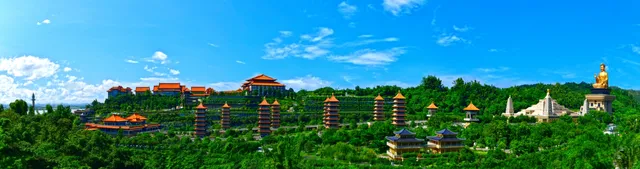
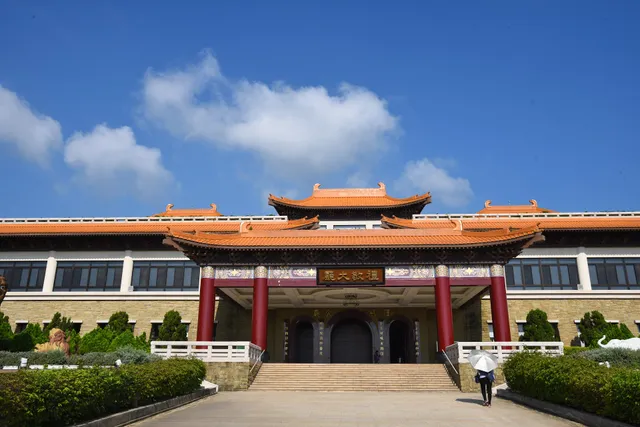
Museum fuses traditional and modern elements, and is equipped with the facilities to assist in spiritual cultivation and the attainment of wisdom, as well as serving as a site for culture and education. The goal of enshrining the Buddha's tooth relic was to create activities that show the Buddha's compassion and wisdom in a way that people can experience concretely. Through their homage to the Buddha’s relic, people could recognize their own true Buddha nature.
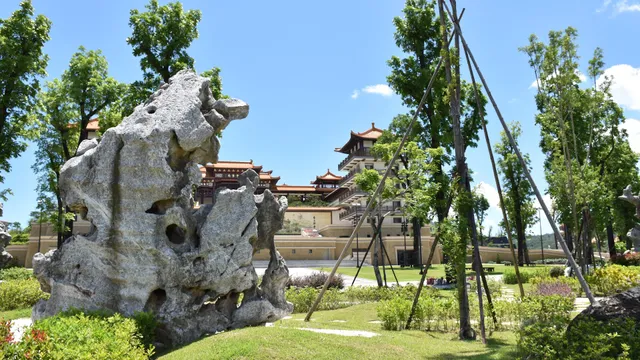
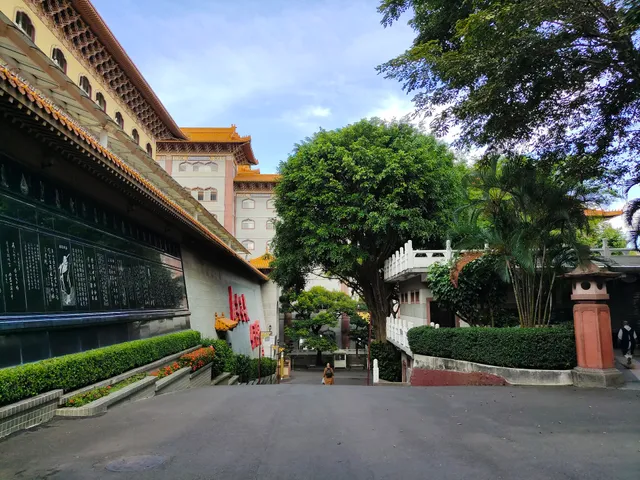
Jetavana Grove is an ecological park with butterflies and mallards. The Life Protection Murals along the outer walls of the covered walkways are great fun for parents and children to learn about life together.
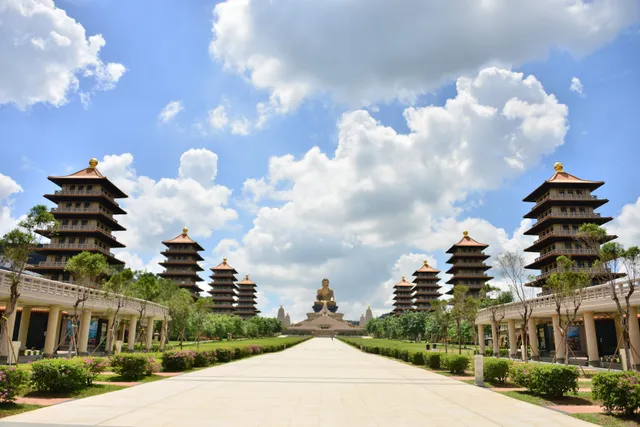
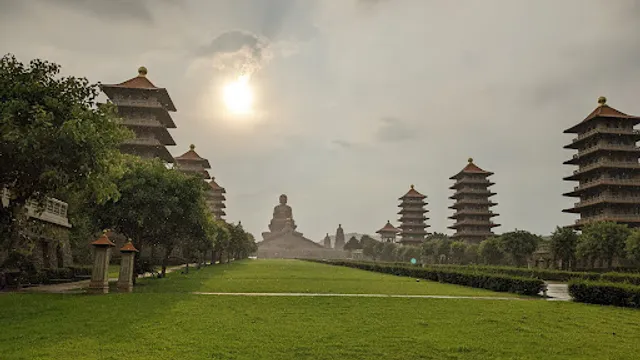
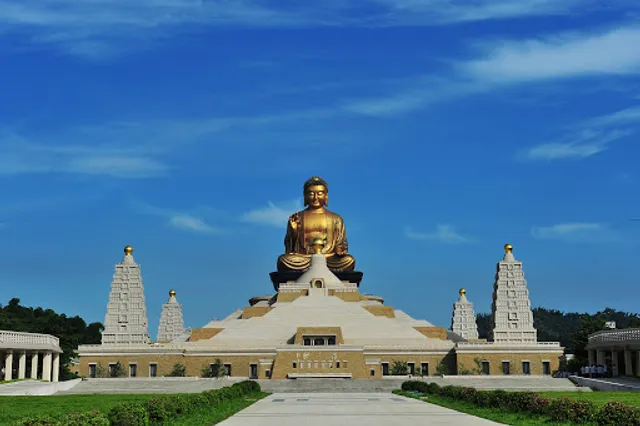
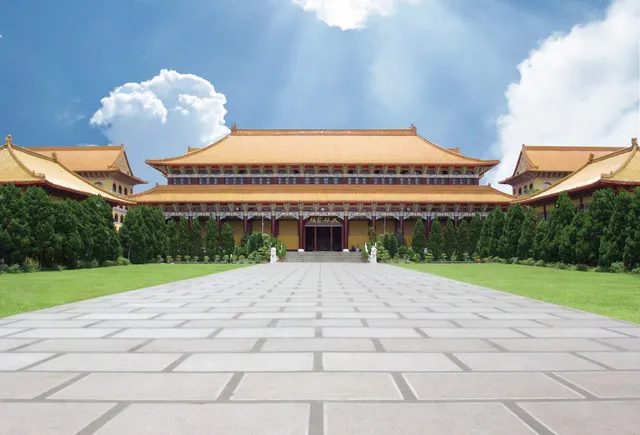
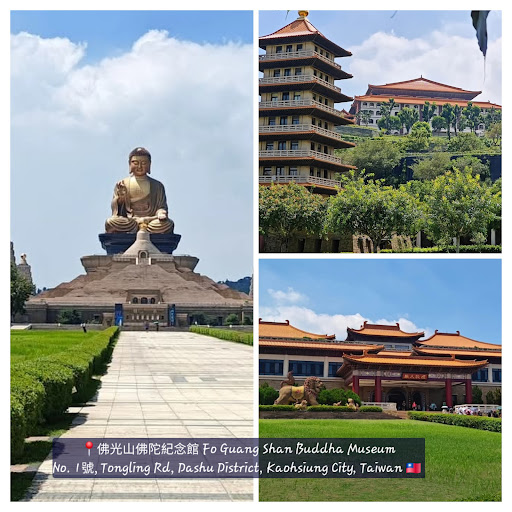
When one stands on the Great Path to Buddhahood, it takes one back in time and space to the Tang dynasty, with Eight Pagodas leading one to the Buddha and the Main Hall, providing one with a majestic and humbling religious experience that surpasses the ordinary museum experience.
Currently the world's largest copper-cast Buddha statue, the Fo Guang Big Buddha sits cross-legged with his hands in the lotus mudra. From base to tip, the Buddha statue is one hundred and eight meters tall, the equivalent of an average thirty-six story building. Its head alone is three stories tall, while a single eye is as wide as the whole floor of most other buildings.
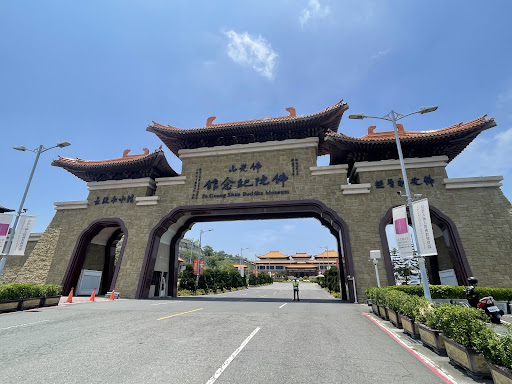
The Buddha Museum is a historic construction that is made for all human beings. The museum belongs to everyone and anybody can come to visit. It is a place of culture and education. Visitors, be they individuals, families, schools or organizations, are free to gather and learn here.
Wheelchairs and strollers are available for rent at the reception counters of the Front and the Main Halls. Additional services including guided tours, luggage deposit, rent of wheelchairs and strollers etc. Designed with a human-centered approach, the entire complex is obstacle-free and the covered walkways shield visitors from the sun and rain. There are also plenty of spots for visitors to take a break while they rest their gaze on the beautiful sceneries.
If you are arriving by car, you can take the National Highway 1, transfer to the National Highway 8, and then continue onto the National Highway 3. After passing the Zhongliao tunnel, drive to the National Highway heading to Qishan. Take the Dashu exit and go straight on the Provincial Highway 29 to Fo Guang Shan where parking is free. Fo Guang Shan provides shuttle services from Fo Guang Shan Monastery to the Buddha Museum from 9:00 -...
Read moreVisiting Fo Guang Shan was one of the most memorable moments of my Taiwan trip. It is not just a religious site, but an enormous spiritual and cultural complex that leaves a lasting impression through its scale, calmness, and attention to detail. As you approach, the towering golden Buddha catches your eye from a distance a powerful image that stays with you. The long walkway lined with eight pagodas feels almost ceremonial, drawing you slowly into the heart of the complex. Despite the grandeur, the entire place feels meditative. Even with a few visitors around, there is a quiet that invites you to slow down. The main shrine inside the museum complex is awe-inspiring. Every wall and surface seems thoughtfully designed, with the surrounding exhibitions offering insight into Buddhist teachings, art, and the history of the order. The museum side is modern and well-curated, showing how tradition and innovation can go hand in hand. What struck me most was the respectful atmosphere. No noise, no rush, just a lot of space physically and mentally, to reflect. It does not push religion on you, but gently presents values of compassion, harmony, and inner peace. If you are near Kaohsiung, make the trip. Give it time. This is not a stop-and-snap kind of place. It is meant to be experienced slowly. Whether or not you are spiritually inclined, Fo Guang Shan is a chance to pause, look around, and feel small in the best possible way. Tip: Wear comfortable shoes and bring a bottle of water with you during the visit. The grounds are vast, and while there are shaded areas, the walk can be long, especially under the sun. Museum and cultural halls are indoors and air-conditioned. Entry is free. Getting there: Public transportation is limited. Only two bus lines serve the complex, so check the timetable carefully before heading out. Buses can be infrequent and stop early in the evening. Planning ahead will help you make the most of your visit without stress. Facilities: No need to worry about food. Inside the main entrance hall, you will find several casual food counters, including vegetarian options. Throughout the buildings, there are tea houses where you can take a quiet break, and even a Starbucks...
Read moreAllocate a full day here
Exhibitions: The first floor offers two permanent exhibits. The one on the right is very professionally and of international quality. It shows discovered Buddhist relics from the tang dynasty. There is a free audio guide so be sure to bring a form of identification to swap it for. The second permanent exhibit is more telling of the story of Buddha from birth to death. The second floor offers non- permanent exhibits, all Buddha themed that can either quick walkthroughs or deserving of a long look. Some of the exhibits I enjoyed were the expansion of Buddhism through the silk trade. Another favorite is the art show.
Things to Know: -Identification to swap for an audio guide -Prepare $100NT bills; There is no entry fee however there are donation boxes everywhere. -No videos are allowed in the exhibition area but photos are permitted as long as you have your flash off. -Photographs are not permitted in areas for praying
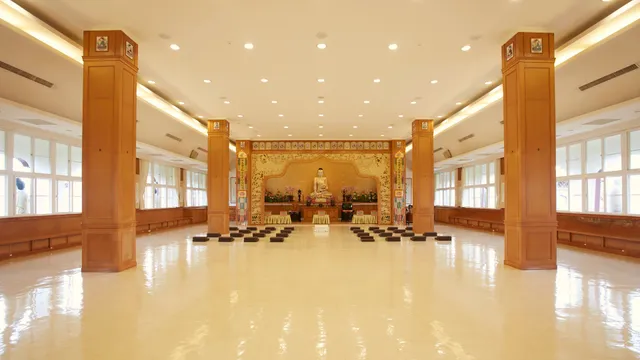
Interesting Areas: On the first floor center of the building behind the elaborate wooden sculpture is an area to receive a blessed water. No photographs. On the second floor far end, there is an area to pray and give a flower offering at no charge. You will be required to take off your footwear. You can walk around the shrine behind a monk. On the third floor underneath the sitting Buddha is an area where you can trace Buddhist mantras. You will be asked to give a donation. No photographs. The eight pagodas in front of the sitting Buddha have gift shops, book stores and a cartoon showing on a schedule while others are closed. There is a small walkway that I would walk the four to the right on the way to the museum and then the four to the left in...
Read more