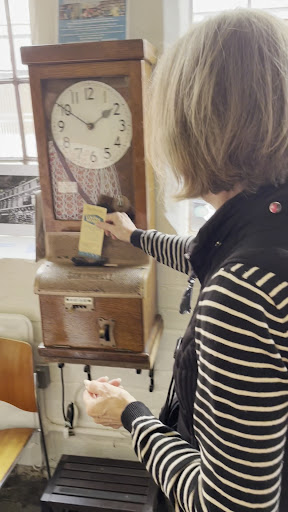
The best museum in Birmingham! Excellent guided tours around the factory.It is amazing to see how everything keeps working, including victorian machinery. You travel back in time to experience how Newman Brothers operated during a regular day. Joyce Green, the last owner, turned her attention to saving the building and preserving a rare slice of this country’s industrial history, and everything still is the same way the factory produced the last coffin. On purpose, everything was left as the business were to return on Monday. You even get to see how she left the shoes under her table in the office room! The note with every woman’s tea preferences, which Dolly’s trolley delivered each day (she begun working at 14 years old for over 64 years).
Coffin Works was established in 1882 by Alfred and Edwin Newman. Originally they made cabinet furniture until 1894, when the company moved to the present site and began to specialize in the production of coffin furniture. Coffin furniture covers a multitude of products from handles, breastplates, crucifixes, decorative ornaments to shrouds and robes, and therefore more money.
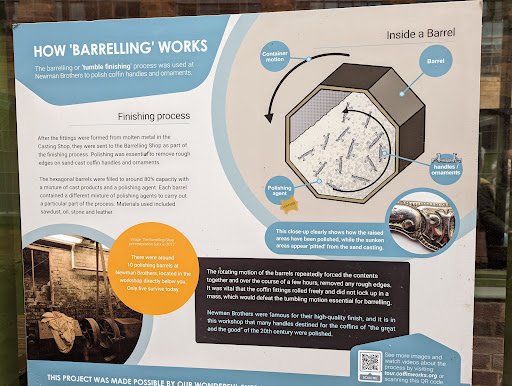
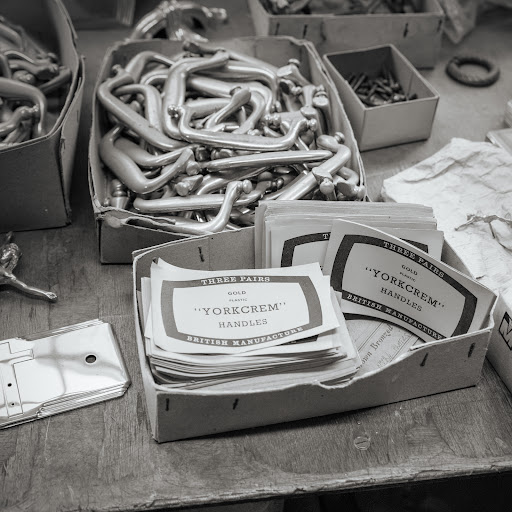
They sat the client and gave them some brandy or tea while they decided which brass was meant to be used, which color, which type of handle or decorative ornament, what robe and which color… Inside the stamp room you can see how up to 17 men and women worked together in a 12 hour shift, in such a small place with the metal oven, the gas light used for working, the people smoking inside…and the noise…in terrible conditions. The hard work in the “hammers” were done by men. The big one worked every 5 seconds, producing a great shake in the room; as the smaller ones where used every two seconds, normally by men who pulled the string with his leg. The ladies worked by the window, with less dangerous machinery. Upstairs you can still find some plastic ornaments, bronzed handles, nickel plated, crucifixes, sacred hearts… There where differences between anglicans, protestants and catholics: these spent a 40% more than the others, so it was the “best market”. You can also find old masonry signs that tells us they used to order Newman Brothers coffin’s also in the first years.
By 1920, every coffin made for rich people in all UK, was signed by Newman Brothers. Sir Winston Churchill, Joseph Chamberlain, members of the royal family, including George V, George VI, the Queen Mother and Princess Diana, Cardinal Newman…The factory produced the finest up-market coffin furniture in the world. After Alfred’s death, his sons Horace and George took the business. George died in 1944, and Horace continued until he died in 1952. From that point, and for the majority of Newman Brothers time in business, the company was managed by a small group of shareholder directors. At its peak in the 1950-60’s, the company employed around 100 people and was exporting products internationally.
The last owner, Joyce Green, acquired the company, working her way up from office secretary in 1949 to company secretary sometime in the 1950’s, to finally sole owner of Newman Brothers in 1989, until it ceased trading in 1998. The Coffin Works continued to specialize in this area until due to competition from abroad and failure to modernize, they were forced out of business and ceased trading in 1998. One of the central factors was the decrease in the popularity of metal coffin furniture, largely facilitated by the increasing popularity of cremation in the UK. Injection moulded plastic emerged as the most common material used to make coffin fitting. Whilst Newman Brothers did produce a single range in plastic, they were generally unwilling to compromise their reputation (and the benefits) as manufacturers of the highest quality goods.
Joyce Green led the fight for the factory's restoration as a museum following the company's collapse in the 1990s, not wishing to see the building redeveloped or the company's social history forgotten. The restoration took place between July 2013 and...
Read moreCoffin Works were established in 1882 by Alfred and Edwin Newman. Originally brass founders, they predominantly made cabinet furniture until 1894, when the company moved to the present site on Fleet Street and began to specialise in the production of coffin furniture, the name given to the plates, handles and decorative object which adorned coffins. They business and ceased trading in 1998 falling victim to cheaper imports and the increase in cremations removing much of the market for the quality coffin furniture they produced. The factory is a time capsule showing beautiful examples of craftsmanship, hand chiseled steel dies used in drop forges to press out the decorations for coffins. Produced on site these are on display they show the progression in design through the history of Newman Brothers. The knowledable volunteer guides use of the equipment to produce the decorations, to stamp the desired parts out. This is a fascinating workshop which shows the light engineering and craftsmanship for which Birmingham was rightly famous. Don't expect a sterile museum, this looks as if the workers have just gone for tea and will be back shortly. Renowned for thier cast brass fittings, used on the coffins of kings and Queens and the rich and famous, the warehouse area allows visitors to see and handle some examples including those used on Churchill's coffin. The business evolved into a one stop shop for all the undertakers needs. The shroud room allows visitors to see examples of the high quality materials which were exported across the world. The guides take the to tours from being about the materials and fabric of the building and weave the social history, the characters who worked in the factory and who traveled the world promoting Newman Brothers Coffin Works. Into the tour. Ask about the traveling salesman kidnapped from his hotel room by the IRA as a suspected British spy, or the enterprising seamstress who made her wedding dress from "borrowed" shroud material.
Whether it's the engineering and manufacturing processes that interest you or the delightful social history Coffin Works has something for everyone. I strongly...
Read moreI finally visited The Coffin Works after years of intending to, drawn in by its consistently excellent online reviews. Despite having worked next door years ago, I never found the time until now - a particularly important occasion as I visited on a loved one's death anniversary. The receptionist (whose name I didn't get - sorry!) warmly welcomed me, guiding me to the courtyard where I met Pat. We shared a heartfelt conversation about grief and loss, and she shared her experiences of volunteering at the museum. Later, I joined Mark and another volunteer for a guided tour. Mark's charisma and engaging storytelling kept me captivated throughout, making what could have been a morbid and even squeamish tour incredibly fun and enjoyable. I'm eager to return with friends to explore the various events and workshops taking place at The Coffin Works, and to simply relax in the beautifully preserved courtyard. A highlight was visiting the shroud room - a time capsule preserving the tools and artifacts of the past, including handwritten tea-run lists from the women who worked there. Mark's anecdote about a visitor recognising herself in an old photo underscored the relevance of this history to us today. It's vital to support and preserve such places, ensuring the rich history of West Midlands' working people endures. A huge thanks to the entire staff team for their warmth...
Read more