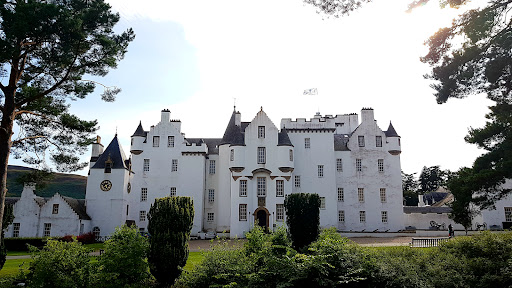
This is a castle not built merely for war, but for a higher purpose. Its walls remember how justice was once something worth defending, how men carried the idea of protection not out of hunger for power, but out of a yearning for the perfection the soul seeks.
It is a shadow of the ideal city, this time fortified with swords and hearts.
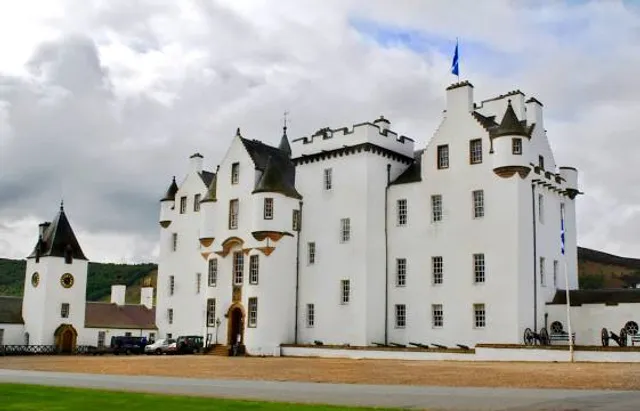
In all things here, there is purpose — from the tall walls to the towers that once shielded it when the Jacobite wars raged, when this castle was the last bastion of loyalty. Stone here was never merely stone; it was a means to achieve the noblest of ends: survival and endurance.
The people of this castle knew something we have long forgotten: virtue is not forged in cities alone but in places where man is forced to confront his fear and his need for wisdom. Perhaps their ancient question — “How do we endure war?” — was closer to philosophy than a thousand dialogues.
When the castle was besieged during the Jacobite uprisings, it did not resist merely for the sake of kings but because the old Roman spirit still lived in the North. Patience, order, and restraint — all these existed behind these white walls.
How many nights did this castle endure as the winds battered it, while within, people repeated their prayers in silence! Here, love for Blair was never about stones but about souls that refused to abandon it, despite exile or siege. This is the kind of love that knows no time.
The history of this castle is the very essence of civilization’s cycle: from strength to stagnation, from siege to calm, and now to tourism and visitors. Yet it never lost the respect of its people; rather, the passing of empires only deepened its reverence.
If you were to ask its people, “Why do you not tear it down and build anew?” they would answer: because when man loses his bond with nature and history, he loses everything. This castle is not stone; it is a living inheritance.
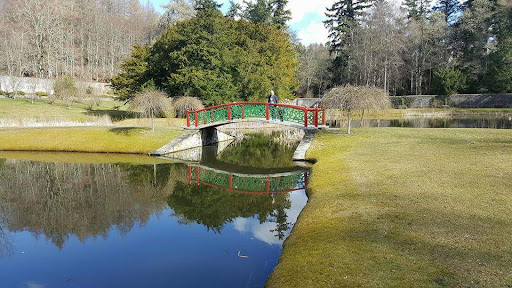
Here, the beauty of nature and the patience of man met and made it a refuge against time, against invading armies once, and now against forgetfulness. And nature rewarded them with this peace that surrounds it.
One marvels at a man who leaves his home by the river to build upon the hill such a castle, but now it is clear: it was never for him alone, but for generations yet to come — to remind them, “This is your place.” Even the silence here carries a thousand meanings.
That this castle still stands after wars, betrayals, and the passing of eras is a testament to the will that few understand. It is a will that outlived everything, even the will of death itself.
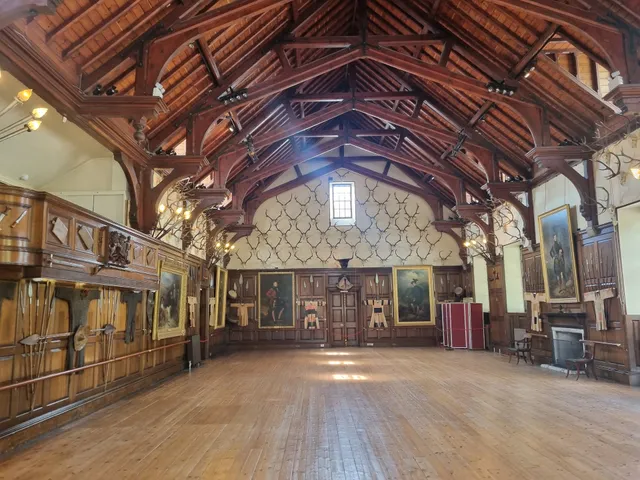
Within these walls, there is no excess luxury but the honest simplicity of people who loved their soil more than their mansions. They were farmers, warriors, nobles, and commoners, yet all saw in this place their home when life grew harsh.
How beautiful to find a castle that once knew siege and hunger, now greeting visitors with the smile of its people. It is like the human spirit: it suffers, but it does not perish; rather, it grows kinder toward what remains.
This castle is not merely a place; it is the manifestation of an idea — the idea of a nation that wished to say: “We are here,” despite fallen kingdoms and changing banners. Within its walls, one sees the struggle between thesis and antithesis until reconciliation with history was born.
What irony! A castle that once resisted London’s forces now welcomes tourists from London, who take pictures and laugh beneath its towers. Thus history reconciles us with its own humor.
What I have seen here affirms that certainty is not built by thought alone but sometimes by sword. That this castle still stands is tangible proof that an idea requires a wall to defend it.
What beauty there is in this place, where a white horse walks before the castle, as if continuing the poets’ tales of chivalry. The river, the trees, the towers — all lines of poetry yet unwritten.
This castle is worthy of a novel: within it lies love and betrayal, war and peace, long nights and warm hearths. It is not a story of...
Read more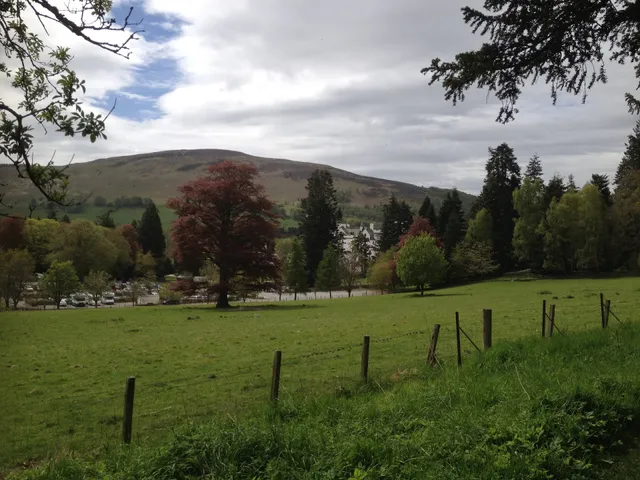
 Learn more insights from Wanderboat AI.