South Norwood Lake and Grounds
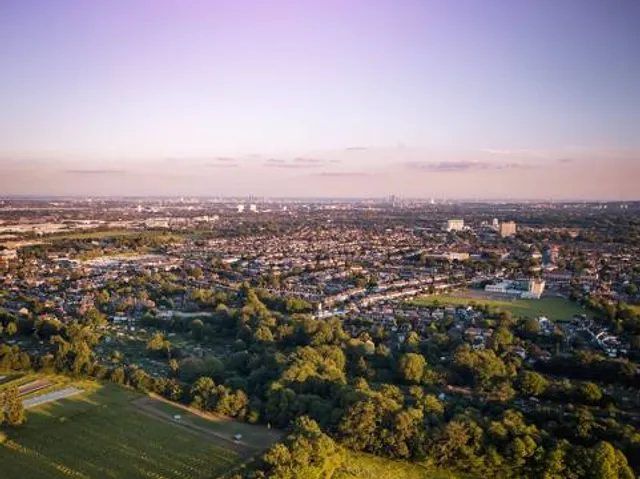
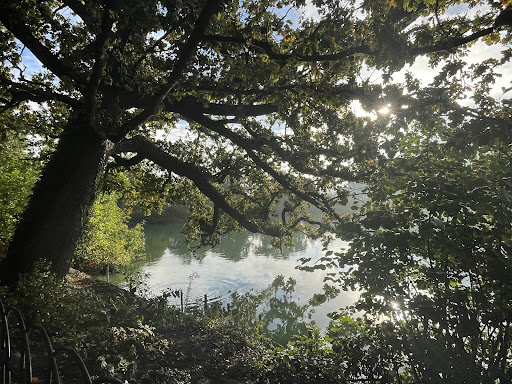
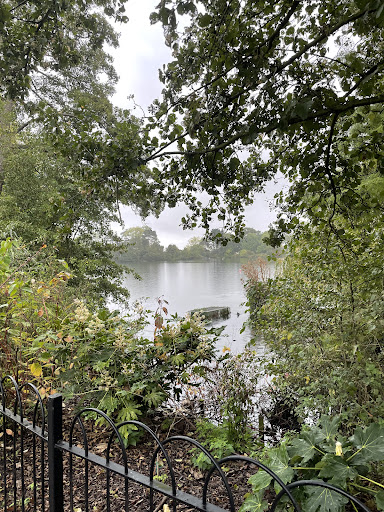
How very fortunate we Norwoodians are to have so much natural beauty preserved for all time around us, in our beautiful parks and open spaces. In our last Review, we visited lovely Norwood Grove, situated 300 ft. up on the Norwood Hills. Now we descend the hills and find in South Norwood a charming willow-bordered lake of eight acres in a sylvan setting.
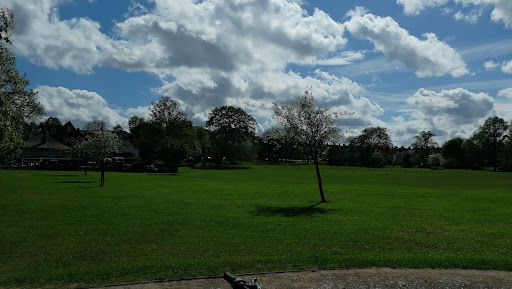
Nearby we see cricket and football pitches, tennis courts, bowling greens, etc., all controlled by the Norwood Sports Club: in all an open space of 54 acres. The history of this lake is most interesting and quite unique. Towards the end of the 18th century the population of Croydon had grown to about 7,000 and some difficulty was beginning to be experienced in supplying them with food and raw materials. As this was long before the railways, everything had to be brought by horse transport on inadequate roads, where fatal accidents and delays were far too frequent.
So a committee headed by Lord Auckland considered the construction of a canal from West Croydon. In 1809, this canal was opened; it followed the cutting where the railway now runs through South Norwood*, Penge, Forest Hill, and on to New Cross, where it joined the Grand Surrey Canal.
As so much water was lost by the opening of the locks at Sydenham and Forest Hill, reservoirs were established to reinforce the water supply, and our lake was one of them. The engineer, John Rennie, used the natural springs which here were so readily available for his water source. The canal which our lake helped to feed was not a commercial success, but as a pleasure resort it was an unfailing attraction. Its wooded banks in the vicinity of Penge were a favourite picnic region and pleasant boating was to be had on the reaches between West Croydon and South Norwood. The Gardens of the Jolly Sailor Inn in those days ran down to the water’s edge and many a happy rendezvous was here arranged.
Until 1931, the lake with 46 acres of open ground was leased to the Norwood Sports Club from the Ecclesiastical Commissioners. This Club was founded in the year 1881 by the Lord of the Manor, Mr. Alfred Steer, and by 1888 it had become the largest tennis club in the world, with 54 grass courts. This Club also controlled a nine-hole golf course in its grounds north of the lake. The course was requisitioned during the 1914-18 war and consequently ruined for golfing. After the war, this land had a tremendous potential as building land and it was said that the Ecclesiastical Commissioners were offered as much as £1,000 per acre! The existing lease was due to expire in 1932. The local residents, fearing that they might lose their most treasured possession for ever, sent a deputation of about 60 people to the Town Hall. The Croydon Corporation bought the ground and subsequently turned the South Norwood Lake and its charming surrounds into a public park, with fishing rights open to the public. It is well stocked each year with bronze and silver bream, carp of various sorts, perch, pike, roach, rudd and tench.
The bird-lover will also be most happy studying wild life both on the lake and in the trees around. Lesser redpolls have been noted on alder trees in January, and lapwings and meadow pipits in the fields nearby. In February, chaffinches, coaltits, goldfinches, greenfinches, linnets and tree sparrows and so on to the glory of Spring migration when wheatears, willow warblers, swallows and whitethroats and garden warblers are to be seen. On the lake, the visitors include wild duck, coot, dabchick, tufted duck and moorhen, as well as many others during the winter, like the heron who was noted there recently in the early mornings, flying off about 9 a.m. in the direction of the Crystal Palace.
*The railway engineers made a deep cutting by the Goat House bridge, leaving the canal route to form, in due course,...
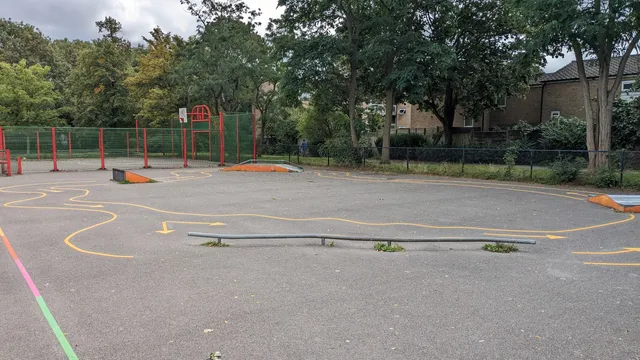
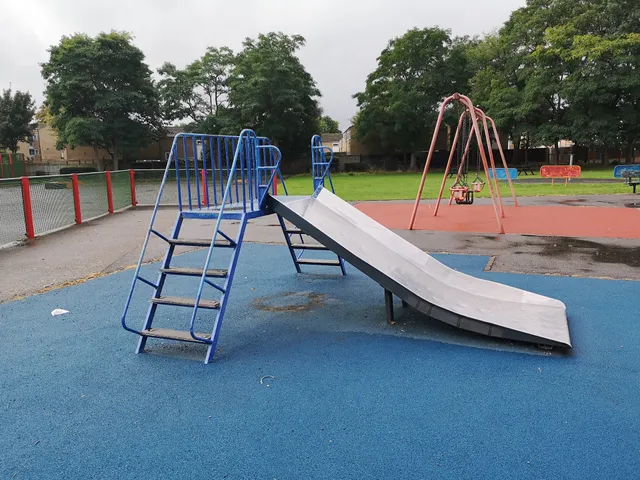
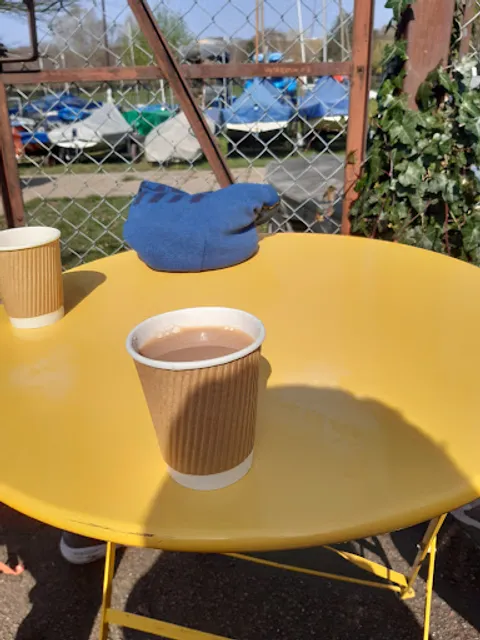
Read moreSouth Norwood lake and grounds is a little splash of green in the suburbs of London. There is a pleasant walk through a narrow strip of common and around the remaining lake. There is an exercise trail to follow, too. Fishing is popular here at the many station all around the lake. As you near the boating club,there is a kiosk where you can buy refreshment, but unfortunately the toilets at the other end of the lake are closed due to vandalism. Stop on your way around the lake to read the information on the toilet block about the history of the common, the gravel pits, and the canal. The play area is at the opposite end of the park from the lake. There are lots of fun activities to do there with different play equipment. The park is also interesting for train spotters, with two busy train lines passing nearby, one of which forms the border of the park and cuts through between the lake and the old common. On and around the lake itself you can spot many different birds and wildlife, including Canada geese, coots, moorhens, black-headed gulls in winter, mallards, divers, cormorants, and if your fortunate, maybe a woodpecker and a heron! Also squirrels can be spotted in the surrounding trees, and are quite friendly! Please visit this little community spot and enjoy the precious bit of green and wildlife that it...
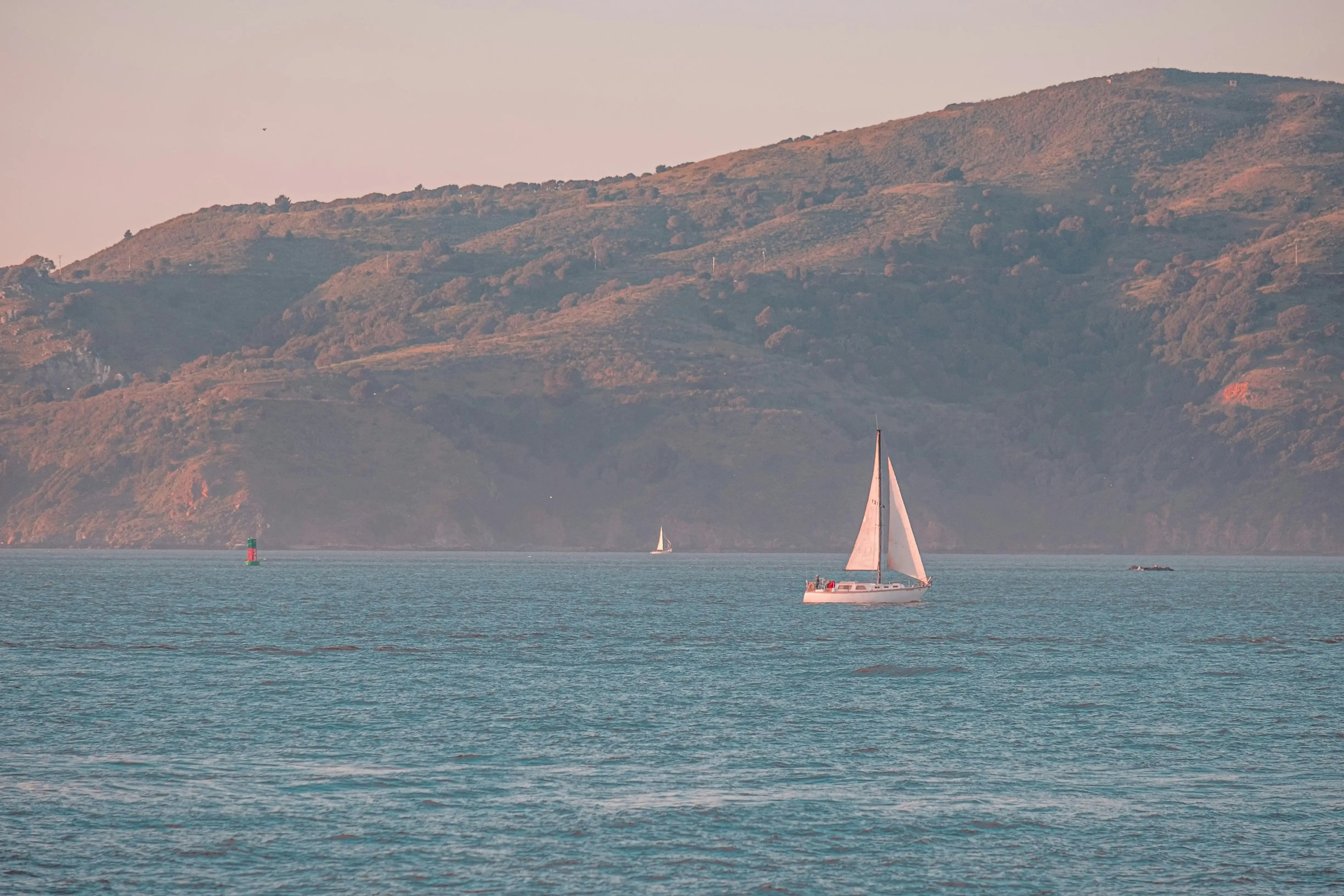
Read morePleasant place to visit. The lake had boats sailing from a local club. It even has a decent toilet facility for public use (which is a rare thing these days.) A welcome site: a kiosk selling light refreshments. When there, a team of volunteers with Hi-Vis were present watering the plants and taking care to inform visitors of the potential trip hazzard water hose posed...so as to prevent any occurence. The local youth cricket team were training on grounds, and they who were gone by midday. As it is not the fishing season, access to lake itself were largely closed off at the various entrances. 'Open season' starts 16th June, according to the notes on the gates. I look forward to a visit then to see closer the lake. Other notices: no feeding birds. As this is not healthy...It encourages rats who also eat nesting water bids eggs and baby birds. (I was one large clean looking brown-coloured rat near the late.) The notices, do not intend to intimidate, mention no penalty or fines for feeding birds...though I suspect...
Read more