The John Rylands Research Institute and Library is a late-Victorian neo-Gothic building on Deansgate in Manchester, England. The library, which opened to the public in 1900, was founded by Enriqueta Augustina Rylands in memory of her husband, John Rylands. It became part of The University of Manchester in 1972, and now houses the majority of the Special Collections of The University of Manchester Library, the third largest academic library in the United Kingdom.
Special collections built up by both libraries were progressively concentrated in the Deansgate building. The special collections, believed to be among the largest in the United Kingdom, include medieval illuminated manuscripts and examples of early European printing, including a Gutenberg Bible, the second largest collection of printing by William Caxton, and the most extensive collection of the editions of the Aldine Press of Venice. The Rylands Library Papyrus P52 has a claim to be the earliest extant New Testament text. The library holds personal papers and letters of notable figures, among them Elizabeth Gaskell and John Dalton.
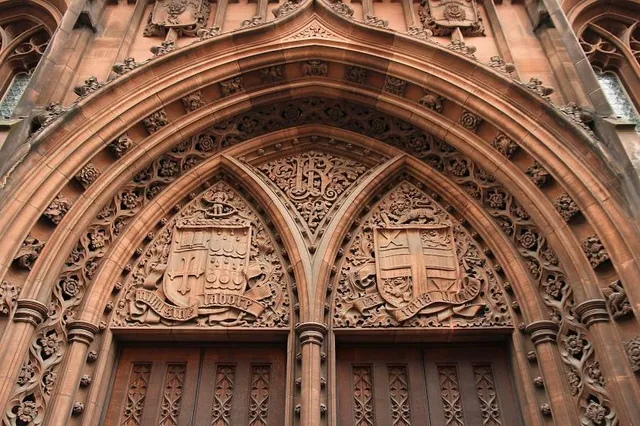
The architectural style is primarily neo-Gothic with elements of the Arts and Crafts movement in the ornate and imposing gatehouse, facing Deansgate, which dominates the surrounding streetscape. The library, granted Grade I listed status in 1994, is maintained by the University of Manchester and open for library readers and visitors.
The library is one of the museum, library and archive collections of national and international importance under the Designation Scheme for England. As of 2020, 152 collections are officially designated.
By the nineteenth century Manchester was a prosperous industrial town and the demands of cotton manufacturing stimulated the growth of engineering and chemical industries. The town became 'abominably filthy' and was 'often covered, especially during the winter, with dense fogs ... there is at all times a copious descent of soots and other impurities'. This, and the overcrowded site, created many design problems for the architect. During the century most textile manufacture moved to newer mills in the surrounding towns while Manchester remained the centre of trading in cotton goods both for the home and foreign markets but pollution from burning coal and gas remained a considerable nuisance.
The site chosen by Mrs Rylands was in a central and fashionable part of the city, but was awkward in shape and orientation and surrounded by tall warehouses, derelict cottages and narrow streets. The position was criticised for its lack of surrounding space and the fact that the valuable manuscript collections were to be housed in "that dirty, uncomfortable city ... not enough light to read by, and the books they already have are wretchedly kept" (written in 1901 about the Crawford MSS.) Mrs Rylands negotiated Deeds of Agreement with her neighbours to fix the heights of future adjacent buildings. The permissible height of the building was fixed at just over 34 feet, but it was suggested that it could be taller at the centre if there was an open area around the edges, at the height of buildings that had been demolished to make way for the construction. Champneys incorporated this suggestion into his design, setting the two towers of the façade twelve feet back from the boundary and keeping the entrance block low, to allow light into the library. He designed the building in a series of tiered steps with an almost flat roof to give a 'liberal concession' to the neighbours' 'right to light'.
Mrs Rylands established a board of trustees to hold the library's assets and a council of governors to maintain the building and control expenditure. The council consisted of some representative and some co-optative governors while honorary governors were not members of the council. Both these bodies were dissolved at the merger in 1972. Members of the council of governors included Professor Arthur Peake and Professor F. F. Bruce both biblical critics and Rylands Professors of Biblical Criticism...
Read moreLocated on Deansgate in Manchester, England, the John Rylands Research Institute and Library is a distinguished late Victorian Gothic Revival building that forms part of the University of Manchester. Founded by Enriqueta Augustine Rylands in memory of her husband, John Rylands, the library opened its doors to the public in 1900. Since becoming part of the university in 1972, it has housed the majority of the Special Collections of the University of Manchester Library, the third-largest academic library in the United Kingdom.
Through its thoughtful curation, the library has established a remarkable collection of special materials, now housed in the Deansgate building. This exceptional resource, one of the largest in the United Kingdom, features an array of rare and significant items, including medieval illuminated manuscripts, early European printing examples, such as a Gutenberg Bible and Mainz Psalter, and a notable collection of printing by William Caxton.
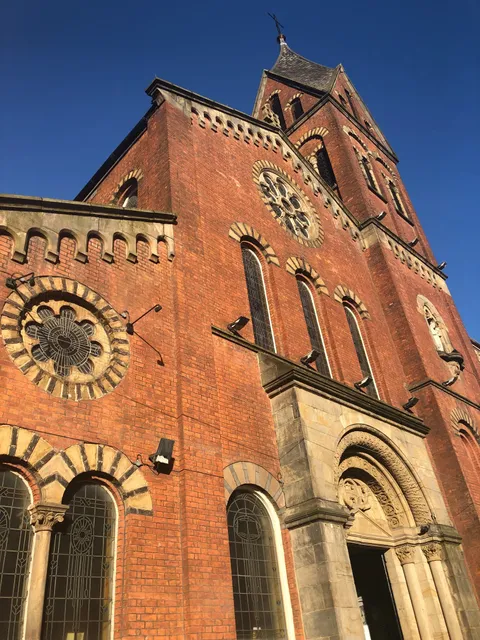
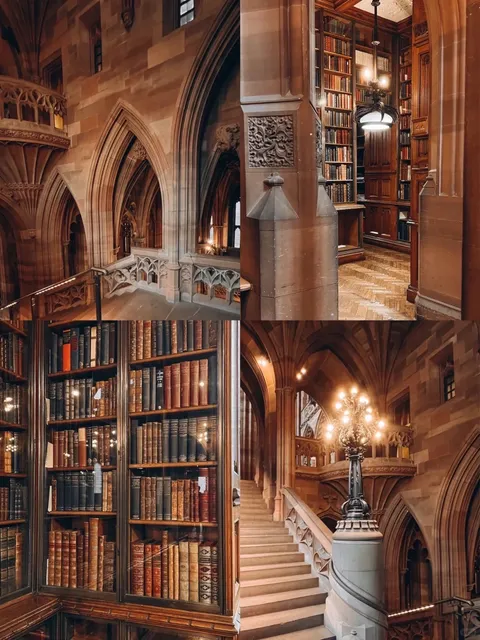
The architectural style is predominantly neo-Gothic, incorporating elements of the Art and Crafts movement, as evident in the ornate and imposing gatehouse facing Deansgate, which dominates the surrounding streetscape. The library's rectangular plan has undergone subsequent rear extensions. Its design resembles a church in decorated neo-Gothic style, complemented by Arts and Crafts details. Constructed from Cumbrian sandstone, the interior features delicately shaded 'Shawk' stone, while the exterior showcases dark red Barbary stone. The building's internal steel framed structure is supplemented by brick arched flooring.
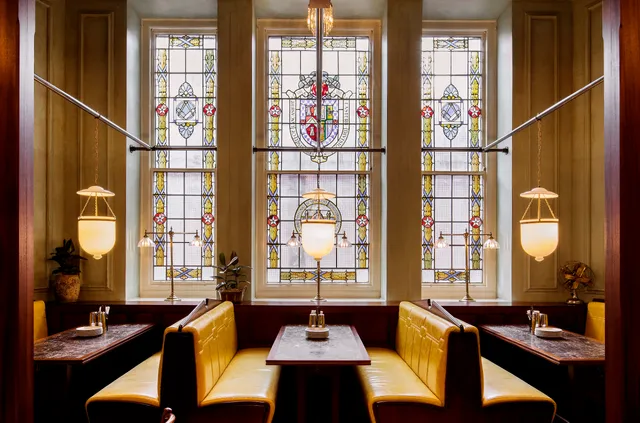
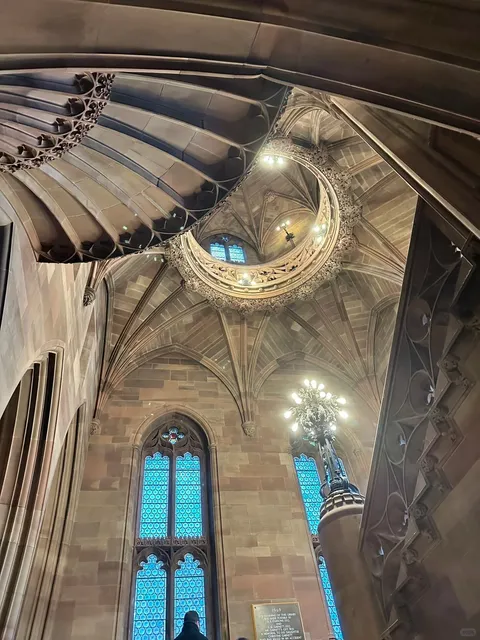
The library's design is a masterclass in subtle elegance, with a crypt nestled beneath two asymmetrical storeys that create the illusion of three. The Deansgate façade is a work of art, featuring an open-work arcading that shelters a stately three-bay entrance. Every surface is enriched with intricate blind tracery and precision-crafted carvings. As you enter the main reading room, you're enveloped in a tranquil atmosphere, with oriel windows and clerestory windows casting a warm glow. The pièce de résistance is the pair of resplendent stained glass windows, portraying iconic figures in stunning detail.
The portraits in sculpture (20) and stained glass (40) showcase a diverse range of trailblazers from the realms of intellect and art, inspiring a sense of limitless possibility.
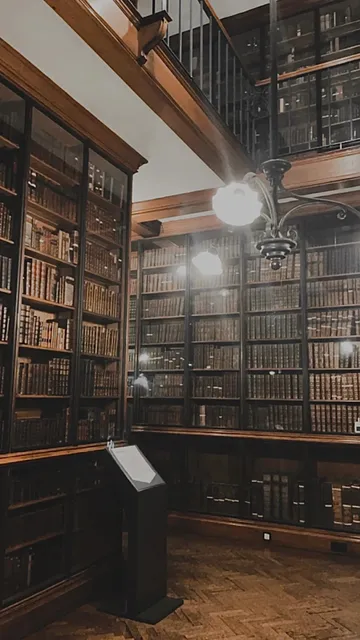
This magnificent library features a beautifully designed main library and reading room with a gallery above, supplemented by specialized rooms for Bible study and map analysis on the first floor, as well as conference and committee rooms on the ground floor. As a valuable resource maintained by the University of Manchester, the library offers readers and visitors the chance to explore its stunning architecture and enjoy a unique learning experience.
The library's collections boast an impressive array of treasures, including stunning medieval illuminated manuscripts, early European printing gems like the Gutenberg Bible, and works printed by William Caxton, alongside personal papers of visionary historical figures such as Elizabeth Gaskell and the French revolutionary collection of the Bibliotheca Lindesiana.
Visiting John Rylands Research Institute and Library was an exhilarating experience that exceeded our expectations in every way of our UK trip.
Visitor Information:
Opening Hours: Wednesday to Saturday: 10am-5pm Admission Policy: Admission is free, and advance booking is not required. Group Visit Policy: Currently, group visits are not accommodated. Historical Collection Growth: From 70,000 books and fewer than 100 manuscripts in 1900, the library expanded to hold over 250,000 printed volumes and more than one million manuscripts and archival items by 2012. Accessing Special Collections: The majority of rare books, maps, and visual collections can be accessed using the following search functions on the library website: Digital Collections Archives Manuscripts Manchester...
Read moreHaving traveled all the way from Portland, OR to experience the John Rylands Library in Manchester, I was truly captivated by its architectural brilliance and profound insight into the library's historical significance. The moment I stepped inside, I found myself transported to a place where the past seamlessly intertwines with the present.
The library's architecture is nothing short of a masterpiece, a harmonious blend of intricate detailing and grandeur that commands attention. The soaring ceilings and elaborate Gothic design evoke a sense of timelessness, underscoring the library's rich heritage. It's as if every corner whispers stories of the past, and each nook and cranny holds a secret waiting to be discovered.
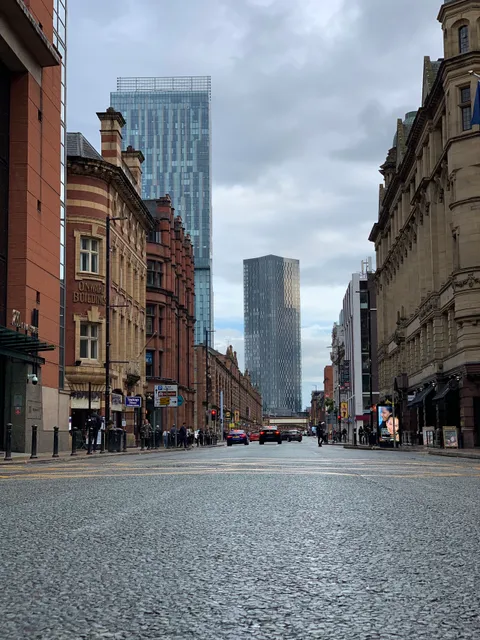
Moreover, the library's location adds an extra layer of charm to the overall experience. Nestled in the heart of Manchester, it becomes more than just a repository of books; it becomes a cultural beacon that connects the city's vibrant present with its storied past. The juxtaposition of the library's historic facade against the backdrop of modern Manchester creates a fascinating contrast, symbolizing the city's dynamic evolution.
The purpose of the John Rylands Library becomes evident as you delve into its extensive collection. The wealth of knowledge housed within its walls spans centuries, offering a profound insight into literature, history, and culture. Whether you're a scholar or a casual visitor, the library's diverse holdings provide a fascinating journey through time and intellect.
In summary, my visit to the John Rylands Library was not just a tour through a stunning architectural marvel but a profound exploration of history, culture, and knowledge. It's a testament to Manchester's rich heritage and a must-visit for anyone seeking to be awestruck by the beauty of the past and the significance of preserving it...
Read more