A Brief History of the oldest Church in the New Forest The Roman conquest of Britain in A.D. 43 spread its influence to the Kingdom of Wessex of which this parish was a part. The fall of Rome in A.D. 410 left Britain defenceless against Saxon or Dane, but Roman influence was to return.
Urged by appeals from England, Gregory the Great directed Augustine to Kent where he pursued his mission in A.D. 597. Forty years later the West Saxons (from which the name of Wessex derives) were converted by Birinus who came from Rome.
There followed a company of secular Canons, later Augustinians, who built a Church and dwelling for themselves at Twinham (Christchurch). As priests, physicians, school-teachers, assistance officers and husbandmen they won to the Faith the people of the area; all the Forest, and much more, became their Parish but it was at Brockenhurst that they probably founded their first mission. The Forest was to become the King’s New Forest after the Norman Conquest.
Our next record is the Charter of Baldwin de Redvers c. 1160 preserved in Christchurch Priory. Brockenhurst had become part of the great de Redvers fief, for we read that its “chapelry” was confirmed by Baldwin to the Canons of Holy Trinity, Twinham, – “for the service of God and my soul’s salvation.”
The Lord of the Manor was obliged to accommodate the King when he came hunting – “Litter for the King’s bed and fodder for his horse”. The Manor, being adjacent to the Church, it is certain that the Norman and Angevin Kings, and their entourages, must have worshipped in St. Nicholas. Brockenhurst was the centre of the Kings’ hunting and its chief importance in those times.
Next we have the “Speculum Prioris” (Cotton M.S. Brit.: Mus: A.D. 1362) a stocktaking of all the Christchurch possessions. It affirms that this Church “To the Church of Christ belongs as to a mother” (tanguam ad mater).
In 1539, the Priory was dissolved and the community of 58 Canons dispersed. No longer were they to serve this Church. The manor and advowson (the right of presentation to the benefice) fell to John Fitzgerald, Earl of Arundel, and eventually in 1709, was acquired by Edward Morant Esq:, whose successor, Edward Morant Esq:, seventh of his line, holds them today.
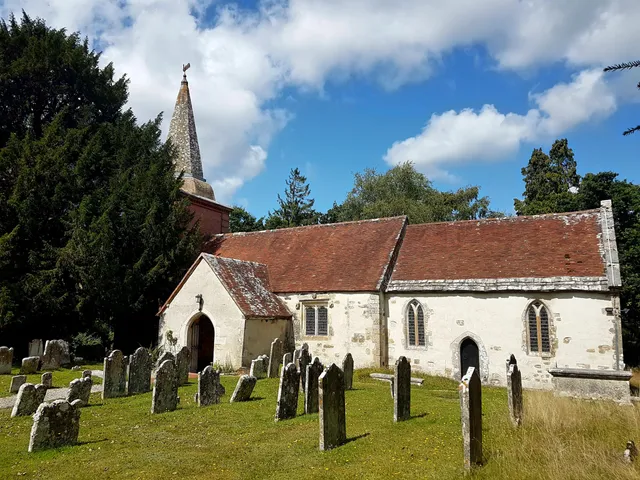
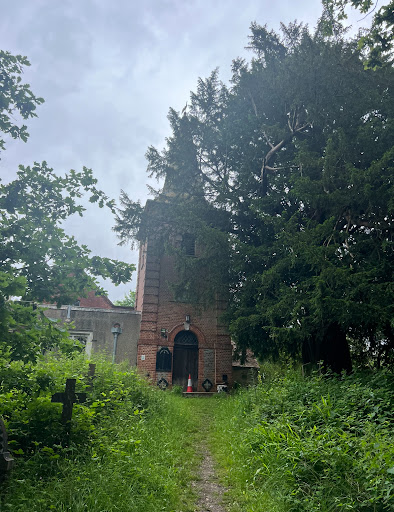
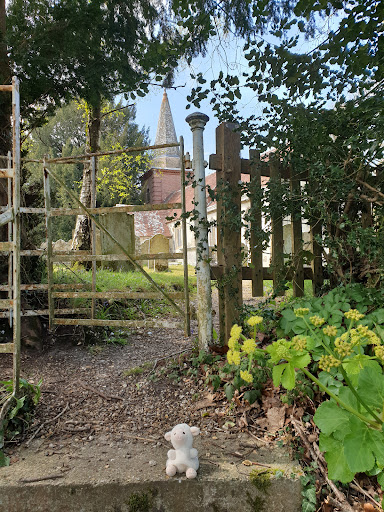
The Church is beautifully situated at the top of a hill, a quarter of a mile south-east of the railway crossing on the Lyndhurst – Lymington road. The mound may be partly artificial, it having been suggested that there may have been a pagan temple on the site; or a Romano-British church. There can be no doubt that there was a Saxon church here, built for and endowed by the local land-owner, to provide a place of worship for himself and the people on his estate.
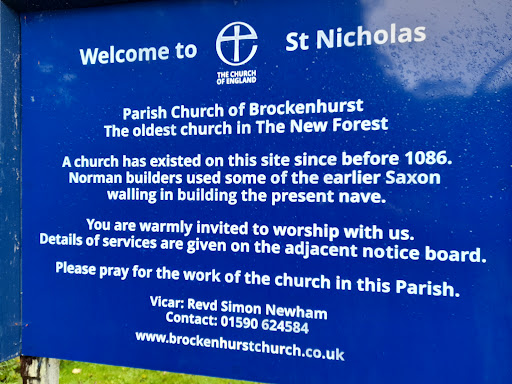
The existence of a church at Broceste (which is how the compilers spelled the name of the village) is recorded in Domesday Book. All through the centuries, between then and now, the parishioners have cared for their church, repairing it, adding to it, and altering it, according to the changing taste and needs of the passing years.
New Zealand Cemetery On the east side of the central level of the cemetery are the graves of more than a hundred New Zealand, Indian and other soldiers who died in the field hospitals at Brockenhurst during and after the first World War. By order of the Commonwealth War Graves Commission the original white wooden crosses were replaced in 1924 by engraved head-stones, and the impressive memorial cross was erected in 1927. An annual ANZAC memorial service is held here on the fourth Sunday in April, attended by a representative of the New Zealand High Commission and of the New Zealand Forces.
There is a new display in St Nicholas’ Church about the “Tin Town” Hospital which was in Tile Barn Lane, the display also commemorates the Brockenhurst born soldiers of both World War 1 and World War 2. St Nicholas’ Church is open to visitors from mid April until the end of October.
©️ 2023 Brockenhurst PCC. All Rights Reserved. Registered Charity No. 1131796. Brockenhurst Church is part of The...
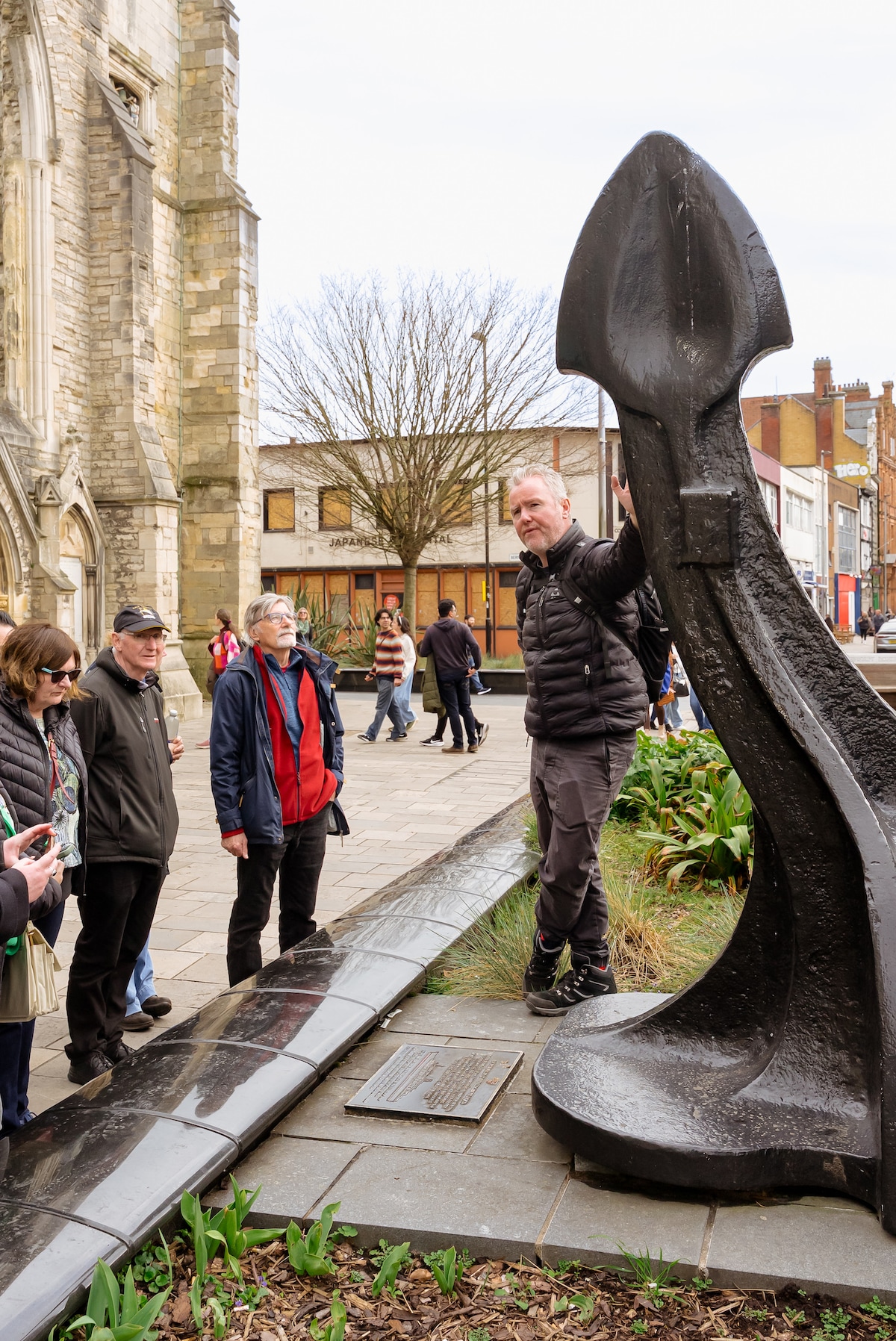
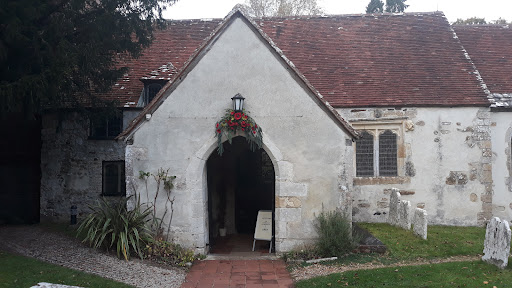
Read moreSt Nicholas Church is the oldest church in the New Forest and is mentioned in the Domesday book, written in 1086. The Church is well worth a visit. There is so much local history to see here. You will need to take your time as there are some hidden gems that could be missed. For example there is a scratch dial on the right side of the porch as you enter the Church. This is an early sun dial telling the time but only the time relevant to Church services. The doorway is a wonderful piece of Norman architecture. Inside, there is a small historical exhibition on the Indian army hospital that was created nearby in World War One and later taken over by the New Zealand army medical Corp. There is a New Zealand memorial stained glass window. In the afternoon there are often local guides on site to show you around the church. They are very welcoming and have a good knowledge of the local history. If they are not available there is a well written guide leaflet that points out the highlights to see inside. Outside there is a large Yew tree, believed to be about 1000 years old. In the churchyard there is a Commonwealth War Graves Commission area with over 100 graves of New Zealanders and other nationalities, including three Indian soldiers. The famous snake catcher of the New Forest, Brusher Mills is buried here. St Nicholas Church is a short walk from Brockenhurst railway station. There is a reasonable amount of car parking space outside. This is well worth visiting. As a historian, I thoroughly...
Read moreYou don't have to give this 1 star when it states that it is St. Nicholas Church and not St. Saviours. St. Nicholas' Church is the oldest church in the New Forest and one of the two stated in the 'Doomsday Book'. The Churchyard is fluttered with New Zealand, Australian and Indian troops from World War One and it's great to see them so well looked after. If you're into the history of the New Forest, this is one of the...
Read more