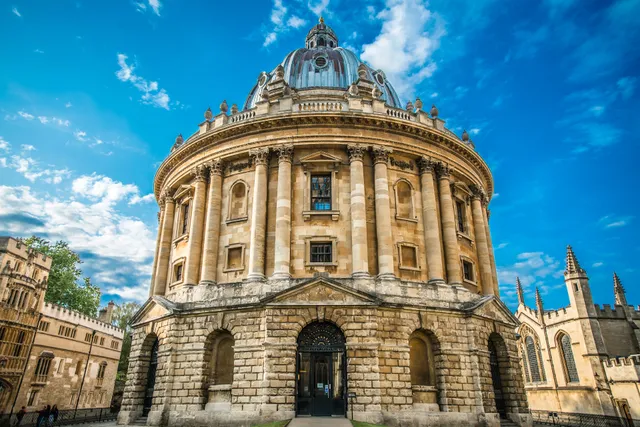
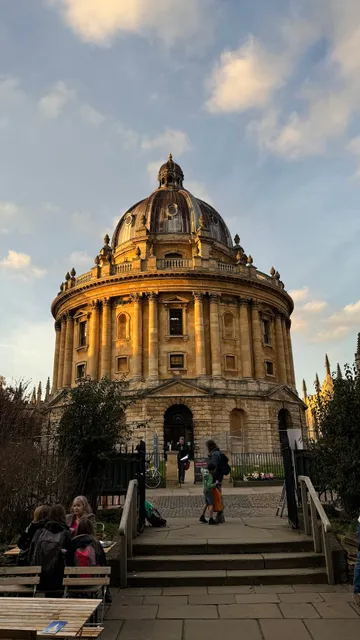
Stepping onto the historic grounds of Oxford University is akin to entering a realm where academia and architectural splendor intertwine. The hallowed halls echo with centuries of intellectual pursuit, as each cobblestone seems to whisper tales of scholarly excellence. The visit commences at the iconic Radcliffe Camera, a circular library that stands as a testament to Oxford's rich literary tradition.
Wandering through the Bodleian Library, one is enveloped in an ambiance that transcends time, surrounded by towering bookshelves and manuscripts that have weathered centuries. The Divinity School, adorned with intricate vaulted ceilings, invites contemplation amid an atmosphere steeped in academic legacy.
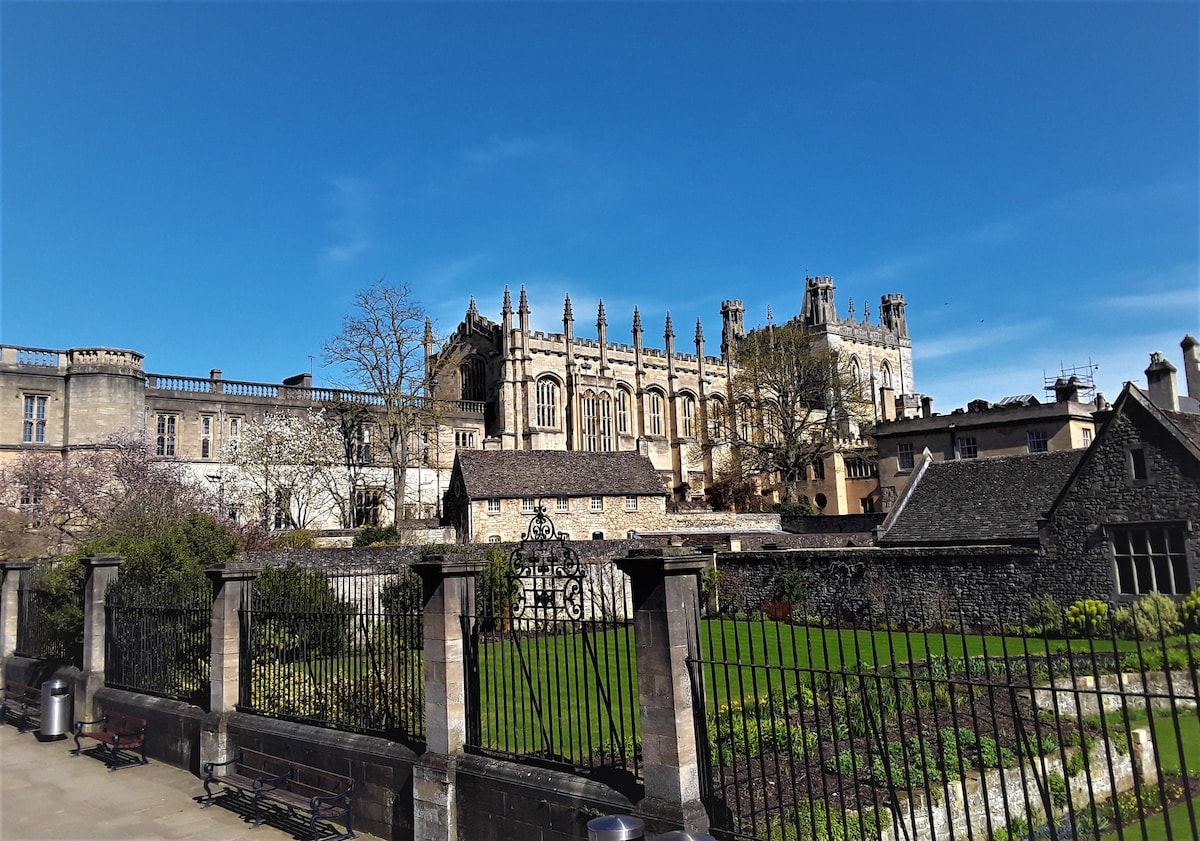
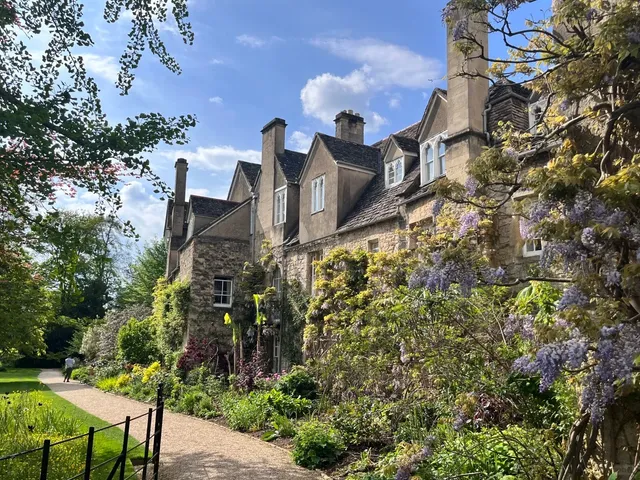
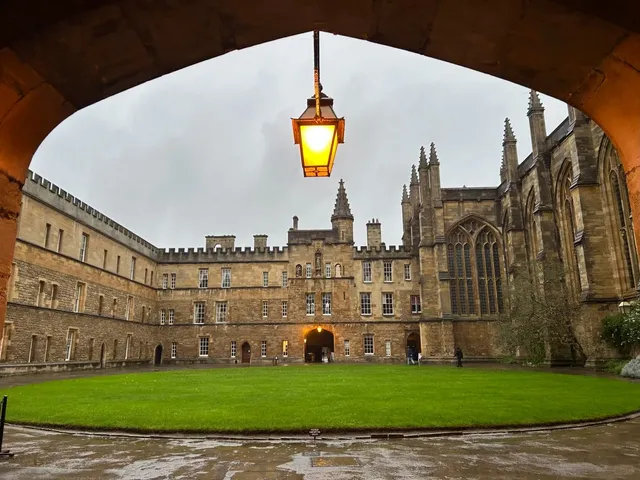
The renowned colleges, each with its distinct character, beckon exploration. Christ Church College, with its grand dining hall that inspired Hogwarts in the Harry Potter series, evokes a sense of enchantment. Magdalen College captivates with its picturesque gardens, where the whispers of the past mingle with the rustling leaves.
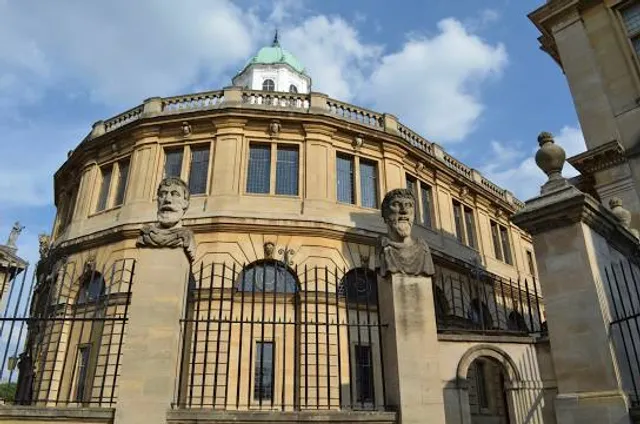
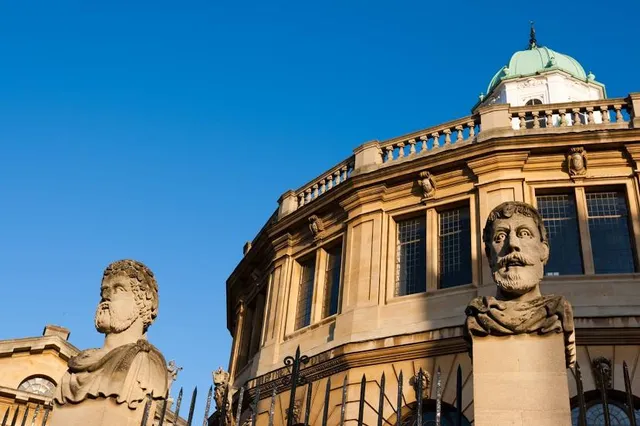
Strolling along the cobblestone streets, the Sheldonian Theatre emerges, an architectural gem designed by Sir Christopher Wren. Its classical facade speaks of the university's commitment to the arts and culture. The Bridge of Sighs, a whimsical structure connecting Hertford College's two halves, adds a touch of romanticism to the visit.
Engaging with students, their passion for learning and the vibrant exchange of ideas permeate the air. The Bodleian's Radcliffe Camera, a hub of intellectual activity, bustles with scholars immersed in their studies.
In essence, a visit to Oxford University is a sojourn through the annals of knowledge, where the past and present converge, leaving an indelible imprint of reverence for the pursuit of wisdom in the hallowed halls of academia.

You
A text with 300 words describe a visite to oxford university
ChatGPT
ChatGPT
Exploring Oxford University is an immersive journey into centuries of academic brilliance and architectural grandeur. The visit commences at the iconic Radcliffe Camera, a circular library that stands as a symbol of Oxford's commitment to knowledge. Its regal presence invites contemplation, surrounded by the historic cobblestone streets that resonate with the footsteps of countless scholars.
The Bodleian Library unfolds as a literary sanctuary, housing manuscripts and books that have weathered the passage of time. The Divinity School, with its intricate vaulted ceilings, exudes an atmosphere steeped in scholarly tradition. The experience within these hallowed halls evokes a profound sense of connection to the intellectual legacy of generations.
Each college within Oxford boasts a unique charm, showcasing architectural splendors and cultural richness. Christ Church College, with its grand dining hall that served as inspiration for the Hogwarts Great Hall, transports visitors into a world of enchantment. Magdalen College enchants with its picturesque gardens, where the serenity of nature harmonizes with the whispers of history.
The Sheldonian Theatre, designed by Sir Christopher Wren, stands as a testament to Oxford's dedication to the arts. Its classical facade and majestic interior reflect a commitment to cultural flourishing. The Bridge of Sighs, a whimsical structure connecting Hertford College's two halves, adds a touch of romanticism to the tour, revealing the university's architectural diversity.
Engaging with the vibrant student community, the passion for learning is palpable. The Bodleian's Radcliffe Camera emerges as a hub of intellectual activity, with students absorbed in their studies, creating a dynamic atmosphere of exploration and discovery.
In essence, a visit to Oxford University is a pilgrimage through the corridors of knowledge, where history, architecture, and academia converge, leaving visitors with a profound appreciation for the pursuit of wisdom in this esteemed seat of learning.
ChatGPT can make...
Read moreUniversity of Oxford, English autonomous institution of higher learning at Oxford, Oxfordshire, England, one of the world’s great universities. It lies along the upper course of the River Thames (called by Oxonians the Isis), 50 miles (80 km) north-northwest of London.
Sketchy evidence indicates that schools existed at Oxford by the early 12th century. By the end of that century, a university was well established, perhaps resulting from the barring of English students from the University of Paris around 1167. Oxford was modeled on the University of Paris, with initial faculties of theology, law, medicine, and the liberal arts. In the 13th century the university gained added strength, particularly in theology, with the establishment of several religious orders, principally Dominicans and Franciscans, in the town of Oxford. The university had no buildings in its early years; lectures were given in hired halls or churches. The various colleges of Oxford were originally merely endowed boardinghouses for impoverished scholars. They were intended primarily for masters or bachelors of arts who needed financial assistance to enable them to continue study for a higher degree. The earliest of these colleges, University College, was founded in 1249. Balliol College was founded about 1263, and Merton College in 1264. During the early history of Oxford, its reputation was based on theology and the liberal arts. But it also gave more-serious treatment to the physical sciences than did the University of Paris: Roger Bacon, after leaving Paris, conducted his scientific experiments and lectured at Oxford from 1247 to 1257. Bacon was one of several influential Franciscans at the university during the 13th and 14th centuries. Among the others were Duns Scotus and William of Ockham. John Wycliffe (c. 1330–84) spent most of his life as a resident Oxford doctor. Beginning in the 13th century, the university gained charters from the crown, but the religious foundations in Oxford town were suppressed during the Protestant Reformation. In 1571 an act of Parliament led to the incorporation of the university. The university’s statutes were codified by its chancellor, Archbishop William Laud, in 1636. In the early 16th century, professorships began to be endowed. And in the latter part of the 17th century, interest in scientific studies increased substantially. During the Renaissance, Desiderius Erasmus carried the new learning to Oxford, and such scholars as William Grocyn, John Colet, and Sir Thomas More enhanced the university’s reputation. Since that time Oxford has traditionally held the highest reputation for scholarship and instruction in the classics, theology, and political science.
In the 19th century the university’s enrollment and its professorial staff were greatly expanded. The first women’s college at Oxford, Lady Margaret Hall, was founded in 1878, and women were first admitted to full membership in the university in 1920. In the 20th century Oxford’s curriculum was modernized. Science came to be taken much more seriously and professionally, and many new faculties were added, including ones for modern languages and economics. Postgraduate studies also expanded greatly in the 20th century. Oxford houses two renowned scholarly institutions, the Bodleian Library and the Ashmolean Museum of Art and Archaeology, as well as the Museum of the History of Science (established 1924). The Oxford University Press, established in 1478, is one of the largest and most prestigious university publishers in the world.
Oxford has been associated with many of the greatest names in British history, from John Wesley and Cardinal Wolsey to Oscar Wilde and Sir Richard Burton and Cecil Rhodes and Sir Walter Raleigh. The astronomer Edmond Halley studied at Oxford, and the physicist Robert Boyle performed his most important...
Read moreOxford is a fantastic institution, filled with incredibly talented staff members and a rich architectural and academic history. Living up to its reputation of academic rigour, Oxford can be a challenging place to study at times, as much of the work is done independently. As a history student, I do not receive a lot of contact hours. I knew this would be the case before I attended, but it still took me a while to adjust to doing all my work myself and then attending weekly tutorials in order to discuss completed work.
Nevertheless, it goes without saying that having access to experts in your field makes studying here worth the money and the time, and the hard workload really helps you develop to the best of your potential. My experience with several tutors has almost always been positive, and they genuinely want to help you learn.
The beautiful libraries and other buildings also make the city a motivational and comfortable place to work. One of the most unique things about Oxford is its collegiate system, which means you live in smaller, tight-knit communities, but also have better access to academic and financial resources right where you live.
The most important thing to do when considering applying to Oxford is to research colleges, as your choice truly does shape your time there. Some colleges have poor kitchen facilities, which forces you to buy meals in the hall, which, despite being subsidised, can be expensive. Some colleges also have less accommodation, meaning that they may not be able to provide a room for you for the duration of your degree. This can be important since private housing in Oxford is sometimes expensive.
All in all, college life is exciting and much of the social activity revolves around these communities. The small size of these colleges means it is easy to get involved in all sorts of societies, as well as drive change within these institutions. Although attending a university with a reputation for being steeped in tradition and elitism can seem daunting, there genuinely is a welcoming atmosphere for everyone and an ability to make your college or university what you...
Read more