HTML SitemapExplore
logo
Find Things to DoFind The Best Restaurants

History of Science Museum — Attraction in Oxford

Name
History of Science Museum
Description
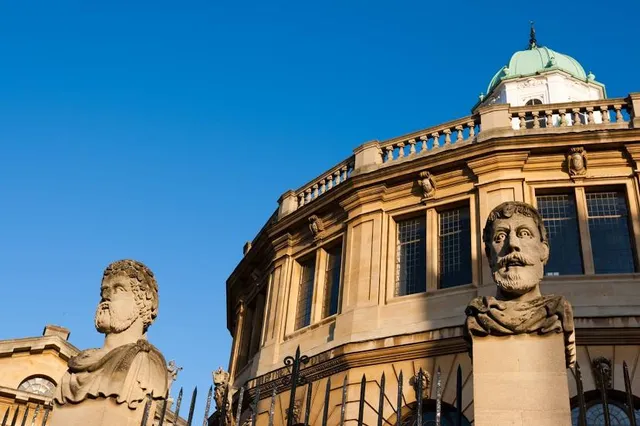
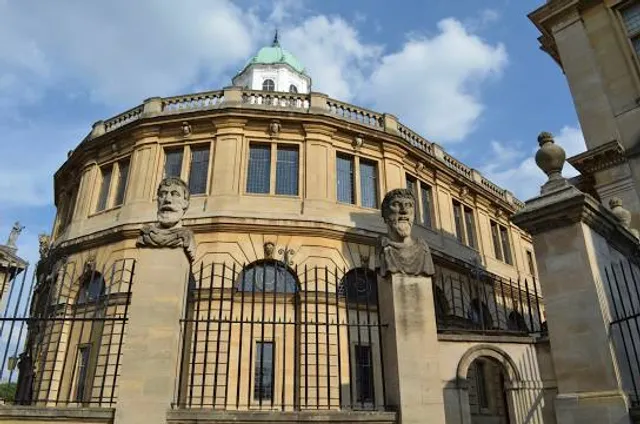
The History of Science Museum in Broad Street, Oxford, England, holds a leading collection of scientific instruments from Middle Ages to the 19th century. The museum building is also known as the Old Ashmolean Building to distinguish it from the newer Ashmolean Museum building completed in 1894.
Nearby attractions
The Sheldonian Theatre
Broad St, Oxford OX1 3AZ, United Kingdom
Bodleian Library
Broad St, Oxford OX1 3BG, United Kingdom
University Church of St Mary the Virgin
The, High St, Oxford OX1 4BJ, United Kingdom
Radcliffe Camera
Radcliffe Camera, Radcliffe Sq, Oxford OX1 3BG, United Kingdom
The Divinity School
University of Oxford, Oxford OX1 3BG, United Kingdom
Weston Library
Broad Street, Oxford OX1 3BG, United Kingdom
University of Oxford
Wellington Square, Oxford OX1 2JD, United Kingdom
Ashmolean Museum
Beaumont St, Oxford OX1 2PH, United Kingdom
Trinity College
Broad St, Oxford OX1 3BH, United Kingdom
Exeter College
Turl St, Oxford OX1 3DP, United Kingdom
Nearby restaurants
Turf Tavern
4 Bath Pl, Oxford OX1 3SU, United Kingdom
Gusto Italian - Oxford
The Mitre, High St, Oxford OX1 4AG, United Kingdom
Vaults & Garden
University Church, 1 Radcliffe Sq, Oxford OX1 4AH, United Kingdom
Turtle Bay Oxford
12 Friars Entry, Oxford OX1 2BY, United Kingdom
The Ivy Oxford Brasserie
120-121 High St, Oxford OX1 4DF, United Kingdom
Brown's Cafe
92, The Market, Oxford OX1 3DY, United Kingdom
COSMO All You Can Eat World Buffet Restaurant | Oxford
8 Magdalen St, Oxford OX1 3AD, United Kingdom
No.1 Ship Street
1 Ship St, Oxford OX1 3DA, United Kingdom
Tse Noodle
8 Ship St, Oxford OX1 3DA, United Kingdom
wagamama oxford
8 Market St, Oxford OX1 3EF, United Kingdom
Nearby hotels
The Buttery
11-12 Broad St, Oxford OX1 3AP, United Kingdom
Tower House
15 Ship St, Oxford OX1 3DA, United Kingdom
Bath Place Hotel
4-5 Bath Pl, Oxford OX1 3SU, United Kingdom
Turl Street Mitre
Turl Street Mitre, Turl St, Oxford OX1 3DN, United Kingdom
George Street Hotel
15-19 George St, Oxford OX1 2AB, United Kingdom
Vanbrugh House Hotel
20, 24 St Michael's St, Oxford OX1 2EB, United Kingdom
George Oxford Hotel
29 George St, Oxford OX1 2AY, United Kingdom
Rhodes House
S Parks Rd, Oxford OX1 3RG, United Kingdom
The Bocardo Hotel
24-26 George St, Oxford OX1 2AE, United Kingdom
Ali Inn Oxford
6 Gloucester St, Oxford OX1 2BN, United Kingdom
Related posts
Keywords
History of Science Museum tourism.History of Science Museum hotels.History of Science Museum bed and breakfast. flights to History of Science Museum.History of Science Museum attractions.History of Science Museum restaurants.History of Science Museum travel.History of Science Museum travel guide.History of Science Museum travel blog.History of Science Museum pictures.History of Science Museum photos.History of Science Museum travel tips.History of Science Museum maps.History of Science Museum things to do.
History of Science Museum things to do, attractions, restaurants, events info and trip planning
History of Science Museum
United KingdomEnglandOxfordHistory of Science Museum

Basic Info

History of Science Museum

Broad St, Oxford OX1 3AZ, United Kingdom
4.4(1.2K)
Open 24 hours
Save
spot

Ratings & Description

Info

The History of Science Museum in Broad Street, Oxford, England, holds a leading collection of scientific instruments from Middle Ages to the 19th century. The museum building is also known as the Old Ashmolean Building to distinguish it from the newer Ashmolean Museum building completed in 1894.

Cultural
Accessibility
Family friendly
attractions: The Sheldonian Theatre, Bodleian Library, University Church of St Mary the Virgin, Radcliffe Camera, The Divinity School, Weston Library, University of Oxford, Ashmolean Museum, Trinity College, Exeter College, restaurants: Turf Tavern, Gusto Italian - Oxford, Vaults & Garden, Turtle Bay Oxford, The Ivy Oxford Brasserie, Brown's Cafe, COSMO All You Can Eat World Buffet Restaurant | Oxford, No.1 Ship Street, Tse Noodle, wagamama oxford
logoLearn more insights from Wanderboat AI.
Phone
+44 1865 277293
Website
hsm.ox.ac.uk

Plan your stay

hotel
Pet-friendly Hotels in Oxford
Find a cozy hotel nearby and make it a full experience.

hotel
Affordable Hotels in Oxford
Find a cozy hotel nearby and make it a full experience.

hotel
The Coolest Hotels You Haven't Heard Of (Yet)
Find a cozy hotel nearby and make it a full experience.

hotel
Trending Stays Worth the Hype in Oxford
Find a cozy hotel nearby and make it a full experience.

Reviews

Nearby attractions of History of Science Museum

The Sheldonian Theatre

Bodleian Library

University Church of St Mary the Virgin

Radcliffe Camera

The Divinity School

Weston Library

University of Oxford

Ashmolean Museum

Trinity College

Exeter College

The Sheldonian Theatre

The Sheldonian Theatre

4.7

(637)

Open 24 hours
Click for details
Bodleian Library

Bodleian Library

4.6

(520)

Open 24 hours
Click for details
University Church of St Mary the Virgin

University Church of St Mary the Virgin

4.7

(1.3K)

Open 24 hours
Click for details
Radcliffe Camera

Radcliffe Camera

4.7

(416)

Open 24 hours
Click for details

Things to do nearby

Oxford’s amazing sights with a local guide
Tue, Dec 9 • 1:00 PM
Oxford, OX1 3AS, United Kingdom
View details
Candlelight: Christmas Classics
Fri, Dec 12 • 6:30 PM
Broad Street, Oxford, OX1 3AZ
View details
Escape to Oxford and explore its rich history
Mon, Dec 8 • 2:00 PM
Oxfordshire, OX1 3AE, United Kingdom
View details

Nearby restaurants of History of Science Museum

Turf Tavern

Gusto Italian - Oxford

Vaults & Garden

Turtle Bay Oxford

The Ivy Oxford Brasserie

Brown's Cafe

COSMO All You Can Eat World Buffet Restaurant | Oxford

No.1 Ship Street

Tse Noodle

wagamama oxford

Turf Tavern

Turf Tavern

4.5

(3K)

Click for details
Gusto Italian - Oxford

Gusto Italian - Oxford

4.6

(892)

Click for details
Vaults & Garden

Vaults & Garden

4.5

(702)

$

Click for details
Turtle Bay Oxford

Turtle Bay Oxford

4.8

(3.6K)

Click for details
Get the Appoverlay
Get the AppOne tap to find yournext favorite spots!
Wanderboat LogoWanderboat

Your everyday Al companion for getaway ideas

CompanyAbout Us
InformationAI Trip PlannerSitemap
SocialXInstagramTiktokLinkedin
LegalTerms of ServicePrivacy Policy

Get the app

© 2025 Wanderboat. All rights reserved.
logo

Reviews of History of Science Museum

4.4
(1,216)
avatar
5.0
1y

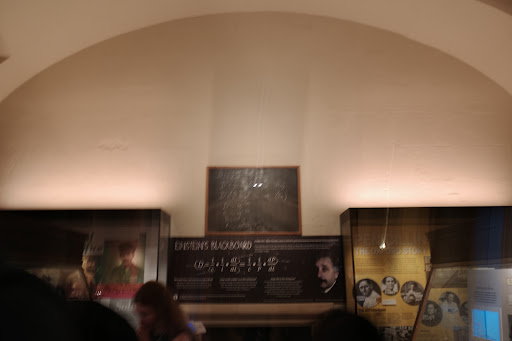
The collection and the building itself now occupies a special position in the study of the history of science and in the development of western culture and collecting. One of the most iconic objects in the collection is Einstein's Blackboard that Albert Einstein used on 16 May 1931 in his lectures while visiting the University of Oxford.

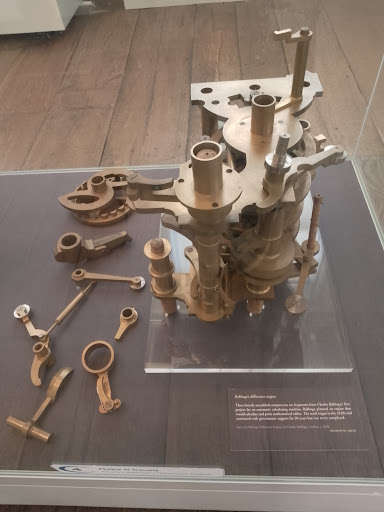
The current collection contains around 18,000 objects from antiquity to the early 20th century, representing almost all aspects of the history of science and is used for both academic study and enjoyment by the visiting public. The museum contains a wide range of scientific instruments, such as quadrants, astrolabes, sundials, early mathematical instruments, optical instruments, equipment associated with chemistry, natural philosophy and medicine, and a reference library regarding the history of scientific instruments that includes manuscripts, incunabula, prints and printed ephemera, and early photographic items.

The museum shows the development of mechanical clocks. Lantern clocks and longcase clocks are exhibited in the Beeson Room. The museum hold a collection of turned ivory and other objects made by Lady Gertrude Crawford.

The museum is also home to the Rochester Avionic Archive, which includes a collection of avionics that originated with the Elliot Brothers, but also includes pieces from Marconi and...

   Read more
avatar
5.0
14w

Visiting the History of Science Museum in Oxford was a truly memorable experience for me. As soon as I entered the historic building, I felt a sense of awe at the rich tapestry of scientific discovery that unfolded before me. Established in 1924, the museum is not only a treasure trove of scientific instruments, but it also tells the story of human curiosity and innovation.

I was captivated by the original telescopes used by astronomers like Thomas Harriot, and I marveled at the early medical instruments that showcased the evolution of medicine. Each exhibit felt like a window into the past, revealing the brilliance of minds like Stephen Hawking and Albert Einstein. I found myself lost in the fascinating narratives behind each artifact.

What I loved most was the welcoming atmosphere; the staff were passionate and eager to share their knowledge, making the experience even more enriching. I also appreciated the temporary exhibitions that kept the visit dynamic and engaging. For anyone who shares a love for science or history, I wholeheartedly recommend a visit to this museum. It’s a place where the past and present of science come alive, and I left feeling inspired...

   Read more
avatar
5.0
17w

Dave personally gave me a guided tour of the Museum of the History of Science. He spoke with infectious enthusiasm about 16th-century astrolabes (used to measure the height of celestial bodies above the horizon, time, and position on Earth), a selenographic moon globe by John Russell, and a moon poster partly drawn by his daughters. The poster is so remarkably accurate that, from a distance, you’d swear it was a photograph.

He also shared an elaborate story about the hospital bedpan once used by Alexander Fleming, the discoverer of penicillin, along with the gold medal he donated to the museum in honor of his Nobel Prize—an accolade he humbly credited mostly to his team.

And last but not least, there was the tale of Einstein’s blackboard, which had mysteriously ended up in the janitor’s closet. The result on the board from the formulas represents the expansion rate of the universe (D), but with a multiplication error of 10² = 100 in the formula for D². Just a two-zero difference - but on an exponent of 53! 😄

Thank you Dave for your (at my request) quick...

   Read more
Page 1 of 7
Previous
Next

Posts

Manjinder ShergillManjinder Shergill
The collection and the building itself now occupies a special position in the study of the history of science and in the development of western culture and collecting. One of the most iconic objects in the collection is Einstein's Blackboard that Albert Einstein used on 16 May 1931 in his lectures while visiting the University of Oxford. The current collection contains around 18,000 objects from antiquity to the early 20th century, representing almost all aspects of the history of science and is used for both academic study and enjoyment by the visiting public. The museum contains a wide range of scientific instruments, such as quadrants, astrolabes, sundials, early mathematical instruments, optical instruments, equipment associated with chemistry, natural philosophy and medicine, and a reference library regarding the history of scientific instruments that includes manuscripts, incunabula, prints and printed ephemera, and early photographic items. The museum shows the development of mechanical clocks. Lantern clocks and longcase clocks are exhibited in the Beeson Room. The museum hold a collection of turned ivory and other objects made by Lady Gertrude Crawford. The museum is also home to the Rochester Avionic Archive, which includes a collection of avionics that originated with the Elliot Brothers, but also includes pieces from Marconi and BAE Systems.
MAIL THE HumanMAIL THE Human
Visiting the History of Science Museum in Oxford was a truly memorable experience for me. As soon as I entered the historic building, I felt a sense of awe at the rich tapestry of scientific discovery that unfolded before me. Established in 1924, the museum is not only a treasure trove of scientific instruments, but it also tells the story of human curiosity and innovation. I was captivated by the original telescopes used by astronomers like Thomas Harriot, and I marveled at the early medical instruments that showcased the evolution of medicine. Each exhibit felt like a window into the past, revealing the brilliance of minds like Stephen Hawking and Albert Einstein. I found myself lost in the fascinating narratives behind each artifact. What I loved most was the welcoming atmosphere; the staff were passionate and eager to share their knowledge, making the experience even more enriching. I also appreciated the temporary exhibitions that kept the visit dynamic and engaging. For anyone who shares a love for science or history, I wholeheartedly recommend a visit to this museum. It’s a place where the past and present of science come alive, and I left feeling inspired and informed.
Lana ELana E
The History of Science Museum in Oxford is a fantastic destination that shouldn't be missed if you're exploring this charming city. Conveniently located near other major attractions like the iconic Sheldonian Theatre, it's a perfect spot to dive into the fascinating world of scientific discoveries and inventions. The museum showcases a wealth of great achievements in science, brought to life with interactive displays that make learning engaging and fun. It's a treat for curious minds of all ages – particularly excellent for families and school children, who'll find the exhibits very entertaining. One note from my visit: the second floor was closed, so I'd definitely suggest checking ahead of your visit for any area closures to make the most of your time there. Kudos to the staff, who were very helpful and friendly – adding to the welcoming atmosphere of the museum. All in all, a must-visit in Oxford for anyone intrigued by science, innovation, and interactive exploration.
See more posts
See more posts
hotel
Find your stay

Pet-friendly Hotels in Oxford

Find a cozy hotel nearby and make it a full experience.

The collection and the building itself now occupies a special position in the study of the history of science and in the development of western culture and collecting. One of the most iconic objects in the collection is Einstein's Blackboard that Albert Einstein used on 16 May 1931 in his lectures while visiting the University of Oxford. The current collection contains around 18,000 objects from antiquity to the early 20th century, representing almost all aspects of the history of science and is used for both academic study and enjoyment by the visiting public. The museum contains a wide range of scientific instruments, such as quadrants, astrolabes, sundials, early mathematical instruments, optical instruments, equipment associated with chemistry, natural philosophy and medicine, and a reference library regarding the history of scientific instruments that includes manuscripts, incunabula, prints and printed ephemera, and early photographic items. The museum shows the development of mechanical clocks. Lantern clocks and longcase clocks are exhibited in the Beeson Room. The museum hold a collection of turned ivory and other objects made by Lady Gertrude Crawford. The museum is also home to the Rochester Avionic Archive, which includes a collection of avionics that originated with the Elliot Brothers, but also includes pieces from Marconi and BAE Systems.
Manjinder Shergill

Manjinder Shergill

hotel
Find your stay

Affordable Hotels in Oxford

Find a cozy hotel nearby and make it a full experience.

Get the Appoverlay
Get the AppOne tap to find yournext favorite spots!
Visiting the History of Science Museum in Oxford was a truly memorable experience for me. As soon as I entered the historic building, I felt a sense of awe at the rich tapestry of scientific discovery that unfolded before me. Established in 1924, the museum is not only a treasure trove of scientific instruments, but it also tells the story of human curiosity and innovation. I was captivated by the original telescopes used by astronomers like Thomas Harriot, and I marveled at the early medical instruments that showcased the evolution of medicine. Each exhibit felt like a window into the past, revealing the brilliance of minds like Stephen Hawking and Albert Einstein. I found myself lost in the fascinating narratives behind each artifact. What I loved most was the welcoming atmosphere; the staff were passionate and eager to share their knowledge, making the experience even more enriching. I also appreciated the temporary exhibitions that kept the visit dynamic and engaging. For anyone who shares a love for science or history, I wholeheartedly recommend a visit to this museum. It’s a place where the past and present of science come alive, and I left feeling inspired and informed.
MAIL THE Human

MAIL THE Human

hotel
Find your stay

The Coolest Hotels You Haven't Heard Of (Yet)

Find a cozy hotel nearby and make it a full experience.

hotel
Find your stay

Trending Stays Worth the Hype in Oxford

Find a cozy hotel nearby and make it a full experience.

The History of Science Museum in Oxford is a fantastic destination that shouldn't be missed if you're exploring this charming city. Conveniently located near other major attractions like the iconic Sheldonian Theatre, it's a perfect spot to dive into the fascinating world of scientific discoveries and inventions. The museum showcases a wealth of great achievements in science, brought to life with interactive displays that make learning engaging and fun. It's a treat for curious minds of all ages – particularly excellent for families and school children, who'll find the exhibits very entertaining. One note from my visit: the second floor was closed, so I'd definitely suggest checking ahead of your visit for any area closures to make the most of your time there. Kudos to the staff, who were very helpful and friendly – adding to the welcoming atmosphere of the museum. All in all, a must-visit in Oxford for anyone intrigued by science, innovation, and interactive exploration.
Lana E

Lana E

See more posts
See more posts