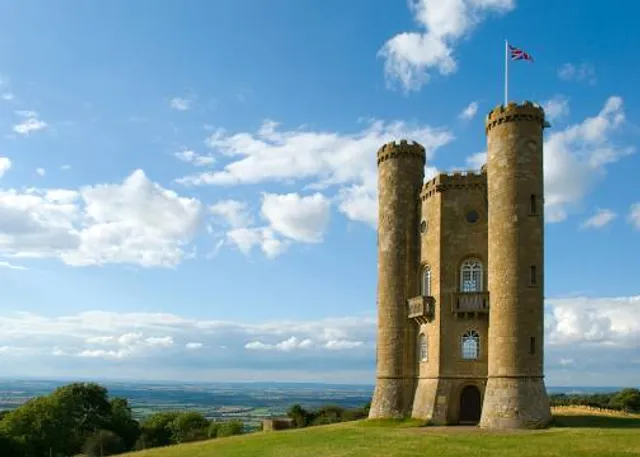
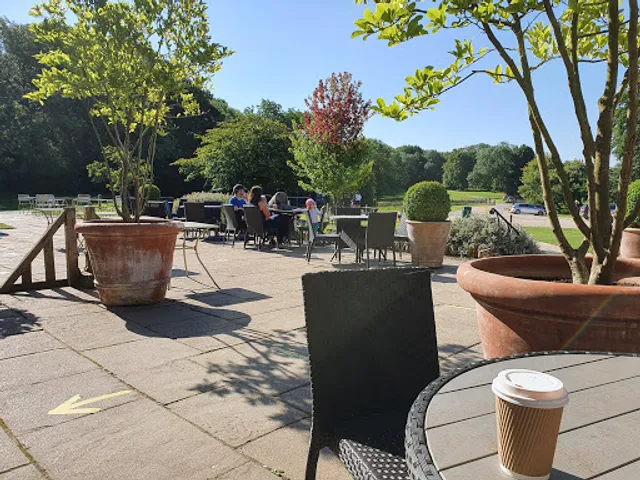
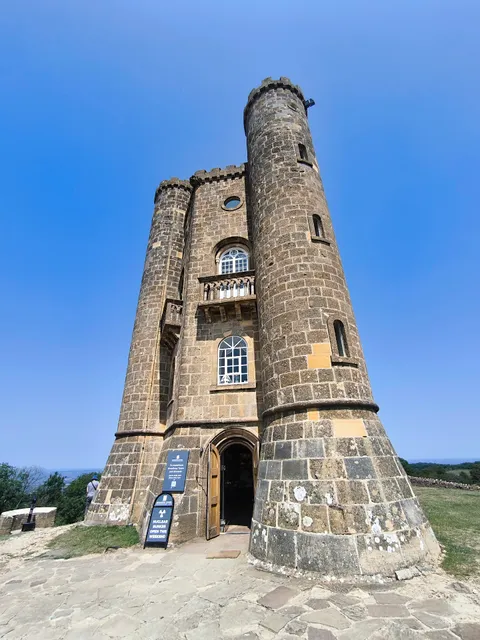
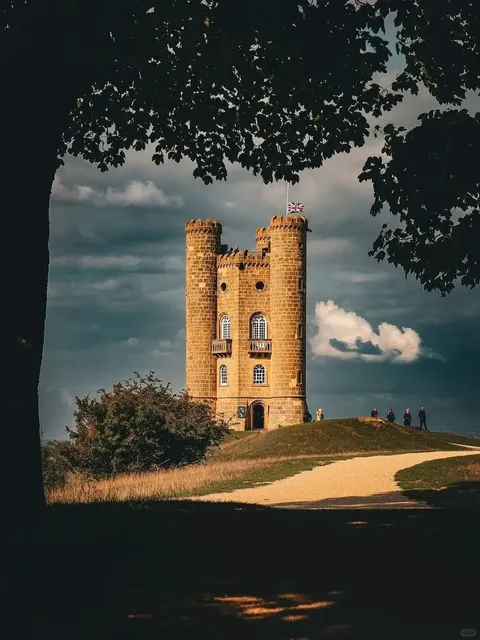
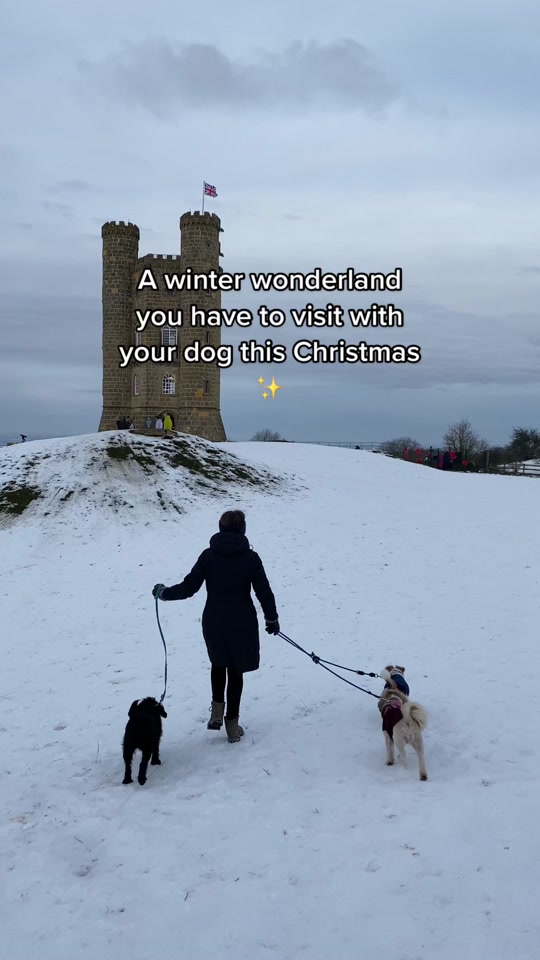
Beautiful #Cotswold Folly, the highest ❤️ castle 🏰 in the Cotswolds. The views are stunning as you look down over the Black ⚫️ Mountains and the #BreconBeacons and to the north ✨️ ♥️ west are the skyscrapers of the Metropolis of Birmingham with the blue 💙 Radisson Blue Hotel in #Chinatown prominent as one of Birmingham's tallest buildings along the sandstone ridge that runs up to the Rotunda THE #Birmingham landmark for tourists and visitors alike. At the top of Broadway Tower it was blowing a gale and very breezy with no mountain range between the Cotswolds and the Russian Urals with the East Anglian plain, the Netherlands and then the central European plains of Germany and Poland 🇵🇱 and then through the Russian Steppes to the Ural Mountains ⛰️. In the paddock directly below Broadway Tower there was a herd of nearly 30 Red Deer 🦌 including one stag with full antlers keeping his harem satisfied. There's also a WW2 or Cold 🥶 War Nuclear Bunker at the #BroadwayTower site and a trip up the Broadway Tower with its magnificent views over Gloucestershire Warwickshire and Worcestershire and down to the Devil 😈 ish depths of the Nuclear Bunker costs £20. There's a nice Cafe and Coffee ☕️ Bar 🍸 at the Broadway Tower which sadly in the 21st Century has NO WiFi!!!! You'd think in this day and age Wifi could be provided in such a Tourist's honeytrap! All in all a great visit followed by a trip to my grandfather's home 🏡 town of Chipping Campden where me Grandad Arthur Lewis Augustus Joseph Merriman a Yeoman English Roman Catholic born in Campden in 1899 and around 1911/12/13 becoming an Arts 🎨 and Crafts Ashbee Silver Apprentice. Arthur could see no prospects for silversmiths in Chipping Campden as the Guild of Arts and Crafts and its founder who's pictured in the Court Barn Museum (£7 entry fee open 10am until 5pm) near to the Church of England church ⛪️ and The Eight Bells public house 🏠 now an expensive Gastropub where Grandad Arthur Merriman used to drink before The Great War. Anyhow Grandad Merriman in that late Edwardian period saw no prospects in silversmithing in Chipping Campden and moved to Birmingham's Jewellery Quarter to work as a silversmith for Eccleston and Hart Jewellers to the rich and well heeled 👠. Then in August 1914 the War to End All Wars: The Great War began and Grandad Arthur full of jingoistic fervour signed to fight the Germans as a 16 year old in 1915 and marched away to war with his fellow soldiers from Birmingham and the Black ⚫️ Country in the Royal Warwickshire Regiment based in Birmingham Barracks. Arthur saw some vicious fighting 😳 and because he'd shot rabbits 🐇 on Chipping Campden farms 🚜 with his trusty .22 rifle he became a sniper in the Royal Warwickshire Regiment and he won 🏆 the Military Medal 🎖 (MM in his Citation 👋) In 1917 at the Battle of Arras Arthur Lewis Augustus Joseph Merriman was gassed and invalided away from the Western Front back to Blighty which probably saved his life. He went back to work again for Mr Eccleston of Eccleston and Hart Bespoke Birmingham Jewellery Quarter ✡️ Jewellers as Mr Eccleston's personal driver (Arthur had learned to drive during the Great War) and body guard. He continued to work with Eccleston and Hart until the Great Depression and Wall 🧱 Street Crash of 1929 when he was thrown out of work as no one could afford Mr Eccleston's expensive bespoke jewellery any more. Arthur managed to get a job with Smethwick based Screw Nut and Bolt 🔩 manufacturers Nettlefolds where Arthur Lewis Augustus Joseph Merriman worked 💪 for over 30 years as a metal tester and Metallurgist until he retired on ill health grounds in 1971 having been gassed in The Great War AND smoking 60 Woodbine cigarettes A-day since 1917. In July 1971 Arthur Lewis Augustus Joseph Merriman was laid to rest after a massive heart ❤️ 💙 💜 attack (no surprise after being gassed & smoking to excess!) & is buried in the Merriman Roman Catholic plot at Quinton Cemetery in Birmingham along with his beloved wife Alice Gwendoline, daughters Maureen & Dorothy Angela...
Read moreWorh a visit. Shame we went on such a miserable day when the Nuclear Bunker wasn't open that day to shelter from the rain! The Tower on top of Beacon Hill dominates the landscape. Didn't realise that this hill is the second highest point in the Cotswolds. The three rooms inside the Tower have been tastefully furnished and decorated. Love the curtains! When we got to the top, it was starting to threaten with rain and gradually visibility of the surrounding countryside was reduced. It must have been breathtaking on a clear day! There were helpful plaques on the walls informing you of the various places you could see ( or not in our case). The short walk through a grass-sodden field gave us a tantalising glimpse of the top surface of the Nuclear Bunker. A herd of deer graze in an area at the foot of the Tower and you get a good view of them through the different shaped windows. We didn't go on the 1km circular walk due to the poor weather which was a shame. There is a lovely cafe and shop on site and a temporary cafe which wasn't open that day. Adequate toilet facilities were available too. Having to pay for parking seemed a bit mean when we were paying to enter and visit the attractions. You can buy a combined ticket to visit the Tower and the Nuclear Bunker. Worth the money to visit, just wished we had had better...
Read moreBroadway Tower is an iconic landmark, on top of the beautiful Cotswolds escarpment, with beautiful views and has enjoyed a colourful history since its conception by Capability Brown over 200 years ago.
The Tower and Park is a family-owned Cotswold destination set within a 50- acre estate of parkland, allowing visitors to experience great English heritage in an inspiring location. Capture the history of the Tower. Cyclist in the area enjoy 2 scenic accents avoiding the main road via Snowshills or Saintbury, ending at either of the tower cafes. a good cafe on an e-bike, relax with a glass of wine over lunch at one of the two cafes,
Broadway Tower was built in 1798 as a Gothic folly to add romance and interest to the landscape for the 6th Earl of Coventry. The 18th century was the age of building and landscaping to create picturesque and fanciful views. Follies were purpose-built "ruins" or mock mediaeval castles. A wealthy landowner with two Worcestershire residences at nearby Spring Hill and Croome Court, the tower could be seen from his residences and was a token of his enduring love for his second wife Barbara St John Bletsoe. Lady Barbara was not only wealthy but described as beautiful, charming, graceful and had a real love of the countryside. The tower is a lasting love token from the Earl to his...
Read more