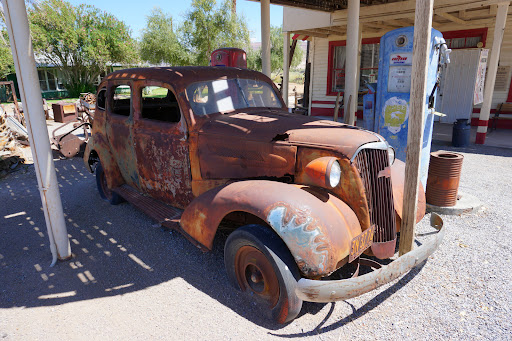
“A small museum with a vast story—where the desert’s human and natural histories converge.”
At first glance, Shoshone is a quiet stop along Highway 127, a place you might pass on your way to Death Valley. But step into the Shoshone Museum, and you’ll find yourself in the middle of an intricate tapestry woven from tens of thousands of years of human adaptation, survival, and ingenuity in one of the most challenging landscapes on Earth.
The exhibits trace the story of the Southern Paiute and Western Shoshone peoples, the first stewards of this desert. From the display cases emerge stone tools, pottery fragments, and woven baskets—each an artifact not just of survival, but of deep environmental knowledge. You learn how the Shoshone and Paiute moved with the seasons, harvesting mesquite beans, hunting small game, and trading across vast desert distances long before European contact.
The museum doesn’t romanticize—it contextualizes. Panels explain how Spanish and later American incursions disrupted traditional lifeways, bringing mining, ranching, and railroads, along with disease and displacement. Yet, the Shoshone people endured, adapting their traditions to new realities.
The town of Shoshone itself was founded in 1910 by Ralph Jacobus “Dad” Fairbanks, a prominent Death Valley entrepreneur. Archival photographs in the museum capture the raw energy of early 20th-century mining camps—tent cities in a sea of sagebrush, wooden storefronts standing against wind and sand, and the arrival of the Tonopah & Tidewater Railroad, which linked the desert to markets far away.
The mining exhibits tell of silver, lead, borax, and talc—the minerals that lured prospectors into this harsh country. But they also tell of busts as well as booms, and of ghost towns reclaimed by silence and sand.
The museum’s strength lies in showing that this place is not “empty,” but profoundly alive—culturally and ecologically. The anthropological displays reveal the symbiotic relationship between humans and this environment: how basketry techniques mirrored the patterns of local plants; how rock art sites marked both sacred and practical knowledge; how desert springs became social and trade hubs for thousands of years.
An entire section is devoted to Mojave Desert ecology—the mesquite groves, the endangered pupfish of nearby springs, and the delicate balance that sustained human life here. It’s a reminder that cultural history and natural history are inseparable in the desert.
The museum also serves as a local archive and cultural hub. Contemporary Shoshone voices are included—photos of elders, oral histories, and ongoing projects to preserve language and traditions. In this way, the museum resists the common trap of freezing Indigenous people in the past, instead showing an unbroken continuum of life in the Amargosa region.
The Shoshone Museum isn’t grand in scale, but its value lies in the depth of its narrative. It tells a story that spans from ancient desert campsites to the present day, revealing how geology, ecology, and human resilience shaped each other over millennia.
For travelers rushing toward the spectacle of Death Valley, this small building offers something quieter but no less important: context. It is here you understand that every hot wind, every spring, and every abandoned mine is part of a human story that stretches far beyond what the...
Read more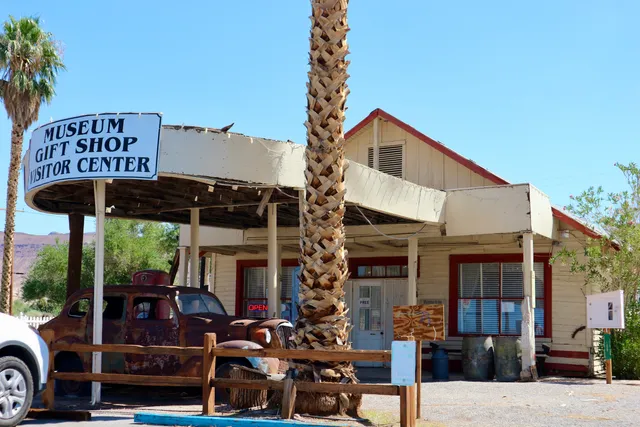
 Learn more insights from Wanderboat AI.