San Diego International Airport feels like California in architectural crisis. The 57-year-old Terminal 1 groans under passenger loads five times its original design, while construction chaos turns simple drop-offs into endurance tests. Yet beneath the dust and delays lies America's most ambitious airport reinvention.
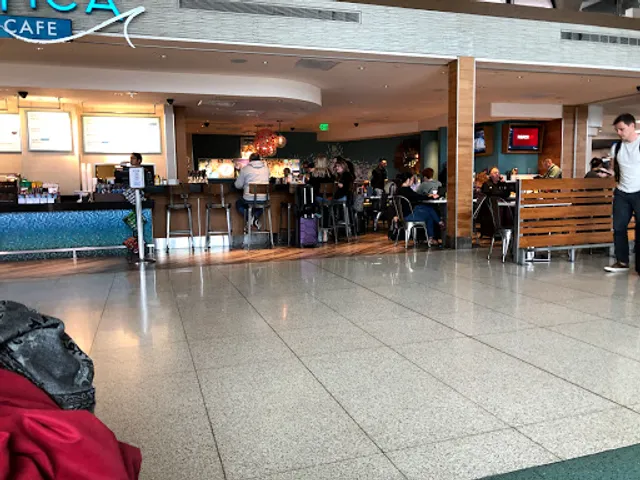
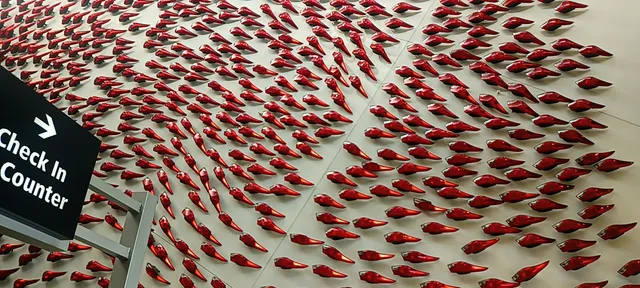
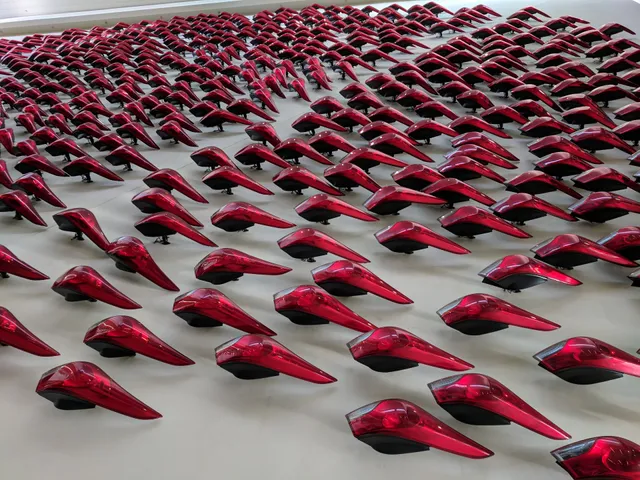
Walking through the current terminals reveals both the problem and promise. Terminal 1's cramped security lines and worn surfaces betray a facility built for 2.5 million annual passengers that now serves over 15 million. The newer Terminal 2 West, completed in 2013, offers a preview of what's possible: soaring 54-foot columns designed to echo airplane wings, sustainable features that earned the world's first LEED Platinum airport certification, and a 700-foot light installation that transforms the departure hall into kinetic art.
The $3.4 billion Terminal 1 replacement, designed by Gensler as a "Glassy Garden Pavilion," promises to resolve these contradictions. The first 19 gates open in summer 2025, featuring outdoor dining terraces overlooking San Diego Bay and underground fuel systems eliminating traditional refueling trucks. By 2028, 30 gates will replace the original terminal entirely.
This transformation addresses a uniquely San Diego problem: operating America's busiest single-runway airport in a constrained urban footprint. Unlike sprawling LAX or multi-runway SFO, Lindbergh Field must maximize every square foot between downtown skyscrapers and the Pacific approach path.
The design challenges are formidable. HNTB Corporation's architects on Terminal 2 matched existing inclined columns while introducing sustainable innovations, working night shifts for three years to avoid disrupting operations. The new Terminal 1 faces similar constraints, building eastward while maintaining full airport functionality.
Current passenger satisfaction reflects this transitional pain. J.D. Power ranked San Diego 21st among 27 large North American airports in 2024, with construction delays driving negative reviews. Travelers endure traffic congestion from 4-6:15 AM, 9:30 AM-12:30 PM, and 8-10 PM as roadways reshape around the rising terminal.
Yet the architectural ambition is undeniable. Gensler's pavilion concept emphasizes California's indoor-outdoor lifestyle through extensive glazing and bay views. Sustainability features include rainwater harvesting and electric vehicle infrastructure, while space is reserved for future rail connections to downtown.
The risk is substantial: building a $3.4 billion terminal while maintaining operations challenges even experienced airport architects. Turner-Flatiron's design-build approach mirrors successful Terminal 2 delivery, but the scale is unprecedented.
Success would transform more than passenger experience. The project represents California's environmental leadership in infrastructure, demonstrating how airports can embrace sustainability without sacrificing functionality.
Charles Lindbergh inspired San Diego's first airport in 1928. Nearly a century later, his namesake field attempts another aviation first: proving major airports can rebuild themselves while honoring both environmental responsibility and architectural ambition. For now, patience remains the price...
Read moreSan Diego California airport My husband and I went to California Oceanside for a week (originally planned from August 23rd to August 30th )We really couldn't afford a week but we made it work. We thought we'll just have to squeak by when we get back to Minnesota for a little while ,so we thought, we had a great time. Oceanside is awesome. Unfortunately I lost my Minnesota driver's license, on the day that we left, we left 3 hours early because we knew that there would be some extra work to do because of this situation, we got there,Told them ,they said come back 1 hour before our flight is planned to leave and we will get you right in, So we hung out outside the airport until then because we couldn't go in, and we didn't have any money to spend, Unfortunately when we came back that person had gone on break and didn't tell anybody about us and our situation so we had to start over, first off I need to explain something that I'm not proud of so I never tell anybody. But here it is. I have dyslexia I can barely read and write, you know before they came out with ( no child left behind )they had already just left me behind, so when they handed me the paperwork to fill out I immediately handed it to my husband because that's what I do to get by in life, and I don't think they liked that very much. So I filled it out. I sat down in the chair. While the officer went through my large fanny pack and the officer asked me if there's anything sharp in here. I said I have my keys in there attached to my mace or pepper spray. Whatever it is ,my protection and 5 seconds later he's saying you have mace. I said yes. Throw it away. I figured I'd just buy more when I get back to Minnesota. No big deal so I'm still sitting there and I hear over the loudspeaker. My husband and my name being called our plane's leaving and our luggage with my acid reflux medicine is in it. They didn't hold the plane, we missed our flight. They told us to come back 2 days later. So we're stranded in San Diego, California. Not that that's a horrible place to be stranded. We still had fun but the expense of $900 for the hotel we stayed at. The only place we could find with such a short notice. Plus we had to buy toothbrushes, toothpaste, a day's worth of clothing for both of us so we can wash the clothes that we were wearing, food, everything that was shipped back to Minnesota without us. We made it back to the airport 2 Days later as instructed and the wonderful lady that helped me out was so absolutely wonderful. Most wonderful person I've ever met. I'm so sorry I forgot her name. I did ask for her to write it down because I know how my brain works and how bad my memory is so unfortunately I forgotten her beautiful name. Thanks to her. We made it back to Minnesota. Thank you thank you...
Read moreMy love affair with San Diego International Airport (SAN) is simple yet profound: it's a testament to the idea that bigger isn't always better. In a world of sprawling, chaotic air hubs, SAN offers a refreshing intimacy that makes travel genuinely enjoyable. First and foremost, the cleanliness is impeccable. From the moment I step inside, there's a palpable sense of order and hygiene. Sparkling floors, pristine restrooms, and well-maintained seating areas create an inviting atmosphere that immediately puts me at ease. It's a small detail, perhaps, but it speaks volumes about the airport's commitment to passenger comfort. But it's the size that truly steals my heart. SAN is wonderfully, gloriously small. There's no endless trekking between terminals, no labyrinthine corridors to navigate. Gates are easily accessible, security lines, while present, often move with surprising efficiency, and baggage claim is a breeze. This compact design transforms the often-stressful airport experience into a calm, almost serene, one. I can arrive closer to my departure time, knowing I won't be rushing or getting lost. The ease of navigating SAN extends to everything – parking is straightforward, and ground transportation options are readily available just outside. It feels less like a major international airport and more like a well-oiled, highly efficient local hub. This small footprint also contributes to a more relaxed ambiance. There's a quieter hum compared to the cacophony of larger airports, making it easier to grab a coffee, catch up on emails, or simply people-watch without feeling overwhelmed. Ultimately, flying out of San Diego International Airport isn't just about getting from point A to point B; it's about starting my journey on a positive note. The cleanliness and the manageable size combine to create an environment that feels less like a necessary evil of travel and more like a pleasant prelude to my destination. It’s a small airport with a big impact on my...
Read more