The Huntington Library: California’s Answer to the Gold Coast
Henry Huntington built his San Marino estate the way the Vanderbilts, Phippses, and Pratts built along Long Island’s North Shore. Out of genuine passion. For great art. For scholarship. For the belief that architecture and landscape together could enhance a deeply lived life. These were personal worlds, built carefully and deliberately, with confidence, by Americans who had made the Grand Tour, studied European museums and gardens firsthand, and returned home transformed. They brought back painting, sculpture, books, architectural ideas, garden traditions, and the conviction that these things mattered enough to live with every day.
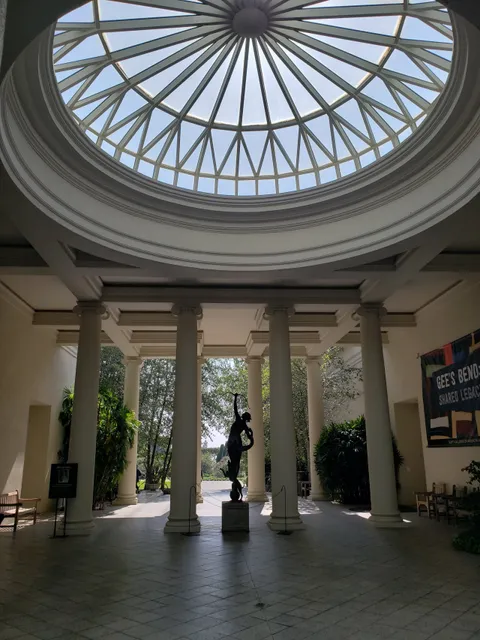
The Beaux Arts mansion announces its pedigree immediately. Inside, Gainsborough’s Blue Boy hangs near Lawrence’s Pinkie. The boy in shimmering blue satin. The girl in translucent rose that seems to catch the wind. There is an energy in them and between them. The energy of youth itself. Boy and girl poised at the threshold of life, with all its promise still intact. Recent conservation work revealed what close study had long suggested: Gainsborough built the painting in complex layers, reworking compositions, adjusting pigments, pursuing optical effects with extraordinary care. This is collecting at the highest level, driven by recognition rather than accumulation.
Step outside and California speaks in a different voice. Camellias grow as full trees beneath open sky. Azaleas spread in drifts of saturated magenta. Palms rise above the camellia walks. This is gardening freed from winter. Long Island offers different beauty: spring bulbs erupting after months of restraint, autumn transforming the landscape to red and gold, water alive with ducks and egrets. At the Huntington, hummingbirds hover over flowers that never stop. Butterflies linger because nothing sends them away. Geography determines what each place can become.
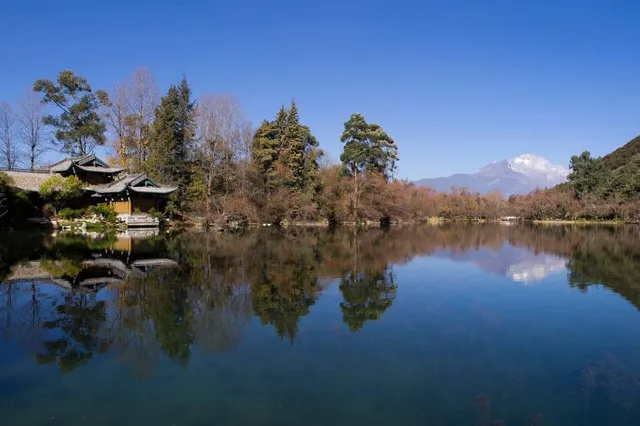
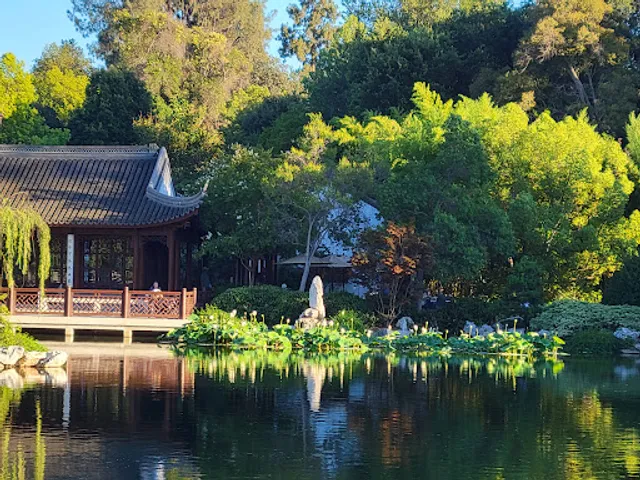
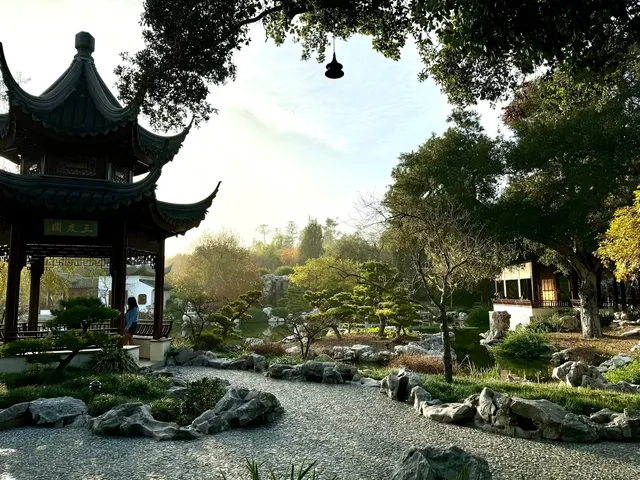
The Chinese Garden reveals what Pacific proximity made possible. The Taihu rocks are authentic stones from Lake Tai, shaped by centuries of water erosion and selected according to aesthetic principles refined over millennia. The pavilions use traditional timber framing that recalls the same reverence for craft found at Planting Fields’ Coe Hall. Different traditions. The same understanding that wood should be worked with intelligence and respect. Behind it all, the San Gabriel Mountains complete the composition.
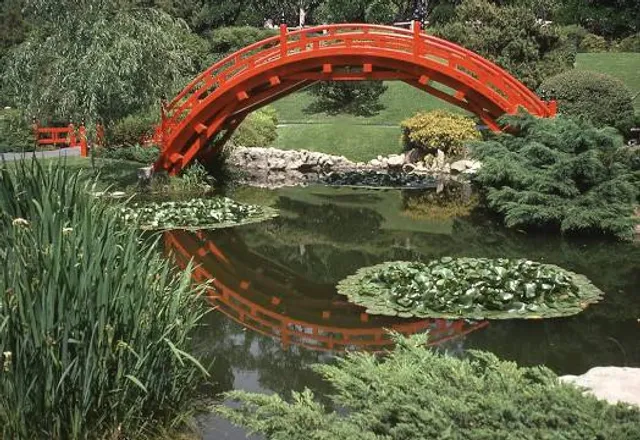
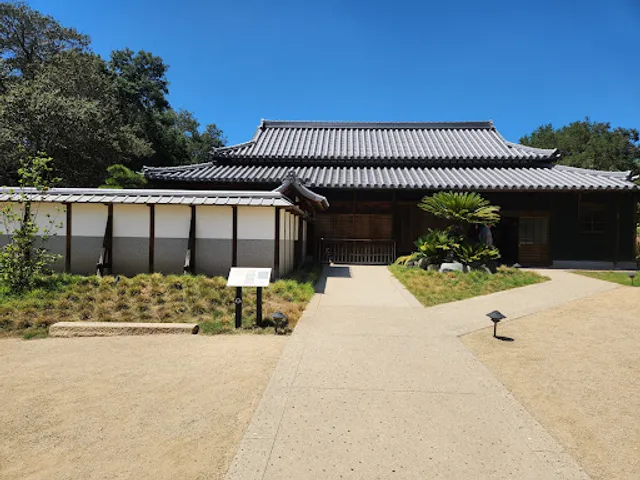
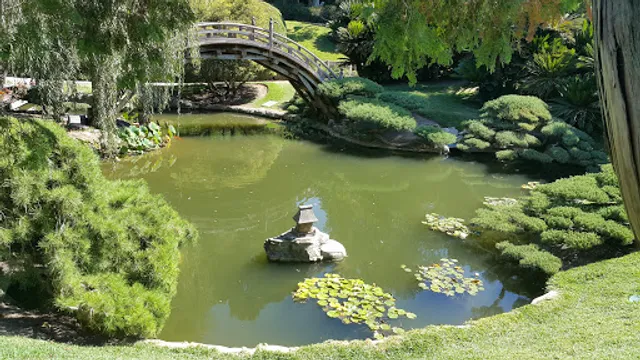
The Japanese Garden extends this seriousness. The arched bridge doubles itself in still water. At the summit, the zen garden strips everything to essence. Freshly raked gravel. Stones placed with absolute restraint. The calm you feel standing there is not accidental. It is the result of philosophy refined over centuries.
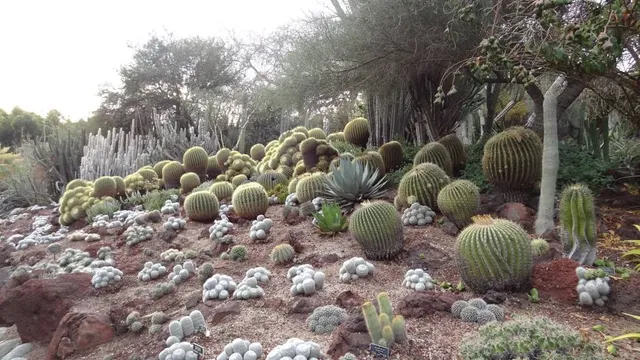
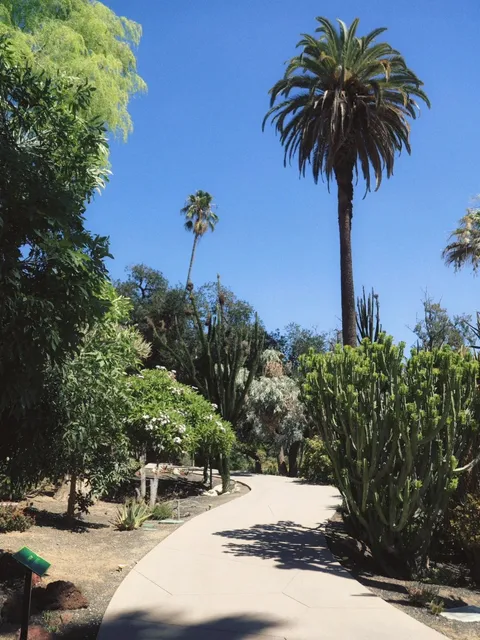
The desert garden may be the Huntington’s most purely Californian expression. Aloes rise in architectural spires. Cacti achieve monumental scale. Plants thriving in the conditions they evolved for, expressing their full character without compromise.
These men assembled estates with seriousness and care that has never been repeated and cannot be replaced. Stand there and you feel the gratitude. How fortunate we are that they lived when they did, that they built what they built, that they cared enough to get every detail right. What began as personal expressions of taste now survives as public trust, elevating our lives, our knowledge, and our appreciation.
They never asked how to create a cultural institution. They asked how to live well. Only later did history intervene. Preservation followed passion.
These places matter because they preserve something that cannot be recreated. A moment when ambition, taste, patience, and resources aligned. The unhurried accumulation of the finest things. The discipline to get every detail right.
What we inherit is responsibility and privilege. To preserve what they made. To stand where they stood. To see what they saw.
Both coasts offer that gift. Do yourself a favor. Set aside the time. Visit them while they still exist.
My first visit to The Huntington Library, Art Museum, and Botanical Gardens on March 5, 2026 turned into a nightmare due to an inconsistent and unnecessarily confrontational check-in process. As someone who had just donated to this institution a week earlier, I deeply regret that decision after this experience.
Our group had seven reservation passes for the free day, totaling 35 people. About 30 people checked in at Window 5, where they were all issued wristbands. I arrived slightly behind the group and checked in my party of five at Window 6. The staff member there told me that using the QR code at the second checkpoint would be sufficient for entry.
However, since the group of 30 had received wristbands, a well-intentioned person mistakenly passed two wristbands to members of my group of five. Realizing the mistake, she asked for them back. Unfortunately, as everyone knows, once these adhesive wristbands are fastened, they cannot be removed intact.
I therefore returned to Window 6 and politely asked if the staff member could issue five wristbands to my group so that I could return the two that had been mistakenly given to us. No matter how I tried to explain the situation, she refused and insisted that we simply use the QR code. She suggested that I text the QR code to the other two people, but I do not know everyone in the group, do not have everyone’s phone number, and did not even know which two people had not received wristbands.
I further explained that some people in our group planned to leave for lunch later and return separately, and I might not be able to accompany them. Wristbands would make re-entry much easier and keep our group consistent with the rest of our party. Despite this, she still refused to help.
At that point I became frustrated and asked to speak with a manager. The manager happened to be at the window that had issued wristbands to the other 30 people, yet he also refused to assist or resolve the inconsistency. When I asked for his name so that I could submit a formal complaint, he provided his name, but the staff member at Window 6 refused to identify herself.
I attempted to take a photo simply so I could identify the correct staff member when filing a complaint, but she avoided the camera, so I was not even able to take a single photo. At that point, the manager stated that he would call security.
Security did arrive. After I explained the situation, they initially appeared willing to help resolve it, specifically by trying to obtain wristbands for us. I knew we could enter at any time using the QR code, but decided to wait for the wristbands.
However, after waiting 15–20 minutes, while the rest of our group had already entered the gardens and only four of us remained outside, I told the security staff that we were tired of waiting and would simply enter using the QR code.
Instead, I was told that because of my behavior, we would not be allowed to enter at all.
This outcome was shocking and extremely frustrating. Because of an inconsistent and arbitrary wristband policy — or possibly simply a display of authority — our group wasted a 120-mile round-trip drive and significant preparation time, only to be denied entry.
While waiting, one member of our group asked one of the security officers why this happened and was told that a group of 35 should have called ahead. However, we were not a single group reservation. We had seven separate reservations, each QR code allowing five people, exactly as the system permits. We did not know about wristbands, much less request them in advance, yet they were issued to 30 members of our party but refused to the remaining five. This inconsistency makes no sense.
This experience completely ruined our day. I will be contacting my credit card company to reverse my donation and will not be returning in the future. Unless the upper management improves the check in process to be consistent, reasonable and friendly.
I came here with my parents on Good Friday. We purchased tickets in advance online and arrived just after 1pm. The line to get in was out the door and ridiculously long. There was a person (I'm assuming a volunteer?) Out front answering questions, but he wasn't directing us on what to do, if we had to stand in that line to purchase tickets or what. They could used more queuing stantions and signage so the line didn't cross a driving lane in the parking lot... not very safe.
After waiting in line for AGES in the direct sun, we got to a ticket counter to scan the QR code from our tickets we purchased ahead of time and that's literally it. Then we had to get those same tickets scanned again before entering the facility. I think the first line and scanning was a HUGE waste of time and patience because what they did at that counter was done later as you enter past the shop and restaurant. Super inefficient and completely unnecessary. Whoever thought of this process needs to be fired immediately and rethink their life choices. Why should I have to stand in line at the ticket counter when I already bought tickets? And why scan my tickets there when they're just going to scan them again at a mobile cart anyway? They didn't even give any information at the ticket counter. It was such a stupid process. Seriously, if the gardens weren't so spectacular, my overall rating would be very different. Ok, rant over... now onto the good stuff!
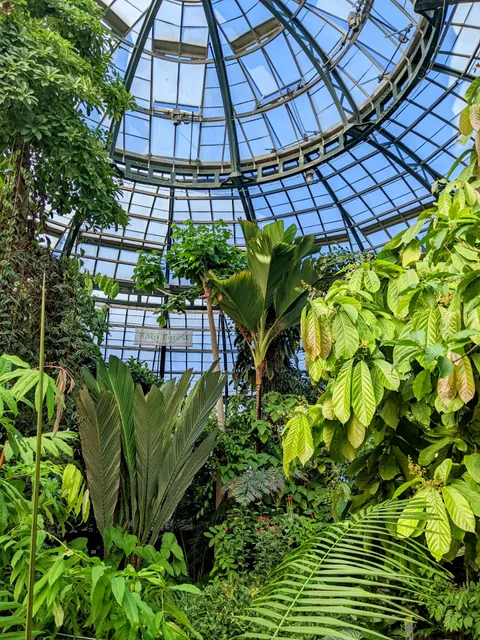
We decided to stick to the gardens this visit and bypassed the art galleries. We wandered into the camelia garden and while we were a little late for peak bloom, there were still plenty of very pretty flowers. We wandered into what I think was the Shakespeare garden (maybe?) and then headed to the conservatory. My dad is super into orchids and he had read about a huge one they have and really wanted to check out their orchid collection, but the conservatory we assume the orchids were kept in was closed. Boo. But... the huge orchid he really wanted to see was on display in the Chinese garden and we happened to stumble upon it (again, they need better information on where to find things). Hooray!
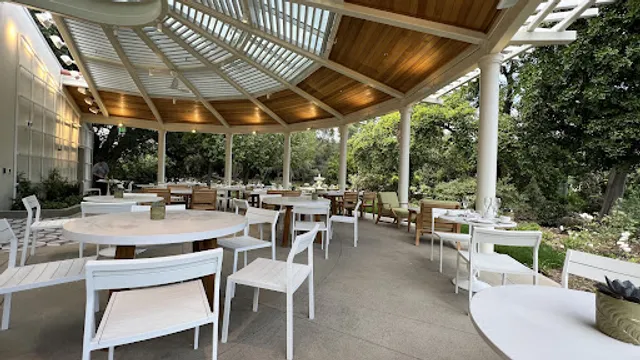
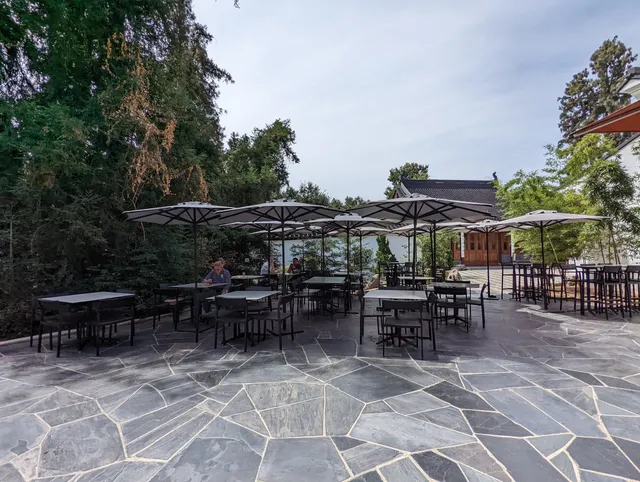
The gem of this place is the Chinese garden. It is spectacular! The architecture and landscaping are incredible and could transform you to Shanghai. I wish there was more information available to tell you what everything symbolized. There was a pamphlet box near the entrance, but only a couple of pamphlets in Chinese were left, so maybe they typically have information available. Photos do not do the Chinese garden justice. It is really beautiful here. There is also a restaurant and a grab & go place where we got some much-needed cold water.
The Japanese garden is nice, but a little sad in comparison with the Chinese garden and other Japanese gardens I've been to. The two big features are the pond with the half-moon bridge and weeping willow, and the sand garden. I feel like they could do more with the ceremonial tea house, but it was nice that they included one, as is customary in most gardens in Japan. The bonzai collection (in both the Japanese and Chinese gardens) is outstanding! I wish the signage was a little better. It would be really cool to know the type of tree and how old it is.
My other favorite garden was the desert garden. So many succulents and cacti were in bloom! It was beautifully done and very nice to wander around before heading out.
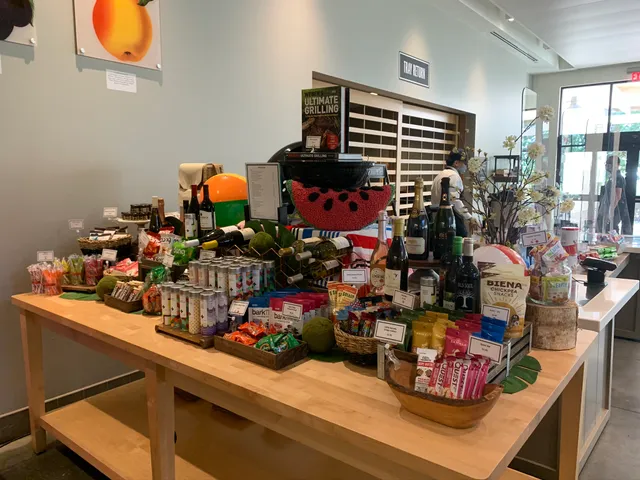
Their gift shop is really great. Lots of great finds - something for everyone! It was clean and well-organized.
Overall, a very nice day. If they fixed the entrance line situation it would've been a full 5 stars.