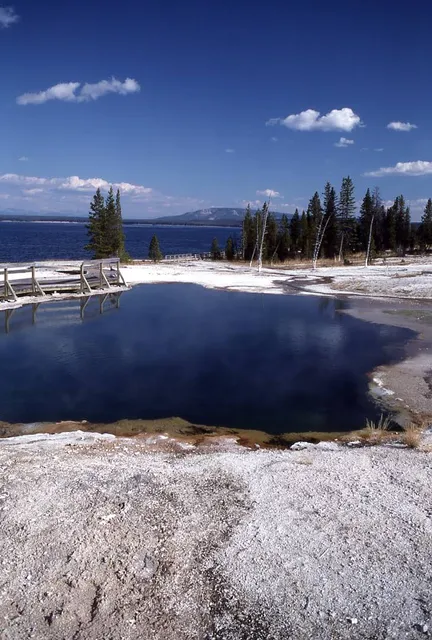
While many of the park's features had been described by mountain men and other explorers, the West Thumb area was the first Yellowstone feature to be written about in a publication. Daniel T. Potts, a trapper in the Yellowstone region in the 1820s, wrote a letter to his brother in Philadelphia, Pennsylvania, regarding his experiences in this area.
The letter was later corrected for punctuation and spelling and printed in the Philadelphia Gazette on September 27, 1827. Part of the letter describing the northern part of the West Thumb Geyser Basin, which is currently known as "Potts Basin" follows:
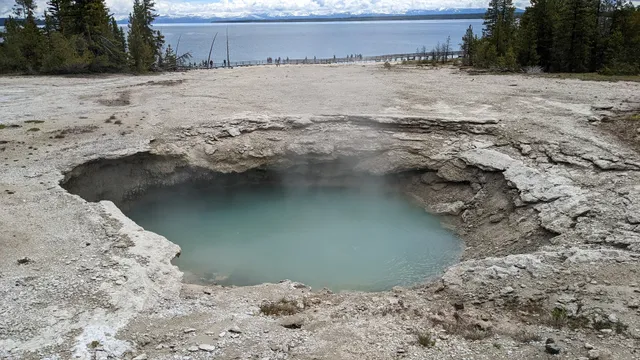
...on the south borders of this lake is a number of hot and boiling springs some of water and others of most beautiful fine clay and resembles that of a mush pot and throws its particles to the immense height of from twenty to thirty feet in height[.] The clay is white and of a pink and water appears fathomless as it appears to be entirely hollow under neath. There is also a number of places where the pure sulfur is sent forth in abundance[.] One of our men visited one of those whilst taking his recreation[.] There at an instant the earth began a tremendous trembling and he with difficulty made his escape when an explosion took place resembling that of thunder. During our stay in that quarter I heard it every day[.] In 1869, the first scientific expedition to explore the Yellowstone area, the Folsom- Cook-Peterson Expedition, visited the West Thumb Geyser Basin. David Folsom described the area as follows:
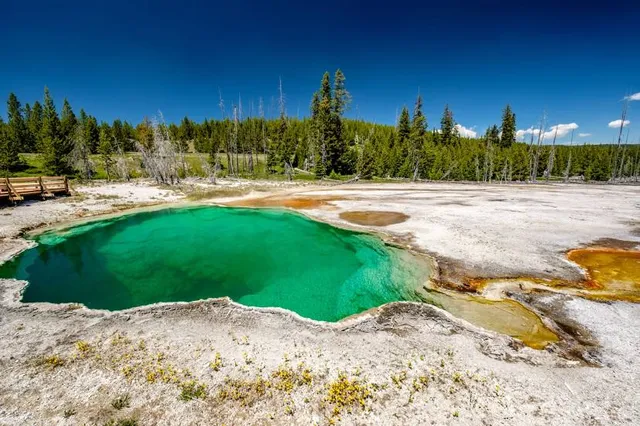
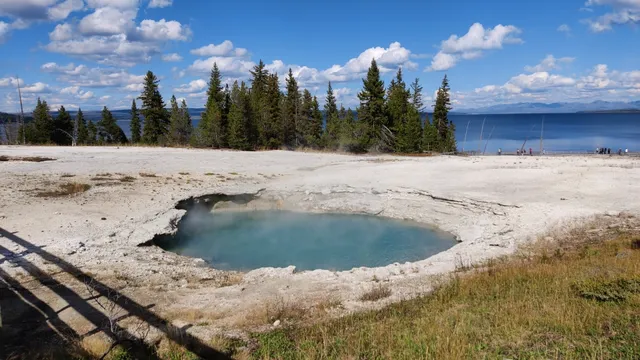
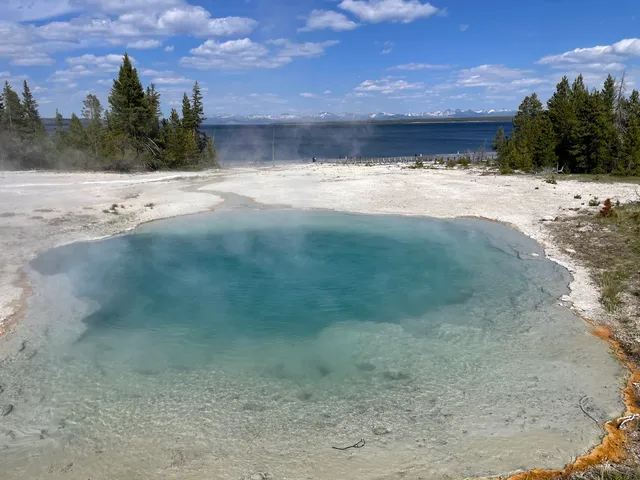
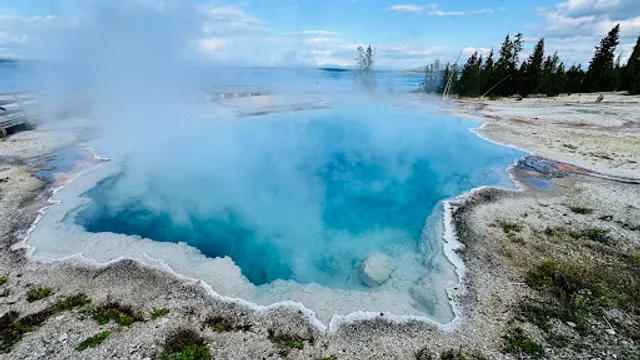
Among these were springs differing from any we had previously seen. They were situated along the shore for a distance of two miles, extending back from it about five hundred yards and into the lake perhaps as many feet. There were several hundred springs here, varying in size from miniature fountains to pools or wells seventy-five feet in diameter and of great depth. The water had a pale violet tinge, and was very clear, enabling us to discern small objects fifty or sixty feet below the surface. A small cluster of mud springs near by claimed our attention. These were filled with mud, resembling thick paint of the finest quality, differing in color from pure white to the various shades of yellow, pink, red and violet. During the afternoon they threw mud to the height of fifteen feet. . . . Historically, visitors travelling to Yellowstone would arrive at West Thumb via stagecoach from the Old Faithful area. At West Thumb, they had the choice of continuing on the dusty, bumpy stagecoach or boarding the steamship "Zillah" to continue the journey to the Lake Hotel. The boat dock was located near the south end of the basin near Lakeside Spring.
The West Thumb area used to be the site of a large campground, cabins, a photo shop, a cafeteria, and a gas station. This development was located immediately next to the geyser basin with the park road passing between the two. In an effort to further protect the scenic quality and the very resource that visitors were coming to see, the National Park Service removed this development...
Read moreYellowstone's geysers are an awe-inspiring natural wonder that showcases the unique and breathtaking beauty of our planet. The geysers in Yellowstone National Park are unlike anything else you'll find on Earth. Witnessing their eruptions is a truly mesmerizing experience that reminds us of the incredible power and geological activity beneath our feet.
The variety of geysers in Yellowstone is remarkable, each with its own distinct characteristics and eruption patterns. From the iconic Old Faithful to lesser-known gems like Grand Prismatic Spring, every geyser offers a unique spectacle that leaves visitors in awe.
The vibrant colors, swirling steam, and bubbling waters create a surreal landscape that feels like stepping into a dream. The sight of a geyser erupting, shooting water and steam high into the air, is nothing short of magical.
Beyond their beauty, geysers play a crucial role in the ecological balance of the park. They provide habitats for unique microbial life and contribute to the park's overall geothermal system. Yellowstone's geysers are a living testament to the power and wonders of nature.
Visiting Yellowstone's geysers is an unforgettable experience that reminds us of the Earth's incredible natural diversity and the forces that shape our world. It's a place where you can witness the extraordinary power and beauty of geothermal activity. For anyone seeking a truly unique and captivating encounter with nature, Yellowstone's geysers are an...
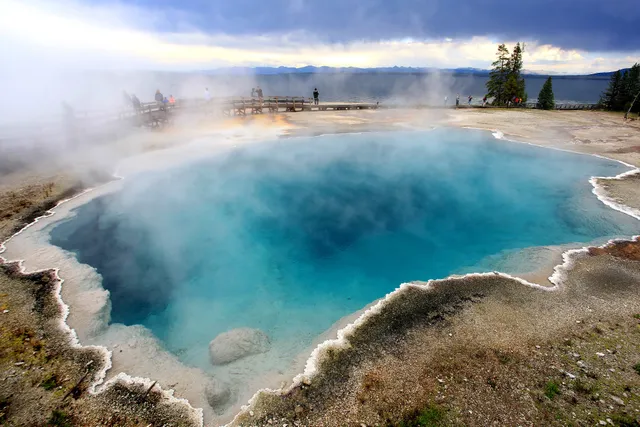
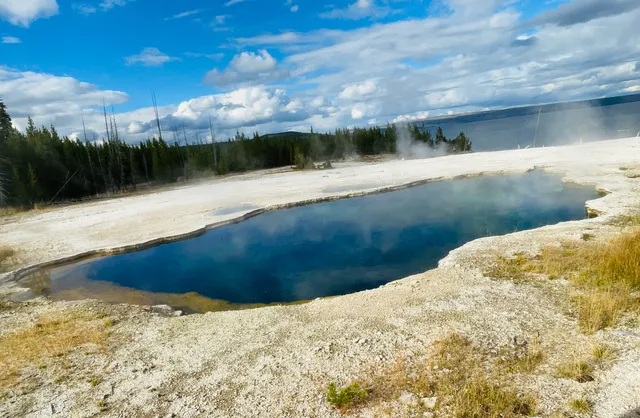
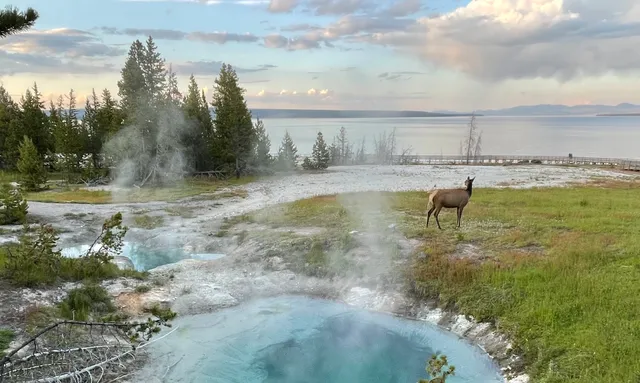
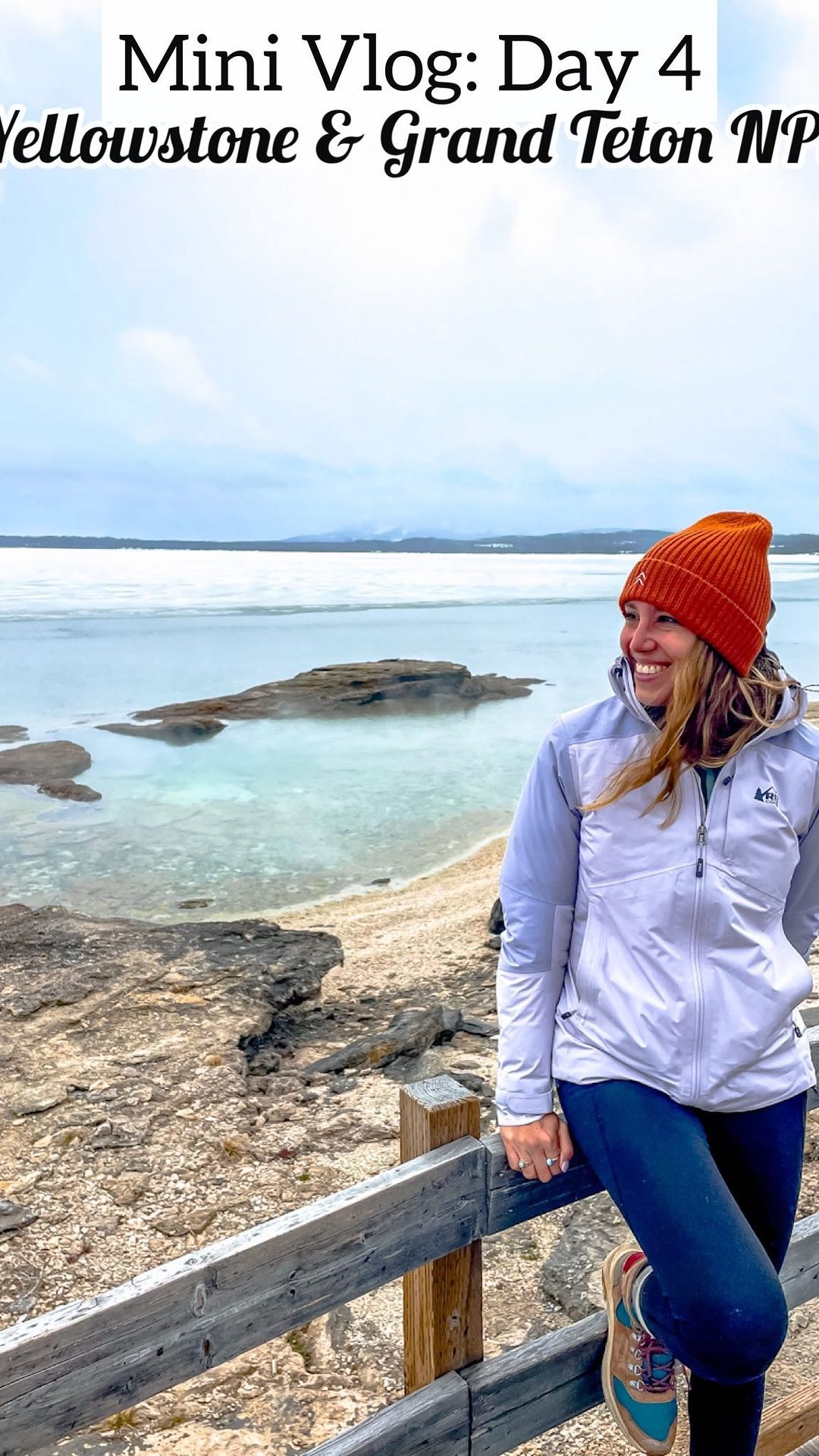
Read moreThumb Geyser at Yellowstone National Park is a mesmerizing natural wonder that showcases the park's geothermal activity in a unique and intimate setting. Located on the shores of Yellowstone Lake, the geyser offers stunning views where the vibrant blue water contrasts beautifully with the surrounding landscape. The geyser basin itself is smaller than some of Yellowstone's more famous sites, but this adds to its charm, providing a more tranquil and personal experience.
The walk along the boardwalks is easy and accessible, making it perfect for visitors of all ages. You can see a variety of thermal features, including hot springs, mud pots, and, of course, the geysers themselves. The steam rising from the lake's edge creates an almost otherworldly atmosphere, especially in the early morning or late afternoon light.
Overall, Thumb Geyser is a must-visit spot in Yellowstone. It offers a unique blend of geothermal beauty and lakeside serenity that you won't find anywhere else...
Read more