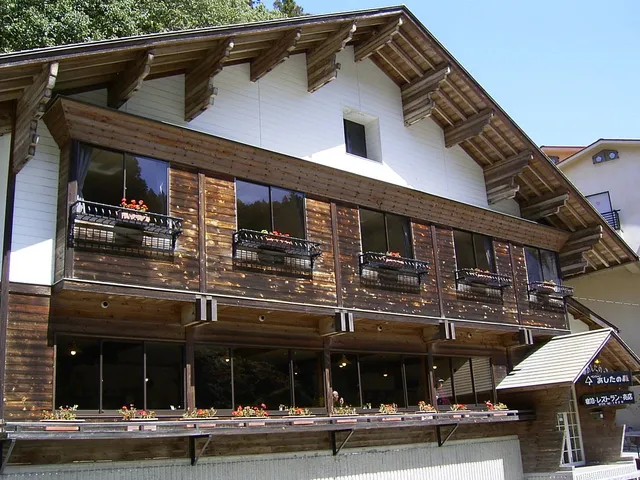
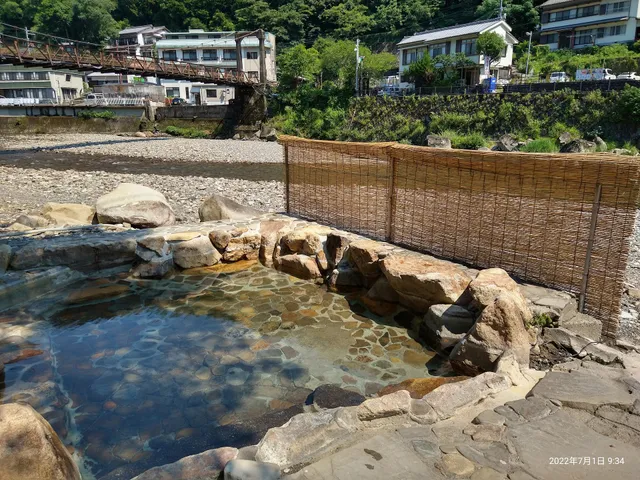
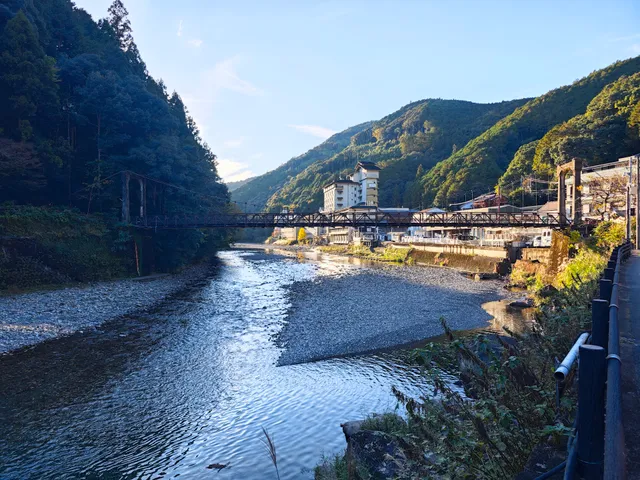
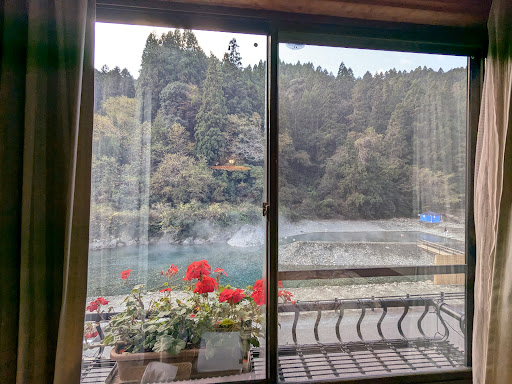
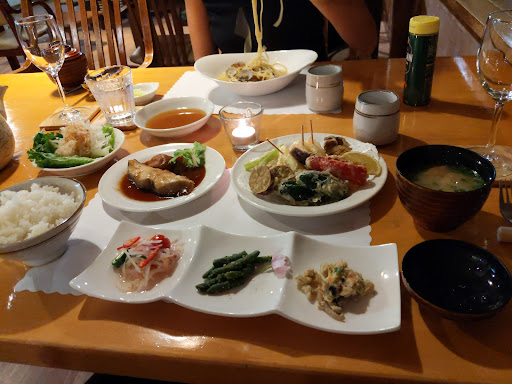
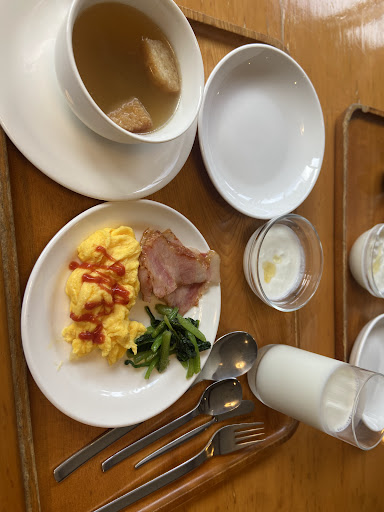
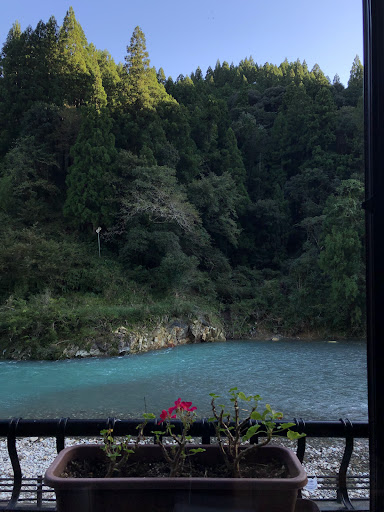
Kawayu Onsen is a beautiful village in the Kii Mountains of Wakayama, right on the sacred walking trails of the Kumanokodo – long known as a place of pilgrimage for Japanese and now very popular hiking for tourists from around the world. Situated on the Oto River, Kawayu Onsen has a range of accommodation, but for me the place to stay is the family run small hotel (or pension), Ashitanomori.||At Ashitanomori the owners openly welcome you and treat you like family. The owner is Hiromasa Kurisu, a spritely 7th generation local octogenarian who still works around 7 days of each week. You may think owning a pension would keep Hiromasa and his family busy enough, but he also is a forester and a farmer (tea, rice, fruit, vegetables), owning several hundred acres of forest and agricultural land. This is a classic story in rural Japan, where most younger people leave the country for white collar city jobs, leaving the older generation to maintain the family farms. With 67% of Japan’s land mass being forest and mountains (much of which is astonishingly beautiful), it’s staggering to know that 94% of the population of 128 million people now live in cities.||The earthiness of Ashitanomori goes to the heart of a traditional Japan somewhat lost now in the neon glitz of the big cities. Hiromasa built the pension himself out of his own timber, he and his wonderful wife Mutsuko, sons Kazuhiro and Kohei, and daughter-in-law Megumi, prepare and serve delicious, fresh food. Much of it is grown by themselves or their neighbours. Their home grown, picked and dried tea is also to die for. ||Kawayu Onsen is a long village, set along the Oto River, which flows through a small but lovely, densely forested valley. Ashitanomori overlooks the river and in winter sits directly opposite Senninburo, a large natural hot spring bath (onsen) adjacent to the river that is open to the public, usually between December and March. The river at that time is very cold however is fine for a swim on warm summer’s day, if a little fresh. I have stayed at Ashitanomori in winter and summer, and each season offers equally distinct wonderful travel experiences. At any time of year you can borrow an Ashitanomori shovel and dig your own onsen along the edge of the river. The hot water rises through the smooth river stones and you plonk yourself in and watch the valley’s resident eagles soar in the sky above.||If you prefer a private onsen, Ashitanomori has two that are available all year around and can even accommodate a family of four.||The bedrooms are also earthy, very comfortable and welcoming at the end of a long day’s visiting shrines and temples while hiking along the Kumanokodo. There are no private bathrooms or toilets, but as the pension only accommodates a small number of people this is never an issue. There are dedicated toilets for men and and women. Everything is clean and well presented, and of course Hiromasa’s hands have placed every piece of timber in the place. There is a washing machine and dryer, located outside a window on the roof towards the back of the building. It’s not as treacherous as it sounds, more a clever use of space and there are railings for safety. But at 198cm I do struggle slightly to climb the stepladder and get through the window onto the roof, always scratching my back or bumping my head! But hey, we all need to suffer and earn our clean clothes occasionally.||Hiromasa and his family are more than willing to help guests with any of their arrangements, often driving you to the top of a mountain for a sunset or to show you the family forest or rice plantings. ||Staying only one night at Ashitanomori is just not enough if you want to immerse yourself into the region that is known as “the spiritual heart of Japan”, I would suggest a minimum of two nights or even more. If you’re doing an extended walk on the Kumanokodo then you are likely soaking up the Kii Mountains pretty well, but this pension and its owners are very special, and you will come away all the better for it. ||After three stays at Ashitanomori I have noticed something interesting. Invariably the guests become friends and keep in touch, such is the warmth of the place. This has occurred for me and my family every time. In fact I was so taken with Hiromasa when I first met him I asked if I could return the following year to make a documentary film about him (at my own expense). I don’t speak Japanese but I managed to shoot the film (which was another great experience) with translation provided by a great friend, Tomomi, and on my most recent visit I was able to surprise Hiromasa with the finished DVD. ||If you want to get a genuine insight into rural life in Japan today, enjoy the warmest hospitality, onsens, food and stay in a beautiful location, visit Kawayu Onsen and stay at...
Read moreKawayu Onsen is a beautiful village in the Kii Mountains of Wakayama, right on the sacred walking trails of the Kumanokodo – long known as a place of pilgrimage for Japanese and now very popular hiking for tourists from around the world. Situated on the Oto River, Kawayu Onsen has a range of accommodation, but for me the place to stay is the family run small hotel (or pension), Ashitanomori.||At Ashitanomori the owners openly welcome you and treat you like family. The owner is Hiromasa Kurisu, a spritely 7th generation local octogenarian who still works around 7 days of each week. You may think owning a pension would keep Hiromasa and his family busy enough, but he also is a forester and a farmer (tea, rice, fruit, vegetables), owning several hundred acres of forest and agricultural land. This is a classic story in rural Japan, where most younger people leave the country for white collar city jobs, leaving the older generation to maintain the family farms. With 67% of Japan’s land mass being forest and mountains (much of which is astonishingly beautiful), it’s staggering to know that 94% of the population of 128 million people now live in cities.||The earthiness of Ashitanomori goes to the heart of a traditional Japan somewhat lost now in the neon glitz of the big cities. Hiromasa built the pension himself out of his own timber, he and his wonderful wife Mutsuko, sons Kazuhiro and Kohei, and daughter-in-law Megumi, prepare and serve delicious, fresh food. Much of it is grown by themselves or their neighbours. Their home grown, picked and dried tea is also to die for. ||Kawayu Onsen is a long village, set along the Oto River, which flows through a small but lovely, densely forested valley. Ashitanomori overlooks the river and in winter sits directly opposite Senninburo, a large natural hot spring bath (onsen) adjacent to the river that is open to the public, usually between December and March. The river at that time is very cold however is fine for a swim on warm summer’s day, if a little fresh. I have stayed at Ashitanomori in winter and summer, and each season offers equally distinct wonderful travel experiences. At any time of year you can borrow an Ashitanomori shovel and dig your own onsen along the edge of the river. The hot water rises through the smooth river stones and you plonk yourself in and watch the valley’s resident eagles soar in the sky above.||If you prefer a private onsen, Ashitanomori has two that are available all year around and can even accommodate a family of four.||The bedrooms are also earthy, very comfortable and welcoming at the end of a long day’s visiting shrines and temples while hiking along the Kumanokodo. There are no private bathrooms or toilets, but as the pension only accommodates a small number of people this is never an issue. There are dedicated toilets for men and and women. Everything is clean and well presented, and of course Hiromasa’s hands have placed every piece of timber in the place. There is a washing machine and dryer, located outside a window on the roof towards the back of the building. It’s not as treacherous as it sounds, more a clever use of space and there are railings for safety. But at 198cm I do struggle slightly to climb the stepladder and get through the window onto the roof, always scratching my back or bumping my head! But hey, we all need to suffer and earn our clean clothes occasionally.||Hiromasa and his family are more than willing to help guests with any of their arrangements, often driving you to the top of a mountain for a sunset or to show you the family forest or rice plantings. ||Staying only one night at Ashitanomori is just not enough if you want to immerse yourself into the region that is known as “the spiritual heart of Japan”, I would suggest a minimum of two nights or even more. If you’re doing an extended walk on the Kumanokodo then you are likely soaking up the Kii Mountains pretty well, but this pension and its owners are very special, and you will come away all the better for it. ||After three stays at Ashitanomori I have noticed something interesting. Invariably the guests become friends and keep in touch, such is the warmth of the place. This has occurred for me and my family every time. In fact I was so taken with Hiromasa when I first met him I asked if I could return the following year to make a documentary film about him (at my own expense). I don’t speak Japanese but I managed to shoot the film (which was another great experience) with translation provided by a great friend, Tomomi, and on my most recent visit I was able to surprise Hiromasa with the finished DVD. ||If you want to get a genuine insight into rural life in Japan today, enjoy the warmest hospitality, onsens, food and stay in a beautiful location, visit Kawayu Onsen and stay at...
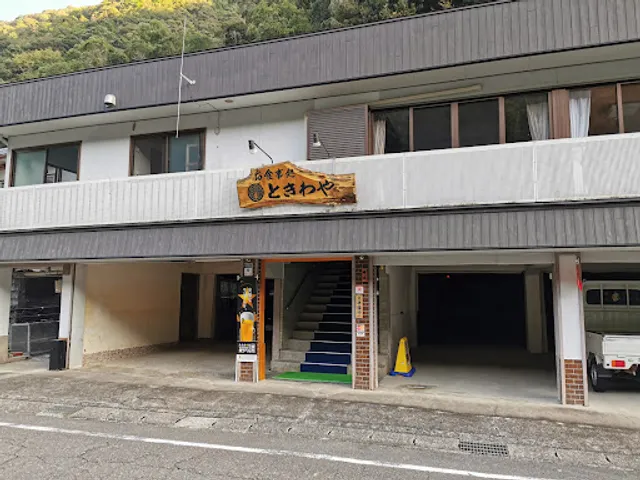
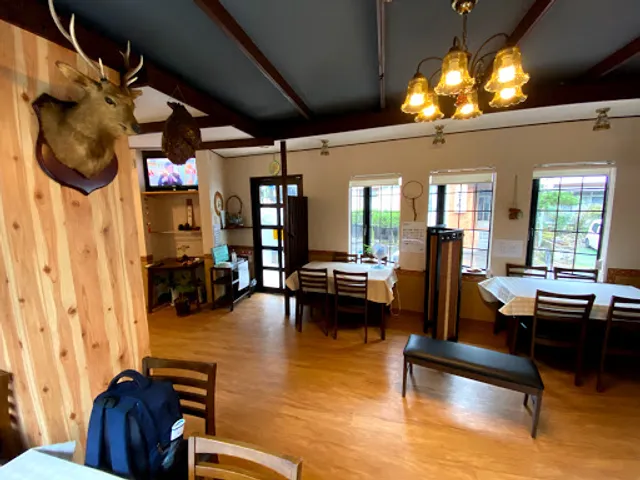
Read moreFinding the hotel was straightforward, and we were immediately impressed by its cleanliness—remember to remove your shoes at the entrance 😄 The description and photos provided online were spot-on, which was reassuring.
The amenities met our expectations, with the highlight being the two private onsens on-site; the one on the right as you approach is particularly wonderful. The hotel’s restaurant offered great meals at reasonable prices.
The staff spoke good English and they were very attentive and helpful, readily arranging lunch boxes for 1,300 Yen per person and offering luggage shuttle services for those continuing along the Kumano Kodo trail.
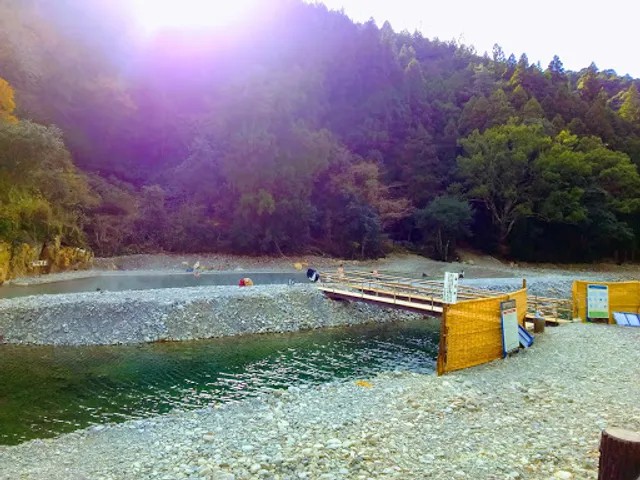
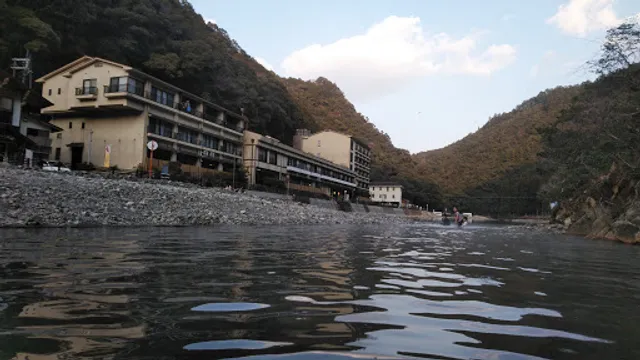
The location could not be better—directly across from a river lined with hot springs. We particularly enjoyed the unique experience of digging our own hot tub by the river, a delightful activity facilitated by shovels provided at the hotel entrance. This natural hot spring experience was a standout, even more appealing to us than Yunomine Onsen, given our familiarity with hot springs back in Iceland.
I highly recommend this hotel for anyone visiting the area. It offers great value for money and a...
Read more