The Delhi Metro has been instrumental in ushering in a new era in the sphere of mass urban transportation in India. The swanky and modern Metro system introduced comfortable, air conditioned and eco-friendly services for the first time in India and completely revolutionized the mass transportation scenario not only in the National Capital Region but the entire country.
Having constructed a massive network of 327 Km with 236 stations in record time, the DMRC today stands out as a shining example of how a mammoth technically complex infrastructure project can be completed before time and within budgeted cost by a Government agency.
The Delhi Metro Rail Corporation Limited (DMRC) was registered on 3rd May 1995 under the Companies Act, 1956 with equal equity participation of the Government of the National Capital Territory of Delhi (GNCTD) and the Central Government to implement the dream of construction and operation of a world- class Mass Rapid Transport System (MRTS).
The DMRC opened its first corridor between Shahdara and Tis Hazari on 25th December, 2002. Subsequently, the first phase of construction worth 65 kilometres of Metro lines was finished two years and nine months ahead of schedule in 2005. Since then the DMRC has also completed the construction of another 125 kilometres of Metro corridors under the second phase in only four and a half years.
Presently, the Delhi Metro network consists of about 327 Km with 236 stations. The network has now crossed the boundaries of Delhi to reach NOIDA and Ghaziabad in Uttar Pradesh, Gurgaon, Faridabad, Bahadurgarh and Ballabhgarh in Haryana. With the opening of the Majlis Park to Durgabhai Deshmukh South Campus and Janakpuri West - Botanical Garden Sections, new age trains equipped with the Unattended Train Operation (UTO) technology have been introduced. These trains operate with the Communication Based Train Control(CBTC) signaling technology which facilitate movement of trains in very short frequencies.
The Airport Express link between the Indira Gandhi International Airport and New Delhi has now propelled Delhi to the league of global cities which have high speed rail connectivity between the city and the airport.
The DMRC today has over 300 train sets of four, six and eight coaches. More than a hundred trains of six coach configuration and over 60 trains of eight coach configuration are currently operational.
The Delhi Metro has also contributed tremendously on the environment front by becoming the first ever railway project in the world to claim carbon credits for regenerative braking. DMRC has also been certified by the United Nations (UN) as the first Metro Rail and Rail based system in the world to get carbon Credits for reducing Green House gas emissions as it has helped to reduce pollution levels in the city by 6.3 lakh tons every year thus helping in reducing global warming.
It has also set up roof top solar power plants at many of its stations. All stations of the presently under construction corridors are being constructed as green buildings. In the present phase of Delhi Metro’s construction, the DMRC is nearing the completion of 160 kilometres of Metro lines which has woven a web of Metro corridors along the city’s Ring Road besides connecting with many other localities in NOIDA, Ghaziabad, Bahadurgarh and Ballabhgarh.
Apart from providing Delhites with a comfortable public transport option, the Delhi Metro is also contributing significantly towards controlling pollution as well as reducing vehicular congestion on the roads. According to a study, Delhi Metro has helped in removing about seven lakh vehicles from the...
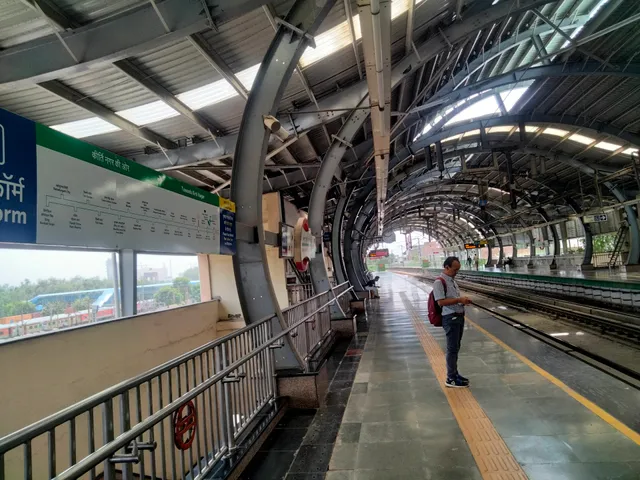
Read moreKirti Nagar Metro Station in West Delhi is a pivotal interchange hub connecting the Blue Line (Dwarka Sector 21 to Noida City Centre/Vaishali) and the Green Line (Inderlok to Brigadier Hoshiyar Singh). This strategic positioning enhances accessibility for commuters traveling between various parts of Delhi. The station serves as a crucial interchange point between the Blue and Green Lines, facilitating seamless transfers for passengers traveling across different corridors of the Delhi Metro network.
Multiple Platforms and Gates
Kirti Nagar Metro Station boasts multiple platforms and entry/exit gates, ensuring efficient passenger flow and accessibility. This design accommodates a high volume of commuters, particularly during peak hours.
Modern Amenities
The station is equipped with various amenities to enhance commuter comfort and convenience:
Air-Conditioned Facilities: To provide a comfortable environment for passengers.
Elevators and Lifts: Ensuring accessibility for all, including differently-abled passengers.
Restrooms: Available for passenger convenience.
Help Desk: Assisting passengers with inquiries and guidance.
CCTV Surveillance: Enhancing security within the station premises.
Shops: Offering refreshments and essential items.
Parking Facilities
The station provides authorized parking spaces for both two-wheelers and four-wheelers, accommodating the needs of commuters who prefer to drive to the station.
Bus Connectivity
Located near the Moti Nagar Industrial Area bus stop, the station is well-served by numerous DTC bus routes, facilitating easy access to various parts of Delhi.
Nearby Landmarks
The station is in proximity to several notable landmarks and commercial areas:
Furniture Market: A renowned hub for furniture shopping.
Moments Mall: A popular shopping destination.
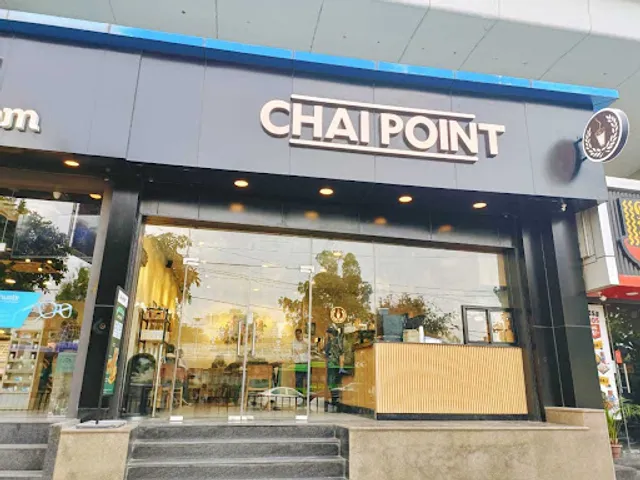
Recreational Spots: Including eateries and cafes like Costa Coffee and Chaayos. Plans are underway for the Delhi Metrolite system, which aims to connect Kirti Nagar to Dwarka ECC via various sectors. This development is expected to further enhance the station's connectivity and accessibility.
In summary, Kirti Nagar Metro Station offers a blend of strategic location, modern amenities, and excellent connectivity, making it a vital component of Delhi's...
Read moreThis time, I was returning from a different location and happened to pass by this particular metro station. However, I didn’t actually stop or visit the station during this instance—it was merely a point I crossed while on my way elsewhere. Reflecting on my past experiences with the metro system, I recall many positive moments, as I used to rely on it quite frequently for my daily commute. The metro was a convenient and efficient mode of transportation for me, and I often found myself traveling through various lines connected to this station.
In the past, this station served as a key junction for several metro routes that I regularly used, making it a familiar and significant part of my travel routine. The connectivity it offered allowed me to reach different parts of the city with ease, and I always appreciated the reliability and speed of the metro system. Whether it was for work, leisure, or other errands, the metro was my go-to choice, and this station often played a central role in my journeys.
Although I didn’t interact with the station this time, seeing it brought back memories of my frequent travels through it. The efficiency of the metro system, the hustle and bustle of commuters, and the convenience of interconnected routes all contributed to my positive experiences. Even now, passing by it reminded me of how integral the metro was to my daily life at one point. While my current route didn’t require me to stop there, the station remains a notable landmark in my travel history, symbolizing many smooth and hassle-free commutes from the past.
Overall, my relationship with this metro station and the broader metro network has been largely positive, and I look back on those experiences fondly. It’s interesting how a simple glimpse of a familiar place can evoke such strong memories of past routines and the reliability of a well-used...
Read more